
BuddhistCatholicContemplativeEvangelicalGeneral ChristianHinduJewishLatter-day SaintMuslimNew VisionsProgressive Christian
Beliefs
- Buddhist
- Catholic
- Contemplative
- Evangelical
- General Christian
- Hindu
- Jewish
- Latter-day Saint
- More Voices
- Muslim
- New Visions
- Pagan
- Progressive Christian
Topics
- Religion News
- Food and Religion
- Sports and Religion
- Religious Art
- Religious Music and Entertainment
- Religious Events
- History and Religion
- Style and Religion
- Politics and Religion
- Women in Religion
- Recreation Outdoors and Religion
- Business Finance and Religion
- Careers Workplace and Religion
- Education and Religion
- Family Parenting and Religion
- Health Fitness and Religion
- Home and Religion
- Relationships and Religion
- Technology and Religion
- Travel and Religion
Columnists
- Buddhist Columnists
- Business Finance and Religion Columnists
- Careers Workplace and Religion Columnists
- Catholic Columnists
- Contemplative Columnists
- Education and Religion Columnists
- Evangelists Columnists
- Family Parenting and Religion Columnists
- General Christian Columnists
- Health Fitness and Religion Columnists
- Hindu Columnists
- History and Religion Columnists
- Home and Religion Columnists
- Jewish Columnists
- More Voices Columnists
- Latter Day Columnists
- Muslim Columnists
- New Visions Columnists
- Nonreligious Columnists
- Pagan Columnists
- Politics and Religion Columnists
- Progressive Columnists
- Recreation Outdoors and Religion Columnists
- Relationships and Religion Columnists
- Religion News Columnists
- Religious Art Columnists
- Religious Events Columnists
- Religious Music and Entertainment Columnists
- Sports and Religion Columnists
- Style and Religion Columnists
- Technology and Religion Columnists
- Travel and Religion Columnists
- Women in Religion Columnists
Resource Library
- 2026 Calendar
- Library of World Religions
- The 100 Most Holy Places on Earth
- Patheos Answers
- Podcasts
- Videos
- Faith Leaders Database
- Anglican Episcopalian
- Bahai
- Baptist
- Buddhism
- Christianity
- Confucianism
- Eastern Orthodoxy
- Hinduism
- Holiness and Pentecostal
- ISKCON
- Islam
- Judaism
- Lutheran
- Methodist
- The Church of Jesus Christ of Latter-day Saints
- New Age
- Paganism
- Presbytarian and Reformed
- Protestantism
- Religion Behind the Scenes
- Roman Catholic
- Scientology
- Shia Islam
- Sikhism
- Sufism
- Sunni Islam
- Taoism
- Zen
- See all religions
Research Tools
 Ad-Free & Subscriber Log-In Subscription Support
Ad-Free & Subscriber Log-In Subscription Support
Follow Patheos 

- Trending:
- Forgiveness
- |
- Marriage
- |
- Consciousness
- |
- Death Penalty
- |
- Election
- |
- Halloween

- Home
- Progressive Christian
- There Is No Immaculate Perception
There Is No Immaculate Perception
Last updated on: December 8, 2019 at 7:00 am by Vance Morgan
There Is No Immaculate Perception 2019-11-29T16:26:25-04:00 Vance Morgan
Patheos Explore the world's faith through different perspectives on religion and spirituality! Patheos has the views of the prevalent religions and spiritualities of the world.
I have taught philosophy in Catholic higher education for twenty-eight years as a non-Catholic. Although I have become accustomed to any number of Catholic commitments and beliefs that are far outside the parameters of the Protestant Christianity in which I was raised, few of these beliefs are more “out there” than the doctrine of the Immaculate Conception. I have found that many—perhaps most—of my predominantly Catholic students believe, incorrectly, that the doctrine applies to virgin birth of Jesus. Even I know better than that (now, at least)—it refers to the notion that the Virgin Mary was conceived without the stain of original sin.
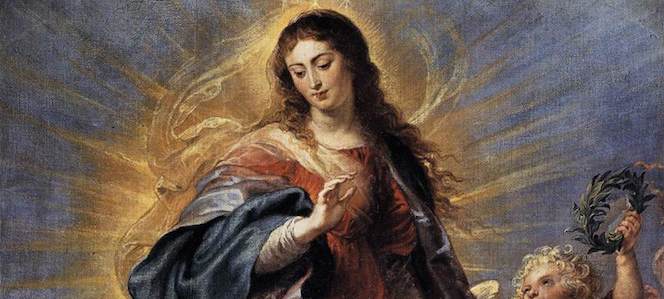
I mention this only because today, December 8, is the day marked as “Immaculate Conception” day on the Catholic Christian calendar. Don’t worry, I do not intend to engage in a discussion about the merits or demerits of such a doctrine—you can go to the Patheos Catholic channel if you are interested in such a conversation (I definitely am not). What I am interested in is something raised by Friedrich Nietzsche in Thus Spake Zarathustra. (An aside: how many blog posts have you ever read that include both the Virgin Mary and Nietzsche?). Nietzsche wrote that “There is no immaculate perception.” No kidding.
I was reminded of this observation from Nietzsche when reading several chapters of Michelle Alexander’s The New Jim Crow for a seminar with a bunch of sophomores a week ago. The subtitle of Alexander’s book is “Mass Incarceration in the Age of Colorblindness”; it is a scathing exposé and indictment of the inherent racism embedded in every stage of the criminal justice system, particularly when related to the “war on drugs.” In the middle of a discussion about unconscious biases even among those who consciously seek to be objective and unbiased, Alexander notes that “decades of cognitive bias research demonstrates that both conscious and unconscious biases lead to discriminatory actions, even when an individual does not want to discriminate.”
Continuing, Alexander references Nietzsche:
The quotation commonly attributed to Nietzsche, that there is no immaculate perception, perfectly captures how cognitive schemas—thought structures—influence what we notice and how the things we notice get interpreted. . . In other words, the fact that you may honestly believe that you are not biased against African Americans, and that you may even have black friends or relatives, does not mean that you are free from unconscious bias.
In another class, we just finished several classes of engaging with issues of race; we began with white privilege. Much of the discussion in my classroom filled with predominantly white students was along the lines of “once I have recognized my white privilege, what should I do?” Michelle Alexander’s discussion clearly identifies something that I should not be seeking to do. My goal should not be to root prejudice entirely out of my worldview in the pursuit of a discrimination-free objectivity. If Friedrich Nietzsche is right (as he usually is), it can’t be done.
So now what? If there is no rational, objective standpoint according to which each or any of us can form fair, just, and unbiased beliefs and judgments, what is a more appropriate goal in terms of what we believe and how we act? Let me use a recent event that many of you may have also experienced—Thanksgiving dinner with family members, many of whom disagree with you and with each other on crucially important topics. Jeanne and I were at her niece’s house for Thanksgiving dinner; about twenty or so members of her family, ranging in age over three generations from late seventies to three years old, crowded around a long table for an outstanding feast.
Seated across the table from me was a brother-in-law whom I respect and love. Over the years I have heard him express various opinions with which I strongly disagree, including that former President Obama was not born in the United States, that Bill and Hillary Clinton probably were involved in murder at some point in the past, that President Trump—although an “idiot”—is a hell of a lot better than all of the possible alternatives, and (perhaps most shockingly) that the New England Patriots “suck” and are a bunch of cheaters. Another brother-in-law toward the far end of the table probably would have agreed with most or all of the above. Various persons scattered around the feast very well may be more closely in agreement with them than with me, as amazing as that may seem (given that I, of course, think that my contrary beliefs are not only correct, but are demonstrably so).
The day after Thanksgiving I read on Twitter that, in response to a question about how to avoid shouting and screaming disagreements at Thanksgiving, Kamala Harris told the questioner that we all should seek to find and engage with “what we all share in common.” Good advice; fortunately, those of us at my niece-in-law’s house for Thanksgiving didn’t need Kamala to tell us this. The conversation largely focused on what everyone in the house shared in common—family.
During dessert, Jeanne and her two brothers talked about their parents, aunts, uncles, and grandparents—people long since gone but powerfully present in each person around the table, whether related by blood or by marriage. The older brothers (Jeanne is the youngest—by far—of five) filled in gaps in family narrative history with interesting, sometimes surprising, details and memories. What we didn’t talk about was anything that many, or at least most, of us knew would be divisive. Not because such matters are not important—they are. Rather, because they are much less important than the things that unite us. Not just on Thanksgiving, but always.
Let me conclude by returning to where I began—the Immaculate Conception. I have been tempted over the years to ask a Catholic friend or colleague something along the lines of “Why is this doctrine important?” or “Doesn’t this doctrine imply that sexual activity is automatically sinful? Otherwise, why the end run around the natural process of conception?” Or, more provocatively, “Why would any normal person believe in such a stupid thing?” My strategy, rather, has always been to recognize a Catholic as a fellow Christian with whom I share any number of core beliefs and experiences. The fact that she or he is a fellow Christian whose faith also includes a number of “add-ons” that I not only consider inessential to Christianity but, on occasion also detrimental is, in the larger scheme of things, unimportant.
At the end of the day, it’s important to remember that “there are no immaculate perceptions.” Something is not incontrovertibly and unassailably true or right just because I believe it. Each of our “thought structures” is uniquely filtered through and shaped by our individual experiences; the chances that the core values and beliefs of any two people will map seamlessly onto each other is vanishingly small. Starting with what we share in common may be more challenging and difficult than starting with what we disagree about, but it’s a lot more rewarding.

Next Post

December 10, 2019 Living in a Minor Key
Browse Our Archives
Select a Category abortion Advent AI Angels Artificial intelligence atheism attention baptism Baptists beauty belief Benedictines Bible bicycling Big Bird books Bovina Camaldoli hermitage Canada Catholicism cats certainty change Christianity Christmas Collegeville Covid-19 creativity Development of Western Civilization dogs doubt Easter Enneagram Epiphany Episcopal ethics Eucharist evil extroverts Facebook faith family fear flowers forgiveness freedom friends God goodness grace happiness heaven hell history Holy Spirit Holy Week hope human nature humility humor idolatry incarnation introverts irreverence Islam Jeanne Jesus Joe Biden joy Judaism justice Kamala Harris knowledge Lent listen literature liturgy love Marsue Memorial Day miracles movies music mystery mythology NPR Old Testament optimism paradox peace Penguins philosophy piano podcast politics power prayer Protestantism Providence College Religion Rhode Island sabbatical sacrament science seeing silence Simone Weil Socrates soul sports St. John's College stories suffering tattoo teaching technology television theology thinking time tolerance transcendence travel trees trust truth Uncategorized Vermont wisdom wonder writing
Select a Month May 2026 April 2026 March 2026 February 2026 January 2026 December 2025 November 2025 October 2025 September 2025 August 2025 July 2025 June 2025 May 2025 April 2025 March 2025 February 2025 January 2025 December 2024 November 2024 October 2024 September 2024 August 2024 July 2024 June 2024 May 2024 April 2024 March 2024 February 2024 January 2024 December 2023 November 2023 October 2023 September 2023 August 2023 July 2023 June 2023 May 2023 April 2023 March 2023 February 2023 January 2023 December 2022 November 2022 October 2022 September 2022 August 2022 July 2022 June 2022 May 2022 April 2022 March 2022 February 2022 January 2022 December 2021 November 2021 October 2021 September 2021 August 2021 July 2021 June 2021 May 2021 April 2021 March 2021 February 2021 January 2021 December 2020 November 2020 October 2020 September 2020 August 2020 July 2020 June 2020 May 2020 April 2020 March 2020 February 2020 January 2020 December 2019 November 2019 October 2019 September 2019 August 2019 July 2019 June 2019 May 2019 April 2019 March 2019 February 2019 January 2019 December 2018 November 2018 October 2018 September 2018 August 2018 July 2018 June 2018 May 2018 April 2018 March 2018 February 2018 January 2018 December 2017 November 2017 October 2017 September 2017 August 2017 July 2017 June 2017 May 2017 April 2017 March 2017 February 2017 January 2017 December 2016 November 2016 October 2016 September 2016 August 2016 July 2016 June 2016 May 2016 April 2016 March 2016 February 2016 January 2016 December 2015 November 2015 October 2015 September 2015 August 2015 July 2015 June 2015 May 2015 April 2015 March 2015 February 2015 January 2015 December 2014 November 2014 October 2014 September 2014 August 2014 July 2014 June 2014 May 2014 April 2014 March 2014 February 2014 January 2014 December 2013 November 2013 October 2013 September 2013 August 2013 July 2013 June 2013 May 2013 April 2013 March 2013 February 2013 January 2013 December 2012 November 2012 October 2012 September 2012
Follow Us!
TAKE THE
Religious Wisdom Quiz
Who succeeded Moses as the leader of Israel?
Select your answer to see how you score.
Aaron Caleb Samuel Joshua
Books by This Author Books by Vance G. Morgan
Related posts from Freelance Christianity

The Lonely Pawn: On Faith, Doubt, and Meaning


AI and Love: When a Chatbot Becomes a...

TRENDING AT PATHEOS Progressive Christian

What Being a Modern-Day Apostle Means to Me
In my last column, I discussed the ins and outs of modern-day...

Did Ancient China Once Worship the God of...
Across human history, a common thread weaves through the origins of the...

Love Your Neighbor – Including Earth-Kin: Lev. 19,...
God’s command to love your neighbor means acting in an ethical and...

Lead a Church Study of “Jesus and Lao...
Guest writer Jack Thomas (The Irreverent Reverend) reflects on leading his church...

Pastoral Wisdom for Responding to Sermon Pushback
Getting sermon pushback on your social justice sermon? Learn practical, Proverbs-based strategies...

Principles for Understanding the Apostolic Ministry Today
Whenever people discover that my formal ministry title is "apostle," as in...
view all Progressive Christian blogs
Ad-Free & Subscriber Log-In Subscription Support
- About Us
- 2026 Calendar
- Videos
- Podcasts
- Library of World Religions
- Faith In Media Tracker
- Advertise With Us
- Write for Us
- Privacy Policy
- Terms of Service
- Do Not Sell My Data
- Contact Us
- Radiant Digital
- Manage Newsletter Subscriptions
- Unsubscribe From Notifications
- Sitemap
Copyright 2008-2026, Patheos. All rights reserved.
Subscription Support Ad-Free & Subscriber Log-In
Follow Patheos