
BuddhistCatholicContemplativeEvangelicalGeneral ChristianHinduJewishLatter-day SaintMuslimNew VisionsProgressive Christian
Beliefs
- Buddhist
- Catholic
- Contemplative
- Evangelical
- General Christian
- Hindu
- Jewish
- Latter-day Saint
- More Voices
- Muslim
- New Visions
- Pagan
- Progressive Christian
Topics
- Religion News
- Food and Religion
- Sports and Religion
- Religious Art
- Religious Music and Entertainment
- Religious Events
- History and Religion
- Style and Religion
- Politics and Religion
- Women in Religion
- Recreation Outdoors and Religion
- Business Finance and Religion
- Careers Workplace and Religion
- Education and Religion
- Family Parenting and Religion
- Health Fitness and Religion
- Home and Religion
- Relationships and Religion
- Technology and Religion
- Travel and Religion
Columnists
- Buddhist Columnists
- Business Finance and Religion Columnists
- Careers Workplace and Religion Columnists
- Catholic Columnists
- Contemplative Columnists
- Education and Religion Columnists
- Evangelists Columnists
- Family Parenting and Religion Columnists
- General Christian Columnists
- Health Fitness and Religion Columnists
- Hindu Columnists
- History and Religion Columnists
- Home and Religion Columnists
- Jewish Columnists
- More Voices Columnists
- Latter Day Columnists
- Muslim Columnists
- New Visions Columnists
- Nonreligious Columnists
- Pagan Columnists
- Politics and Religion Columnists
- Progressive Columnists
- Recreation Outdoors and Religion Columnists
- Relationships and Religion Columnists
- Religion News Columnists
- Religious Art Columnists
- Religious Events Columnists
- Religious Music and Entertainment Columnists
- Sports and Religion Columnists
- Style and Religion Columnists
- Technology and Religion Columnists
- Travel and Religion Columnists
- Women in Religion Columnists
Resource Library
- 2026 Calendar
- Library of World Religions
- The 100 Most Holy Places on Earth
- Patheos Answers
- Podcasts
- Videos
- Faith Leaders Database
- Anglican Episcopalian
- Bahai
- Baptist
- Buddhism
- Christianity
- Confucianism
- Eastern Orthodoxy
- Hinduism
- Holiness and Pentecostal
- ISKCON
- Islam
- Judaism
- Lutheran
- Methodist
- The Church of Jesus Christ of Latter-day Saints
- New Age
- Paganism
- Presbytarian and Reformed
- Protestantism
- Religion Behind the Scenes
- Roman Catholic
- Scientology
- Shia Islam
- Sikhism
- Sufism
- Sunni Islam
- Taoism
- Zen
- See all religions
Research Tools
 Ad-Free & Subscriber Log-In Subscription Support
Ad-Free & Subscriber Log-In Subscription Support
Follow Patheos 

- Trending:
- Forgiveness
- |
- Marriage
- |
- Consciousness
- |
- Death Penalty
- |
- Election
- |
- Halloween

- Home
- Progressive Christian
- The Word is a Person
The Word is a Person
Last updated on: April 30, 2024 at 6:00 am by Vance Morgan
The Word is a Person 2024-04-29T10:13:10-04:00 Vance Morgan
Patheos Explore the world's faith through different perspectives on religion and spirituality! Patheos has the views of the prevalent religions and spiritualities of the world.
In the beginning was the Word . . . and the Word was made flesh, and dwelt among us. John 1:1, 14
“In the beginning was the Word . . .” ranks right up there with “Once upon a time . . .” as one of the best-of all-time intro lines to a story. The opening verses of John provide a beautifully poetic introduction to the greatest story ever told. Because the language is poetic rather than discursive, in these verses the author of John has provided two millennia of theologians and persons of faith with more to write, talk pontificate, preach, argue, and be confused about than could possibly be exhausted in future millennia.
Logos, the word translated from the Greek as “Word,” has many possible meanings, including “word,” “thought,” “principle,” “speech,” and “reason.” That the author chose logos to begin the story opens the door to all sorts of possibilities . . . but not to the possibility that many Christians, including those in the evangelical Protestant world in which I grew up, insist upon. The first chapter of John makes it clear that the Word is not a text or a book, nor is it a collection of doctrines, dogmas, and traditions. The Word is a person.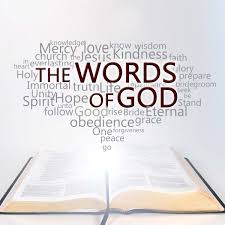
Of the many conversations I have had over the years with Christians who believe that the Bible is the literal, inerrant Word of God, I remember as if it was yesterday a conversation (debate? Disagreement?) I had with someone on social media several years ago concerning the opening verses of John’s gospel. In response to my suggestion that the Bible is a special book, but one written by human beings rather than dictated by God, the other person responded that anyone who denies the inerrancy of scripture cannot legitimately call themselves “Christian.” Rejecting scriptural inerrancy is the same as rejecting the authority of God in one’s life.
I responded, rather defensively, that I found it sad to imagine a faith so narrow that it claims that God is confined within the covers of a book. That God somehow is incapable of speaking directly to contemporary human beings. That the Word of God is a book rather than a Person. God is brought into the world through human beings, not ancient texts.
I could have done better. I could have used the very book that the fellow I was arguing with worships to make my point as the next participant in the conversation did succinctly in short order by simply using John’s gospel:
John 1:1—In the beginning was the Word. John 1:14—And the Word was made flesh and dwelt among us . . . The Bible isn’t the Word of God, but it can lead us to the Word of God.
The Word is not a book, in other words. The Word is a Person.
Words have been a central focus of my life since my earliest memories. There have been few times in my life when a book was not within arm’s reach. My early years were full of apocryphal stories of how I learned to read. According to my mother, I was reading by age three without anyone having taught me how to do it. I was never without a book, and lined up my menagerie of stuffed animals on the couch to read to them. I knew how to read before I could tell time or tie my shoes—perhaps my parents should have provided me with shoe-tying instruction manuals to read.
In “An Essay on the Concept of Reading,” Simone Weil reminds us that reading is more than deciphering words on a page:
There is a mystery in reading, a mystery which, if we contemplate it, may well help us, not to explain, but to grab hold of other mysteries in human life. . . The sky, the seas, the sun, the stars, human beings, everything that surrounds us is something that we read.
This insight includes a much broader understanding of “reading” than our traditional Western conception which considers reading to be an exclusively cognitive, intellectual, and mental activity—precisely the sort of activity I’ve spent the majority of my waking hours on this planet doing. Accordingly, I was grateful to discover a new kind of reading several years ago while on sabbatical.
I had heard about “lectio divina,” sacred reading, before I went on sabbatical to a Benedictine college campus with a large abbey on site over a decade ago, but it had not struck me as a particularly interesting concept. Just another skill to learn, technique to master, perhaps—but really, I thought, if there’s one thing I know how to do pretty well, its reading. After several weeks of daily prayer with the abbey monks, it dawned on me that lectio divina isn’t about words, meaning, or retention at all.
I often found that I did not remember, even for the amount of time it took to walk from the choir stalls to the front of the abbey and exit, which psalms we had read nor any of the content. Yet I had a sense that what we were doing was far more important than reading a book, marking it with highlighter and pen in my usual method, and perhaps memorizing a phrase or two for future reference in class or conversation.
What was happening in the choir stalls was not a mind event, but a full body experience bypassing my overdeveloped mind and seeping into all the other parts of me that had been starved for years. My bodily rhythms, my intuitions, my emotions, my spirit. The Psalms speak of God’s word all the time, but almost never of thinking about God’s word.
It’s more like what Jeremiah reports: “Your words were found and I ate them, and your words became to me a joy and the delight of my heart.” Simone Weil was channeling her internal Jeremiah when she wrote that “I only read what I am hungry for at the moment when I have an appetite for it, and then I do not read, I eat.” And like a mother bird regurgitating food for its babies, an important word or phrase would come into my consciousness later in the day, one that I didn’t remember reading but which had seeped into my soul.
In our “real world” of immediacy, getting it done, making money and a living, is there a place for what I began to absorb in a monastery abbey in the middle-of-nowhere Minnesota? Over the subsequent years I’ve seen small but important evidence of change in how I converse with people, how I approach the day, and a heightened and more immediate sense of when a layer is threatening to grow back over my divine reading space.
Learning how to read differently is not just another technique; because it is a new way of being, it is transferable to everything. I went on sabbatical expecting to write about trying to sustain a life of faith when God at best is a silent partner who never writes, calls, emails, texts, or tweets. Now the divine is everywhere and seems to have a lot to say. Reading the divine begins with believing that everything is sacramental, infused with the breath of God, with taking “the Word became flesh” very seriously. All of creation is a sacred text. What are you reading?
Previous Post
April 28, 2024
Your Comfort Zone Is Not a Sacred Space
Next Post

May 2, 2024 Big News, and a Blast from the Past!
Recent Comments
"Mary did have a choice. And she was able to make it before the Holy ..."
"i cannot read beyond your recommendations for the books since i like to have a ..."
"AI will never be able to utter with honesty, feeling, or humility, the greeting: "Namaste".It ..."
"They do. I'm sure you could find discussions of the same topic from any of ..."
Browse Our Archives
Select a Category abortion Advent AI Angels Artificial intelligence atheism attention baptism Baptists beauty belief Benedictines Bible bicycling Big Bird books Bovina Camaldoli hermitage Canada Catholicism cats certainty change Christianity Christmas Collegeville Covid-19 creativity Development of Western Civilization dogs doubt Easter Enneagram Epiphany Episcopal ethics Eucharist evil extroverts Facebook faith family fear flowers forgiveness freedom friends God goodness grace happiness heaven hell history Holy Spirit Holy Week hope human nature humility humor idolatry incarnation introverts irreverence Islam Jeanne Jesus Joe Biden joy Judaism justice Kamala Harris knowledge Lent listen literature liturgy love Marsue Memorial Day miracles movies music mystery mythology NPR Old Testament optimism paradox peace Penguins philosophy piano podcast politics power prayer Protestantism Providence College Religion Rhode Island sabbatical sacrament science seeing silence Simone Weil Socrates soul sports St. John's College stories suffering tattoo teaching technology television theology thinking time tolerance transcendence travel trees trust truth Uncategorized Vermont wisdom wonder writing
Select a Month May 2026 April 2026 March 2026 February 2026 January 2026 December 2025 November 2025 October 2025 September 2025 August 2025 July 2025 June 2025 May 2025 April 2025 March 2025 February 2025 January 2025 December 2024 November 2024 October 2024 September 2024 August 2024 July 2024 June 2024 May 2024 April 2024 March 2024 February 2024 January 2024 December 2023 November 2023 October 2023 September 2023 August 2023 July 2023 June 2023 May 2023 April 2023 March 2023 February 2023 January 2023 December 2022 November 2022 October 2022 September 2022 August 2022 July 2022 June 2022 May 2022 April 2022 March 2022 February 2022 January 2022 December 2021 November 2021 October 2021 September 2021 August 2021 July 2021 June 2021 May 2021 April 2021 March 2021 February 2021 January 2021 December 2020 November 2020 October 2020 September 2020 August 2020 July 2020 June 2020 May 2020 April 2020 March 2020 February 2020 January 2020 December 2019 November 2019 October 2019 September 2019 August 2019 July 2019 June 2019 May 2019 April 2019 March 2019 February 2019 January 2019 December 2018 November 2018 October 2018 September 2018 August 2018 July 2018 June 2018 May 2018 April 2018 March 2018 February 2018 January 2018 December 2017 November 2017 October 2017 September 2017 August 2017 July 2017 June 2017 May 2017 April 2017 March 2017 February 2017 January 2017 December 2016 November 2016 October 2016 September 2016 August 2016 July 2016 June 2016 May 2016 April 2016 March 2016 February 2016 January 2016 December 2015 November 2015 October 2015 September 2015 August 2015 July 2015 June 2015 May 2015 April 2015 March 2015 February 2015 January 2015 December 2014 November 2014 October 2014 September 2014 August 2014 July 2014 June 2014 May 2014 April 2014 March 2014 February 2014 January 2014 December 2013 November 2013 October 2013 September 2013 August 2013 July 2013 June 2013 May 2013 April 2013 March 2013 February 2013 January 2013 December 2012 November 2012 October 2012 September 2012
Follow Us!
TAKE THE
Religious Wisdom Quiz
What does "Hoshea" mean in Hebrew?
Select your answer to see how you score.
Chosen One Salvation God's Messenger The Lord is Holy
Books by This Author Books by Vance G. Morgan
Related posts from Freelance Christianity

The Lonely Pawn: On Faith, Doubt, and Meaning


AI and Love: When a Chatbot Becomes a...

TRENDING AT PATHEOS Progressive Christian

What Being a Modern-Day Apostle Means to Me
In my last column, I discussed the ins and outs of modern-day...

Did Ancient China Once Worship the God of...
Across human history, a common thread weaves through the origins of the...

Love Your Neighbor – Including Earth-Kin: Lev. 19,...
God’s command to love your neighbor means acting in an ethical and...

Lead a Church Study of “Jesus and Lao...
Guest writer Jack Thomas (The Irreverent Reverend) reflects on leading his church...

Pastoral Wisdom for Responding to Sermon Pushback
Getting sermon pushback on your social justice sermon? Learn practical, Proverbs-based strategies...

Principles for Understanding the Apostolic Ministry Today
Whenever people discover that my formal ministry title is "apostle," as in...
view all Progressive Christian blogs
What Are Your Thoughts?leave a comment
Ad-Free & Subscriber Log-In Subscription Support
- About Us
- 2026 Calendar
- Videos
- Podcasts
- Library of World Religions
- Faith In Media Tracker
- Advertise With Us
- Write for Us
- Privacy Policy
- Terms of Service
- Do Not Sell My Data
- Contact Us
- Radiant Digital
- Manage Newsletter Subscriptions
- Unsubscribe From Notifications
- Sitemap
Copyright 2008-2026, Patheos. All rights reserved.
Subscription Support Ad-Free & Subscriber Log-In
Follow Patheos