
BuddhistCatholicContemplativeEvangelicalGeneral ChristianHinduJewishLatter-day SaintMuslimNew VisionsProgressive Christian
Beliefs
- Buddhist
- Catholic
- Contemplative
- Evangelical
- General Christian
- Hindu
- Jewish
- Latter-day Saint
- More Voices
- Muslim
- New Visions
- Pagan
- Progressive Christian
Topics
- Religion News
- Food and Religion
- Sports and Religion
- Religious Art
- Religious Music and Entertainment
- Religious Events
- History and Religion
- Style and Religion
- Politics and Religion
- Women in Religion
- Recreation Outdoors and Religion
- Business Finance and Religion
- Careers Workplace and Religion
- Education and Religion
- Family Parenting and Religion
- Health Fitness and Religion
- Home and Religion
- Relationships and Religion
- Technology and Religion
- Travel and Religion
Columnists
- Buddhist Columnists
- Business Finance and Religion Columnists
- Careers Workplace and Religion Columnists
- Catholic Columnists
- Contemplative Columnists
- Education and Religion Columnists
- Evangelists Columnists
- Family Parenting and Religion Columnists
- General Christian Columnists
- Health Fitness and Religion Columnists
- Hindu Columnists
- History and Religion Columnists
- Home and Religion Columnists
- Jewish Columnists
- More Voices Columnists
- Latter Day Columnists
- Muslim Columnists
- New Visions Columnists
- Nonreligious Columnists
- Pagan Columnists
- Politics and Religion Columnists
- Progressive Columnists
- Recreation Outdoors and Religion Columnists
- Relationships and Religion Columnists
- Religion News Columnists
- Religious Art Columnists
- Religious Events Columnists
- Religious Music and Entertainment Columnists
- Sports and Religion Columnists
- Style and Religion Columnists
- Technology and Religion Columnists
- Travel and Religion Columnists
- Women in Religion Columnists
Resource Library
- 2026 Calendar
- Library of World Religions
- The 100 Most Holy Places on Earth
- Patheos Answers
- Podcasts
- Videos
- Faith Leaders Database
- Anglican Episcopalian
- Bahai
- Baptist
- Buddhism
- Christianity
- Confucianism
- Eastern Orthodoxy
- Hinduism
- Holiness and Pentecostal
- ISKCON
- Islam
- Judaism
- Lutheran
- Methodist
- The Church of Jesus Christ of Latter-day Saints
- New Age
- Paganism
- Presbytarian and Reformed
- Protestantism
- Religion Behind the Scenes
- Roman Catholic
- Scientology
- Shia Islam
- Sikhism
- Sufism
- Sunni Islam
- Taoism
- Zen
- See all religions
Research Tools
 Ad-Free & Subscriber Log-In Subscription Support
Ad-Free & Subscriber Log-In Subscription Support
Follow Patheos 

- Trending:
- Forgiveness
- |
- Marriage
- |
- Consciousness
- |
- Death Penalty
- |
- Election
- |
- Halloween

- Home
- Progressive Christian
- The Story I am Willing to be Wrong About
The Story I am Willing to be Wrong About
Last updated on: May 23, 2022 at 2:00 pm by Vance Morgan
The Story I am Willing to be Wrong About 2022-05-23T13:36:59-04:00 Vance Morgan
Patheos Explore the world's faith through different perspectives on religion and spirituality! Patheos has the views of the prevalent religions and spiritualities of the world.
My political scientist Dominican priest friend and colleague, who was my teaching partner in our “Faith and Doubt” colloquium during the just-completed spring semester, is kind enough to be a regular reader of this blog. He has mentioned to me more than once over the past several weeks, most recently during our usual beer get-together on Friday afternoons, that he’s been interested to see how closely my blog posts have been tracking our course work this semester. Had he been reading my blog for longer than the past year or so, he would know that this is not unusual. My teaching informs my writing (and vice versa) intimately; I have often said that I’m never sure what I think about a particular idea or topic until I start writing about it.
Another way of putting this is that over the years writing has become my primary form of spiritual practice. In Wholehearted Faith, the final text in “Faith and Doubt” this past semester, Rachel Held Evans expresses this far more eloquently than I have ever been able to (I hate it when people do that).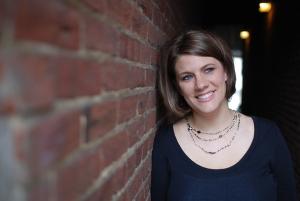
Writing has taught me a special kind of patience that I am finally learning to apply to my faith. I find myself repeating the same mantras on a day of doubt that I repeat on a day of writer’s block: be patient. Don’t rush it. Live the questions. Let this play out.
Although “live the questions” is an overused trope in some circles that often doesn’t mean much, it resonates strongly with me because it connects my life as a philosophy professor with my life as a person of faith.
I tell my students early on in just about every course I teach that, after almost three decades of doing what I do for a living, it was only a few years ago that I landed on my go-to definition of philosophy: Philosophy is the art of asking better and better questions. This truly is how I conceive of philosophy—the definition has the added virtue of making several practical points to my students at the start of the semester.
- For STEM majors or for the increasing number of business majors on our campus—in other words, for those expecting questions to be answered definitively—philosophy is likely to be frustrating at first.
- Philosophy is the quintessential “perennial” discipline that never gets old. It engages with questions that truly have no definitive answer—such questions are beyond the reach of our natural capacities to answer definitively—but human progress (if you believe there is such a thing) provides us with better and better ways of asking the questions.
- Philosophy as I conceive it calls us back to our childhood curiosity. It is natural to the human being to ask questions about everything—just ask anyone who has ever spent time with a little kid. Somehow this gets beaten out of most of us as we “mature” and become adults. Philosophy calls us back to our youth and out natural state of wonderment.
What does this have to do with the life of faith? Both philosophy and faith call us to never stop wondering, to never stop questioning, and above all to never fall into the trap of certainty.
One of the final books we considered in “Faith and Doubt” was Tomáš Halík’s Patience with God. It was my first time through this evocative and dense book that was suggested by my teaching partner; I’m sure it will be showing up during my writing this summer.
For today, though, it’s enough to simply appreciate the book’s title and the notion that God is something or someone that we need to have patience with. I think most people of faith, at least occasionally, wish that the God they believe in would demonstrably do something—preferably in answer to a specific prayer. But “Let this play out” and “Don’t rush it” are precisely the sort of phrase that resonate with my own faith journey.
In her excellent 2013 book Still, Lauren Winner tells the story of a friend, a pastor’s daughter, who at twelve years of age on the eve of her confirmation service told her father that she was having second thoughts about whether she should be confirmed. She didn’t know that she really believed all of the things she was supposed to believe, and she was particularly concerned about professing in front of the church that she was ready to believe these things forever. Her wise father responded that “What you promise when you are confirmed is not that you will believe this forever. What you promise when you are confirmed is that this is the story you will wrestle with forever.”
As a preacher’s kid myself, I greatly appreciate this pastor’s loving response to his daughter. The larger religious world in which I grew up was all about certainty, inerrancy, and doctrinal purity. My father was a minister in that world, but over the years I observed him wrestle with the story regularly, evolving from the national vice president of the Independent Fundamental Churches of America to a tongues-speaking charismatic whose primary focus was facilitating the health of those who had been damaged by bad religion. Although we had few explicit conversations about his evolution, I learned by observation that “adventuring with God,” as he would have described it, was exactly that—an adventure. Furthermore, it is not for the faint of heart.
I introduced our “Faith and Doubt” students to Rachel Held Evans during the final week of our semester by viewing together a talk she gave at Lipscomb University in 2015. Lipscomb is a conservative Protestant university, but Evans had the courage to be honest and direct about the doubts that were her constant companions as she evolved from hardcore conservative evangelical Protestant into one of the most important and dynamic voices of progressive Christianity before her untimely death in 2019. Toward the end of her talk, she addressed the question that I’m sure many in the audience that evening were asking.
Why am I still a Christian? Because as hard as that story is to believe, it’s still the story I’m willing to be wrong about.
I often quote Alasdair MacIntyre’s observation that understanding human behavior and morality begins with realizing that we are narrative creatures. Human beings are storytelling animals. And our life-defining stories change and morph as we grow. My own faith story has evolved and changed so much over the years that those who are still living within the boundaries of the version of the story I began with frequently claim that my story is no longer recognizable to them. But that’s okay, because the larger story is broad and vibrant enough to accommodate many versions.
Once a number of years ago I asked a seminar of twelve honors freshman a question that stopped them in their tracks. Our texts for the day were Luke, Acts, and Romans from the New Testament. I teach at a Catholic college; I knew from previous conversations that the majority of my seminar students had been raised Catholic and educated in Catholic parochial schools. “What if it could be proven definitively, beyond the shadow of a doubt, that Jesus never existed and all of these stories are just that—stories?” I asked. “What difference would it make to your faith? Would you remain a Christian?”
After what seemed like an eternity of silence, a young woman who seldom contributed in seminar raised her hand. “Yes, I would still be a Christian,” she said, “because being a Christian helps me be a better person than I would be without it.” At the early age of eighteen this student already had learned something about what makes a story true. The truth of a story has little to nothing to do with the “facts” of what did or didn’t happen. The truth of a story is revealed in the impact it makes in one’s life. Some stories are worth risking being wrong about.

Next Post
May 24, 2022 Save Your Thoughts and Prayers. Do Something
Browse Our Archives
Select a Category abortion Advent AI Angels Artificial intelligence atheism attention baptism Baptists beauty belief Benedictines Bible bicycling Big Bird books Bovina Camaldoli hermitage Canada Catholicism cats certainty change Christianity Christmas Collegeville Covid-19 creativity Development of Western Civilization dogs doubt Easter Enneagram Epiphany Episcopal ethics Eucharist evil extroverts Facebook faith family fear flowers forgiveness freedom friends God goodness grace happiness heaven hell history Holy Spirit Holy Week hope human nature humility humor idolatry incarnation introverts irreverence Islam Jeanne Jesus Joe Biden joy Judaism justice Kamala Harris knowledge Lent listen literature liturgy love Marsue Memorial Day miracles movies music mystery mythology NPR Old Testament optimism paradox peace Penguins philosophy piano podcast politics power prayer Protestantism Providence College Religion Rhode Island sabbatical sacrament science seeing silence Simone Weil Socrates soul sports St. John's College stories suffering tattoo teaching technology television theology thinking time tolerance transcendence travel trees trust truth Uncategorized Vermont wisdom wonder writing
Select a Month May 2026 April 2026 March 2026 February 2026 January 2026 December 2025 November 2025 October 2025 September 2025 August 2025 July 2025 June 2025 May 2025 April 2025 March 2025 February 2025 January 2025 December 2024 November 2024 October 2024 September 2024 August 2024 July 2024 June 2024 May 2024 April 2024 March 2024 February 2024 January 2024 December 2023 November 2023 October 2023 September 2023 August 2023 July 2023 June 2023 May 2023 April 2023 March 2023 February 2023 January 2023 December 2022 November 2022 October 2022 September 2022 August 2022 July 2022 June 2022 May 2022 April 2022 March 2022 February 2022 January 2022 December 2021 November 2021 October 2021 September 2021 August 2021 July 2021 June 2021 May 2021 April 2021 March 2021 February 2021 January 2021 December 2020 November 2020 October 2020 September 2020 August 2020 July 2020 June 2020 May 2020 April 2020 March 2020 February 2020 January 2020 December 2019 November 2019 October 2019 September 2019 August 2019 July 2019 June 2019 May 2019 April 2019 March 2019 February 2019 January 2019 December 2018 November 2018 October 2018 September 2018 August 2018 July 2018 June 2018 May 2018 April 2018 March 2018 February 2018 January 2018 December 2017 November 2017 October 2017 September 2017 August 2017 July 2017 June 2017 May 2017 April 2017 March 2017 February 2017 January 2017 December 2016 November 2016 October 2016 September 2016 August 2016 July 2016 June 2016 May 2016 April 2016 March 2016 February 2016 January 2016 December 2015 November 2015 October 2015 September 2015 August 2015 July 2015 June 2015 May 2015 April 2015 March 2015 February 2015 January 2015 December 2014 November 2014 October 2014 September 2014 August 2014 July 2014 June 2014 May 2014 April 2014 March 2014 February 2014 January 2014 December 2013 November 2013 October 2013 September 2013 August 2013 July 2013 June 2013 May 2013 April 2013 March 2013 February 2013 January 2013 December 2012 November 2012 October 2012 September 2012
Follow Us!
TAKE THE
Religious Wisdom Quiz
Whose bones were to be carried from Egypt back to Canaan?
Select your answer to see how you score.
Levi Joseph Benjamin Jacob
Books by This Author Books by Vance G. Morgan
Related posts from Freelance Christianity

The Lonely Pawn: On Faith, Doubt, and Meaning


AI and Love: When a Chatbot Becomes a...

TRENDING AT PATHEOS Progressive Christian

Why Christians Have a Sacred Duty to Vote:...
The Bible offers strong support for the sacred duty to vote. Here...

What Being a Modern-Day Apostle Means to Me
In my last column, I discussed the ins and outs of modern-day...

Did Ancient China Once Worship the God of...
Across human history, a common thread weaves through the origins of the...

Love Your Neighbor – Including Earth-Kin: Lev. 19,...
God’s command to love your neighbor means acting in an ethical and...

Lead a Church Study of “Jesus and Lao...
Guest writer Jack Thomas (The Irreverent Reverend) reflects on leading his church...

Principles for Understanding the Apostolic Ministry Today
Whenever people discover that my formal ministry title is "apostle," as in...
view all Progressive Christian blogs
Ad-Free & Subscriber Log-In Subscription Support
- About Us
- 2026 Calendar
- Videos
- Podcasts
- Library of World Religions
- Faith In Media Tracker
- Advertise With Us
- Write for Us
- Privacy Policy
- Terms of Service
- Do Not Sell My Data
- Contact Us
- Radiant Digital
- Manage Newsletter Subscriptions
- Unsubscribe From Notifications
- Sitemap
Copyright 2008-2026, Patheos. All rights reserved.
Subscription Support Ad-Free & Subscriber Log-In
Follow Patheos