
BuddhistCatholicContemplativeEvangelicalGeneral ChristianHinduJewishLatter-day SaintMuslimNew VisionsProgressive Christian
Beliefs
- Buddhist
- Catholic
- Contemplative
- Evangelical
- General Christian
- Hindu
- Jewish
- Latter-day Saint
- More Voices
- Muslim
- New Visions
- Pagan
- Progressive Christian
Topics
- Religion News
- Food and Religion
- Sports and Religion
- Religious Art
- Religious Music and Entertainment
- Religious Events
- History and Religion
- Style and Religion
- Politics and Religion
- Women in Religion
- Recreation Outdoors and Religion
- Business Finance and Religion
- Careers Workplace and Religion
- Education and Religion
- Family Parenting and Religion
- Health Fitness and Religion
- Home and Religion
- Relationships and Religion
- Technology and Religion
- Travel and Religion
Columnists
- Buddhist Columnists
- Business Finance and Religion Columnists
- Careers Workplace and Religion Columnists
- Catholic Columnists
- Contemplative Columnists
- Education and Religion Columnists
- Evangelists Columnists
- Family Parenting and Religion Columnists
- General Christian Columnists
- Health Fitness and Religion Columnists
- Hindu Columnists
- History and Religion Columnists
- Home and Religion Columnists
- Jewish Columnists
- More Voices Columnists
- Latter Day Columnists
- Muslim Columnists
- New Visions Columnists
- Nonreligious Columnists
- Pagan Columnists
- Politics and Religion Columnists
- Progressive Columnists
- Recreation Outdoors and Religion Columnists
- Relationships and Religion Columnists
- Religion News Columnists
- Religious Art Columnists
- Religious Events Columnists
- Religious Music and Entertainment Columnists
- Sports and Religion Columnists
- Style and Religion Columnists
- Technology and Religion Columnists
- Travel and Religion Columnists
- Women in Religion Columnists
Resource Library
- 2026 Calendar
- Library of World Religions
- The 100 Most Holy Places on Earth
- Patheos Answers
- Podcasts
- Videos
- Faith Leaders Database
- Anglican Episcopalian
- Bahai
- Baptist
- Buddhism
- Christianity
- Confucianism
- Eastern Orthodoxy
- Hinduism
- Holiness and Pentecostal
- ISKCON
- Islam
- Judaism
- Lutheran
- Methodist
- The Church of Jesus Christ of Latter-day Saints
- New Age
- Paganism
- Presbytarian and Reformed
- Protestantism
- Religion Behind the Scenes
- Roman Catholic
- Scientology
- Shia Islam
- Sikhism
- Sufism
- Sunni Islam
- Taoism
- Zen
- See all religions
Research Tools
 Ad-Free & Subscriber Log-In Subscription Support
Ad-Free & Subscriber Log-In Subscription Support
Follow Patheos 

- Trending:
- Forgiveness
- |
- Marriage
- |
- Consciousness
- |
- Death Penalty
- |
- Election
- |
- Halloween

- Home
- Progressive Christian
- The Stories We Tell and the Lies We Believe
The Stories We Tell and the Lies We Believe
Last updated on: September 12, 2021 at 6:00 am by Vance Morgan
The Stories We Tell and the Lies We Believe 2021-09-08T13:40:48-04:00 Vance Morgan
Patheos Explore the world's faith through different perspectives on religion and spirituality! Patheos has the views of the prevalent religions and spiritualities of the world.
As always, this past summer was a season of eclectic reading. I am team-teaching a course that I have not taught in a dozen years, so our syllabus several books that I’ve never read (yes, there are such things). One of them is Clint Smith’s new book How the Word Is Passed, whose subtitle is “A Reckoning with the History of Slavery Across America.” The historical bookends of our course are roughly the Enlightenment and the beginning of the twentieth century; we are using Smith’s book as a central text in November when we spend two weeks on the U. S. Civil War.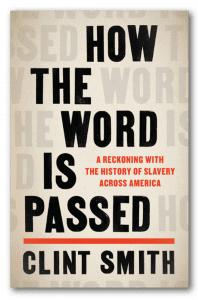
How the Word is Passed is both stunning and disturbing. The flyleaf describes the book as “an unforgettable tour of monuments and landmarks—those that are honest about the past and those that are not—that offer an intergenerational story of how slavery has been central in shaping our nation’s collective history and memory.” A central chapter is centered on Blandford Cemetery in Petersburg, Virginia, where 30,000 Confederate soldiers are buried in a mass grave—the names of only about ten percent of these soldiers are known.
Each Memorial Day at Blandford Cemetery, the Sons of Confederate Veterans host an event to honor the Confederate dead and, in many ways, to tell a story of the Civil War that focuses on the “Lost Cause,” a perspective that Smith describes as “a movement that gained traction in the late nineteenth century that attempted to recast the Confederacy as something predicated on family, honor, and heritage rather than what it was, a traitorous effort to extend and expand the bondage of Black people.” Smith, the only person of color in sight at the rally, stood at the back and listened as the keynote speaker began his speech. “I came across a story the other day,” the speaker said. “I don’t know if it’s true or not, but I like it.” The story he told was one entirely in line with the Lost Cause narrative.
“I don’t know if it’s true or not, but I like it.” This reminds me of something an English professor who was one of my mentors in my early years of teaching was fond of saying about various myths and stories from the past: “If this story isn’t true, it should be.” He, at least partially, intended this as a laugh line, but it raises an important question: How much of what we believe to be true is simply a projection of what we want to be true?
I’m teaching two sections of my favorite introductory philosophy course, General Ethics, this semester. I chose a few years ago to make this course as contemporary as possible—with two exceptions, every assigned text was written within the past ten years. One of the exceptions comes this week from one of my three or four favorite writers—16th century French philosopher and essayist Michel de Montaigne. We will be working on perhaps Montaigne’s most famous essay—“On Cannibals.”
Reflecting on the visit to France of several Brazilians from cannibal tribes in the New World, Montaigne notes that just as cultured Europeans of his day were appalled by various Brazilian tribal practices, so the visitors were also confused and appalled by certain European cultural norms. Stepping back, Montaigne argues first that a stronger case for barbarism could be leveled against Europeans than against the cannibals. Then he puts his finger on an issue that is remarkably relevant to our contemporary world.
We all call barbarous anything that is contrary to our own habits. Indeed, we seem to have no other criterion of truth and reason than the type and kind of opinions and customs current in the land where we live. There we always see the perfect religion, the perfect political system, the perfect and most accomplished way of doing everything.
Our own myopias and parochialisms are usually defined by something other than national borders, but Montaigne’s point is clearly as true now as it was in his day. We tend to believe that what we are most accustomed and used to is true, without ever wondering how we came to be accustomed and used to these things in the first place. We resonate most strongly with those who mirror back to us what we are already thinking.
Parochialism and attachment to what we think we know is not a problem exclusive to any particular set of beliefs or experiences. All of us, from conservative to progressive, from atheist to dedicated religious believer, assume that the way that we think is not only the epitome of common sense, but also the standard of reason well used. Yet as Adam Etinson, a contemporary commenter on Montaigne’s “On Cannibals” observes,
Moral reasoning is generally something we use merely to convince others of long-held beliefs that we are unwilling to abandon . . . often, no amount of persuasive reasoning, clear argument or exposed contradiction can shake us from what we already believe.
Why are we so inclined to hang on to our most entrenched thoughts, even in the face of evidence that our most deeply held beliefs are rooted in anything but experiential evidence supported by logical reasoning?
Another book from my summer reading list, Useful Delusions: The Power and Paradox of the Self-Deceiving Brain by Shankar Vedantam, is a fascinating exploration of this and related questions. Vedantam is the creator and host of “Hidden Brain,” one of my favorite podcasts. In a wide-ranging discussion, Vedantam uses neuroscience, psychology, sociology, history, and various other intersecting disciplines to sketch a picture of just how difficult the problem we face when it comes to finding the truth actually is.
We are not just in a war with con artists, conspiracy theorists and demagogues. We are in a war with ourselves. Our minds are not designed to see the truth, but to show us selective slices of reality, and to prompt us toward predetermined goals. Even worse, they are designed to do all this while giving us the illusion that we are seeing reality. We can believe that we are thinking clearly, acting rationally, and fighting for the truth, even as we are beguiled into seeing what is functional for our groups, our families and ourselves—and imagining it to be the truth.
In various ways, human “knowers” are an eclectic hodgepodge of various evolutionary and creative features that, when it comes to the search for truth, do not play well together. As renowned biologist E. O. Wilson once put it, “We have paleolithic emotions, medieval institutions, and God-like technology.”
In short, the next time you are inclined to criticize and drop negative social media bombs on a person who not only believes differently than you do, but also appears to do so with cavalier and stubborn resistance to the evidence and facts that are so clear to you, step back for a moment. You are undoubtedly doing the same thing. There is no human being who has access to an objective, God-like perspective on anything. We are all in this frustrating and interesting cognitive mess together.
One effective way that I have found to bring the randomness of our deepest convictions to light is to simply ask my students the following: “How many of you think that you would be a very different person today if you had been born in rural Tibet instead of where you were actually born?” All hands go up. “Why?” Because, as everyone knows, we are shaped early and often by features of our existence—our society, family, location, social status—that we do not choose.
Yet we often wander unreflectively through life relying on these foundations that we did not choose, as if we had magically been given the universal truth about all important issues at birth. The fact that our deepest held beliefs would be different had we been born elsewhere on the planet (or even, sometimes, to different parents farther down the street) should disconcert us. In every course syllabus I include Spinoza’s observation that “I do not know how to teach philosophy without disturbing the peace.” The “What if you were born elsewhere?” exercise is one of the more effective peace disturbers in my teaching arsenal.
Returning briefly to How the Word Is Passed, one of the best one-line strategies I’ve heard in a long time for how to regularly combat our natural willingness to believe as true what is simply convenient and comfortable comes from a young woman who was the guide for a tour that Clint Smith and others took of various slavery-themed sites in Manhattan. The young woman’s advice for how to grapple with what might or might not be true? Don’t believe anything to be true that makes you comfortable. As I often tell my students, in the world of truth, comfort is vastly overrated.
Of all the things I deeply believe, those that I have embraced through the process of challenging preconceptions and previously unchallenged assumptions are the ones that are now most definitive of who I am. All of us should regularly reexamine our beliefs and practices, become alert to weaknesses and inconsistencies in our own thinking, discover something plausible in another’s point of view and in so doing, become better than the parochial and myopic creatures that we naturally are. After all, none of us needs to believe everything that we think.

Next Post

September 14, 2021 Is Happiness Overrated?
Browse Our Archives
Select a Category abortion Advent AI Angels Artificial intelligence atheism attention baptism Baptists beauty belief Benedictines Bible bicycling Big Bird books Bovina Camaldoli hermitage Canada Catholicism cats certainty change Christianity Christmas Collegeville Covid-19 creativity Development of Western Civilization dogs doubt Easter Enneagram Epiphany Episcopal ethics Eucharist evil extroverts Facebook faith family fear flowers forgiveness freedom friends God goodness grace happiness heaven hell history Holy Spirit Holy Week hope human nature humility humor idolatry incarnation introverts irreverence Islam Jeanne Jesus Joe Biden joy Judaism justice Kamala Harris knowledge Lent listen literature liturgy love Marsue Memorial Day miracles movies music mystery mythology NPR Old Testament optimism paradox peace Penguins philosophy piano podcast politics power prayer Protestantism Providence College Religion Rhode Island sabbatical sacrament science seeing silence Simone Weil Socrates soul sports St. John's College stories suffering tattoo teaching technology television theology thinking time tolerance transcendence travel trees trust truth Uncategorized Vermont wisdom wonder writing
Select a Month May 2026 April 2026 March 2026 February 2026 January 2026 December 2025 November 2025 October 2025 September 2025 August 2025 July 2025 June 2025 May 2025 April 2025 March 2025 February 2025 January 2025 December 2024 November 2024 October 2024 September 2024 August 2024 July 2024 June 2024 May 2024 April 2024 March 2024 February 2024 January 2024 December 2023 November 2023 October 2023 September 2023 August 2023 July 2023 June 2023 May 2023 April 2023 March 2023 February 2023 January 2023 December 2022 November 2022 October 2022 September 2022 August 2022 July 2022 June 2022 May 2022 April 2022 March 2022 February 2022 January 2022 December 2021 November 2021 October 2021 September 2021 August 2021 July 2021 June 2021 May 2021 April 2021 March 2021 February 2021 January 2021 December 2020 November 2020 October 2020 September 2020 August 2020 July 2020 June 2020 May 2020 April 2020 March 2020 February 2020 January 2020 December 2019 November 2019 October 2019 September 2019 August 2019 July 2019 June 2019 May 2019 April 2019 March 2019 February 2019 January 2019 December 2018 November 2018 October 2018 September 2018 August 2018 July 2018 June 2018 May 2018 April 2018 March 2018 February 2018 January 2018 December 2017 November 2017 October 2017 September 2017 August 2017 July 2017 June 2017 May 2017 April 2017 March 2017 February 2017 January 2017 December 2016 November 2016 October 2016 September 2016 August 2016 July 2016 June 2016 May 2016 April 2016 March 2016 February 2016 January 2016 December 2015 November 2015 October 2015 September 2015 August 2015 July 2015 June 2015 May 2015 April 2015 March 2015 February 2015 January 2015 December 2014 November 2014 October 2014 September 2014 August 2014 July 2014 June 2014 May 2014 April 2014 March 2014 February 2014 January 2014 December 2013 November 2013 October 2013 September 2013 August 2013 July 2013 June 2013 May 2013 April 2013 March 2013 February 2013 January 2013 December 2012 November 2012 October 2012 September 2012
Follow Us!
TAKE THE
Religious Wisdom Quiz
Though Israel played the harlot, I will betroth you to me forever in righteousness and justice, in love and what?
Select your answer to see how you score.
Truth Holiness Faithfulness Compassion
Books by This Author Books by Vance G. Morgan
Related posts from Freelance Christianity

The Lonely Pawn: On Faith, Doubt, and Meaning


AI and Love: When a Chatbot Becomes a...

TRENDING AT PATHEOS Progressive Christian

What Being a Modern-Day Apostle Means to Me
In my last column, I discussed the ins and outs of modern-day...

Did Ancient China Once Worship the God of...
Across human history, a common thread weaves through the origins of the...

Love Your Neighbor – Including Earth-Kin: Lev. 19,...
God’s command to love your neighbor means acting in an ethical and...

Lead a Church Study of “Jesus and Lao...
Guest writer Jack Thomas (The Irreverent Reverend) reflects on leading his church...

Pastoral Wisdom for Responding to Sermon Pushback
Getting sermon pushback on your social justice sermon? Learn practical, Proverbs-based strategies...

Principles for Understanding the Apostolic Ministry Today
Whenever people discover that my formal ministry title is "apostle," as in...
view all Progressive Christian blogs
Ad-Free & Subscriber Log-In Subscription Support
- About Us
- 2026 Calendar
- Videos
- Podcasts
- Library of World Religions
- Faith In Media Tracker
- Advertise With Us
- Write for Us
- Privacy Policy
- Terms of Service
- Do Not Sell My Data
- Contact Us
- Radiant Digital
- Manage Newsletter Subscriptions
- Unsubscribe From Notifications
- Sitemap
Copyright 2008-2026, Patheos. All rights reserved.
Subscription Support Ad-Free & Subscriber Log-In
Follow Patheos