
BuddhistCatholicContemplativeEvangelicalGeneral ChristianHinduJewishLatter-day SaintMuslimNew VisionsProgressive Christian
Beliefs
- Buddhist
- Catholic
- Contemplative
- Evangelical
- General Christian
- Hindu
- Jewish
- Latter-day Saint
- More Voices
- Muslim
- New Visions
- Pagan
- Progressive Christian
Topics
- Religion News
- Food and Religion
- Sports and Religion
- Religious Art
- Religious Music and Entertainment
- Religious Events
- History and Religion
- Style and Religion
- Politics and Religion
- Women in Religion
- Recreation Outdoors and Religion
- Business Finance and Religion
- Careers Workplace and Religion
- Education and Religion
- Family Parenting and Religion
- Health Fitness and Religion
- Home and Religion
- Relationships and Religion
- Technology and Religion
- Travel and Religion
Columnists
- Buddhist Columnists
- Business Finance and Religion Columnists
- Careers Workplace and Religion Columnists
- Catholic Columnists
- Contemplative Columnists
- Education and Religion Columnists
- Evangelists Columnists
- Family Parenting and Religion Columnists
- General Christian Columnists
- Health Fitness and Religion Columnists
- Hindu Columnists
- History and Religion Columnists
- Home and Religion Columnists
- Jewish Columnists
- More Voices Columnists
- Latter Day Columnists
- Muslim Columnists
- New Visions Columnists
- Nonreligious Columnists
- Pagan Columnists
- Politics and Religion Columnists
- Progressive Columnists
- Recreation Outdoors and Religion Columnists
- Relationships and Religion Columnists
- Religion News Columnists
- Religious Art Columnists
- Religious Events Columnists
- Religious Music and Entertainment Columnists
- Sports and Religion Columnists
- Style and Religion Columnists
- Technology and Religion Columnists
- Travel and Religion Columnists
- Women in Religion Columnists
Resource Library
- 2026 Calendar
- Library of World Religions
- The 100 Most Holy Places on Earth
- Patheos Answers
- Podcasts
- Videos
- Faith Leaders Database
- Anglican Episcopalian
- Bahai
- Baptist
- Buddhism
- Christianity
- Confucianism
- Eastern Orthodoxy
- Hinduism
- Holiness and Pentecostal
- ISKCON
- Islam
- Judaism
- Lutheran
- Methodist
- The Church of Jesus Christ of Latter-day Saints
- New Age
- Paganism
- Presbytarian and Reformed
- Protestantism
- Religion Behind the Scenes
- Roman Catholic
- Scientology
- Shia Islam
- Sikhism
- Sufism
- Sunni Islam
- Taoism
- Zen
- See all religions
Research Tools
 Ad-Free & Subscriber Log-In Subscription Support
Ad-Free & Subscriber Log-In Subscription Support
Follow Patheos 

- Trending:
- Forgiveness
- |
- Marriage
- |
- Consciousness
- |
- Death Penalty
- |
- Election
- |
- Halloween

- Home
- Progressive Christian
- The Sea of Ignorance
The Sea of Ignorance
Last updated on: August 31, 2015 at 7:25 am by Vance Morgan
The Sea of Ignorance 2015-08-31T07:25:33-04:00 Vance Morgan
Patheos Explore the world's faith through different perspectives on religion and spirituality! Patheos has the views of the prevalent religions and spiritualities of the world.
People tend to think of not knowing as something to be wiped out or overcome, as if ignorance were simply the absence of knowledge. But answers don’t merely resolve questions; they provoke new ones. Jamie Holmes
On a slow day a couple of weeks ago I baited my multitude of Facebook acquaintances who are fellow alums of St. John’s College (“The Great Books College”) into an online conversation by listing, in no apparent order, a number of my philosophical preferences honed over several decades of studying and more than twenty-five years of teaching philosophy. I had started a recent blog post with this very same list.
but only a few of my fellow Johnnies read my blog regularly, as far as I know, so I thought I’d tweak them directly by putting the list up on a “Johnnies Only” Facebook group page. One of the great features of a shared St. John’s education is that every alum has encountered the same authors, regardless of when they graduated—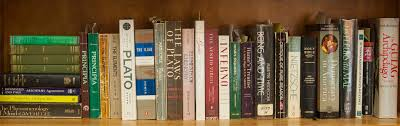 the Great Books curriculum changes less often than the worship of a liturgical church. Furthermore, I knew that all of my fellow alums would have at least spent a bit of time with each of the couple of dozen philosophers on my comparative list. I suspected that it would generate discussion, since no St. John’s graduate can resist expressing her or his opinion on just about anything—and I was right. In less than a minute one acquaintance commented “I disagree!” followed by dozens more. A sampling:
- I could hardly disagree with Mr. Morgan’s preferences, but I don’t share a lot of them.
- I like Aristotle as a naturalist, although sometimes he didn’t extrapolate the process from what he was observing.
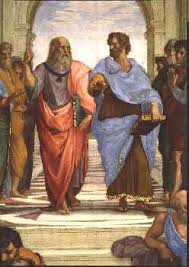
- Mr. XXX (a previous commenter), I assume that you are joking when you suggest that any reasonable reader would see Plato and Aristotle as anything other than polar figures defining an essential duality in ontologic thought.
- I’ll say that where Vance speaks of his preferences for isms and concepts (empiricism vs. rationalism, the particular vs. the universal, etc.), he seems to be choosing half a loaf rather than the entire loaf. That is, the best philosophy will find a place for the particular AND the universal, the empirical AND the rationalistic, etc. Indeed, some of the philosophers Vance prefers (e. g., Aristotle, Nietzsche, later Wittgenstein) do precisely that.
You get the point. I did not participate in the discussion at first—it was as good as a classroom seminar taking off so energetically that I no longer needed to direct it.
Eventually the discussion turned toward 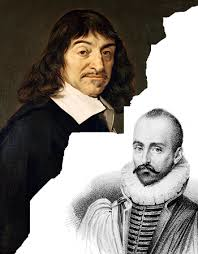 Descartes (Mr. Certainty) vs. Montaigne (Mr. Skepticism). I have written frequently in this blog about my conviction that certainty is not only vastly overrated but also is not generally available to creatures with knowledge tools such as ours—hence my love for Montaigne and my weariness with Descartes. This did not go over well with some of the Facebook participants.
- Me: Montaigne would actually agree with the last sentence in Pascal’s first paragraph, and “the common talk of life” is probably the best place to begin philosophy. There’s a reason why I love Epictetus and the Stoics as much as I love Montaigne. And as a final comment–certainty is vastly overrated.
- Mr. X: I am not sure you are right, Vance.
- Vance Morgan: That certainly would not be the first time–but about what?
- XXX: About certainty being overrated!
- Vance Morgan:
 I’ll take open endedness and the real possibility that I might be wrong or have a lot to learn on anything whatsoever over conviction of certainty any day!
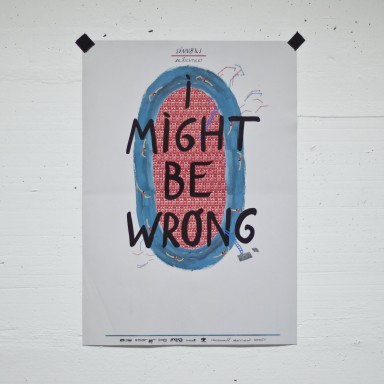
- XXX: Wit, are you saying you are certain that certainty is overrated?
- Vance Morgan: It is highly probable that certainty is overrated–but I might be wrong.
- XXX: Ok now I am on board!
Imagine my pleasure just a few days later when the NY Times feed in my morning email announced an Op-Ed with the provocative title “The Case for Teaching Ignorance.”
The Case for Teaching Ignorance
“I’m going to read this” I announced to Jeanne—“Of course you are,” she replied—and I was not disappointed. Of course who wouldn’t expect a philosophy/humanities professor to resonate with passages such as
The more we know, the more we can ask. Questions don’t give way to answers so much as the two proliferate together. Answers breed questions. Curiosity isn’t merely a static disposition but rather a passion of the mind that is ceaselessly earned and nurtured.
and
Educators should devote time to the relationship between ignorance and creativity and the strategic manufacturing of uncertainty.
This is great stuff for someone (me) who defines his home discipline of philosophy as “the art of asking better and better questions” and tells his students that his job is to disturb their peace.
 But what made Jamie Holmes’ essay particularly satisfying and fascinating is that it is a report straight out of STEM world (that’s Science, Technology, Engineering and Mathematics for those of you who are tired of being overwhelmed by acronyms). The term is typically used when addressing education policy and curriculum choices in schools to improve competitiveness in science and technology development. Politicians and educators of all stripes and persuasions have been urging the importance of educating students in the STEM disciplines for some time now; these are the disciplines on the cutting edge of the future (and ones that might actually get a college graduate a freaking job). Calls for STEM emphasis in education and curriculum development, either directly or indirectly, are often energized by the assumption that it is time to de-emphasize fuzzy humanities and liberal arts curricula as we train the next generation for what is to come.
So it was a pleasure to read STEM people from neuroscientists to surgeons saying things like
Presenting ignorance as less extensive than it is, knowledge as more solid and more stable, and discovery as neater also leads students to misunderstand the interplay between answers and questions.
and
Discovery is not the neat and linear process many students imagine, but usually involves feeling around in dark rooms, bumping into unidentifiable things, looking for barely perceptible phantoms.
Michael Smithson, one of the scholars referenced in the article, provides an interesting metaphor to illustrate the important dynamic between what we know and what we don’t know. 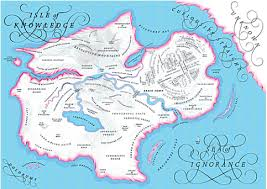 Imagine human knowledge as an island in a vast sea of ignorance. The island is dynamic and growing—living in the middle of it one might think it is a continent and be unaware of the surrounding sea. Smithson points out that the larger the island of knowledge grows, the longer the shoreline — where knowledge meets ignorance — extends. Pushing the metaphor further, James Holmes writes that
Mapping the coast of the island of knowledge . . . requires a grasp of the psychology of ambiguity. The ever-expanding shoreline, where questions are born of answers, is terrain characterized by vague and conflicting information. The resulting state of uncertainty, psychologists have shown, intensifies our emotions: not only exhilaration and surprise, but also confusion and frustration.
Exactly—this is why the teaching profession and facilitating the life of learning is so exhilarating and fascinating. I like the shoreline analogy, adding only that the shoreline between sea and land is always fluctuating as the tide rolls in and rolls out. The line of demarcation between land and water, between knowledge and ignorance, is shifting sand—that’s the territory of true learning. The pedagogy of uncertainty and ignorance favors questions over answers, uncertainty over certainty, the unknown over the set and established.
Focusing on uncertainty can foster latent curiosity, while emphasizing clarity can convey a warped understanding of knowledge. . . . Giving due emphasis to unknowns, highlighting case studies that illustrate the fertile interplay between questions and answers, and exploring the psychology of ambiguity are essential.
Happy semester to my colleagues in the teaching profession as they joyfully make their new charges aware of our collective ignorance!
Previous Post

August 21, 2015
A Few Summer Observations
Next Post
September 2, 2015 The Return of Republican Jesus
Browse Our Archives
Select a Category abortion Advent AI Angels Artificial intelligence atheism attention baptism Baptists beauty belief Benedictines Bible bicycling Big Bird books Bovina Camaldoli hermitage Canada Catholicism cats certainty change Christianity Christmas Collegeville Covid-19 creativity Development of Western Civilization dogs doubt Easter Enneagram Epiphany Episcopal ethics Eucharist evil extroverts Facebook faith family fear flowers forgiveness freedom friends God goodness grace happiness heaven hell history Holy Spirit Holy Week hope human nature humility humor idolatry incarnation introverts irreverence Islam Jeanne Jesus Joe Biden joy Judaism justice Kamala Harris knowledge Lent listen literature liturgy love Marsue Memorial Day miracles movies music mystery mythology NPR Old Testament optimism paradox peace Penguins philosophy piano podcast politics power prayer Protestantism Providence College Religion Rhode Island sabbatical sacrament science seeing silence Simone Weil Socrates soul sports St. John's College stories suffering tattoo teaching technology television theology thinking time tolerance transcendence travel trees trust truth Uncategorized Vermont wisdom wonder writing
Select a Month May 2026 April 2026 March 2026 February 2026 January 2026 December 2025 November 2025 October 2025 September 2025 August 2025 July 2025 June 2025 May 2025 April 2025 March 2025 February 2025 January 2025 December 2024 November 2024 October 2024 September 2024 August 2024 July 2024 June 2024 May 2024 April 2024 March 2024 February 2024 January 2024 December 2023 November 2023 October 2023 September 2023 August 2023 July 2023 June 2023 May 2023 April 2023 March 2023 February 2023 January 2023 December 2022 November 2022 October 2022 September 2022 August 2022 July 2022 June 2022 May 2022 April 2022 March 2022 February 2022 January 2022 December 2021 November 2021 October 2021 September 2021 August 2021 July 2021 June 2021 May 2021 April 2021 March 2021 February 2021 January 2021 December 2020 November 2020 October 2020 September 2020 August 2020 July 2020 June 2020 May 2020 April 2020 March 2020 February 2020 January 2020 December 2019 November 2019 October 2019 September 2019 August 2019 July 2019 June 2019 May 2019 April 2019 March 2019 February 2019 January 2019 December 2018 November 2018 October 2018 September 2018 August 2018 July 2018 June 2018 May 2018 April 2018 March 2018 February 2018 January 2018 December 2017 November 2017 October 2017 September 2017 August 2017 July 2017 June 2017 May 2017 April 2017 March 2017 February 2017 January 2017 December 2016 November 2016 October 2016 September 2016 August 2016 July 2016 June 2016 May 2016 April 2016 March 2016 February 2016 January 2016 December 2015 November 2015 October 2015 September 2015 August 2015 July 2015 June 2015 May 2015 April 2015 March 2015 February 2015 January 2015 December 2014 November 2014 October 2014 September 2014 August 2014 July 2014 June 2014 May 2014 April 2014 March 2014 February 2014 January 2014 December 2013 November 2013 October 2013 September 2013 August 2013 July 2013 June 2013 May 2013 April 2013 March 2013 February 2013 January 2013 December 2012 November 2012 October 2012 September 2012
Follow Us!
TAKE THE
Religious Wisdom Quiz
What city is known as the Holy City, sacred to Jews, Christians, and Muslims?
Select your answer to see how you score.
Cairo Athens Jerusalem Rome
Books by This Author Books by Vance G. Morgan
Related posts from Freelance Christianity

The Lonely Pawn: On Faith, Doubt, and Meaning


AI and Love: When a Chatbot Becomes a...

TRENDING AT PATHEOS Progressive Christian

Why Christians Have a Sacred Duty to Vote:...
The Bible offers strong support for the sacred duty to vote. Here...

What Being a Modern-Day Apostle Means to Me
In my last column, I discussed the ins and outs of modern-day...

Did Ancient China Once Worship the God of...
Across human history, a common thread weaves through the origins of the...

Love Your Neighbor – Including Earth-Kin: Lev. 19,...
God’s command to love your neighbor means acting in an ethical and...

Lead a Church Study of “Jesus and Lao...
Guest writer Jack Thomas (The Irreverent Reverend) reflects on leading his church...

Principles for Understanding the Apostolic Ministry Today
Whenever people discover that my formal ministry title is "apostle," as in...
view all Progressive Christian blogs
Ad-Free & Subscriber Log-In Subscription Support
- About Us
- 2026 Calendar
- Videos
- Podcasts
- Library of World Religions
- Faith In Media Tracker
- Advertise With Us
- Write for Us
- Privacy Policy
- Terms of Service
- Do Not Sell My Data
- Contact Us
- Radiant Digital
- Manage Newsletter Subscriptions
- Unsubscribe From Notifications
- Sitemap
Copyright 2008-2026, Patheos. All rights reserved.
Subscription Support Ad-Free & Subscriber Log-In
Follow Patheos