
BuddhistCatholicContemplativeEvangelicalGeneral ChristianHinduJewishLatter-day SaintMuslimNew VisionsProgressive Christian
Beliefs
- Buddhist
- Catholic
- Contemplative
- Evangelical
- General Christian
- Hindu
- Jewish
- Latter-day Saint
- More Voices
- Muslim
- New Visions
- Pagan
- Progressive Christian
Topics
- Religion News
- Food and Religion
- Sports and Religion
- Religious Art
- Religious Music and Entertainment
- Religious Events
- History and Religion
- Style and Religion
- Politics and Religion
- Women in Religion
- Recreation Outdoors and Religion
- Business Finance and Religion
- Careers Workplace and Religion
- Education and Religion
- Family Parenting and Religion
- Health Fitness and Religion
- Home and Religion
- Relationships and Religion
- Technology and Religion
- Travel and Religion
Columnists
- Buddhist Columnists
- Business Finance and Religion Columnists
- Careers Workplace and Religion Columnists
- Catholic Columnists
- Contemplative Columnists
- Education and Religion Columnists
- Evangelists Columnists
- Family Parenting and Religion Columnists
- General Christian Columnists
- Health Fitness and Religion Columnists
- Hindu Columnists
- History and Religion Columnists
- Home and Religion Columnists
- Jewish Columnists
- More Voices Columnists
- Latter Day Columnists
- Muslim Columnists
- New Visions Columnists
- Nonreligious Columnists
- Pagan Columnists
- Politics and Religion Columnists
- Progressive Columnists
- Recreation Outdoors and Religion Columnists
- Relationships and Religion Columnists
- Religion News Columnists
- Religious Art Columnists
- Religious Events Columnists
- Religious Music and Entertainment Columnists
- Sports and Religion Columnists
- Style and Religion Columnists
- Technology and Religion Columnists
- Travel and Religion Columnists
- Women in Religion Columnists
Resource Library
- 2026 Calendar
- Library of World Religions
- The 100 Most Holy Places on Earth
- Patheos Answers
- Podcasts
- Videos
- Faith Leaders Database
- Anglican Episcopalian
- Bahai
- Baptist
- Buddhism
- Christianity
- Confucianism
- Eastern Orthodoxy
- Hinduism
- Holiness and Pentecostal
- ISKCON
- Islam
- Judaism
- Lutheran
- Methodist
- The Church of Jesus Christ of Latter-day Saints
- New Age
- Paganism
- Presbytarian and Reformed
- Protestantism
- Religion Behind the Scenes
- Roman Catholic
- Scientology
- Shia Islam
- Sikhism
- Sufism
- Sunni Islam
- Taoism
- Zen
- See all religions
Research Tools
 Ad-Free & Subscriber Log-In Subscription Support
Ad-Free & Subscriber Log-In Subscription Support
Follow Patheos 

- Trending:
- Forgiveness
- |
- Marriage
- |
- Consciousness
- |
- Death Penalty
- |
- Election
- |
- Halloween

- Home
- Progressive Christian
- The Rule of the Best
The Rule of the Best
Last updated on: August 1, 2016 at 7:30 am by Vance Morgan
The Rule of the Best 2016-08-01T07:30:46-04:00 Vance Morgan
Patheos Explore the world's faith through different perspectives on religion and spirituality! Patheos has the views of the prevalent religions and spiritualities of the world.
The best argument against democracy is a five-minute conversation with the average voter. Winston Churchill
I had a fascinating conversation on Facebook the other day (imagine that!). You may have noticed that we are in the middle of a very polarized political campaign—a Facebook acquaintance posted some data identifying the demographic that is most favorable to Donald Trump and most problematic for Hillary Clinton—white men with no degree. At the time the article was published,  Hillary was doing 14% worse with this group of voters than President Obama did four years ago.
Hillary Clinton and white men without a degree
My Facebook acquaintance and I have never met in person, but we share a couple of important characteristics. Both of us are college professors, and both of us earned our bachelor’s degree from the Great Book curriculum at St. John’s College. We have “liked” each other’s posts before—this time, I took the opportunity to throw something out there that I have frequently taught in the classroom and written about—voting should be considered as a privilege that one earns rather than a right that one is entitled to.
- Me: The elitist in me thinks that the white men no degree problem could be solved by voting being considered as a privilege rather than a right. Everyone should be required to get at least a 70% on the written civics test given to those seeking citizenship in order to earn the privilege of voting.
- Facebook Acquaintance (FA): As an educator, I sadly do not have faith that a civics test would be voting.
Where did I get this ridiculous idea that voting should be an earned privilege rather than a right? It is rooted in the thought of perhaps the greatest philosopher in the Western tradition, as I explained to FA.
- Me: As an educator as well, I get your point. My problem is there is a part of me that thinks Plato is on to something in the Republic. His critique of democracy is that it pretends that everyone is equal—but we know this isn’t true. Very un-American, I know. And I wouldn’t say that only the elite would be voting. Rather, those who have bothered to earn the privilege of voting would be voting. I know many “educated” people who would not pass the test.
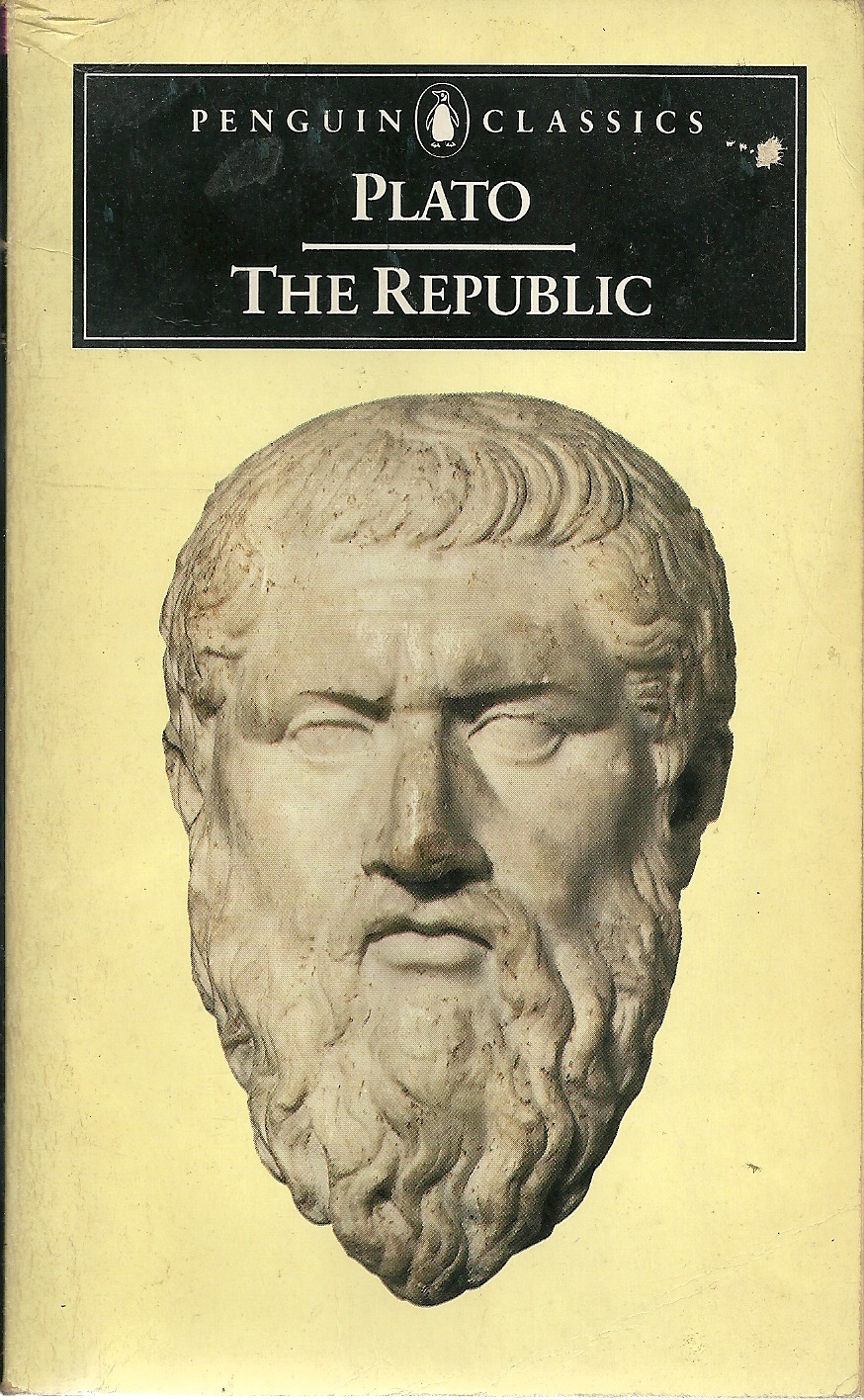 Plato was of the opinion that the proper education qualified a person to participate in government, implying that many people are not capable of successfully completing such an education. FA thought that the problem might lie elsewhere.
- FA: I am not sure that many people would care to earn the privilege. Sadly. It is easier to complain and watch the reality TV Trump show. Have you seen the movie “Idiocracy”?
- Me: I haven’t, but can guess from the title what it’s about. I agree that not many people would care to earn the privilege. Which might mean that Plato is right again. Aristocracy in its true meaning—the rule of the best—is the best form of government.
FA’s suggestion that many people might lack the drive or interest to take my proposed voting test illustrates—intentionally or not—one of Plato’s most important points in the Republic. Human beings are not created equal. Some are worthy of being educated to be full participating citizens and some are not. Whether because of lack of intelligence, drive, character, or a combination of these, some people are not capable of being full citizens. 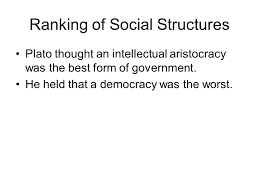 This is Plato’s fundamental critique of democracy—it is rooted in the ludicrously false assumption that all human beings are equal in all relevant ways. They aren’t.
So what does Plato advocate as the best form of government? Aristocracy, understood not as the passing on of power through blood lines as we think of when we hear “aristocracy,” but understood in its original and pure form. Aristocracy simply means “the rule of the best (aristos).” One of the major thrusts of the Republic is a meticulous construction of the perfect community, a community in which each person performs the tasks for which she or he is most naturally suited and which is ruled by the best people in the community. The rulers are identified early in their lives as potential leaders and educated with a view to actualizing the excellence that is latent in them.  The potentials of others are similarly identified early in their lives; accordingly, each person is trained to be the person she or he is most naturally fit to be.
FA was not having it.
- FA: I don’t think Plato is right. I think people don’t care to earn the privilege because they don’t believe the system will work for them, and because they are so poorly educated because they are poor. It is not a matter of individual failings, but of people being shaped by the system.
There’s a lot in this response. Suffice it to say that FA could be completely right without Plato being wrong. Our current system that has clearly produced millions of disaffected and disillusioned voters is a product of the democratic system, a system that Plato rejects. FA’s insight is that the “system” (society, if you will) shapes the individual—Plato would entirely agree. Our problem is that we have the wrong “system.”
Thirty seconds later FA sent an additional comment that changed the whole discussion.
- FA: As a counterargument to Plato’s Republic, I give you Euripides’ Medea. She definitely would have wanted a vote.
- Me: Good point.
Touché. That’s what I get for getting into this sort of conversation with someone who knows the ancient classics. The title character in Euripides’ Medea is brilliant, powerful, insightful, and effective—exactly what one would want in an informed electorate. She is also vindictive, manipulative, and murders three people (including her two sons) in the play. She’s a bad person, in other words. FA’s point is that what we need is not a test for how informed one is about current events and how government works. In an aristocracy, what is needed is a test to determine who is aristos. And before that, someone to define what aristos even means. Who do we trust to do that and to create the test? I have suggested to my students that I would be willing to do it, but they didn’t seem strongly supportive of my offer.
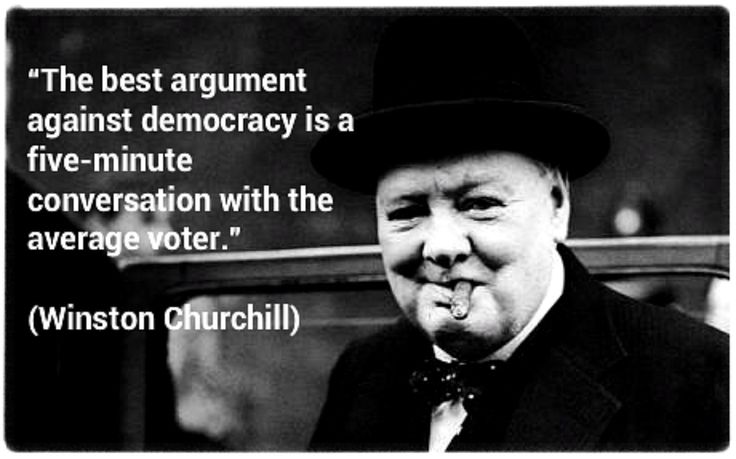 Winston Churchill famously said that “Democracy is the worst form of government, except for all those other forms that have been tried from time to time.” Context is important here. After courageously leading Great Britain as Prime Minister through the dark days of World War II, voters rewarded Winston by voting him out of office in 1947. The famous comment was made in Parliament several months later. Democracy is the messiest imaginable way to run things—it might even facilitate the election of Donald Trump as President in November. But every time I work with students to try and devise a better way of doing things, we always come back to the same conclusion. Democracy is a mess, but it is our mess. What are you going to do?
Previous Post

July 29, 2016
Those Effing Blue Jays
Next Post
August 3, 2016 A Modest Proposal
Browse Our Archives
Select a Category abortion Advent AI Angels Artificial intelligence atheism attention baptism Baptists beauty belief Benedictines Bible bicycling Big Bird books Bovina Camaldoli hermitage Canada Catholicism cats certainty change Christianity Christmas Collegeville Covid-19 creativity Development of Western Civilization dogs doubt Easter Enneagram Epiphany Episcopal ethics Eucharist evil extroverts Facebook faith family fear flowers forgiveness freedom friends God goodness grace happiness heaven hell history Holy Spirit Holy Week hope human nature humility humor idolatry incarnation introverts irreverence Islam Jeanne Jesus Joe Biden joy Judaism justice Kamala Harris knowledge Lent listen literature liturgy love Marsue Memorial Day miracles movies music mystery mythology NPR Old Testament optimism paradox peace Penguins philosophy piano podcast politics power prayer Protestantism Providence College Religion Rhode Island sabbatical sacrament science seeing silence Simone Weil Socrates soul sports St. John's College stories suffering tattoo teaching technology television theology thinking time tolerance transcendence travel trees trust truth Uncategorized Vermont wisdom wonder writing
Select a Month May 2026 April 2026 March 2026 February 2026 January 2026 December 2025 November 2025 October 2025 September 2025 August 2025 July 2025 June 2025 May 2025 April 2025 March 2025 February 2025 January 2025 December 2024 November 2024 October 2024 September 2024 August 2024 July 2024 June 2024 May 2024 April 2024 March 2024 February 2024 January 2024 December 2023 November 2023 October 2023 September 2023 August 2023 July 2023 June 2023 May 2023 April 2023 March 2023 February 2023 January 2023 December 2022 November 2022 October 2022 September 2022 August 2022 July 2022 June 2022 May 2022 April 2022 March 2022 February 2022 January 2022 December 2021 November 2021 October 2021 September 2021 August 2021 July 2021 June 2021 May 2021 April 2021 March 2021 February 2021 January 2021 December 2020 November 2020 October 2020 September 2020 August 2020 July 2020 June 2020 May 2020 April 2020 March 2020 February 2020 January 2020 December 2019 November 2019 October 2019 September 2019 August 2019 July 2019 June 2019 May 2019 April 2019 March 2019 February 2019 January 2019 December 2018 November 2018 October 2018 September 2018 August 2018 July 2018 June 2018 May 2018 April 2018 March 2018 February 2018 January 2018 December 2017 November 2017 October 2017 September 2017 August 2017 July 2017 June 2017 May 2017 April 2017 March 2017 February 2017 January 2017 December 2016 November 2016 October 2016 September 2016 August 2016 July 2016 June 2016 May 2016 April 2016 March 2016 February 2016 January 2016 December 2015 November 2015 October 2015 September 2015 August 2015 July 2015 June 2015 May 2015 April 2015 March 2015 February 2015 January 2015 December 2014 November 2014 October 2014 September 2014 August 2014 July 2014 June 2014 May 2014 April 2014 March 2014 February 2014 January 2014 December 2013 November 2013 October 2013 September 2013 August 2013 July 2013 June 2013 May 2013 April 2013 March 2013 February 2013 January 2013 December 2012 November 2012 October 2012 September 2012
Follow Us!
TAKE THE
Religious Wisdom Quiz
Who is commended in 3 John for walking in the truth?
Select your answer to see how you score.
Diotrephes Philemon Gaius Demetrius
Books by This Author Books by Vance G. Morgan
Related posts from Freelance Christianity

The Lonely Pawn: On Faith, Doubt, and Meaning


AI and Love: When a Chatbot Becomes a...

TRENDING AT PATHEOS Progressive Christian

Why Christians Have a Sacred Duty to Vote:...
The Bible offers strong support for the sacred duty to vote. Here...

What Being a Modern-Day Apostle Means to Me
In my last column, I discussed the ins and outs of modern-day...

Did Ancient China Once Worship the God of...
Across human history, a common thread weaves through the origins of the...

Love Your Neighbor – Including Earth-Kin: Lev. 19,...
God’s command to love your neighbor means acting in an ethical and...

Lead a Church Study of “Jesus and Lao...
Guest writer Jack Thomas (The Irreverent Reverend) reflects on leading his church...

Principles for Understanding the Apostolic Ministry Today
Whenever people discover that my formal ministry title is "apostle," as in...
view all Progressive Christian blogs
Ad-Free & Subscriber Log-In Subscription Support
- About Us
- 2026 Calendar
- Videos
- Podcasts
- Library of World Religions
- Faith In Media Tracker
- Advertise With Us
- Write for Us
- Privacy Policy
- Terms of Service
- Do Not Sell My Data
- Contact Us
- Radiant Digital
- Manage Newsletter Subscriptions
- Unsubscribe From Notifications
- Sitemap
Copyright 2008-2026, Patheos. All rights reserved.
Subscription Support Ad-Free & Subscriber Log-In
Follow Patheos