
BuddhistCatholicContemplativeEvangelicalGeneral ChristianHinduJewishLatter-day SaintMuslimNew VisionsProgressive Christian
Beliefs
- Buddhist
- Catholic
- Contemplative
- Evangelical
- General Christian
- Hindu
- Jewish
- Latter-day Saint
- More Voices
- Muslim
- New Visions
- Pagan
- Progressive Christian
Topics
- Religion News
- Food and Religion
- Sports and Religion
- Religious Art
- Religious Music and Entertainment
- Religious Events
- History and Religion
- Style and Religion
- Politics and Religion
- Women in Religion
- Recreation Outdoors and Religion
- Business Finance and Religion
- Careers Workplace and Religion
- Education and Religion
- Family Parenting and Religion
- Health Fitness and Religion
- Home and Religion
- Relationships and Religion
- Technology and Religion
- Travel and Religion
Columnists
- Buddhist Columnists
- Business Finance and Religion Columnists
- Careers Workplace and Religion Columnists
- Catholic Columnists
- Contemplative Columnists
- Education and Religion Columnists
- Evangelists Columnists
- Family Parenting and Religion Columnists
- General Christian Columnists
- Health Fitness and Religion Columnists
- Hindu Columnists
- History and Religion Columnists
- Home and Religion Columnists
- Jewish Columnists
- More Voices Columnists
- Latter Day Columnists
- Muslim Columnists
- New Visions Columnists
- Nonreligious Columnists
- Pagan Columnists
- Politics and Religion Columnists
- Progressive Columnists
- Recreation Outdoors and Religion Columnists
- Relationships and Religion Columnists
- Religion News Columnists
- Religious Art Columnists
- Religious Events Columnists
- Religious Music and Entertainment Columnists
- Sports and Religion Columnists
- Style and Religion Columnists
- Technology and Religion Columnists
- Travel and Religion Columnists
- Women in Religion Columnists
Resource Library
- 2026 Calendar
- Library of World Religions
- The 100 Most Holy Places on Earth
- Patheos Answers
- Podcasts
- Videos
- Faith Leaders Database
- Anglican Episcopalian
- Bahai
- Baptist
- Buddhism
- Christianity
- Confucianism
- Eastern Orthodoxy
- Hinduism
- Holiness and Pentecostal
- ISKCON
- Islam
- Judaism
- Lutheran
- Methodist
- The Church of Jesus Christ of Latter-day Saints
- New Age
- Paganism
- Presbytarian and Reformed
- Protestantism
- Religion Behind the Scenes
- Roman Catholic
- Scientology
- Shia Islam
- Sikhism
- Sufism
- Sunni Islam
- Taoism
- Zen
- See all religions
Research Tools
 Ad-Free & Subscriber Log-In Subscription Support
Ad-Free & Subscriber Log-In Subscription Support
Follow Patheos 

- Trending:
- Forgiveness
- |
- Marriage
- |
- Consciousness
- |
- Death Penalty
- |
- Election
- |
- Halloween

- Home
- Progressive Christian
- The Right Niyyah
The Right Niyyah
Last updated on: September 23, 2016 at 7:30 am by Vance Morgan
The Right Niyyah 2016-09-23T07:30:22-04:00 Vance Morgan
Patheos Explore the world's faith through different perspectives on religion and spirituality! Patheos has the views of the prevalent religions and spiritualities of the world.
As I wait impatiently for my sabbatical that is under contract with a publisher to return from the editor, I’ve been thinking about some of my blog essays that “made the cut” in some sense to appear in revised form in my book-to-be. One of these essays is about the challenge of cultivating the right attitude with which to enter the world on a daily basis. I learned a lot about this from Rami Nashishibi when he was interviewed a year or so ago on Krista Tippett’s “On Being.”
Regular readers of this blog know that I am a fan of Krista Tippett’s radio program “On Being,” a show that I frequently catch several minutes of on Sunday mornings as I drive the fifteen minutes from our house to the early show at church. A few weeks ago, her guest was Rami Nashashibi, Founder and Executive Director of the Inner-city Muslim Action Network, or IMAN, in Chicago. He’s also a Visiting Assistant Professor in Sociology of Religion and Muslim Studies at Chicago Theological Seminary.
On Being: A New Coming Together
Tippett describes Nashishibi at the beginning of the interview as using
Graffiti, calligraphy, and hip-hop in his work as a healing force on the South Side of Chicago. A Palestinian-American, he started his activism with at-risk urban Muslim families, especially youth, while he was still a college student. Now he’s the leader of a globally-emulated project converging religious virtues, the arts, and social action. And he is a fascinating face of a Muslim-American dream flourishing against the odds in post-9/11 America.
Not surprisingly, the conversation was wide-ranging, fascinating, and introduced me to a number of matters and issues that are well outside of my usual frame of reference. What particularly grabbed me, however, was a brief exchange toward the end of the interview, just as I was pulling into my usual parking spot at Trinity Episcopal.
Krista Tippett: I told you I was on your Twitter feed, and I love this. I think it was really recent. You wrote: “My 4-year-old discovers the spiritual power of her name as she looks over and seriously asks, ‘Daddy, do you have the right niyyah?’” What does niyyah mean?
Rami Nashashibi: So niyyah — in kind of Arabic-Muslim parlance — is spiritual intention.  And oftentimes — it’s both the Swahili and Arabic word. And oftentimes, Muslims are always asked before they pray, before they do any act of service, before they engage in anything that has any kind of sense of worship associated with it, is it being done for the right niyyah? Is it being done for the right purpose? Are you attempting to get fame or credit? I think, yes, there was a song that had used her name in that way and the light went off in the middle of it and turned over to me on the couch and asked me that question. Honestly, I looked at her and I didn’t have an answer for her for I think a good 20 seconds. She nodded her head and she said, “No, probably not.”
And I said, “What?” We then had a conversation. I said, “Well, at least keep me in your prayers that I have.”
This four-year-old’s simple question—Do you have the right niyyah?—has stuck with me ever since. So has her response to her father’s lack of response—“No, probably not.” It’s hard enough to figure out what the right thing to do is on a daily basis; adding in that it should be done with the right intention, for the right reasons, seems like piling on.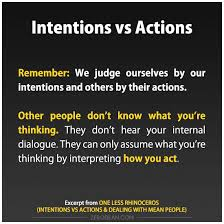 As a philosophy professor who has taught introductory ethics courses more times than I care to count over the past twenty-five years, I have thought about this a lot. When I ask my students “What is more important—what you do, or why you do it? Actions or intentions?” they usually split roughly down the middle.
And so do the great moral philosophers. There is the tradition of those who say that only results matter (since they can be observed and measured publicly) and intentions are irrelevant. Then there is the other tradition (spearheaded by Immanuel Kant) who say that results are irrelevant—the true measure of the moral life is internal. Were your intentions pure? Was your heart in the right place? If so, then you are morally in the clear, even if the results of your intended action go “tits up” (to quote my brother-in-law).
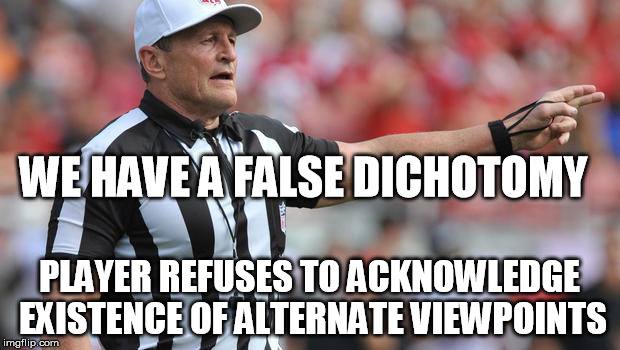 My students are pretty smart, and it doesn’t take very long before they realize that the “results or intentions” question is a false dichotomy. Because in truth, normal human beings care about both. If morality is just about doing the right thing, then the person who identifies the things that should be done and does them—even if for all of the wrong reasons, such as self-righteous smugness or the praise of others—is morally in the clear. But Nashashibi’s four-year-old daughter is right—we want not only the right thing to be done, but for it to be done with the right niyyah, the right intention or reason. And that sucks, because it takes things straight into the human heart. For those who profess the Christian faith, it also takes things straight into the world of grace.
The first thing I ever learned from Scripture about the human heart as a young boy was from Jeremiah : “The heart is deceitful above all things and desperately wicked—who can know it?” Far less attention was paid to the Psalm that is recited in liturgical churches during the Ash Wednesday liturgy: “Create in me a clean heart, and renew a right spirit within me. Cast me not away from your presence, O Lord, and take not your Holy Spirit from me. Restore unto me the joy of your salvation, and renew a right spirit within me.” Straight from the Jewish scriptures is both the problem of and the solution for right intentions. As a flawed human being, I am incapable of doing things for the right reason, but help is available. Through divine grace the heart is changed and turned toward the good. Rami Nashishibi’s daughter is right when she doubts that her dad has the right niyyah, so long as that depends on his own energies and strength. But when the divine gets involved, everything changes.
The mystery of grace is exactly that—a mystery. Divine grace enters the world through flawed human beings, strangely enough, and there isn’t enough time to try to figure it out. Grace is something to be channeled, to be lived, not systematized and turned into dogma or doctrine.  The poet Christian Wiman writes beautifully about this. Through many years of cancer treatments, he learned to hear God, then to channel God, in the most unlikely places, the very places where divine grace apparently lives. Wiman writes that
God speaks to us by speaking through us, and any meaning we arrive at in this life is composed of the irreducible details of the life that is around us at any moment. . . . All too often the task to which we are called is simply to show a kindness to the irritating person in the cubicle next to us, say, or to touch the face of a spouse from whom we ourselves have been long absent, letting grace wake love from our intense, self-enclosed sleep.
The right niyyah is not the result of struggle, training, or calculation. And as the author of Deuteronomy tells us,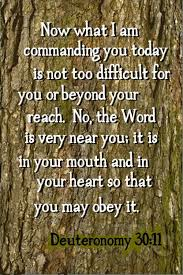
Nor is it beyond the sea, that you should say, “Who will cross the sea for us to get it for us and make us hear it, that we may observe it?” But the word is very near you, in your mouth and in your heart, that you may observe it.
All I have to do to have the right niyyah is to open my heart, open my mouth, and let it out.
To experience grace is one thing; to integrate it into your life is quite another. What I crave now is that integration, some speech that is true to the transcendent nature of grace yet adequate to the hard reality in which daily faith operates.
Previous Post

September 19, 2016
Disturbing the Peace
Next Post
September 26, 2016 West of What?
Browse Our Archives
Select a Category abortion Advent AI Angels Artificial intelligence atheism attention baptism Baptists beauty belief Benedictines Bible bicycling Big Bird books Bovina Camaldoli hermitage Canada Catholicism cats certainty change Christianity Christmas Collegeville Covid-19 creativity Development of Western Civilization dogs doubt Easter Enneagram Epiphany Episcopal ethics Eucharist evil extroverts Facebook faith family fear flowers forgiveness freedom friends God goodness grace happiness heaven hell history Holy Spirit Holy Week hope human nature humility humor idolatry incarnation introverts irreverence Islam Jeanne Jesus Joe Biden joy Judaism justice Kamala Harris knowledge Lent listen literature liturgy love Marsue Memorial Day miracles movies music mystery mythology NPR Old Testament optimism paradox peace Penguins philosophy piano podcast politics power prayer Protestantism Providence College Religion Rhode Island sabbatical sacrament science seeing silence Simone Weil Socrates soul sports St. John's College stories suffering tattoo teaching technology television theology thinking time tolerance transcendence travel trees trust truth Uncategorized Vermont wisdom wonder writing
Select a Month May 2026 April 2026 March 2026 February 2026 January 2026 December 2025 November 2025 October 2025 September 2025 August 2025 July 2025 June 2025 May 2025 April 2025 March 2025 February 2025 January 2025 December 2024 November 2024 October 2024 September 2024 August 2024 July 2024 June 2024 May 2024 April 2024 March 2024 February 2024 January 2024 December 2023 November 2023 October 2023 September 2023 August 2023 July 2023 June 2023 May 2023 April 2023 March 2023 February 2023 January 2023 December 2022 November 2022 October 2022 September 2022 August 2022 July 2022 June 2022 May 2022 April 2022 March 2022 February 2022 January 2022 December 2021 November 2021 October 2021 September 2021 August 2021 July 2021 June 2021 May 2021 April 2021 March 2021 February 2021 January 2021 December 2020 November 2020 October 2020 September 2020 August 2020 July 2020 June 2020 May 2020 April 2020 March 2020 February 2020 January 2020 December 2019 November 2019 October 2019 September 2019 August 2019 July 2019 June 2019 May 2019 April 2019 March 2019 February 2019 January 2019 December 2018 November 2018 October 2018 September 2018 August 2018 July 2018 June 2018 May 2018 April 2018 March 2018 February 2018 January 2018 December 2017 November 2017 October 2017 September 2017 August 2017 July 2017 June 2017 May 2017 April 2017 March 2017 February 2017 January 2017 December 2016 November 2016 October 2016 September 2016 August 2016 July 2016 June 2016 May 2016 April 2016 March 2016 February 2016 January 2016 December 2015 November 2015 October 2015 September 2015 August 2015 July 2015 June 2015 May 2015 April 2015 March 2015 February 2015 January 2015 December 2014 November 2014 October 2014 September 2014 August 2014 July 2014 June 2014 May 2014 April 2014 March 2014 February 2014 January 2014 December 2013 November 2013 October 2013 September 2013 August 2013 July 2013 June 2013 May 2013 April 2013 March 2013 February 2013 January 2013 December 2012 November 2012 October 2012 September 2012
Follow Us!
TAKE THE
Religious Wisdom Quiz
Who said, "I am not worthy to untie the strap of his sandals"?
Select your answer to see how you score.
John the Baptist Peter Paul Thomas
Books by This Author Books by Vance G. Morgan
Related posts from Freelance Christianity

The Lonely Pawn: On Faith, Doubt, and Meaning


AI and Love: When a Chatbot Becomes a...

TRENDING AT PATHEOS Progressive Christian

Why Christians Have a Sacred Duty to Vote:...
The Bible offers strong support for the sacred duty to vote. Here...

What Being a Modern-Day Apostle Means to Me
In my last column, I discussed the ins and outs of modern-day...

Did Ancient China Once Worship the God of...
Across human history, a common thread weaves through the origins of the...

Love Your Neighbor – Including Earth-Kin: Lev. 19,...
God’s command to love your neighbor means acting in an ethical and...

Lead a Church Study of “Jesus and Lao...
Guest writer Jack Thomas (The Irreverent Reverend) reflects on leading his church...

Principles for Understanding the Apostolic Ministry Today
Whenever people discover that my formal ministry title is "apostle," as in...
view all Progressive Christian blogs
Ad-Free & Subscriber Log-In Subscription Support
- About Us
- 2026 Calendar
- Videos
- Podcasts
- Library of World Religions
- Faith In Media Tracker
- Advertise With Us
- Write for Us
- Privacy Policy
- Terms of Service
- Do Not Sell My Data
- Contact Us
- Radiant Digital
- Manage Newsletter Subscriptions
- Unsubscribe From Notifications
- Sitemap
Copyright 2008-2026, Patheos. All rights reserved.
Subscription Support Ad-Free & Subscriber Log-In
Follow Patheos