
BuddhistCatholicContemplativeEvangelicalGeneral ChristianHinduJewishLatter-day SaintMuslimNew VisionsProgressive Christian
Beliefs
- Buddhist
- Catholic
- Contemplative
- Evangelical
- General Christian
- Hindu
- Jewish
- Latter-day Saint
- More Voices
- Muslim
- New Visions
- Pagan
- Progressive Christian
Topics
- Religion News
- Food and Religion
- Sports and Religion
- Religious Art
- Religious Music and Entertainment
- Religious Events
- History and Religion
- Style and Religion
- Politics and Religion
- Women in Religion
- Recreation Outdoors and Religion
- Business Finance and Religion
- Careers Workplace and Religion
- Education and Religion
- Family Parenting and Religion
- Health Fitness and Religion
- Home and Religion
- Relationships and Religion
- Technology and Religion
- Travel and Religion
Columnists
- Buddhist Columnists
- Business Finance and Religion Columnists
- Careers Workplace and Religion Columnists
- Catholic Columnists
- Contemplative Columnists
- Education and Religion Columnists
- Evangelists Columnists
- Family Parenting and Religion Columnists
- General Christian Columnists
- Health Fitness and Religion Columnists
- Hindu Columnists
- History and Religion Columnists
- Home and Religion Columnists
- Jewish Columnists
- More Voices Columnists
- Latter Day Columnists
- Muslim Columnists
- New Visions Columnists
- Nonreligious Columnists
- Pagan Columnists
- Politics and Religion Columnists
- Progressive Columnists
- Recreation Outdoors and Religion Columnists
- Relationships and Religion Columnists
- Religion News Columnists
- Religious Art Columnists
- Religious Events Columnists
- Religious Music and Entertainment Columnists
- Sports and Religion Columnists
- Style and Religion Columnists
- Technology and Religion Columnists
- Travel and Religion Columnists
- Women in Religion Columnists
Resource Library
- 2026 Calendar
- Library of World Religions
- The 100 Most Holy Places on Earth
- Patheos Answers
- Podcasts
- Videos
- Faith Leaders Database
- Anglican Episcopalian
- Bahai
- Baptist
- Buddhism
- Christianity
- Confucianism
- Eastern Orthodoxy
- Hinduism
- Holiness and Pentecostal
- ISKCON
- Islam
- Judaism
- Lutheran
- Methodist
- The Church of Jesus Christ of Latter-day Saints
- New Age
- Paganism
- Presbytarian and Reformed
- Protestantism
- Religion Behind the Scenes
- Roman Catholic
- Scientology
- Shia Islam
- Sikhism
- Sufism
- Sunni Islam
- Taoism
- Zen
- See all religions
Research Tools
 Ad-Free & Subscriber Log-In Subscription Support
Ad-Free & Subscriber Log-In Subscription Support
Follow Patheos 

- Trending:
- Forgiveness
- |
- Marriage
- |
- Consciousness
- |
- Death Penalty
- |
- Election
- |
- Halloween

- Home
- Progressive Christian
- The Powers of Words
The Powers of Words
Last updated on: June 30, 2014 at 7:00 am by Vance Morgan
The Powers of Words 2014-06-30T07:00:10-04:00 Vance Morgan
Patheos Explore the world's faith through different perspectives on religion and spirituality! Patheos has the views of the prevalent religions and spiritualities of the world.
The building looked like the love child of a logic problem and a crossword puzzle. Richard Powers, Orfeo
During the summer I tend to plow through a book per week, making up for all of the months during the academic year when I do not have the time to read anything other than what I have assigned the students or have been assigned by my colleagues and superiors. 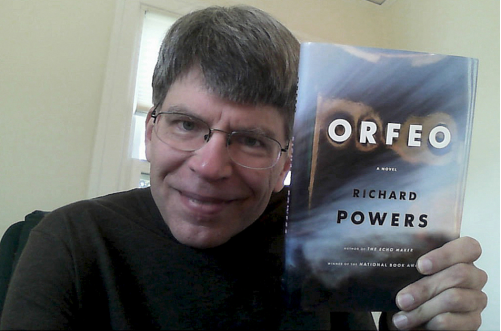 Last week’s book was Richard Powers’ Orfeo. Powers is one of my favorite novelists, but I don’t recall ever having a conversation with anyone about his books. He’s the sort of author whose books win awards, whose novels reviewers rave about as “brilliant,” a “tour de force,” and “his generation’s Herman Melville,” but few people read. Orfeo is his eleventh novel—I’ve read them all, but could not tell you off the top of my head the plot of any one of them. Powers is incredibly smart, knows a ton about classical music, science, philosophy, politics and a bunch of other things—and he enjoys showing off his intelligence. His books often strike me as clumps of genius loosely connected by characters and a plot. What makes me keep track of when the next Richard Powers novel is coming out and purchasing it as soon as it is released is his mastery of the English language. I can think of no author—and I’ve read many—who astounds me more often, page after page, with a phrase or descriptive sentence that makes me put the book down and simply say “Wow. That’s beautiful” (or brilliant or a tour de force). Orfeo is no exception.
And so she sat pushing her pen across the page like a pilgrim slogging to Compostela.
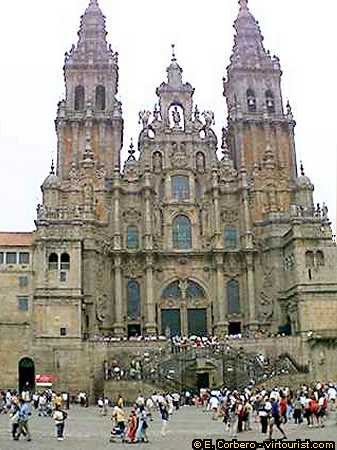 Replace “pushing her pen” with “clacking his laptop keys” and I know exactly what Powers is describing. I’ve never made the pilgrimage to Compostela, but have talked to a few persons who have. It takes daily preparation beforehand, but above all requires a daily commitment. Some days will be bright and beautiful, filled with great conversation and a general joie de vivre. Other days will be drizzly, cold, gloomy, and invite one to stay in bed. But getting to Compostela requires putting in the miles every day, regardless of weather and/or emotional contingencies. Writing is like that. Waiting until the stars are aligned and you have something important to say means that you will wait forever. It’s like police work—days on end of boredom punctuated by unpredictable moments of sheer terror (or inspiration or insight if one is writing—hopefully writing doesn’t always inspire terror). The immediacy of regular blog writing is helpful—committing myself to two new posts every week guarantees that I won’t wait on elusive inspiration.
Dissonance is a beauty that familiarity hasn’t yet destroyed.
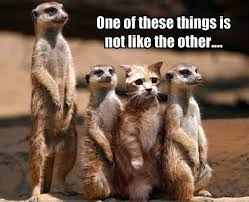 I try to introduce my students to the important concept of cognitive dissonance all the time, usually starting with a reminder of the Sesame Street game: “One of these things is not like the other, one of these things doesn’t belong.” Our natural tendency is to resolve dissonance into similarity, even if it requires forcing the issue. But part of a liberal education is a growing awareness that sometimes contradictions not only cannot be but should not be resolved. Familiarity breeds contempt, but dissonance keep us on our toes—and that’s a beautiful thing.
“Isn’t the point of music to move listeners?”
“No. The point of music is to wake listeners up. To break all our ready-made habits.”
T he same is true of the learning process. Important thinkers from Aristotle to Simone Weil tell us that the struggle and process involved in grappling with unfamiliar ideas is often far more important than getting “the right answer.” In a recent article in the Huffington Post, Christopher Nelson (President of my alma mater St. John’s College) nails it: “A liberal education, especially, inspires students to value struggle. By grappling with authors and ideas that demand the greatest level of intellectual intensity—and this is especially true in subjects that are difficult and uncongenial—students learn that they stretch themselves more through struggle, whether or not they win the match.”
We are brought back to ourselves by solitude, and from ourselves to God is only a step.
With this I return, as I frequently do, to a phrase from an obscure medieval nun that captures the essence of what I learned on sabbatical five years ago: My deepest me is God. Using the vocabulary of Christianity, Powers is identifying the truest meaning of incarnation, the divine embedded in human form. The point is just as powerful when taken outside of a religious context. Usually what I most need and desire cannot be found by turning outward to things, persons, jobs or events. The source of everything I need is internal.  I spent all of last semester with a bunch of sophomores studying how various people in the worst possible circumstances time and again came to this realization. Etty Hillesum was a case in point.
Etty Hillesum has been described as “the adult counterpart to Anne Frank”; her diary and letters, published as An Interrupted Life, reveal a remarkable awareness and compassion in the midst of some of humanity’s darkest days. She died in Auschwitz in 1943 at the age of twenty-nine. Knowing that I taught a colloquium on various issues related to the Holocaust last semester, the President of my college recommended it to me at lunch the other day. I knew that the recommendation was a fortuitous one as soon as I read the introduction by Jan Gaarlandt. Gaarlandt writes of Hillesum’s “totally unconventional” spirituality and rejects the attempts by both Jews and Christians to claim her as typically Jewish or typically Christian as “unprofitable.” As I suspect is the case with most persons described as “religious,” Etty’s spirituality was uniquely her own; she regularly addresses God in her diary and letters as she would address herself.
I hold a silly, naïve, or deadly serious conversation with what is deepest inside me, which for the sake of convenience I call God . . . I repose in myself. And that part of myself, that deepest and richest part in which I repose, is what I call “God.”
This may not be “typical” in any sense, but it captures the incarnational heart of Christianity beautifully. As the medieval sister said, My deepest me is God.
Previous Post

June 18, 2014
What Goes Down Must Come Up
Next Post
July 9, 2014 Tell Me a Big Story
Browse Our Archives
Select a Category abortion Advent AI Angels Artificial intelligence atheism attention baptism Baptists beauty belief Benedictines Bible bicycling Big Bird books Bovina Camaldoli hermitage Canada Catholicism cats certainty change Christianity Christmas Collegeville Covid-19 creativity Development of Western Civilization dogs doubt Easter Enneagram Epiphany Episcopal ethics Eucharist evil extroverts Facebook faith family fear flowers forgiveness freedom friends God goodness grace happiness heaven hell history Holy Spirit Holy Week hope human nature humility humor idolatry incarnation introverts irreverence Islam Jeanne Jesus Joe Biden joy Judaism justice Kamala Harris knowledge Lent listen literature liturgy love Marsue Memorial Day miracles movies music mystery mythology NPR Old Testament optimism paradox peace Penguins philosophy piano podcast politics power prayer Protestantism Providence College Religion Rhode Island sabbatical sacrament science seeing silence Simone Weil Socrates soul sports St. John's College stories suffering tattoo teaching technology television theology thinking time tolerance transcendence travel trees trust truth Uncategorized Vermont wisdom wonder writing
Select a Month May 2026 April 2026 March 2026 February 2026 January 2026 December 2025 November 2025 October 2025 September 2025 August 2025 July 2025 June 2025 May 2025 April 2025 March 2025 February 2025 January 2025 December 2024 November 2024 October 2024 September 2024 August 2024 July 2024 June 2024 May 2024 April 2024 March 2024 February 2024 January 2024 December 2023 November 2023 October 2023 September 2023 August 2023 July 2023 June 2023 May 2023 April 2023 March 2023 February 2023 January 2023 December 2022 November 2022 October 2022 September 2022 August 2022 July 2022 June 2022 May 2022 April 2022 March 2022 February 2022 January 2022 December 2021 November 2021 October 2021 September 2021 August 2021 July 2021 June 2021 May 2021 April 2021 March 2021 February 2021 January 2021 December 2020 November 2020 October 2020 September 2020 August 2020 July 2020 June 2020 May 2020 April 2020 March 2020 February 2020 January 2020 December 2019 November 2019 October 2019 September 2019 August 2019 July 2019 June 2019 May 2019 April 2019 March 2019 February 2019 January 2019 December 2018 November 2018 October 2018 September 2018 August 2018 July 2018 June 2018 May 2018 April 2018 March 2018 February 2018 January 2018 December 2017 November 2017 October 2017 September 2017 August 2017 July 2017 June 2017 May 2017 April 2017 March 2017 February 2017 January 2017 December 2016 November 2016 October 2016 September 2016 August 2016 July 2016 June 2016 May 2016 April 2016 March 2016 February 2016 January 2016 December 2015 November 2015 October 2015 September 2015 August 2015 July 2015 June 2015 May 2015 April 2015 March 2015 February 2015 January 2015 December 2014 November 2014 October 2014 September 2014 August 2014 July 2014 June 2014 May 2014 April 2014 March 2014 February 2014 January 2014 December 2013 November 2013 October 2013 September 2013 August 2013 July 2013 June 2013 May 2013 April 2013 March 2013 February 2013 January 2013 December 2012 November 2012 October 2012 September 2012
Follow Us!
TAKE THE
Religious Wisdom Quiz
What idols' worship did the Israelites imitate in the wilderness?
Select your answer to see how you score.
Canaanite gods Babylonian gods Egyptian gods Philistine gods
Books by This Author Books by Vance G. Morgan
Related posts from Freelance Christianity

The Lonely Pawn: On Faith, Doubt, and Meaning


AI and Love: When a Chatbot Becomes a...

TRENDING AT PATHEOS Progressive Christian

What Being a Modern-Day Apostle Means to Me
In my last column, I discussed the ins and outs of modern-day...

Did Ancient China Once Worship the God of...
Across human history, a common thread weaves through the origins of the...

Love Your Neighbor – Including Earth-Kin: Lev. 19,...
God’s command to love your neighbor means acting in an ethical and...

Lead a Church Study of “Jesus and Lao...
Guest writer Jack Thomas (The Irreverent Reverend) reflects on leading his church...

Pastoral Wisdom for Responding to Sermon Pushback
Getting sermon pushback on your social justice sermon? Learn practical, Proverbs-based strategies...

Principles for Understanding the Apostolic Ministry Today
Whenever people discover that my formal ministry title is "apostle," as in...
view all Progressive Christian blogs
Ad-Free & Subscriber Log-In Subscription Support
- About Us
- 2026 Calendar
- Videos
- Podcasts
- Library of World Religions
- Faith In Media Tracker
- Advertise With Us
- Write for Us
- Privacy Policy
- Terms of Service
- Do Not Sell My Data
- Contact Us
- Radiant Digital
- Manage Newsletter Subscriptions
- Unsubscribe From Notifications
- Sitemap
Copyright 2008-2026, Patheos. All rights reserved.
Subscription Support Ad-Free & Subscriber Log-In
Follow Patheos