
BuddhistCatholicContemplativeEvangelicalGeneral ChristianHinduJewishLatter-day SaintMuslimNew VisionsProgressive Christian
Beliefs
- Buddhist
- Catholic
- Contemplative
- Evangelical
- General Christian
- Hindu
- Jewish
- Latter-day Saint
- More Voices
- Muslim
- New Visions
- Pagan
- Progressive Christian
Topics
- Religion News
- Food and Religion
- Sports and Religion
- Religious Art
- Religious Music and Entertainment
- Religious Events
- History and Religion
- Style and Religion
- Politics and Religion
- Women in Religion
- Recreation Outdoors and Religion
- Business Finance and Religion
- Careers Workplace and Religion
- Education and Religion
- Family Parenting and Religion
- Health Fitness and Religion
- Home and Religion
- Relationships and Religion
- Technology and Religion
- Travel and Religion
Columnists
- Buddhist Columnists
- Business Finance and Religion Columnists
- Careers Workplace and Religion Columnists
- Catholic Columnists
- Contemplative Columnists
- Education and Religion Columnists
- Evangelists Columnists
- Family Parenting and Religion Columnists
- General Christian Columnists
- Health Fitness and Religion Columnists
- Hindu Columnists
- History and Religion Columnists
- Home and Religion Columnists
- Jewish Columnists
- More Voices Columnists
- Latter Day Columnists
- Muslim Columnists
- New Visions Columnists
- Nonreligious Columnists
- Pagan Columnists
- Politics and Religion Columnists
- Progressive Columnists
- Recreation Outdoors and Religion Columnists
- Relationships and Religion Columnists
- Religion News Columnists
- Religious Art Columnists
- Religious Events Columnists
- Religious Music and Entertainment Columnists
- Sports and Religion Columnists
- Style and Religion Columnists
- Technology and Religion Columnists
- Travel and Religion Columnists
- Women in Religion Columnists
Resource Library
- 2026 Calendar
- Library of World Religions
- The 100 Most Holy Places on Earth
- Patheos Answers
- Podcasts
- Videos
- Faith Leaders Database
- Anglican Episcopalian
- Bahai
- Baptist
- Buddhism
- Christianity
- Confucianism
- Eastern Orthodoxy
- Hinduism
- Holiness and Pentecostal
- ISKCON
- Islam
- Judaism
- Lutheran
- Methodist
- The Church of Jesus Christ of Latter-day Saints
- New Age
- Paganism
- Presbytarian and Reformed
- Protestantism
- Religion Behind the Scenes
- Roman Catholic
- Scientology
- Shia Islam
- Sikhism
- Sufism
- Sunni Islam
- Taoism
- Zen
- See all religions
Research Tools
 Ad-Free & Subscriber Log-In Subscription Support
Ad-Free & Subscriber Log-In Subscription Support
Follow Patheos 

- Trending:
- Forgiveness
- |
- Marriage
- |
- Consciousness
- |
- Death Penalty
- |
- Election
- |
- Halloween

- Home
- Progressive Christian
- The Peaceable Kingdom
The Peaceable Kingdom
Last updated on: December 9, 2013 at 7:30 am by Vance Morgan
The Peaceable Kingdom 2013-12-09T07:30:52-04:00 Vance Morgan
Patheos Explore the world's faith through different perspectives on religion and spirituality! Patheos has the views of the prevalent religions and spiritualities of the world.
Bleary-eyed at the 8;00 service yesterday morning, I noticed that a reproduction of the above familiar yet peculiar painting was propped up on a stand at the base of the reader’s lectern. Shortly thereafter, the Old Testament reading for the morning–the following familiar passage from Isaiah–nudged me into awareness:
The wolf shall live with the lamb, the leopard shall lie down with the kid; the calf and the lion and the fatling together, and a little child shall lead them. The cow and the bear shall graze, their young shall lie down together; and the lion shall eat straw like the ox. The nursing child shall play over the hole of the asp, and the weaned child shall put its hand on the adder’s den.
The painting is one of many versions of “The Peaceable Kingdom” by 18th century Quaker artist Edward Hicks. Hicks’ artistic rendition of Isaiah’s vision is complete with rather flat representations of all the above animals plus three children, all hanging out on a grassy knoll with pop-eyed and glazed looks that have all the earmarks of drug inducement. The promise of the day’s Advent readings was a future world of peace where natural enemies will no longer be enemies. Drugs are one way to produce peace, I suppose.
 At home we have a less diverse menagerie of beasts than Isaiah’s. Our group consists of two dachshunds—fifteen pound tubular bundles of extroverted energy—and a Boston terrier who is badly in need of a psychotherapist. A new friend who has never been to our house, upon hearing my description of our canine trio, said “well just make sure that they know who’s in charge.” To which I replied “oh there’s no doubt about who’s in charge—they are.” Although Jeanne and I love our four-leggers, let’s just say that peace is in short supply on the home front.
Lacking Isaiah’s prophetic powers and Hicks’ drugs, we tried something else not long ago. On a friend’s recommendation, Jeanne purchased a CD called “Through a Dog’s Ear,” a collection of piano arrangements of classical music that, according to the CD jacket, have been selected precisely to soothe and quiet even the most hyperactive dachshund and anxiety-ridden terrier. The companion website says that the CD “is recommended for when you want your dog to rest, when your dog is left alone, or when anxiety or excitement in your dog is anticipated — thunderstorms, fireworks, or the arrival of guests.
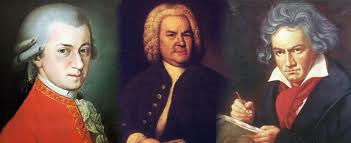 ” Most of the music is Mozart (also good for silencing babies and making them smart), along with some Bach and a bit of Beethoven.
We hoped that this CD would be useful when we want the dachshunds not to bark at people walking their dogs a quarter-mile away, or at me when I open the back door after being outside for thirty seconds taking out the garbage. Maybe it would even lessen the likelihood of Boston terrier incontinence and cardiac arrest when a male human being (especially me) is within ten feet.
We put the CD on the stereo and pressed the 24/7/365 button (I’m glad I love classical music), just to see what would happen. Although Jeanne thought the music made the beasts sleep more. I can’t say that I noticed a lot of difference in them. I did, however, find that I felt lazier than usual.
This same passage from Isaiah was one of the readings a few years ago for a service focused on an international day of prayer for peace. I suspect that such days were established with something more than canine tranquility in mind. Another of that morning’s readings was from Isaiah, who in chapter 2 invites us to go to “the mountain of the Lord” where, at some unspecified future time, the Lord will reign supreme and human beings will be acting quite differently than we do now.
 They will hammer their swords into ploughshares, their spears into sickles. Nation will not lift sword against nation; there will be no more training for war.**
Whatever Isaiah was seeing in this memorable vision, it sure isn’t the present. Although the writer of Ecclesiastes says there is “a time for war, and a time for peace,” the time for war has stretched for as long as human existence, and its end doesn’t appear imminent.
That’s probably why, in the religious tradition of my youth, we considered Isaiah’s peaceable kingdom either to be a description of heaven itself, or of God’s millennial kingdom of one thousand years which would occur after the second coming of Christ and the tribulation in which, after a lot of violence and judgment, the bad guys would be destroyed and only we good guys would remain. When we prayed “Thy kingdom come, thy will be done,” we really meant “Please come back soon and rescue us from this totally crappy and ruined world in which we live.”
So what am I supposed to be praying for on the day of prayer for peace and every other day? What can I do to help bring about world peace? Put “Visualize Whirled Peas” and “Who Would Jesus Bomb?” bumper stickers on my car? Commit random acts of kindness? Sing “Give Peace a Chance” along with John and Yoko? Play Mozart tunes as loudly as possible? Why not just spit into the wind and be done with it?
One possible place to begin is to remember that the Kingdom of God for which we pray, the Peaceable Kingdom, is here. “The Kingdom of God is within you.” The peaceable kingdom, the kingdom of heaven, begins in me, just as every one of Isaiah’s beasts is in me. I am a wolf, a lamb, a leopard, a goat, a calf, a lion, a cow, a bear, an ox, an adder, and an asp, as well as some other things Isaiah didn’t mention. There is probably a dachshund and a Boston terrier in there too. And, lest I forget, both a nursing child and a weaned child.
 The key to establishing a peaceable kingdom within me is not to tame the scary beasts and put the fuzzy and cuddly ones in charge. Rather, it’s welcoming them all, allowing each their place, and not getting nervous when the lion and lamb decide to sit next to each other. To cite another John Lennon song, “Let It Be.” As I welcome and release each of the beasts, I commit myself, at least for today, to listening to as much Mozart as possible and following the example of the psalmist in Psalm 131:
Truly I have set my soul in silence and peace. As a weaned child on its mother’s breast, so is my soul.
Previous Post

December 7, 2013
Ubuntu
Next Post
December 14, 2013 The Great Homesickness
Browse Our Archives
Select a Category abortion Advent AI Angels Artificial intelligence atheism attention baptism Baptists beauty belief Benedictines Bible bicycling Big Bird books Bovina Camaldoli hermitage Canada Catholicism cats certainty change Christianity Christmas Collegeville Covid-19 creativity Development of Western Civilization dogs doubt Easter Enneagram Epiphany Episcopal ethics Eucharist evil extroverts Facebook faith family fear flowers forgiveness freedom friends God goodness grace happiness heaven hell history Holy Spirit Holy Week hope human nature humility humor idolatry incarnation introverts irreverence Islam Jeanne Jesus Joe Biden joy Judaism justice Kamala Harris knowledge Lent listen literature liturgy love Marsue Memorial Day miracles movies music mystery mythology NPR Old Testament optimism paradox peace Penguins philosophy piano podcast politics power prayer Protestantism Providence College Religion Rhode Island sabbatical sacrament science seeing silence Simone Weil Socrates soul sports St. John's College stories suffering tattoo teaching technology television theology thinking time tolerance transcendence travel trees trust truth Uncategorized Vermont wisdom wonder writing
Select a Month May 2026 April 2026 March 2026 February 2026 January 2026 December 2025 November 2025 October 2025 September 2025 August 2025 July 2025 June 2025 May 2025 April 2025 March 2025 February 2025 January 2025 December 2024 November 2024 October 2024 September 2024 August 2024 July 2024 June 2024 May 2024 April 2024 March 2024 February 2024 January 2024 December 2023 November 2023 October 2023 September 2023 August 2023 July 2023 June 2023 May 2023 April 2023 March 2023 February 2023 January 2023 December 2022 November 2022 October 2022 September 2022 August 2022 July 2022 June 2022 May 2022 April 2022 March 2022 February 2022 January 2022 December 2021 November 2021 October 2021 September 2021 August 2021 July 2021 June 2021 May 2021 April 2021 March 2021 February 2021 January 2021 December 2020 November 2020 October 2020 September 2020 August 2020 July 2020 June 2020 May 2020 April 2020 March 2020 February 2020 January 2020 December 2019 November 2019 October 2019 September 2019 August 2019 July 2019 June 2019 May 2019 April 2019 March 2019 February 2019 January 2019 December 2018 November 2018 October 2018 September 2018 August 2018 July 2018 June 2018 May 2018 April 2018 March 2018 February 2018 January 2018 December 2017 November 2017 October 2017 September 2017 August 2017 July 2017 June 2017 May 2017 April 2017 March 2017 February 2017 January 2017 December 2016 November 2016 October 2016 September 2016 August 2016 July 2016 June 2016 May 2016 April 2016 March 2016 February 2016 January 2016 December 2015 November 2015 October 2015 September 2015 August 2015 July 2015 June 2015 May 2015 April 2015 March 2015 February 2015 January 2015 December 2014 November 2014 October 2014 September 2014 August 2014 July 2014 June 2014 May 2014 April 2014 March 2014 February 2014 January 2014 December 2013 November 2013 October 2013 September 2013 August 2013 July 2013 June 2013 May 2013 April 2013 March 2013 February 2013 January 2013 December 2012 November 2012 October 2012 September 2012
Follow Us!
TAKE THE
Religious Wisdom Quiz
How much was Judas paid to betray Jesus?
Select your answer to see how you score.
30 pieces of silver 20 pieces of silver 12 pieces of silver 10 pieces of silver
Books by This Author Books by Vance G. Morgan
Related posts from Freelance Christianity

The Lonely Pawn: On Faith, Doubt, and Meaning


AI and Love: When a Chatbot Becomes a...

TRENDING AT PATHEOS Progressive Christian

What Being a Modern-Day Apostle Means to Me
In my last column, I discussed the ins and outs of modern-day...

Did Ancient China Once Worship the God of...
Across human history, a common thread weaves through the origins of the...

Love Your Neighbor – Including Earth-Kin: Lev. 19,...
God’s command to love your neighbor means acting in an ethical and...

Lead a Church Study of “Jesus and Lao...
Guest writer Jack Thomas (The Irreverent Reverend) reflects on leading his church...

Pastoral Wisdom for Responding to Sermon Pushback
Getting sermon pushback on your social justice sermon? Learn practical, Proverbs-based strategies...

Principles for Understanding the Apostolic Ministry Today
Whenever people discover that my formal ministry title is "apostle," as in...
view all Progressive Christian blogs
Ad-Free & Subscriber Log-In Subscription Support
- About Us
- 2026 Calendar
- Videos
- Podcasts
- Library of World Religions
- Faith In Media Tracker
- Advertise With Us
- Write for Us
- Privacy Policy
- Terms of Service
- Do Not Sell My Data
- Contact Us
- Radiant Digital
- Manage Newsletter Subscriptions
- Unsubscribe From Notifications
- Sitemap
Copyright 2008-2026, Patheos. All rights reserved.
Subscription Support Ad-Free & Subscriber Log-In
Follow Patheos