
BuddhistCatholicContemplativeEvangelicalGeneral ChristianHinduJewishLatter-day SaintMuslimNew VisionsProgressive Christian
Beliefs
- Buddhist
- Catholic
- Contemplative
- Evangelical
- General Christian
- Hindu
- Jewish
- Latter-day Saint
- More Voices
- Muslim
- New Visions
- Pagan
- Progressive Christian
Topics
- Religion News
- Food and Religion
- Sports and Religion
- Religious Art
- Religious Music and Entertainment
- Religious Events
- History and Religion
- Style and Religion
- Politics and Religion
- Women in Religion
- Recreation Outdoors and Religion
- Business Finance and Religion
- Careers Workplace and Religion
- Education and Religion
- Family Parenting and Religion
- Health Fitness and Religion
- Home and Religion
- Relationships and Religion
- Technology and Religion
- Travel and Religion
Columnists
- Buddhist Columnists
- Business Finance and Religion Columnists
- Careers Workplace and Religion Columnists
- Catholic Columnists
- Contemplative Columnists
- Education and Religion Columnists
- Evangelists Columnists
- Family Parenting and Religion Columnists
- General Christian Columnists
- Health Fitness and Religion Columnists
- Hindu Columnists
- History and Religion Columnists
- Home and Religion Columnists
- Jewish Columnists
- More Voices Columnists
- Latter Day Columnists
- Muslim Columnists
- New Visions Columnists
- Nonreligious Columnists
- Pagan Columnists
- Politics and Religion Columnists
- Progressive Columnists
- Recreation Outdoors and Religion Columnists
- Relationships and Religion Columnists
- Religion News Columnists
- Religious Art Columnists
- Religious Events Columnists
- Religious Music and Entertainment Columnists
- Sports and Religion Columnists
- Style and Religion Columnists
- Technology and Religion Columnists
- Travel and Religion Columnists
- Women in Religion Columnists
Resource Library
- 2026 Calendar
- Library of World Religions
- The 100 Most Holy Places on Earth
- Patheos Answers
- Podcasts
- Videos
- Faith Leaders Database
- Anglican Episcopalian
- Bahai
- Baptist
- Buddhism
- Christianity
- Confucianism
- Eastern Orthodoxy
- Hinduism
- Holiness and Pentecostal
- ISKCON
- Islam
- Judaism
- Lutheran
- Methodist
- The Church of Jesus Christ of Latter-day Saints
- New Age
- Paganism
- Presbytarian and Reformed
- Protestantism
- Religion Behind the Scenes
- Roman Catholic
- Scientology
- Shia Islam
- Sikhism
- Sufism
- Sunni Islam
- Taoism
- Zen
- See all religions
Research Tools
 Ad-Free & Subscriber Log-In Subscription Support
Ad-Free & Subscriber Log-In Subscription Support
Follow Patheos 

- Trending:
- Forgiveness
- |
- Marriage
- |
- Consciousness
- |
- Death Penalty
- |
- Election
- |
- Halloween

- Home
- Progressive Christian
- The Great Homesickness
The Great Homesickness
Last updated on: December 14, 2017 at 7:18 am by Vance Morgan
The Great Homesickness 2017-12-14T07:18:44-04:00 Vance Morgan
Patheos Explore the world's faith through different perspectives on religion and spirituality! Patheos has the views of the prevalent religions and spiritualities of the world.
I was the world’s most pathetic camper. One of the (alleged) rewards for 12-15 weeks of learning Bible verses throughout the winter was the privilege of attending BMA (Bible Memory Association) camp for a week in the summer; I earned this reward for what must have been 7-8 years running when I was young, starting when I was about eight years old.
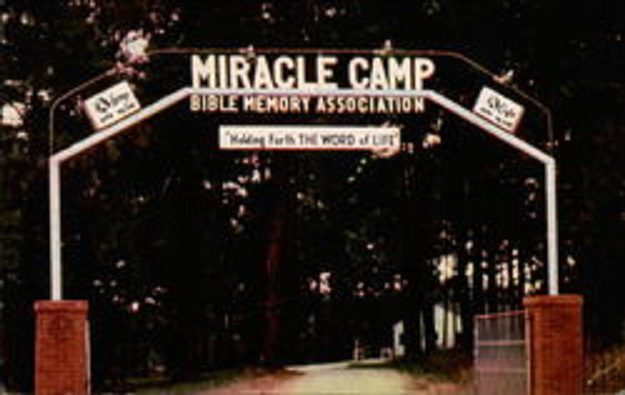
And I hated camp. If you use your imagination a bit, you can probably picture why camp for a bunch of fundamentalist-raised youngsters wasn’t particularly fabulous. Reveille at 6:00 in the morning, church before breakfast, Bible study in the morning, enforced nap time after lunch (I’m not kidding), “free time” for two or three hours in the afternoon which included same-sex swimming, paddle boats which invariably broke down in the middle of the lake, and horse riding (I was deathly afraid of horses). Devotions between supper and the evening worship service, during which we were required to hunker down somewhere with our Bibles by ourselves for half an hour, then evening service for a couple of hours, then taps and lights out by 9:45. What fun.
Truth be told, I would have hated any camp, Bible Memory Association or not. I suffered from debilitating and close-to-terminal homesickness. I usually went to camp with my brother and two or three cousins while my parents spent the week at a Bible conference about 75 miles away where my father was the featured speaker. I would much rather have stayed with them (with my mother, actually), but off to camp I went every year. I usually spent the first twenty-four hours crying or at least sniffling—I remember one year my camp dorm counselor, who was not much more than a kid himself, was assigned to spend the first afternoon of camp trying to console this skinny, curly-headed kid who wanted his mother. He probably asked for a raise after that.
What I didn’t understand is why almost no one else was homesick. I usually saw two or three like-minded campers sniffling and with tears in their eyes the first day or so, but the vast majority of the upward of 200 campers not only seemed fine, but appeared positively thrilled to be away from their mothers. Go figure. To their credit, my non-homesick brother and cousins always managed to put up with me without calling me a pussy (or whatever good Baptist kids would have called someone like me). They just waited me out—I wasn’t going anywhere, after all.
I was deeply moved when I read the following lines in a Rainer Maria Rilke poem not long ago:
I love you, gentlest of Ways,
Who ripened us as we wrestled with you.
You, the great homesickness we could never shake off.
You, the forest that always surrounded us.
“The great homesickness we could never shake off.” That’s one of the best names for God I’ve ever encountered. Homesickness cannot be cured by anything other than the presence of what you are homesick for. Sure, I was able to cope at camp and sort of enjoy myself at times, but there was always a gnawing emptiness, a low-grade disturbance, that I knew would not leave until I saw my parents’ car driving through the front gates of camp on Saturday morning. I never made the connection until I read the lines from Rilke, but the Psalmist is homesick when he writes:
As the deer pants for the water brooks,
So pants my soul for You, O God.
My soul thirsts for God, for the living God.
When shall I come and appear before God?
And Rilke gets it exactly right in another poem when he writes:
I am orphaned
each time the sun goes down.
I can feel cast out from everything.
That’s when I want you—
you knower of my emptiness,
you unspeaking partner to my sorrow—
that’s when I need you, God, like food.
Just as there were some campers who weren’t homesick for their mothers, I suppose there are some people who don’t thirst for God. But I do.
I recall the Holy Week services at St. John’s Abbey during my sabbatical in Collegeville, MN a number of years ago. The Abbott’s Palm Sunday homily focused not on Judas, or on the donkey, or the Pharisees, or Pilate, or Peter’s denial, but on the first event in Mark’s telling of the Passion story—the woman who pours the costly oil on Jesus’ feet.
The Abbott was trained as a chemist, so he spent a few minutes describing just why nard, a precious oil squeezed from the roots of the spikenard plant which grows only at the foot of the Himalayas, and alabaster, the translucent stone from which the broken flask containing the nard was made, were so expensive. Not surprisingly, the disciples and others are appalled at the waste—the oil and the flask could have been sold for more than a laborer’s yearly wage. A lot of poor people could have been helped.
And they are right. But the woman knows something the onlookers don’t know. She recognizes Jesus in a way that others who had spent months and even years with him don’t. The Gospels tell us that the disciples were often confused about who Jesus was. But by anointing Jesus, the woman is saying “I recognize you. I know you who you are. I’ve been homesick for you my whole life, and I’ve foun d you. I’m home.”
I yearn to belong to something, to be contained
in an all-embracing love that sees me
as a single thing.
I yearn to be held in the great hands of your heart—
oh let them take me now.
Into them I place these fragments, my life,
and you, God—spend them however you want.
Previous Post

December 12, 2017
It's About Time
Next Post

December 16, 2017 Faith in a Post-Truth World
Browse Our Archives
Select a Category abortion Advent AI Angels Artificial intelligence atheism attention baptism Baptists beauty belief Benedictines Bible bicycling Big Bird books Bovina Camaldoli hermitage Canada Catholicism cats certainty change Christianity Christmas Collegeville Covid-19 creativity Development of Western Civilization dogs doubt Easter Enneagram Epiphany Episcopal ethics Eucharist evil extroverts Facebook faith family fear flowers forgiveness freedom friends God goodness grace happiness heaven hell history Holy Spirit Holy Week hope human nature humility humor idolatry incarnation introverts irreverence Islam Jeanne Jesus Joe Biden joy Judaism justice Kamala Harris knowledge Lent listen literature liturgy love Marsue Memorial Day miracles movies music mystery mythology NPR Old Testament optimism paradox peace Penguins philosophy piano podcast politics power prayer Protestantism Providence College Religion Rhode Island sabbatical sacrament science seeing silence Simone Weil Socrates soul sports St. John's College stories suffering tattoo teaching technology television theology thinking time tolerance transcendence travel trees trust truth Uncategorized Vermont wisdom wonder writing
Select a Month May 2026 April 2026 March 2026 February 2026 January 2026 December 2025 November 2025 October 2025 September 2025 August 2025 July 2025 June 2025 May 2025 April 2025 March 2025 February 2025 January 2025 December 2024 November 2024 October 2024 September 2024 August 2024 July 2024 June 2024 May 2024 April 2024 March 2024 February 2024 January 2024 December 2023 November 2023 October 2023 September 2023 August 2023 July 2023 June 2023 May 2023 April 2023 March 2023 February 2023 January 2023 December 2022 November 2022 October 2022 September 2022 August 2022 July 2022 June 2022 May 2022 April 2022 March 2022 February 2022 January 2022 December 2021 November 2021 October 2021 September 2021 August 2021 July 2021 June 2021 May 2021 April 2021 March 2021 February 2021 January 2021 December 2020 November 2020 October 2020 September 2020 August 2020 July 2020 June 2020 May 2020 April 2020 March 2020 February 2020 January 2020 December 2019 November 2019 October 2019 September 2019 August 2019 July 2019 June 2019 May 2019 April 2019 March 2019 February 2019 January 2019 December 2018 November 2018 October 2018 September 2018 August 2018 July 2018 June 2018 May 2018 April 2018 March 2018 February 2018 January 2018 December 2017 November 2017 October 2017 September 2017 August 2017 July 2017 June 2017 May 2017 April 2017 March 2017 February 2017 January 2017 December 2016 November 2016 October 2016 September 2016 August 2016 July 2016 June 2016 May 2016 April 2016 March 2016 February 2016 January 2016 December 2015 November 2015 October 2015 September 2015 August 2015 July 2015 June 2015 May 2015 April 2015 March 2015 February 2015 January 2015 December 2014 November 2014 October 2014 September 2014 August 2014 July 2014 June 2014 May 2014 April 2014 March 2014 February 2014 January 2014 December 2013 November 2013 October 2013 September 2013 August 2013 July 2013 June 2013 May 2013 April 2013 March 2013 February 2013 January 2013 December 2012 November 2012 October 2012 September 2012
Follow Us!
TAKE THE
Religious Wisdom Quiz
How many years between the exodus of the Children of Israel and construction of the temple?
Select your answer to see how you score.
450 years 400 years 500 years 480 years
Books by This Author Books by Vance G. Morgan
Related posts from Freelance Christianity

The Lonely Pawn: On Faith, Doubt, and Meaning


AI and Love: When a Chatbot Becomes a...

TRENDING AT PATHEOS Progressive Christian

Why Christians Have a Sacred Duty to Vote:...
The Bible offers strong support for the sacred duty to vote. Here...

What Being a Modern-Day Apostle Means to Me
In my last column, I discussed the ins and outs of modern-day...

Did Ancient China Once Worship the God of...
Across human history, a common thread weaves through the origins of the...

Love Your Neighbor – Including Earth-Kin: Lev. 19,...
God’s command to love your neighbor means acting in an ethical and...

Lead a Church Study of “Jesus and Lao...
Guest writer Jack Thomas (The Irreverent Reverend) reflects on leading his church...

Principles for Understanding the Apostolic Ministry Today
Whenever people discover that my formal ministry title is "apostle," as in...
view all Progressive Christian blogs
Ad-Free & Subscriber Log-In Subscription Support
- About Us
- 2026 Calendar
- Videos
- Podcasts
- Library of World Religions
- Faith In Media Tracker
- Advertise With Us
- Write for Us
- Privacy Policy
- Terms of Service
- Do Not Sell My Data
- Contact Us
- Radiant Digital
- Manage Newsletter Subscriptions
- Unsubscribe From Notifications
- Sitemap
Copyright 2008-2026, Patheos. All rights reserved.
Subscription Support Ad-Free & Subscriber Log-In
Follow Patheos