
BuddhistCatholicContemplativeEvangelicalGeneral ChristianHinduJewishLatter-day SaintMuslimNew VisionsProgressive Christian
Beliefs
- Buddhist
- Catholic
- Contemplative
- Evangelical
- General Christian
- Hindu
- Jewish
- Latter-day Saint
- More Voices
- Muslim
- New Visions
- Pagan
- Progressive Christian
Topics
- Religion News
- Food and Religion
- Sports and Religion
- Religious Art
- Religious Music and Entertainment
- Religious Events
- History and Religion
- Style and Religion
- Politics and Religion
- Women in Religion
- Recreation Outdoors and Religion
- Business Finance and Religion
- Careers Workplace and Religion
- Education and Religion
- Family Parenting and Religion
- Health Fitness and Religion
- Home and Religion
- Relationships and Religion
- Technology and Religion
- Travel and Religion
Columnists
- Buddhist Columnists
- Business Finance and Religion Columnists
- Careers Workplace and Religion Columnists
- Catholic Columnists
- Contemplative Columnists
- Education and Religion Columnists
- Evangelists Columnists
- Family Parenting and Religion Columnists
- General Christian Columnists
- Health Fitness and Religion Columnists
- Hindu Columnists
- History and Religion Columnists
- Home and Religion Columnists
- Jewish Columnists
- More Voices Columnists
- Latter Day Columnists
- Muslim Columnists
- New Visions Columnists
- Nonreligious Columnists
- Pagan Columnists
- Politics and Religion Columnists
- Progressive Columnists
- Recreation Outdoors and Religion Columnists
- Relationships and Religion Columnists
- Religion News Columnists
- Religious Art Columnists
- Religious Events Columnists
- Religious Music and Entertainment Columnists
- Sports and Religion Columnists
- Style and Religion Columnists
- Technology and Religion Columnists
- Travel and Religion Columnists
- Women in Religion Columnists
Resource Library
- 2026 Calendar
- Library of World Religions
- The 100 Most Holy Places on Earth
- Patheos Answers
- Podcasts
- Videos
- Faith Leaders Database
- Anglican Episcopalian
- Bahai
- Baptist
- Buddhism
- Christianity
- Confucianism
- Eastern Orthodoxy
- Hinduism
- Holiness and Pentecostal
- ISKCON
- Islam
- Judaism
- Lutheran
- Methodist
- The Church of Jesus Christ of Latter-day Saints
- New Age
- Paganism
- Presbytarian and Reformed
- Protestantism
- Religion Behind the Scenes
- Roman Catholic
- Scientology
- Shia Islam
- Sikhism
- Sufism
- Sunni Islam
- Taoism
- Zen
- See all religions
Research Tools
 Ad-Free & Subscriber Log-In Subscription Support
Ad-Free & Subscriber Log-In Subscription Support
Follow Patheos 

- Trending:
- Forgiveness
- |
- Marriage
- |
- Consciousness
- |
- Death Penalty
- |
- Election
- |
- Halloween

- Home
- Progressive Christian
- The Gospel According to Marilynne Robinson
The Gospel According to Marilynne Robinson
Last updated on: October 11, 2020 at 6:40 am by Vance Morgan
The Gospel According to Marilynne Robinson 2020-10-11T06:40:31-04:00 Vance Morgan
Patheos Explore the world's faith through different perspectives on religion and spirituality! Patheos has the views of the prevalent religions and spiritualities of the world.
This is an interesting planet. It deserves all the attention you can give it. Marilynne Robinson, Gilead
One of the highlights of my week during the academic year for the past several years has been “MacPhails at 4.” MacPhails is the small pub-style gathering spot on our campus, named after a beloved Dominican priest who served as the associate vice president for student services for many years at the college. Every Friday at 4:00 pm, several members of the faculty gather to unwind from the week with a beer (or two or three) before heading home for the weekend.
Until last March, that is. Once all classes went remote thanks to Covid-19, MacPhails was no longer available. In the flesh, that is. I am usually the guy who sends out the email blast reminding my colleagues of MacPhails at 4: accordingly, after a week or so of seclusion, I sent an email inviting the same group to “MacPhails on Zoom,” an opportunity to converse and gossip as we consume adult beverages and watch each other do the same at our homes. MacPhails on Zoom has turned out to be popular, and the drinks are actually better. I can purchase and consume what I like rather than settling for the mediocre libations available at the small bar at the real MacPhails.
One of the many matters often discussed when at MacPhails in person or on Zoom is what we are reading, other than the stuff we have to read because we are professors and assign the students lots of things that we have to read ourselves. At a recent MacPhails on Zoom I mentioned how excited I was to have received Jack, Marilynne Robinson’s latest novel, from Amazon a couple of days earlier on the day it was published (I had pre-ordered it weeks earlier). One of my colleagues, a good friend in the History and Classics department, said “Who is Marilynne Robinson? I don’t think I’m familiar with her work.”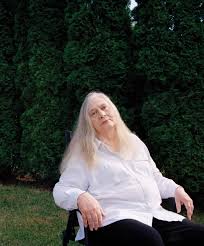
I could not have been more shocked if someone had asked “Who is Charles Dickens?” or “Who is this F. Scott Fitzgerald guy? I’ve never heard of him.” Now that’s not entirely fair, of course; I’ve come to realize that people of good faith need not read and believe the same things in order to be friends and colleagues. My reaction to my colleague’s unfamiliarity with Marilynne Robinson says a lot more about me than it does about her. I believe that I have read every published word Marilynne Robinson has ever produced, except for academic articles that have not made it into her many wonderful collections of essays.
A quick search on this blog reveals that I have referenced Marilynne Robinson over the years more often than Plato or Aristotle, more frequently than Charles Dickens or even George Eliot (my favorite Victorian novelist), more times than any other single writer than Simone Weil. Robinson is referenced frequently in both of my most recent books. When I taught a course in 20th century philosophy and chose to put only women on the syllabus, Marilynne Robinson was one of the three, along with Iris Murdoch and Simone Weil. Clearly her work has wormed its way into my teaching and writing. It has also worked its way into my soul.
As much as I appreciate and learn from Marilynne Robinson’s essays, it is her novels that I love with a passion. I have described her Gilead, the winner of the 2004 Pulitzer Prize, as the most perfect novel I have ever read. “Read” strikes me as the incorrect verb to describe my interaction with Gilead. I have consumed it many times over the years, marked and inwardly digested it so deeply that Reverend Ames, the main character, has become a part of me. I used to imagine my beloved maternal grandfather when picturing Ames. But Ames is only about a decade older in the story than I am now; I realize that Reverend Ames is actually who I aspire to be when I grow up.
There are passages from Gilead that still put tears in my eyes and gives me chills every time return to them. This one, for instance:
I realize there is nothing more astonishing than a human face. It has something to do with incarnation. You feel your obligation to a child when you have seen it and held it. Any human face is a claim on you, because you can’t help but understand the singularity of it, the courage and loneliness of it.
Or this one:
It has seemed to me sometimes as though the Lord breathes on this poor gray ember of Creation and it turns to radiance—for a moment or a year or the span of a life. And then it sinks back into itself again, and to look at it no one would know it had anything to do with fire, or light . . . Wherever you turn your eyes the world can shine like transfiguration. You don’t have to bring a thing to it except a little willingness to see. Only, who has the courage to see it?
I have just begun reading Jack, and fully expect it will similarly be filled with insights and beauty. Because Jack was just released a couple of weeks ago, the most recent issue of The New Yorker includes a several thousand-word article about Robinson. It is clear that the author of the article, Casey Cep, is as thoroughly familiar with and as moved by Marilynne Robinson’s work as I am. As an aside, I appreciate that there are virtually no spoilers about Jack in Cep’s article. Jack is the fourth novel set in Gilead, a fictional town in Iowa in the 1950s (the second and third novels are Home and Lila).
As Cep describes, the later novels in the Gilead series are not sequels to the originals; rather, each tells the same stories through the eyes of different characters. Cep is exactly right when he says that the connections between the novels are “like the Gospels, telling the same story four different ways.” Throughout, Robinson both attracts and disturbs the reader on virtually every page, as Cep notes when commenting on a feature of Lila:
Like all of the Gilead novels, Lila is almost shockingly beautiful, tender where it is a love story, and bracing when it raises the existential questions that consume its protagonists.
At the heart of Robinson’s work, both essays and novels, is a simple conviction. The world is miraculous, but we seldom pay sufficient attention to encounter either miracle or beauty. The only extended passage from Jack that Cep quotes in his article is not a spoiler, but it is quintessentially Robinsonian:
Once in a lifetime, you look at a stranger and you see a soul, a glorious presence out of place in the world. And if you love God, every choice is made for you. There is no turning away . . . There is nothing to be said about it except that it is a holy human soul. And it is a miracle when you recognize it.
Each human being is a miracle. And so is the world we find ourselves in. Worth remembering, particularly during these times when it seems uniquely difficult to pay attention.
Previous Post

October 8, 2020
Bombing Raids and a Spark of the Divine
Browse Our Archives
Select a Category abortion Advent AI Angels Artificial intelligence atheism attention baptism Baptists beauty belief Benedictines Bible bicycling Big Bird books Bovina Camaldoli hermitage Canada Catholicism cats certainty change Christianity Christmas Collegeville Covid-19 creativity Development of Western Civilization dogs doubt Easter Enneagram Epiphany Episcopal ethics Eucharist evil extroverts Facebook faith family fear flowers forgiveness freedom friends God goodness grace happiness heaven hell history Holy Spirit Holy Week hope human nature humility humor idolatry incarnation introverts irreverence Islam Jeanne Jesus Joe Biden joy Judaism justice Kamala Harris knowledge Lent listen literature liturgy love Marsue Memorial Day miracles movies music mystery mythology NPR Old Testament optimism paradox peace Penguins philosophy piano podcast politics power prayer Protestantism Providence College Religion Rhode Island sabbatical sacrament science seeing silence Simone Weil Socrates soul sports St. John's College stories suffering tattoo teaching technology television theology thinking time tolerance transcendence travel trees trust truth Uncategorized Vermont wisdom wonder writing
Select a Month May 2026 April 2026 March 2026 February 2026 January 2026 December 2025 November 2025 October 2025 September 2025 August 2025 July 2025 June 2025 May 2025 April 2025 March 2025 February 2025 January 2025 December 2024 November 2024 October 2024 September 2024 August 2024 July 2024 June 2024 May 2024 April 2024 March 2024 February 2024 January 2024 December 2023 November 2023 October 2023 September 2023 August 2023 July 2023 June 2023 May 2023 April 2023 March 2023 February 2023 January 2023 December 2022 November 2022 October 2022 September 2022 August 2022 July 2022 June 2022 May 2022 April 2022 March 2022 February 2022 January 2022 December 2021 November 2021 October 2021 September 2021 August 2021 July 2021 June 2021 May 2021 April 2021 March 2021 February 2021 January 2021 December 2020 November 2020 October 2020 September 2020 August 2020 July 2020 June 2020 May 2020 April 2020 March 2020 February 2020 January 2020 December 2019 November 2019 October 2019 September 2019 August 2019 July 2019 June 2019 May 2019 April 2019 March 2019 February 2019 January 2019 December 2018 November 2018 October 2018 September 2018 August 2018 July 2018 June 2018 May 2018 April 2018 March 2018 February 2018 January 2018 December 2017 November 2017 October 2017 September 2017 August 2017 July 2017 June 2017 May 2017 April 2017 March 2017 February 2017 January 2017 December 2016 November 2016 October 2016 September 2016 August 2016 July 2016 June 2016 May 2016 April 2016 March 2016 February 2016 January 2016 December 2015 November 2015 October 2015 September 2015 August 2015 July 2015 June 2015 May 2015 April 2015 March 2015 February 2015 January 2015 December 2014 November 2014 October 2014 September 2014 August 2014 July 2014 June 2014 May 2014 April 2014 March 2014 February 2014 January 2014 December 2013 November 2013 October 2013 September 2013 August 2013 July 2013 June 2013 May 2013 April 2013 March 2013 February 2013 January 2013 December 2012 November 2012 October 2012 September 2012
Follow Us!
TAKE THE
Religious Wisdom Quiz
Who prophesied about a locust plague and called for national repentance?
Select your answer to see how you score.
Joel Daniel Amos Micah
Books by This Author Books by Vance G. Morgan
Related posts from Freelance Christianity

The Lonely Pawn: On Faith, Doubt, and Meaning


AI and Love: When a Chatbot Becomes a...

TRENDING AT PATHEOS Progressive Christian

Why Christians Have a Sacred Duty to Vote:...
The Bible offers strong support for the sacred duty to vote. Here...

What Being a Modern-Day Apostle Means to Me
In my last column, I discussed the ins and outs of modern-day...

Did Ancient China Once Worship the God of...
Across human history, a common thread weaves through the origins of the...

Love Your Neighbor – Including Earth-Kin: Lev. 19,...
God’s command to love your neighbor means acting in an ethical and...

Lead a Church Study of “Jesus and Lao...
Guest writer Jack Thomas (The Irreverent Reverend) reflects on leading his church...

Principles for Understanding the Apostolic Ministry Today
Whenever people discover that my formal ministry title is "apostle," as in...
view all Progressive Christian blogs
Ad-Free & Subscriber Log-In Subscription Support
- About Us
- 2026 Calendar
- Videos
- Podcasts
- Library of World Religions
- Faith In Media Tracker
- Advertise With Us
- Write for Us
- Privacy Policy
- Terms of Service
- Do Not Sell My Data
- Contact Us
- Radiant Digital
- Manage Newsletter Subscriptions
- Unsubscribe From Notifications
- Sitemap
Copyright 2008-2026, Patheos. All rights reserved.
Subscription Support Ad-Free & Subscriber Log-In
Follow Patheos