
BuddhistCatholicContemplativeEvangelicalGeneral ChristianHinduJewishLatter-day SaintMuslimNew VisionsProgressive Christian
Beliefs
- Buddhist
- Catholic
- Contemplative
- Evangelical
- General Christian
- Hindu
- Jewish
- Latter-day Saint
- More Voices
- Muslim
- New Visions
- Pagan
- Progressive Christian
Topics
- Religion News
- Food and Religion
- Sports and Religion
- Religious Art
- Religious Music and Entertainment
- Religious Events
- History and Religion
- Style and Religion
- Politics and Religion
- Women in Religion
- Recreation Outdoors and Religion
- Business Finance and Religion
- Careers Workplace and Religion
- Education and Religion
- Family Parenting and Religion
- Health Fitness and Religion
- Home and Religion
- Relationships and Religion
- Technology and Religion
- Travel and Religion
Columnists
- Buddhist Columnists
- Business Finance and Religion Columnists
- Careers Workplace and Religion Columnists
- Catholic Columnists
- Contemplative Columnists
- Education and Religion Columnists
- Evangelists Columnists
- Family Parenting and Religion Columnists
- General Christian Columnists
- Health Fitness and Religion Columnists
- Hindu Columnists
- History and Religion Columnists
- Home and Religion Columnists
- Jewish Columnists
- More Voices Columnists
- Latter Day Columnists
- Muslim Columnists
- New Visions Columnists
- Nonreligious Columnists
- Pagan Columnists
- Politics and Religion Columnists
- Progressive Columnists
- Recreation Outdoors and Religion Columnists
- Relationships and Religion Columnists
- Religion News Columnists
- Religious Art Columnists
- Religious Events Columnists
- Religious Music and Entertainment Columnists
- Sports and Religion Columnists
- Style and Religion Columnists
- Technology and Religion Columnists
- Travel and Religion Columnists
- Women in Religion Columnists
Resource Library
- 2026 Calendar
- Library of World Religions
- The 100 Most Holy Places on Earth
- Patheos Answers
- Podcasts
- Videos
- Faith Leaders Database
- Anglican Episcopalian
- Bahai
- Baptist
- Buddhism
- Christianity
- Confucianism
- Eastern Orthodoxy
- Hinduism
- Holiness and Pentecostal
- ISKCON
- Islam
- Judaism
- Lutheran
- Methodist
- The Church of Jesus Christ of Latter-day Saints
- New Age
- Paganism
- Presbytarian and Reformed
- Protestantism
- Religion Behind the Scenes
- Roman Catholic
- Scientology
- Shia Islam
- Sikhism
- Sufism
- Sunni Islam
- Taoism
- Zen
- See all religions
Research Tools
 Ad-Free & Subscriber Log-In Subscription Support
Ad-Free & Subscriber Log-In Subscription Support
Follow Patheos 

- Trending:
- Forgiveness
- |
- Marriage
- |
- Consciousness
- |
- Death Penalty
- |
- Election
- |
- Halloween

- Home
- Progressive Christian
- AI and Transcendence
AI and Transcendence
Last updated on: May 14, 2026 at 6:06 am by Vance Morgan
AI and Transcendence 2026-05-13T14:43:28-04:00 Vance Morgan
Patheos Explore the world's faith through different perspectives on religion and spirituality! Patheos has the views of the prevalent religions and spiritualities of the world.
Two weeks ago, I set the stage for my next several posts by engaging with a lecture by Notre Dame professor Meghan Sullivan on the topic “Ethics, AI, and Human Flourishing.” During that lecture she introduces a framework for thinking about AI in the context of Christian values and virtue ethics that goes by the acronym “DELTA,” as described in the following short video:
Last Wednesday I focused on the third letter in the DELTA acronym: “L” is for Love. Today’s letter: “T” is for Transcendence.
Meghan Sullivan spends the least amount of time in her talk on transcendence, but I would argue that it might be the most important of the five DELTA issues to considering human beings in relation to AI. It is in a careful engagement with transcendence that the irreducible differences between human beings and artificial intellgence become, for me at least, most evident.
A good place to start is with the ancient philosopher Protagoras’ claim that human beings “are the measure of all things,” a pithy expression of our human tendency to believe that we are the center of everything and the primary arbiters and deciders of what is valuable, important, and good. Transcendence points us toward an important response: Protagoras was wrong. We are wrong. When Hamlet tells his friend that “there are more things in heaven and in earth, Horatio, than are dreamed of in your philosophy,” he’s setting the stage for a consideration of transcendence. We are not the measure of all things,
Many people, understandably, think of God-related issues when they think of transcendence, of passages from scripture such as toward the end of Job when God blows Job’s complaints away with several chapters of illustrations that “I’m God, and you’re not!” But for me the best way to touch transcendence is through engaging with the natural world, a place where we immediately encounter beauty, violence, mystery, otherness, and constant reminders that we live a world that we did not create, a reality that is given to us. As a woman once said to Annie Dillard, ” “Seem like we’re just set down here,and don’t nobody know why.”
Since the Enlightenment, reason and rationality have most often been identified as the capacities which make human beings unique among creatures. Logic, creativity, and productivity are addditionally characteristic of human specialness. One of the challenges of emerging AI is that artifical intelligence appears to not only be capable of all of the above, but by most measures is better at them (or will be in the near future) than we are. Here is where a certain amount of humility is useful, not only in order to recognize our relative insignificance in the larger reality in which we find ourselves, but also in opening ourselves to just how wild and wonderful that larger reality is.
Annie Dillard is one of the best observers of the natural world of her generation. In Pilgrim at Tinker Creek, she writes that “Our life is a faint tracing on the surface of mystery,” noting frequently that we often run headlong into the limits of our reason and logic when paying the slightest attention to the beauty and mystery of nature.
“Nature,” said Thoreau in his journal, “is mythical and mystical always, and spends her whole genius on the least work.” The creator, I would add, churns out the intricate texture of least works that is the world with a spendthrift genius and an extravagance of care. This is the point . . . Certainly nature seems to exult in abounding radicality, extremism, anarchy. If we were to judge nature by its common sense or likelihood, we wouldn’t believe the world existed.
Dillard recommends developing the capacity to see things for what they are rather than as we expect or want them to be. This is a useful excercise in de-centering, since “I have often noticed that even a few minutes of self-forgetfulness is tremendously invigorating. I wonder if we do not waste most of our energy just by spending every waking minute saying hello to ourselves.” The more we turn our attention outward, the more we recognize our own insignificance in the face of a world that appears to have no regard for our rational expectations or limits. We learn that “Knowledge does not vanquish mystery, or obscure its distant lights.” Encountering the limits of our capacities opens the door to the wonder of transcendence.
Terror and a beauty insoluble are a ribbon of blue woven into the fringes of garments of things both great and small . . . It occurs to me more and more that everything I have seen is wholly gratuitous. . . . not in any real sense necessary per se to the world or to its creator. Nor am I. The creation in the first place, being itself, is the only necessity, for which I would die, and I shall . . .
In Marilynne Robinson’s novel Gilead, the narrator and main character, Reverand Ames, is getting older (actually he’s only a few years older than I am now) and frequently has transcendence on his mind.
It has seemed to me sometimes as though the Lord breathes on this poor gray ember of Creation and it turns to radiance—for a moment or a year or the span of a life. And then it sinks back into itself again, and to look at it no one would know it had anything to do with fire, or light. . . . Wherever you turn your eyes the world can shine like transfiguration. You don’t have to bring a thing to it except a little willingness to see. Only, who has the courage to see it?
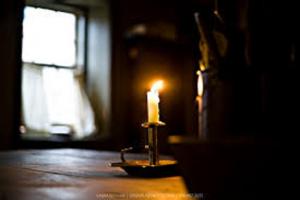 Whether we like it or not, human beings will continue to coexist with fast-developing AI. I suggest that embracing transcendence, an attunement to what is other and greater than oneself, will remain an important and significant difference between what we are and what we create. What is it that connects us to what is greater than us? I turn once again to Reverand Ames.
A candle flame looks beautiful in the light of morning . . . It seems to me to be a metaphor for the human soul, the singular light within the great general light of existence.
Previous Post

May 13, 2026
AI and Love: When a Chatbot Becomes a Companion
Next Post
May 20, 2026 AI and Agency
Recent Comments
"Mary did have a choice. And she was able to make it before the Holy ..."
"i cannot read beyond your recommendations for the books since i like to have a ..."
"AI will never be able to utter with honesty, feeling, or humility, the greeting: "Namaste".It ..."
"They do. I'm sure you could find discussions of the same topic from any of ..."
Browse Our Archives
Select a Category abortion Advent AI Angels Artificial intelligence atheism attention baptism Baptists beauty belief Benedictines Bible bicycling Big Bird books Bovina Camaldoli hermitage Canada Catholicism cats certainty change Christianity Christmas Collegeville Covid-19 creativity Development of Western Civilization dogs doubt Easter Enneagram Epiphany Episcopal ethics Eucharist evil extroverts Facebook faith family fear flowers forgiveness freedom friends God goodness grace happiness heaven hell history Holy Spirit Holy Week hope human nature humility humor idolatry incarnation introverts irreverence Islam Jeanne Jesus Joe Biden joy Judaism justice Kamala Harris knowledge Lent listen literature liturgy love Marsue Memorial Day miracles movies music mystery mythology NPR Old Testament optimism paradox peace Penguins philosophy piano podcast politics power prayer Protestantism Providence College Religion Rhode Island sabbatical sacrament science seeing silence Simone Weil Socrates soul sports St. John's College stories suffering tattoo teaching technology television theology thinking time tolerance transcendence travel trees trust truth Uncategorized Vermont wisdom wonder writing
Select a Month May 2026 April 2026 March 2026 February 2026 January 2026 December 2025 November 2025 October 2025 September 2025 August 2025 July 2025 June 2025 May 2025 April 2025 March 2025 February 2025 January 2025 December 2024 November 2024 October 2024 September 2024 August 2024 July 2024 June 2024 May 2024 April 2024 March 2024 February 2024 January 2024 December 2023 November 2023 October 2023 September 2023 August 2023 July 2023 June 2023 May 2023 April 2023 March 2023 February 2023 January 2023 December 2022 November 2022 October 2022 September 2022 August 2022 July 2022 June 2022 May 2022 April 2022 March 2022 February 2022 January 2022 December 2021 November 2021 October 2021 September 2021 August 2021 July 2021 June 2021 May 2021 April 2021 March 2021 February 2021 January 2021 December 2020 November 2020 October 2020 September 2020 August 2020 July 2020 June 2020 May 2020 April 2020 March 2020 February 2020 January 2020 December 2019 November 2019 October 2019 September 2019 August 2019 July 2019 June 2019 May 2019 April 2019 March 2019 February 2019 January 2019 December 2018 November 2018 October 2018 September 2018 August 2018 July 2018 June 2018 May 2018 April 2018 March 2018 February 2018 January 2018 December 2017 November 2017 October 2017 September 2017 August 2017 July 2017 June 2017 May 2017 April 2017 March 2017 February 2017 January 2017 December 2016 November 2016 October 2016 September 2016 August 2016 July 2016 June 2016 May 2016 April 2016 March 2016 February 2016 January 2016 December 2015 November 2015 October 2015 September 2015 August 2015 July 2015 June 2015 May 2015 April 2015 March 2015 February 2015 January 2015 December 2014 November 2014 October 2014 September 2014 August 2014 July 2014 June 2014 May 2014 April 2014 March 2014 February 2014 January 2014 December 2013 November 2013 October 2013 September 2013 August 2013 July 2013 June 2013 May 2013 April 2013 March 2013 February 2013 January 2013 December 2012 November 2012 October 2012 September 2012
Follow Us!
TAKE THE
Religious Wisdom Quiz
What was the name of the first murderer in the Bible?
Select your answer to see how you score.
Ishmael Cain Esau Lamech
Books by This Author Books by Vance G. Morgan
Related posts from Freelance Christianity

The Lonely Pawn: On Faith, Doubt, and Meaning


AI and Love: When a Chatbot Becomes a...

TRENDING AT PATHEOS Progressive Christian

What Being a Modern-Day Apostle Means to Me
In my last column, I discussed the ins and outs of modern-day...

Did Ancient China Once Worship the God of...
Across human history, a common thread weaves through the origins of the...

Love Your Neighbor – Including Earth-Kin: Lev. 19,...
God’s command to love your neighbor means acting in an ethical and...

Lead a Church Study of “Jesus and Lao...
Guest writer Jack Thomas (The Irreverent Reverend) reflects on leading his church...

Pastoral Wisdom for Responding to Sermon Pushback
Getting sermon pushback on your social justice sermon? Learn practical, Proverbs-based strategies...

Principles for Understanding the Apostolic Ministry Today
Whenever people discover that my formal ministry title is "apostle," as in...
view all Progressive Christian blogs
What Are Your Thoughts?leave a comment
Ad-Free & Subscriber Log-In Subscription Support
- About Us
- 2026 Calendar
- Videos
- Podcasts
- Library of World Religions
- Faith In Media Tracker
- Advertise With Us
- Write for Us
- Privacy Policy
- Terms of Service
- Do Not Sell My Data
- Contact Us
- Radiant Digital
- Manage Newsletter Subscriptions
- Unsubscribe From Notifications
- Sitemap
Copyright 2008-2026, Patheos. All rights reserved.
Subscription Support Ad-Free & Subscriber Log-In
Follow Patheos