
BuddhistCatholicContemplativeEvangelicalGeneral ChristianHinduJewishLatter-day SaintMuslimNew VisionsProgressive Christian
Beliefs
- Buddhist
- Catholic
- Contemplative
- Evangelical
- General Christian
- Hindu
- Jewish
- Latter-day Saint
- More Voices
- Muslim
- New Visions
- Pagan
- Progressive Christian
Topics
- Religion News
- Food and Religion
- Sports and Religion
- Religious Art
- Religious Music and Entertainment
- Religious Events
- History and Religion
- Style and Religion
- Politics and Religion
- Women in Religion
- Recreation Outdoors and Religion
- Business Finance and Religion
- Careers Workplace and Religion
- Education and Religion
- Family Parenting and Religion
- Health Fitness and Religion
- Home and Religion
- Relationships and Religion
- Technology and Religion
- Travel and Religion
Columnists
- Buddhist Columnists
- Business Finance and Religion Columnists
- Careers Workplace and Religion Columnists
- Catholic Columnists
- Contemplative Columnists
- Education and Religion Columnists
- Evangelists Columnists
- Family Parenting and Religion Columnists
- General Christian Columnists
- Health Fitness and Religion Columnists
- Hindu Columnists
- History and Religion Columnists
- Home and Religion Columnists
- Jewish Columnists
- More Voices Columnists
- Latter Day Columnists
- Muslim Columnists
- New Visions Columnists
- Nonreligious Columnists
- Pagan Columnists
- Politics and Religion Columnists
- Progressive Columnists
- Recreation Outdoors and Religion Columnists
- Relationships and Religion Columnists
- Religion News Columnists
- Religious Art Columnists
- Religious Events Columnists
- Religious Music and Entertainment Columnists
- Sports and Religion Columnists
- Style and Religion Columnists
- Technology and Religion Columnists
- Travel and Religion Columnists
- Women in Religion Columnists
Resource Library
- 2026 Calendar
- Library of World Religions
- The 100 Most Holy Places on Earth
- Patheos Answers
- Podcasts
- Videos
- Faith Leaders Database
- Anglican Episcopalian
- Bahai
- Baptist
- Buddhism
- Christianity
- Confucianism
- Eastern Orthodoxy
- Hinduism
- Holiness and Pentecostal
- ISKCON
- Islam
- Judaism
- Lutheran
- Methodist
- The Church of Jesus Christ of Latter-day Saints
- New Age
- Paganism
- Presbytarian and Reformed
- Protestantism
- Religion Behind the Scenes
- Roman Catholic
- Scientology
- Shia Islam
- Sikhism
- Sufism
- Sunni Islam
- Taoism
- Zen
- See all religions
Research Tools
 Ad-Free & Subscriber Log-In Subscription Support
Ad-Free & Subscriber Log-In Subscription Support
Follow Patheos 

- Trending:
- Forgiveness
- |
- Marriage
- |
- Consciousness
- |
- Death Penalty
- |
- Election
- |
- Halloween

- Home
- Progressive Christian
- The Ancient Stoics in Zoom Land
The Ancient Stoics in Zoom Land
Last updated on: November 17, 2020 at 12:23 pm by Vance Morgan
The Ancient Stoics in Zoom Land 2020-11-17T12:23:24-04:00 Vance Morgan
Patheos Explore the world's faith through different perspectives on religion and spirituality! Patheos has the views of the prevalent religions and spiritualities of the world.
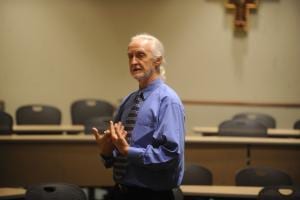
I was asked a few days ago by someone in our Marketing and Communications area on campus (the people who are responsible for what we look and sound like to the larger community) to reflect, now that this semester is close to over, on what teaching during Covid-19 has been for both my students and me. This essay is spending the next two weeks on the front page of my college’s website. Enjoy!
The first line of the ancient Stoic philosopher Epictetus’ “Handbook” makes a remarkably basic observation. “Some things are up to us, and some things are not up to us.” At first look, one might be tempted to say “Thanks, Captain Obvious,” and move on. But from this simple starting point, the Stoics build a moral perspective that, of all of the philosophical moral frameworks included in the syllabi of the dozens of ethics classes I have taught over the past thirty years as a philosophy professor, is perhaps the most useful and profound.
Every day, the Stoics advise, each of us should carefully distinguish between those things that are within our power and those things that are not within our control. Then comes the hard part: Commit yourself to wasting no time or energy worrying about or trying to change what is not within your power. Simple as that. Epictetus was a slave, with very little in his daily life that was “up to him.” But, as the Stoics tell us, there is very little in any of our lives that is truly within our power. Then along comes Covid-19, and takes a great deal of even that away. Let’s just say that it has made for a very interesting semester.
I am in my twenty-seventh year of teaching philosophy at Providence College. Along the way, I have been the chair of my department, interim chair of the Elementary/Special Education department, and director of the Development of Western Civilization program. I have been on more committees than I care to count. I would venture to guess that I have taught at least two dozen different course preparations and have teamed up with more than one hundred different colleagues on interdisciplinary teams. Each semester, each academic year, has brought unique joys and challenges. And I can say without hesitation or qualification that the Fall 2020 semester has been the most unpredictable, challenging, exhilarating, exhausting, frustrating, and ultimately rewarding of the fifty-three semesters I have taught on this wonderful campus.
Although I take pride in my ability to adjust to the demands of the classroom on a daily basis in real time, my teaching style is actually pretty simple. Lecture as little and lead discussion as much as possible. Keep technology to a minimum (PowerPoints and the rare video are as far as I go). Use small groups. Have the students read primary texts and write on a weekly basis. And most of all, emphasize the face-to-face, in-person element. For the past several years, I have told many of my colleagues about how happy I am that I’m old enough to never have to teach anything on line.
Then, over just five days in the middle of last March, I had to learn how to teach remotely courses designed for an in-your-face, in-person environment—as did all of my faculty colleagues. Words and phrases like “Zoom,” “Hyflex,” “Hybrid,” and “Synchronous vs. Asynchronous teaching” immediately became part of everyone’s vocabulary. Debates over whether Zoom, Google, Outlook, Sakai, or some other platform I’d never heard of was preferable for remote classes broke out among the faculty and tech people in email threads and discussions on social media. The IT folks created more workshops to help the floundering faculty than any one person could possibly participate in. Information overload is always a bad thing; it’s even worse when it largely involves information that you don’t understand.
Over the last half of the spring semester, I found myself trying to channel my best internal Stoic during every remote class, convincing myself that this would be the class in which, for the first time, I would not embarrass myself due to my general technological incompetence. The good news was that although the delivery system was brand new and unfamiliar, the content of my courses did not need to change much at all. Who knew what would happen in the fall.
Over the summer, as hundreds of administrators, staff, and faculty in dozens of working groups tried to shape the unknown future into some semblance of order, as it became clear that—unlike many other colleges and universities across the country—Providence College was going to open for in-person business for the fall semester, each of the faculty was asked to express her or his preference for class format in the fall. In person? Remote? A bit (or a lot) of both? For many reasons, I chose “in person as much as possible” for all of my classes. Although there were only two times all semester, spread over all three of my classes, in which all registered students were present in person without anyone on Zoom, I don’t regret the commitment I made in the summer.
Each member of the faculty could fill a lengthy book chapter, perhaps a complete book, with stories and anecdotes from this semester, things guaranteed to work that utterly failed, other things certain to be a disaster that turned out to be a success. Each class has been like trying to build a serviceable boat while out in the middle of the ocean. As we move toward an extended Christmas break, each member of the PC community should start writing these stories down before we forget them. As if we could.
Everyone has known since last August that all classes for the last two weeks of this semester, followed by finals week, would be remote. Send everyone home for Thanksgiving, then keep them there until the Spring 2021 semester begins in late January. The decision to send everyone home and begin entirely remote classes a week earlier than planned was understandable, justifiable, and very disappointing for those of us who were teaching face-to-face as much as possible. Had I known this was going to happen a few days earlier, I would have run my last in-person class meetings differently. But, as my inner Epictetus reminds me, this was just another thing outside of my control.
What is always within the control of each of us, no matter what unexpected and unwelcome daily hand the world deals us, is how we process and respond to what is outside of our power. My attitudes, emotions, thought processes, and responses are entirely within my control, no matter how frustrating and challenging my daily circumstances might seem to be. As we move toward Thanksgiving Day, here’s what I would tell my students I am thankful for if I had one more opportunity to speak with them in person (I will be telling them on Zoom instead, but it’s not quite the same):
- I am thankful that we all are at a college that, in the face of many challenges made it possible, for those of us who were able and willing, to be in person with each other in class as often as we could this semester.
- I am thankful for the gratitude of my students, expressed both explicitly and implicitly over the past several weeks, for the herculean efforts made by so many over the past several months to give us a chance to make this all work.
- I am so impressed by my students’ work ethic, their willingness to roll with the punches, and their patience with their Baby Boomer professor who still, after many months of practice, screws up technology on a daily basis that they were born knowing how to use as second nature.
- I am grateful for the moments, unpredictable and unplanned, when a mundane class in which even I was counting the minutes to the end suddenly turned into something profound and sacred.
- I am thankful for the resilience of the Providence College family—administration, staff, faculty, and students—who collectively turned what looked for all the world like a failure in late September and early October into what looks an awful lot like a success story.
Everyone would like to believe that we have a handle on how next semester will work out, but even in the best of times we know that isn’t true. In Covid-19 times, certainty about the future is laughable. As I frequently say, “if you want to give God a good laugh, tell Her your plans.” And, of course, Covid-19 has no regard for our plans, either. But as the Stoics remind us, there remains much within our control. We can choose to appreciate and respect each other, to continue our collective commitment to the life of learning, and to refuse giving in to the “whatever” or “it is what it is” temptation that is ever present. We are blessed to be partners and co-travelers in this sacred journey of education.
Development of Western Civilization
Development of Western Civilization
Previous Post
November 14, 2020
Don't Make Me Come Down There
Next Post

November 19, 2020 God is Bigger than Religion
Browse Our Archives
Select a Category abortion Advent AI Angels Artificial intelligence atheism attention baptism Baptists beauty belief Benedictines Bible bicycling Big Bird books Bovina Camaldoli hermitage Canada Catholicism cats certainty change Christianity Christmas Collegeville Covid-19 creativity Development of Western Civilization dogs doubt Easter Enneagram Epiphany Episcopal ethics Eucharist evil extroverts Facebook faith family fear flowers forgiveness freedom friends God goodness grace happiness heaven hell history Holy Spirit Holy Week hope human nature humility humor idolatry incarnation introverts irreverence Islam Jeanne Jesus Joe Biden joy Judaism justice Kamala Harris knowledge Lent listen literature liturgy love Marsue Memorial Day miracles movies music mystery mythology NPR Old Testament optimism paradox peace Penguins philosophy piano podcast politics power prayer Protestantism Providence College Religion Rhode Island sabbatical sacrament science seeing silence Simone Weil Socrates soul sports St. John's College stories suffering tattoo teaching technology television theology thinking time tolerance transcendence travel trees trust truth Uncategorized Vermont wisdom wonder writing
Select a Month May 2026 April 2026 March 2026 February 2026 January 2026 December 2025 November 2025 October 2025 September 2025 August 2025 July 2025 June 2025 May 2025 April 2025 March 2025 February 2025 January 2025 December 2024 November 2024 October 2024 September 2024 August 2024 July 2024 June 2024 May 2024 April 2024 March 2024 February 2024 January 2024 December 2023 November 2023 October 2023 September 2023 August 2023 July 2023 June 2023 May 2023 April 2023 March 2023 February 2023 January 2023 December 2022 November 2022 October 2022 September 2022 August 2022 July 2022 June 2022 May 2022 April 2022 March 2022 February 2022 January 2022 December 2021 November 2021 October 2021 September 2021 August 2021 July 2021 June 2021 May 2021 April 2021 March 2021 February 2021 January 2021 December 2020 November 2020 October 2020 September 2020 August 2020 July 2020 June 2020 May 2020 April 2020 March 2020 February 2020 January 2020 December 2019 November 2019 October 2019 September 2019 August 2019 July 2019 June 2019 May 2019 April 2019 March 2019 February 2019 January 2019 December 2018 November 2018 October 2018 September 2018 August 2018 July 2018 June 2018 May 2018 April 2018 March 2018 February 2018 January 2018 December 2017 November 2017 October 2017 September 2017 August 2017 July 2017 June 2017 May 2017 April 2017 March 2017 February 2017 January 2017 December 2016 November 2016 October 2016 September 2016 August 2016 July 2016 June 2016 May 2016 April 2016 March 2016 February 2016 January 2016 December 2015 November 2015 October 2015 September 2015 August 2015 July 2015 June 2015 May 2015 April 2015 March 2015 February 2015 January 2015 December 2014 November 2014 October 2014 September 2014 August 2014 July 2014 June 2014 May 2014 April 2014 March 2014 February 2014 January 2014 December 2013 November 2013 October 2013 September 2013 August 2013 July 2013 June 2013 May 2013 April 2013 March 2013 February 2013 January 2013 December 2012 November 2012 October 2012 September 2012
Follow Us!
TAKE THE
Religious Wisdom Quiz
What did Paul say was the purpose of the Law?
Select your answer to see how you score.
To separate Israel from the nations To lead us to Christ To make us righteous To keep order
Books by This Author Books by Vance G. Morgan
Related posts from Freelance Christianity

The Lonely Pawn: On Faith, Doubt, and Meaning


AI and Love: When a Chatbot Becomes a...

TRENDING AT PATHEOS Progressive Christian

Why Christians Have a Sacred Duty to Vote:...
The Bible offers strong support for the sacred duty to vote. Here...

What Being a Modern-Day Apostle Means to Me
In my last column, I discussed the ins and outs of modern-day...

Did Ancient China Once Worship the God of...
Across human history, a common thread weaves through the origins of the...

Love Your Neighbor – Including Earth-Kin: Lev. 19,...
God’s command to love your neighbor means acting in an ethical and...

Lead a Church Study of “Jesus and Lao...
Guest writer Jack Thomas (The Irreverent Reverend) reflects on leading his church...

Principles for Understanding the Apostolic Ministry Today
Whenever people discover that my formal ministry title is "apostle," as in...
view all Progressive Christian blogs
Ad-Free & Subscriber Log-In Subscription Support
- About Us
- 2026 Calendar
- Videos
- Podcasts
- Library of World Religions
- Faith In Media Tracker
- Advertise With Us
- Write for Us
- Privacy Policy
- Terms of Service
- Do Not Sell My Data
- Contact Us
- Radiant Digital
- Manage Newsletter Subscriptions
- Unsubscribe From Notifications
- Sitemap
Copyright 2008-2026, Patheos. All rights reserved.
Subscription Support Ad-Free & Subscriber Log-In
Follow Patheos