
BuddhistCatholicContemplativeEvangelicalGeneral ChristianHinduJewishLatter-day SaintMuslimNew VisionsProgressive Christian
Beliefs
- Buddhist
- Catholic
- Contemplative
- Evangelical
- General Christian
- Hindu
- Jewish
- Latter-day Saint
- More Voices
- Muslim
- New Visions
- Pagan
- Progressive Christian
Topics
- Religion News
- Food and Religion
- Sports and Religion
- Religious Art
- Religious Music and Entertainment
- Religious Events
- History and Religion
- Style and Religion
- Politics and Religion
- Women in Religion
- Recreation Outdoors and Religion
- Business Finance and Religion
- Careers Workplace and Religion
- Education and Religion
- Family Parenting and Religion
- Health Fitness and Religion
- Home and Religion
- Relationships and Religion
- Technology and Religion
- Travel and Religion
Columnists
- Buddhist Columnists
- Business Finance and Religion Columnists
- Careers Workplace and Religion Columnists
- Catholic Columnists
- Contemplative Columnists
- Education and Religion Columnists
- Evangelists Columnists
- Family Parenting and Religion Columnists
- General Christian Columnists
- Health Fitness and Religion Columnists
- Hindu Columnists
- History and Religion Columnists
- Home and Religion Columnists
- Jewish Columnists
- More Voices Columnists
- Latter Day Columnists
- Muslim Columnists
- New Visions Columnists
- Nonreligious Columnists
- Pagan Columnists
- Politics and Religion Columnists
- Progressive Columnists
- Recreation Outdoors and Religion Columnists
- Relationships and Religion Columnists
- Religion News Columnists
- Religious Art Columnists
- Religious Events Columnists
- Religious Music and Entertainment Columnists
- Sports and Religion Columnists
- Style and Religion Columnists
- Technology and Religion Columnists
- Travel and Religion Columnists
- Women in Religion Columnists
Resource Library
- 2026 Calendar
- Library of World Religions
- The 100 Most Holy Places on Earth
- Patheos Answers
- Podcasts
- Videos
- Faith Leaders Database
- Anglican Episcopalian
- Bahai
- Baptist
- Buddhism
- Christianity
- Confucianism
- Eastern Orthodoxy
- Hinduism
- Holiness and Pentecostal
- ISKCON
- Islam
- Judaism
- Lutheran
- Methodist
- The Church of Jesus Christ of Latter-day Saints
- New Age
- Paganism
- Presbytarian and Reformed
- Protestantism
- Religion Behind the Scenes
- Roman Catholic
- Scientology
- Shia Islam
- Sikhism
- Sufism
- Sunni Islam
- Taoism
- Zen
- See all religions
Research Tools
 Ad-Free & Subscriber Log-In Subscription Support
Ad-Free & Subscriber Log-In Subscription Support
Follow Patheos 

- Trending:
- Forgiveness
- |
- Marriage
- |
- Consciousness
- |
- Death Penalty
- |
- Election
- |
- Halloween

- Home
- Progressive Christian
- Swimming in the Miraculous
Swimming in the Miraculous
Last updated on: April 27, 2023 at 6:00 am by Vance Morgan
Swimming in the Miraculous 2023-04-26T13:39:13-04:00 Vance Morgan
Patheos Explore the world's faith through different perspectives on religion and spirituality! Patheos has the views of the prevalent religions and spiritualities of the world.
There are these two young fish swimming along and they happen to meet an older fish swimming the other way, who nods at them and says “Morning, boys. How’s the water?” The two young fish swim on for a bit; eventually one of them looks over at the other and goes “What the hell is water?”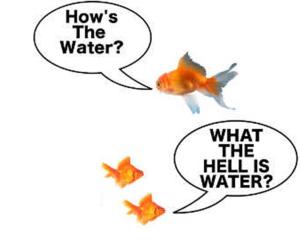
David Foster Wallace opened his 2005 commencement address at Kenyon College with this amusing parable, using it to set up some reflections on how, as Henry David Thoreau once said, to avoid arriving at the end of your life and coming to the realization that you have not lived. I was reminded of the story when Rabbi Steve Leder used it leading to a different interpretation when he was the guest on a recent episode of Kate Bowler’s podcast “Everything Happens.”
The rabbi quotes Marshall McLuhan who once said, “I don’t know who discovered water, but it wasn’t the fish.” Slightly more critical than David Foster Wallace, Leder notes that “the fish is the idiot that doesn’t know it’s in water,” then brings the point home by pointing out that we are the fish. A fish first learns what water is when it is jerked by a hook in its mouth tied to a fishing line out of the water, gasping for air. Similarly,
it is only pain and disruption that can do that for us. . . Disruption is the only thing that teaches us anything. Pain is the only teacher. Death is the only teacher. And is it worth it? No. Is it worthless? No.
So far the “what is water?” parable leads both to consideration of staying focused on what is important in one’s life and the teaching power of pain and suffering. There’s at least one more way in which the story can be read, a lesson that is particularly important to consider during Easter season. Jesus’ resurrection is both central to Christian faith and a miracle if one defines a “miracle” as something that is contrary to the laws of nature. But I’ve come to suspect over the years that miracles are hidden in plain sight, just as water is for the fish. Seeing them requires a different sort of awareness and attention.
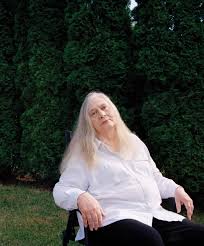 A recent rereading of Marilynne Robinson’s beautiful novel Gilead reminded me of a fruitful space concerning miracles, a space that I’ve learned to occupy more and more over the past several years. In Gilead, a rural Congregational minister in his late seventies is writing a memoir for his young son, an only child unexpectedly born to Rev. Ames and his much-younger wife Lila when Ames is seventy.
Ames expects to die long before the boy is grown, and Gilead is his love letter to his son containing as much guidance and wisdom as Ames can muster. One of Ames’ greatest continuing insights concerns the sacredness of all things. As he nears the end of his life, he pays close attention to the mystery and miracle of things most of us dismiss as “ordinary.” Toward the end of the novel, Ames writes:
It has seemed to me sometimes as though the Lord breathes on this poor gray ember of Creation and it turns to radiance–for a moment or a year or the span of a life. And then it sinks back into itself again, and to look at it no one would know it had anything to do with fire, or light. . . . But the Lord is more constant and far more extravagant than we think. Wherever you turn your eyes the world can shine like transfiguration. You don’t have to bring a thing to it except a little willingness to see. Only, who has the courage to see it?
Good question. It takes a lot more courage to embrace this world with all of its imperfections and disappointments as a spectacular and continuing divine miracle than to step back and bemoan the fact that it seldom is the miracle we would have performed had it been up to us. It isn’t up to us—the power and glory of our created, sacred world is far above our pay scale.
The older I get, the more inclined I am to look for intimations of the divine in places both unusual and mundane. Sometimes favor seems to drop into the day as light as a feather and as ephemeral as a wisp of smoke, while at other times transcendence invades the everyday in ways that only the most deliberately blind could miss. Jeanne and I call such events “Big Bird moments” and have come to expect them as a normal part of our lives.
Then there are other reminders that we are not alone and that this is not all there is which, instead of dropping in from outside, arise from within our deepest selves. In one of her many insightful essays, Marilynne Robinson refers to these as moments when we discover that “we are more than we are,” moments she describes as follows:
By this I mean to suggest the feeling all of us have who try something difficult and find that, for a moment or two perhaps, we succeed beyond our aspirations. The character on the page speaks in her own voice, goes her own way. The paintbrush takes life in the painter’s hand, the violin plays itself. There is no answer to the inevitable questions: Where did that idea come from? How did you get that effect? Again, particulars are lacking. We have no language to describe the sense of a second order of reality that comes with these assertions of higher insights and will override even very settled intentions, when we are fortunate.
In my own life, these moments occur most often in the classroom; I have also experienced such moments on the organ or piano bench. When I walk out of a classroom thinking “Whoa! Where did that come from?” I am realizing that I am more than I am, and I had nothing to do with it. When I am able to improvise a bridge between the penultimate and final verse of a hymn on the fly that is far better than I could have come up with if I had thought about it, I have the “sense of a second order of reality” that Robinson is talking about. Sure, it could be luck, chance, a confluence of unknown events, or Scrooge’s blob of undigested cheese. But I choose to consider such moments as “thin places” where the membrane between the here and now and what is greater than us becomes so porous as to almost disappear.
Such moments cannot be planned, nor can they be manufactured. But they can be witnessed rather than ignored. Recognizing them requires a shift in attitude and focus that needs to be cultivated—it’s something I’ve been working on, with mixed success, for the past several years. We are surrounded by moments of pure grace, moments when, as Anne Lamott writes, “suddenly you’re in a different universe from the one where you were stuck, and there was absolutely no way for you get there on your own.” We are surrounded by such moments if we only have the eyes to see them. Just as fish swimming in water, we are immersed in the miraculous.
Previous Post

April 25, 2023
The Story of God and Us
Next Post

April 30, 2023 A Bunch of Communists in the Book of Acts
Recent Comments
"Mary did have a choice. And she was able to make it before the Holy ..."
"i cannot read beyond your recommendations for the books since i like to have a ..."
"AI will never be able to utter with honesty, feeling, or humility, the greeting: "Namaste".It ..."
"They do. I'm sure you could find discussions of the same topic from any of ..."
Browse Our Archives
Select a Category abortion Advent AI Angels Artificial intelligence atheism attention baptism Baptists beauty belief Benedictines Bible bicycling Big Bird books Bovina Camaldoli hermitage Canada Catholicism cats certainty change Christianity Christmas Collegeville Covid-19 creativity Development of Western Civilization dogs doubt Easter Enneagram Epiphany Episcopal ethics Eucharist evil extroverts Facebook faith family fear flowers forgiveness freedom friends God goodness grace happiness heaven hell history Holy Spirit Holy Week hope human nature humility humor idolatry incarnation introverts irreverence Islam Jeanne Jesus Joe Biden joy Judaism justice Kamala Harris knowledge Lent listen literature liturgy love Marsue Memorial Day miracles movies music mystery mythology NPR Old Testament optimism paradox peace Penguins philosophy piano podcast politics power prayer Protestantism Providence College Religion Rhode Island sabbatical sacrament science seeing silence Simone Weil Socrates soul sports St. John's College stories suffering tattoo teaching technology television theology thinking time tolerance transcendence travel trees trust truth Uncategorized Vermont wisdom wonder writing
Select a Month May 2026 April 2026 March 2026 February 2026 January 2026 December 2025 November 2025 October 2025 September 2025 August 2025 July 2025 June 2025 May 2025 April 2025 March 2025 February 2025 January 2025 December 2024 November 2024 October 2024 September 2024 August 2024 July 2024 June 2024 May 2024 April 2024 March 2024 February 2024 January 2024 December 2023 November 2023 October 2023 September 2023 August 2023 July 2023 June 2023 May 2023 April 2023 March 2023 February 2023 January 2023 December 2022 November 2022 October 2022 September 2022 August 2022 July 2022 June 2022 May 2022 April 2022 March 2022 February 2022 January 2022 December 2021 November 2021 October 2021 September 2021 August 2021 July 2021 June 2021 May 2021 April 2021 March 2021 February 2021 January 2021 December 2020 November 2020 October 2020 September 2020 August 2020 July 2020 June 2020 May 2020 April 2020 March 2020 February 2020 January 2020 December 2019 November 2019 October 2019 September 2019 August 2019 July 2019 June 2019 May 2019 April 2019 March 2019 February 2019 January 2019 December 2018 November 2018 October 2018 September 2018 August 2018 July 2018 June 2018 May 2018 April 2018 March 2018 February 2018 January 2018 December 2017 November 2017 October 2017 September 2017 August 2017 July 2017 June 2017 May 2017 April 2017 March 2017 February 2017 January 2017 December 2016 November 2016 October 2016 September 2016 August 2016 July 2016 June 2016 May 2016 April 2016 March 2016 February 2016 January 2016 December 2015 November 2015 October 2015 September 2015 August 2015 July 2015 June 2015 May 2015 April 2015 March 2015 February 2015 January 2015 December 2014 November 2014 October 2014 September 2014 August 2014 July 2014 June 2014 May 2014 April 2014 March 2014 February 2014 January 2014 December 2013 November 2013 October 2013 September 2013 August 2013 July 2013 June 2013 May 2013 April 2013 March 2013 February 2013 January 2013 December 2012 November 2012 October 2012 September 2012
Follow Us!
TAKE THE
Religious Wisdom Quiz
What is the Christian teaching about humility?
Select your answer to see how you score.
Be proud always Boast often Demand honor Value others above yourself
Books by This Author Books by Vance G. Morgan
Related posts from Freelance Christianity

The Lonely Pawn: On Faith, Doubt, and Meaning


AI and Love: When a Chatbot Becomes a...

TRENDING AT PATHEOS Progressive Christian

What Being a Modern-Day Apostle Means to Me
In my last column, I discussed the ins and outs of modern-day...

Did Ancient China Once Worship the God of...
Across human history, a common thread weaves through the origins of the...

Love Your Neighbor – Including Earth-Kin: Lev. 19,...
God’s command to love your neighbor means acting in an ethical and...

Lead a Church Study of “Jesus and Lao...
Guest writer Jack Thomas (The Irreverent Reverend) reflects on leading his church...

Pastoral Wisdom for Responding to Sermon Pushback
Getting sermon pushback on your social justice sermon? Learn practical, Proverbs-based strategies...

Principles for Understanding the Apostolic Ministry Today
Whenever people discover that my formal ministry title is "apostle," as in...
view all Progressive Christian blogs
What Are Your Thoughts?leave a comment
Ad-Free & Subscriber Log-In Subscription Support
- About Us
- 2026 Calendar
- Videos
- Podcasts
- Library of World Religions
- Faith In Media Tracker
- Advertise With Us
- Write for Us
- Privacy Policy
- Terms of Service
- Do Not Sell My Data
- Contact Us
- Radiant Digital
- Manage Newsletter Subscriptions
- Unsubscribe From Notifications
- Sitemap
Copyright 2008-2026, Patheos. All rights reserved.
Subscription Support Ad-Free & Subscriber Log-In
Follow Patheos