
BuddhistCatholicContemplativeEvangelicalGeneral ChristianHinduJewishLatter-day SaintMuslimNew VisionsProgressive Christian
Beliefs
- Buddhist
- Catholic
- Contemplative
- Evangelical
- General Christian
- Hindu
- Jewish
- Latter-day Saint
- More Voices
- Muslim
- New Visions
- Pagan
- Progressive Christian
Topics
- Religion News
- Food and Religion
- Sports and Religion
- Religious Art
- Religious Music and Entertainment
- Religious Events
- History and Religion
- Style and Religion
- Politics and Religion
- Women in Religion
- Recreation Outdoors and Religion
- Business Finance and Religion
- Careers Workplace and Religion
- Education and Religion
- Family Parenting and Religion
- Health Fitness and Religion
- Home and Religion
- Relationships and Religion
- Technology and Religion
- Travel and Religion
Columnists
- Buddhist Columnists
- Business Finance and Religion Columnists
- Careers Workplace and Religion Columnists
- Catholic Columnists
- Contemplative Columnists
- Education and Religion Columnists
- Evangelists Columnists
- Family Parenting and Religion Columnists
- General Christian Columnists
- Health Fitness and Religion Columnists
- Hindu Columnists
- History and Religion Columnists
- Home and Religion Columnists
- Jewish Columnists
- More Voices Columnists
- Latter Day Columnists
- Muslim Columnists
- New Visions Columnists
- Nonreligious Columnists
- Pagan Columnists
- Politics and Religion Columnists
- Progressive Columnists
- Recreation Outdoors and Religion Columnists
- Relationships and Religion Columnists
- Religion News Columnists
- Religious Art Columnists
- Religious Events Columnists
- Religious Music and Entertainment Columnists
- Sports and Religion Columnists
- Style and Religion Columnists
- Technology and Religion Columnists
- Travel and Religion Columnists
- Women in Religion Columnists
Resource Library
- 2026 Calendar
- Library of World Religions
- The 100 Most Holy Places on Earth
- Patheos Answers
- Podcasts
- Videos
- Faith Leaders Database
- Anglican Episcopalian
- Bahai
- Baptist
- Buddhism
- Christianity
- Confucianism
- Eastern Orthodoxy
- Hinduism
- Holiness and Pentecostal
- ISKCON
- Islam
- Judaism
- Lutheran
- Methodist
- The Church of Jesus Christ of Latter-day Saints
- New Age
- Paganism
- Presbytarian and Reformed
- Protestantism
- Religion Behind the Scenes
- Roman Catholic
- Scientology
- Shia Islam
- Sikhism
- Sufism
- Sunni Islam
- Taoism
- Zen
- See all religions
Research Tools
 Ad-Free & Subscriber Log-In Subscription Support
Ad-Free & Subscriber Log-In Subscription Support
Follow Patheos 

- Trending:
- Forgiveness
- |
- Marriage
- |
- Consciousness
- |
- Death Penalty
- |
- Election
- |
- Halloween

- Home
- Progressive Christian
- Spiritual Punctuation
Spiritual Punctuation
Last updated on: August 21, 2025 at 1:35 pm by Vance Morgan
Spiritual Punctuation 2025-08-21T13:35:24-04:00 Vance Morgan
Patheos Explore the world's faith through different perspectives on religion and spirituality! Patheos has the views of the prevalent religions and spiritualities of the world.
In my life-long spiritual journey, the decade of my twenties was the charismatic decade. No, that was not when I began to develop my current charismatic personality—that’s when I first encountered the Christian charismatic movement.
![pentecostal[1]](https://wp-media.patheos.com/blogs/sites/766/2017/11/pentecostal1-300x170.jpg)
For the uninitiated, the charismatic movement was (and is) marked positively by an infusion of divine energy into churches and denominations that had for too long lived out the negative side of Paul’s observation that “the letter kills, but the spirit gives life.” For those whose whole experience of the Christian faith has been defined by rote repetition of stale and worn out practices and observances, the exuberant and often unpredictable energy of charismatic worship can be both exhilarating and frightening.
My Baptist minister father, who for better and worse was my most important spiritual influence growing up, always considered himself a “maverick” in the McCain tradition, part of the Christian denomination into which he was born and then ordained, but also an outlier pressing against the envelope from inside. This regularly caused problems for him with both the faculty of and the monetary contributors to the small Bible school he had founded and of which he was President. The Bible Institute of New England was barely keeping its head above water in the summer of 1974 when my father and I drove 2300 miles from Vermont to New Mexico as he delivered me to my first semester at St. John’s College in Santa Fe. He frequently fretted during the trip about the financial instability of his Bible school, wondering how much longer it would last.
After leaving me at school, he stayed within a couple hundred miles of Santa Fe for a few days in case I got homesick and didn’t want to stay. During a hike in a Colorado meadow one of those days, he asked God for guidance and peace—in response, as he described it, he received a vivid vision and began ecstatically speaking in a language he did not understand. In charismatic language, he had received the gift of tongues—a powerful sign of the infusion of the Holy Spirit. Not surprisingly, the faculty and financial supporters of the Bible Institute of New England were not ready to get on board with an already-maverick-turned-charismatic President. BINE soon closed its doors and morphed into a retreat/conference center slash place for spiritual misfits to hang out called Winterhill.
I experienced Winterhill for the first time a year later when I returned to Vermont for summer vacation. The get-togethers at Winterhill looked like a tiny version of Woodstock, with hippie-ish twenty and thirty-somethings sitting in a large circle, strumming guitars, banging on drums, shaking tambourines, singing music offensive to my classically trained ear, eyes closed and hands raised, regularly violating the Apostle Paul’s directive that worship should be done “decently and in order.” Worship was interrupted regularly by words of prophecy, speaking in tongues, laying on of hands for all manner of prayer and healing—all benevolently overseen by my father and a few other leaders. It looked just like a sixties love-in, without the drugs and sex (I think).
Winterhill lasted for only a couple of years, but my fringe relationship with the charismatic movement continued for years, from time spent at a large charismatic church in Florida where my father was one of the “elders” to St. Matthew’s Cathedral in Laramie, Wyoming, where I experienced for the first time the dynamic but volatile relationship between charismatic spiritual energies and traditional Episcopal liturgies.
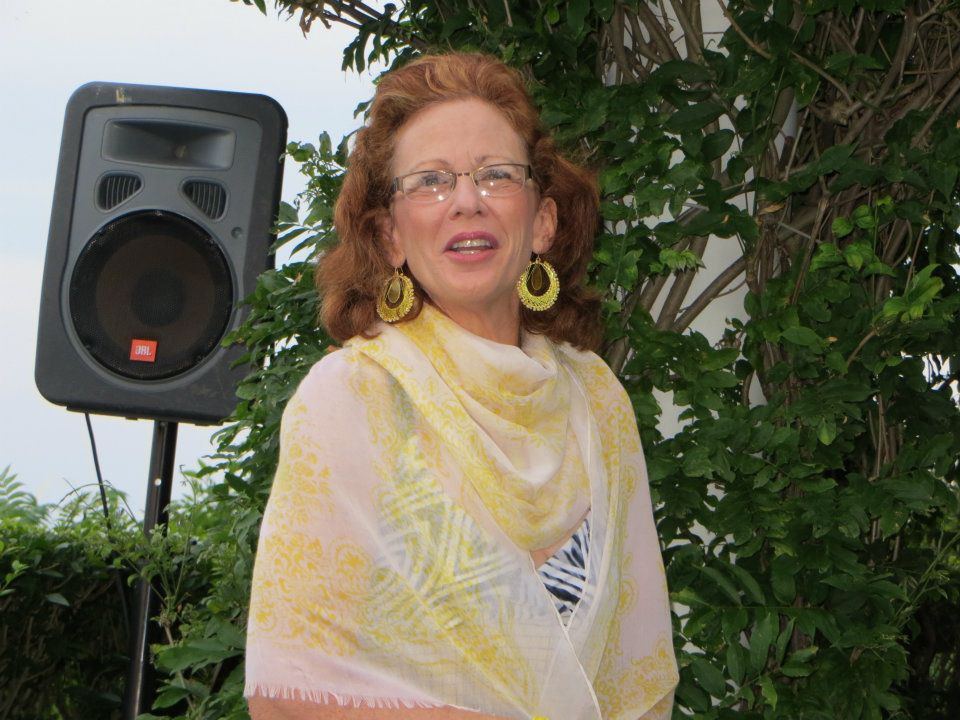
Top it off with being introduced by my parents to a beautiful red-haired force of nature whose dynamic spirituality was shaped by the Catholic charismatic movement in the seventies, and the tension between charismatic life and my own introverted personality and love for traditional liturgy and worship was here to stay. Jeanne is a daily reminder of the power and beauty of charisma at its best, while I carry within me a lived history containing many examples of how the charismatic movement can injure and go wrong.
The charismatic movement takes its name from the Greek word meaning “gift” or “favor,” referring to the gifts of the Holy Spirit mentioned on several occasions in Paul’s letters, including the passage from First Corinthians read at church this morning. Depending on where one looks, there are as many as nine of them, ranging from prophecy and healings to tongues and their interpretation.
In my experience, as soon as people start talking about the gifts of the Spirit, they start ranking them in importance (although Paul does not) and accordingly create a pecking order, seeking as humans often do to harness power by containing it. I have been witness to many arguments between people trying to make sense of what Paul says—churches and denominations have split over this. The problem is that Paul was writing letters, not theological treatises. He’s not always consistent, and much of what he writes is crafted specifically for the people to whom he is writing.
After more than thirty years of struggling with charisma and the life of faith, I’ve come to think that the greatest value in thinking and talking about the gifts of the Spirit is psychological rather than doctrinal. Paul always mentions the gifts in the context of the larger community, making clear that no one has all of the gifts, that an individual should not be judged for lacking any of them, but that just as a healthy body needs the active contribution of many parts, so a healthy community of believers requires the active infusion of all of the talents and abilities referenced as “gifts.” Each person’s abilities and talents are uniquely theirs, a part of their spiritual personality.
The important question for each of us to ask is: What do I have to offer? Because I spend most of my life, at work and outside, with words, I’ve started thinking about spiritual gifts and abilities in terms of how we organize and structure our language–punctuation marks. Each punctuation mark plays an important and unique role in the structuring of the written and spoken word. In Writing Tools, Roy Peter Clark offers this quick and snappy reminder of the roles played by the major players:
If a period is a stop sign, then what kind of traffic flow is created by other marks? The comma is a speed bump, the semicolon is what a driver education teacher calls a “rolling stop”; the parenthetical expression is a detour; the colon is a flashing yellow light that announces something important up ahead; the dash is a tree branch in the road.
I leave it to you to decide where the question mark [ ? ] ellipsis [ . . . ] and exclamation point [ ! ] fit in this driving analogy.
Now think about yourself: your personality, your strengths, your weaknesses, what you are the “go to” person for, the things that you know you need help with. If you were a punctuation mark, which one would you be? Which punctuation mark best captures your special contributions to the whole? Think about yourself alone, at work, with your friends, your family, your faith community if you have one. Just as the variety of punctuation marks serves a vast panoply of words and meaning, the vast range of personal strengths and weaknesses, talents and foibles, contribute to the beauty of the human whole. What is your special contribution? Which punctuation mark best captures you?
P.S.: I am a semicolon.
Previous Post
February 8, 2020
The Gospel at Gun-Point

Browse Our Archives
Select a Category abortion Advent AI Angels Artificial intelligence atheism attention baptism Baptists beauty belief Benedictines Bible bicycling Big Bird books Bovina Camaldoli hermitage Canada Catholicism cats certainty change Christianity Christmas Collegeville Covid-19 creativity Development of Western Civilization dogs doubt Easter Enneagram Epiphany Episcopal ethics Eucharist evil extroverts Facebook faith family fear flowers forgiveness freedom friends God goodness grace happiness heaven hell history Holy Spirit Holy Week hope human nature humility humor idolatry incarnation introverts irreverence Islam Jeanne Jesus Joe Biden joy Judaism justice Kamala Harris knowledge Lent listen literature liturgy love Marsue Memorial Day miracles movies music mystery mythology NPR Old Testament optimism paradox peace Penguins philosophy piano podcast politics power prayer Protestantism Providence College Religion Rhode Island sabbatical sacrament science seeing silence Simone Weil Socrates soul sports St. John's College stories suffering tattoo teaching technology television theology thinking time tolerance transcendence travel trees trust truth Uncategorized Vermont wisdom wonder writing
Select a Month May 2026 April 2026 March 2026 February 2026 January 2026 December 2025 November 2025 October 2025 September 2025 August 2025 July 2025 June 2025 May 2025 April 2025 March 2025 February 2025 January 2025 December 2024 November 2024 October 2024 September 2024 August 2024 July 2024 June 2024 May 2024 April 2024 March 2024 February 2024 January 2024 December 2023 November 2023 October 2023 September 2023 August 2023 July 2023 June 2023 May 2023 April 2023 March 2023 February 2023 January 2023 December 2022 November 2022 October 2022 September 2022 August 2022 July 2022 June 2022 May 2022 April 2022 March 2022 February 2022 January 2022 December 2021 November 2021 October 2021 September 2021 August 2021 July 2021 June 2021 May 2021 April 2021 March 2021 February 2021 January 2021 December 2020 November 2020 October 2020 September 2020 August 2020 July 2020 June 2020 May 2020 April 2020 March 2020 February 2020 January 2020 December 2019 November 2019 October 2019 September 2019 August 2019 July 2019 June 2019 May 2019 April 2019 March 2019 February 2019 January 2019 December 2018 November 2018 October 2018 September 2018 August 2018 July 2018 June 2018 May 2018 April 2018 March 2018 February 2018 January 2018 December 2017 November 2017 October 2017 September 2017 August 2017 July 2017 June 2017 May 2017 April 2017 March 2017 February 2017 January 2017 December 2016 November 2016 October 2016 September 2016 August 2016 July 2016 June 2016 May 2016 April 2016 March 2016 February 2016 January 2016 December 2015 November 2015 October 2015 September 2015 August 2015 July 2015 June 2015 May 2015 April 2015 March 2015 February 2015 January 2015 December 2014 November 2014 October 2014 September 2014 August 2014 July 2014 June 2014 May 2014 April 2014 March 2014 February 2014 January 2014 December 2013 November 2013 October 2013 September 2013 August 2013 July 2013 June 2013 May 2013 April 2013 March 2013 February 2013 January 2013 December 2012 November 2012 October 2012 September 2012
Follow Us!
TAKE THE
Religious Wisdom Quiz
Who wrote the Book of Acts?
Select your answer to see how you score.
Luke Peter Mark Paul
Books by This Author Books by Vance G. Morgan
Related posts from Freelance Christianity

The Lonely Pawn: On Faith, Doubt, and Meaning


AI and Love: When a Chatbot Becomes a...

TRENDING AT PATHEOS Progressive Christian

What Being a Modern-Day Apostle Means to Me
In my last column, I discussed the ins and outs of modern-day...

Did Ancient China Once Worship the God of...
Across human history, a common thread weaves through the origins of the...

Love Your Neighbor – Including Earth-Kin: Lev. 19,...
God’s command to love your neighbor means acting in an ethical and...

Lead a Church Study of “Jesus and Lao...
Guest writer Jack Thomas (The Irreverent Reverend) reflects on leading his church...

Pastoral Wisdom for Responding to Sermon Pushback
Getting sermon pushback on your social justice sermon? Learn practical, Proverbs-based strategies...

Principles for Understanding the Apostolic Ministry Today
Whenever people discover that my formal ministry title is "apostle," as in...
view all Progressive Christian blogs
Ad-Free & Subscriber Log-In Subscription Support
- About Us
- 2026 Calendar
- Videos
- Podcasts
- Library of World Religions
- Faith In Media Tracker
- Advertise With Us
- Write for Us
- Privacy Policy
- Terms of Service
- Do Not Sell My Data
- Contact Us
- Radiant Digital
- Manage Newsletter Subscriptions
- Unsubscribe From Notifications
- Sitemap
Copyright 2008-2026, Patheos. All rights reserved.
Subscription Support Ad-Free & Subscriber Log-In
Follow Patheos