
BuddhistCatholicContemplativeEvangelicalGeneral ChristianHinduJewishLatter-day SaintMuslimNew VisionsProgressive Christian
Beliefs
- Buddhist
- Catholic
- Contemplative
- Evangelical
- General Christian
- Hindu
- Jewish
- Latter-day Saint
- More Voices
- Muslim
- New Visions
- Pagan
- Progressive Christian
Topics
- Religion News
- Food and Religion
- Sports and Religion
- Religious Art
- Religious Music and Entertainment
- Religious Events
- History and Religion
- Style and Religion
- Politics and Religion
- Women in Religion
- Recreation Outdoors and Religion
- Business Finance and Religion
- Careers Workplace and Religion
- Education and Religion
- Family Parenting and Religion
- Health Fitness and Religion
- Home and Religion
- Relationships and Religion
- Technology and Religion
- Travel and Religion
Columnists
- Buddhist Columnists
- Business Finance and Religion Columnists
- Careers Workplace and Religion Columnists
- Catholic Columnists
- Contemplative Columnists
- Education and Religion Columnists
- Evangelists Columnists
- Family Parenting and Religion Columnists
- General Christian Columnists
- Health Fitness and Religion Columnists
- Hindu Columnists
- History and Religion Columnists
- Home and Religion Columnists
- Jewish Columnists
- More Voices Columnists
- Latter Day Columnists
- Muslim Columnists
- New Visions Columnists
- Nonreligious Columnists
- Pagan Columnists
- Politics and Religion Columnists
- Progressive Columnists
- Recreation Outdoors and Religion Columnists
- Relationships and Religion Columnists
- Religion News Columnists
- Religious Art Columnists
- Religious Events Columnists
- Religious Music and Entertainment Columnists
- Sports and Religion Columnists
- Style and Religion Columnists
- Technology and Religion Columnists
- Travel and Religion Columnists
- Women in Religion Columnists
Resource Library
- 2026 Calendar
- Library of World Religions
- The 100 Most Holy Places on Earth
- Patheos Answers
- Podcasts
- Videos
- Faith Leaders Database
- Anglican Episcopalian
- Bahai
- Baptist
- Buddhism
- Christianity
- Confucianism
- Eastern Orthodoxy
- Hinduism
- Holiness and Pentecostal
- ISKCON
- Islam
- Judaism
- Lutheran
- Methodist
- The Church of Jesus Christ of Latter-day Saints
- New Age
- Paganism
- Presbytarian and Reformed
- Protestantism
- Religion Behind the Scenes
- Roman Catholic
- Scientology
- Shia Islam
- Sikhism
- Sufism
- Sunni Islam
- Taoism
- Zen
- See all religions
Research Tools
 Ad-Free & Subscriber Log-In Subscription Support
Ad-Free & Subscriber Log-In Subscription Support
Follow Patheos 

- Trending:
- Forgiveness
- |
- Marriage
- |
- Consciousness
- |
- Death Penalty
- |
- Election
- |
- Halloween

- Home
- Progressive Christian
- Sometimes, Getting Stoned is a Bad Thing
Sometimes, Getting Stoned is a Bad Thing
Last updated on: May 10, 2020 at 6:44 am by Vance Morgan
Sometimes, Getting Stoned is a Bad Thing 2020-05-10T06:44:13-04:00 Vance Morgan
Patheos Explore the world's faith through different perspectives on religion and spirituality! Patheos has the views of the prevalent religions and spiritualities of the world.
The New Testament reading in today’s lectionary line-up is the stoning of Stephen from the Book of Acts. This reminds me of a brief conversation I had with a Benedictine monk a decade ago. “Happy Stoning Day!” Brother John said as he greeted me after noon prayer the day after Christmas. December 26 is the Feast of St. Stephen, officially designated as the first Christian martyr. Brother John, a guitar-picking, out-of-the-box product of the sixties, is not your typical Benedictine. “I’ve always wanted to play Dylan’s ‘Everybody Must Get Stoned’ at mass on St. Stephen’s Day.” My kind of monk—irreverence is my favorite virtue.
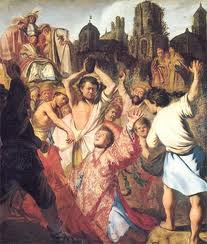
Stephen has always been a problem for me. Although Acts has been one of my favorite books of the Bible since childhood, with its exciting stories of early Christians acting just like imperfect and flawed human beings, regularly bailed out of tough circumstances by the Holy Spirit, I used to get uncomfortable when Stephen came up in church or Sunday School. Stephen died for Jesus, just like some missionaries in South America that we were always hearing about. “Would you die for Jesus, just like Stephen did?” the pastor or teacher would ask, to which I (internally) would definitively answer “Hell No!” Dying for Jesus ranked right up there with becoming a missionary to deepest, darkest Africa as things I definitely did NOT intend to do with my life. If being a good Christian meant being willing to die for Jesus, I thought, then maybe I should check out what they do at the Catholic church on the other, spiritually mysterious side of town.
Little did I know then that Catholics have been making martyrdom into a cottage industry for centuries. Although I’m much more aware of it now, since I’ve been married to a cradle Catholic and have taught in Catholic institutions of higher education for the past thirty-plus years, my few remaining Protestant sensibilities are still occasionally jangled by the Catholic fixation on martyrs. Just a few years ago I burst out laughing when I stumbled across a very peculiar piece of artwork while looking around a little church in Boston’s North End. Peculiar in the sense that it was a statue of a demure young woman holding a plate with two eyeballs on it. “Oh yeah, that’s Saint Lucy,” Jeanne said in the same tone of voice with which she might have gestured in my direction and said “Oh yeah, that’s my husband” to an inquiring stranger. Saint Lucy is either the patron saint of opticians or disgusting hors d’oeuvres, I suppose.
Philosophy has only one martyr—Socrates, the godfather of Western philosophy. And there is at least one very interesting parallel between Socrates and Stephen. They both clearly were looking to die. Stephen’s sermon in Acts 7 is so inflammatory that he’s got the crowd “gnashing their teeth” by the time he’s done. For some reason, the audience did not take kindly to being called “stiff-necked people, uncircumcised in heart and ears” or “the betrayers and murderers” of God.
Similarly, Socrates’ defense against trumped-up but serious charges in Plato’s Apology is anything but apologetic. Now he didn’t have to die. His Athenian accusers were not interested in killing him—they just wanted him to go away and stop annoying everyone. And had he played the game by the accepted rules, that’s what would have happened. Instead, he is so obnoxious and unwilling to compromise his principles that he is found guilty by a 281 to 220 vote—the Athenians liked big juries. During the subsequent sentencing portion of the trial, the unrepentant Socrates is so offensive that more jurors vote for the death penalty than voted “guilty” in the first place. A few weeks later he drinks a hemlock cocktail and dies, exhibiting the same calm and composure in the face of death as Stephen four and a half centuries later.
I love teaching philosophy and at least claim to believe, just as the godfather did, that “the unexamined life is not worth living.” But I’m just about certain that I would no more die for philosophy than I would have died for Jesus as a kid. My model in such things is Aristotle. About fifty years after Socrates drank the hemlock, Aristotle found himself in political trouble eerily similar to the problems that had brought Socrates to trial. Aristotle’s response was to hike up his toga and haul ass out of Athens, reportedly saying that he did not want to give the Athenians the opportunity to sin against philosophy twice. He went on to write his greatest books, was hired as Alexander the Great’s personal tutor, and no one holds it against him that he left town. I’m with Aristotle—life strikes me as an attractive alternative to death.
What things are worth dying for? I asked one of my classes that question a few years ago, and their response was both revealing and disturbing. Or their lack of response, rather—they couldn’t come up with anything. Family, friends, country, beliefs of any sort—none of my students was willing to say that she or he would be willing to die for any of these. That class, perhaps more than any other I’ve ever been in, changed me. It wasn’t that they weren’t sure which things were worth dying for—I’ve obviously struggled with that one too. It’s that the very idea of loving or believing in something so much that one would stake one’s life on it was foreign to them.
When relating this story to some friends a few days after my encounter with Brother John, one of them (a lifelong activist in various causes) reminded me of something that Dr. King said: “If you don’t have something to die for, you don’t have anything to live for” (or something like that). My students’ apathetic response to my question gave me a clear direction in my teaching that has been a focus ever since. Although over the years I’ve not embraced many of the candidates offered to me as being worth dying for, it’s always been clear to me that something is—perhaps the whole point of both the intellectual and spiritual quest is to find out what that “something” is.
Part of my teaching vocation has become convincing my students to commit to something, to believe in something, to stake their lives, at least figuratively, on the possibility of something’s being true. Learning and growth depend on it. William James once challenged a bunch of college students to “believe that life is worth living, and your belief will help create the fact.” Sometimes commitment comes before content.
I don’t think that “everybody must get stoned”—fortunately my reality doesn’t demand a “life or death” choice of me. But I do believe that something else Socrates said while sitting in prison waiting for his execution is true—there is a difference between living and living well. The difference, I think, has more to do with seeking than finding.
Previous Post

May 8, 2020
How to Speak About Gun Violence
Next Post

May 12, 2020 This is the Way the Semester Ends
Browse Our Archives
Select a Category abortion Advent AI Angels Artificial intelligence atheism attention baptism Baptists beauty belief Benedictines Bible bicycling Big Bird books Bovina Camaldoli hermitage Canada Catholicism cats certainty change Christianity Christmas Collegeville Covid-19 creativity Development of Western Civilization dogs doubt Easter Enneagram Epiphany Episcopal ethics Eucharist evil extroverts Facebook faith family fear flowers forgiveness freedom friends God goodness grace happiness heaven hell history Holy Spirit Holy Week hope human nature humility humor idolatry incarnation introverts irreverence Islam Jeanne Jesus Joe Biden joy Judaism justice Kamala Harris knowledge Lent listen literature liturgy love Marsue Memorial Day miracles movies music mystery mythology NPR Old Testament optimism paradox peace Penguins philosophy piano podcast politics power prayer Protestantism Providence College Religion Rhode Island sabbatical sacrament science seeing silence Simone Weil Socrates soul sports St. John's College stories suffering tattoo teaching technology television theology thinking time tolerance transcendence travel trees trust truth Uncategorized Vermont wisdom wonder writing
Select a Month May 2026 April 2026 March 2026 February 2026 January 2026 December 2025 November 2025 October 2025 September 2025 August 2025 July 2025 June 2025 May 2025 April 2025 March 2025 February 2025 January 2025 December 2024 November 2024 October 2024 September 2024 August 2024 July 2024 June 2024 May 2024 April 2024 March 2024 February 2024 January 2024 December 2023 November 2023 October 2023 September 2023 August 2023 July 2023 June 2023 May 2023 April 2023 March 2023 February 2023 January 2023 December 2022 November 2022 October 2022 September 2022 August 2022 July 2022 June 2022 May 2022 April 2022 March 2022 February 2022 January 2022 December 2021 November 2021 October 2021 September 2021 August 2021 July 2021 June 2021 May 2021 April 2021 March 2021 February 2021 January 2021 December 2020 November 2020 October 2020 September 2020 August 2020 July 2020 June 2020 May 2020 April 2020 March 2020 February 2020 January 2020 December 2019 November 2019 October 2019 September 2019 August 2019 July 2019 June 2019 May 2019 April 2019 March 2019 February 2019 January 2019 December 2018 November 2018 October 2018 September 2018 August 2018 July 2018 June 2018 May 2018 April 2018 March 2018 February 2018 January 2018 December 2017 November 2017 October 2017 September 2017 August 2017 July 2017 June 2017 May 2017 April 2017 March 2017 February 2017 January 2017 December 2016 November 2016 October 2016 September 2016 August 2016 July 2016 June 2016 May 2016 April 2016 March 2016 February 2016 January 2016 December 2015 November 2015 October 2015 September 2015 August 2015 July 2015 June 2015 May 2015 April 2015 March 2015 February 2015 January 2015 December 2014 November 2014 October 2014 September 2014 August 2014 July 2014 June 2014 May 2014 April 2014 March 2014 February 2014 January 2014 December 2013 November 2013 October 2013 September 2013 August 2013 July 2013 June 2013 May 2013 April 2013 March 2013 February 2013 January 2013 December 2012 November 2012 October 2012 September 2012
Follow Us!
TAKE THE
Religious Wisdom Quiz
Who said, "Lord, do not hold this sin against them"?
Select your answer to see how you score.
Paul Peter Stephen John
Books by This Author Books by Vance G. Morgan
Related posts from Freelance Christianity

The Lonely Pawn: On Faith, Doubt, and Meaning


AI and Love: When a Chatbot Becomes a...

TRENDING AT PATHEOS Progressive Christian

What Being a Modern-Day Apostle Means to Me
In my last column, I discussed the ins and outs of modern-day...

Did Ancient China Once Worship the God of...
Across human history, a common thread weaves through the origins of the...

Love Your Neighbor – Including Earth-Kin: Lev. 19,...
God’s command to love your neighbor means acting in an ethical and...

Lead a Church Study of “Jesus and Lao...
Guest writer Jack Thomas (The Irreverent Reverend) reflects on leading his church...

Pastoral Wisdom for Responding to Sermon Pushback
Getting sermon pushback on your social justice sermon? Learn practical, Proverbs-based strategies...

Principles for Understanding the Apostolic Ministry Today
Whenever people discover that my formal ministry title is "apostle," as in...
view all Progressive Christian blogs
Ad-Free & Subscriber Log-In Subscription Support
- About Us
- 2026 Calendar
- Videos
- Podcasts
- Library of World Religions
- Faith In Media Tracker
- Advertise With Us
- Write for Us
- Privacy Policy
- Terms of Service
- Do Not Sell My Data
- Contact Us
- Radiant Digital
- Manage Newsletter Subscriptions
- Unsubscribe From Notifications
- Sitemap
Copyright 2008-2026, Patheos. All rights reserved.
Subscription Support Ad-Free & Subscriber Log-In
Follow Patheos