
BuddhistCatholicContemplativeEvangelicalGeneral ChristianHinduJewishLatter-day SaintMuslimNew VisionsProgressive Christian
Beliefs
- Buddhist
- Catholic
- Contemplative
- Evangelical
- General Christian
- Hindu
- Jewish
- Latter-day Saint
- More Voices
- Muslim
- New Visions
- Pagan
- Progressive Christian
Topics
- Religion News
- Food and Religion
- Sports and Religion
- Religious Art
- Religious Music and Entertainment
- Religious Events
- History and Religion
- Style and Religion
- Politics and Religion
- Women in Religion
- Recreation Outdoors and Religion
- Business Finance and Religion
- Careers Workplace and Religion
- Education and Religion
- Family Parenting and Religion
- Health Fitness and Religion
- Home and Religion
- Relationships and Religion
- Technology and Religion
- Travel and Religion
Columnists
- Buddhist Columnists
- Business Finance and Religion Columnists
- Careers Workplace and Religion Columnists
- Catholic Columnists
- Contemplative Columnists
- Education and Religion Columnists
- Evangelists Columnists
- Family Parenting and Religion Columnists
- General Christian Columnists
- Health Fitness and Religion Columnists
- Hindu Columnists
- History and Religion Columnists
- Home and Religion Columnists
- Jewish Columnists
- More Voices Columnists
- Latter Day Columnists
- Muslim Columnists
- New Visions Columnists
- Nonreligious Columnists
- Pagan Columnists
- Politics and Religion Columnists
- Progressive Columnists
- Recreation Outdoors and Religion Columnists
- Relationships and Religion Columnists
- Religion News Columnists
- Religious Art Columnists
- Religious Events Columnists
- Religious Music and Entertainment Columnists
- Sports and Religion Columnists
- Style and Religion Columnists
- Technology and Religion Columnists
- Travel and Religion Columnists
- Women in Religion Columnists
Resource Library
- 2026 Calendar
- Library of World Religions
- The 100 Most Holy Places on Earth
- Patheos Answers
- Podcasts
- Videos
- Faith Leaders Database
- Anglican Episcopalian
- Bahai
- Baptist
- Buddhism
- Christianity
- Confucianism
- Eastern Orthodoxy
- Hinduism
- Holiness and Pentecostal
- ISKCON
- Islam
- Judaism
- Lutheran
- Methodist
- The Church of Jesus Christ of Latter-day Saints
- New Age
- Paganism
- Presbytarian and Reformed
- Protestantism
- Religion Behind the Scenes
- Roman Catholic
- Scientology
- Shia Islam
- Sikhism
- Sufism
- Sunni Islam
- Taoism
- Zen
- See all religions
Research Tools
 Ad-Free & Subscriber Log-In Subscription Support
Ad-Free & Subscriber Log-In Subscription Support
Follow Patheos 

- Trending:
- Forgiveness
- |
- Marriage
- |
- Consciousness
- |
- Death Penalty
- |
- Election
- |
- Halloween

- Home
- Progressive Christian
- The Divine Uncertainty Principle
The Divine Uncertainty Principle
Last updated on: January 26, 2018 at 8:49 am by Vance Morgan
The Divine Uncertainty Principle 2018-01-26T08:49:12-04:00 Vance Morgan
Patheos Explore the world's faith through different perspectives on religion and spirituality! Patheos has the views of the prevalent religions and spiritualities of the world.
Fifteen or more years ago my professional writing and research interests were largely focused on the philosophical implications of various interesting and important issues in the sciences, particularly the theory of natural selection in biology and philosophy’s contributions to cognitive science (an interdisciplinary investigation of consciousness and the brain involving biology, neuroscience, physics, psychology, linguistics, philosophy, and several other disciplines).
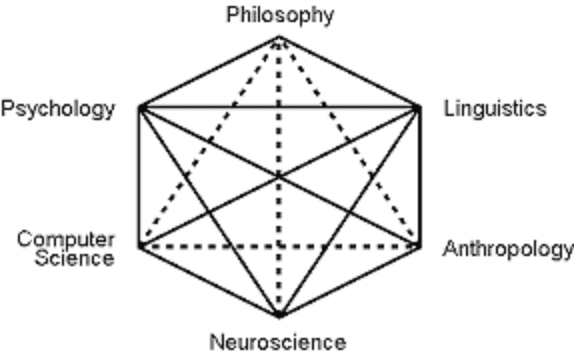
For a number of reasons my professional research and writing energies have shifted over the years, but I still have a fond place in my heart for the intersection of philosophy and science. So when I read an essayist the other day compare the Christian claim that Jesus was both human and divine to the famous “uncertainty principle” in physics, my virtual ears perked up. With apologies in advance for oversimplification to my colleagues and friends in various physics departments, let’s take a look.
The uncertainty principle was introduced by Werner Heisenberg in 1927 as a statement of one of the most fascinating and mind-bending features of the world of quantum physics. The principle states that the more precisely the position of some particle is determined, the less precisely its momentum can be known, and vice versa. In other words, you cannot know both the position and the speed of a particle at the same time. The notion that two directly measurable quantities of the same physical particle cannot be nailed down simultaneously sounds odd, to say the least, but philosophers have long grappled with the problem of how to handle two truths that are both obviously and logically true yet are incompatible with each other.
Dualistic philosophers, for example, claim that a human being consists of two fundamentally incompatible things, a physical body and a non-physical mind. Yet we know experientially that our bodies and minds interact with each other all the time—something mind and body should not be able to do if they are substantially different. So are they really different sorts of things or not? Princess Elizabeth of Bohemia once pressed the great philosopher René Descartes so vigorously on this in their letter correspondence–How can mind and body be different substances and still interact in the human person?—that he finally wrote, in essence, “I don’t know. They just do.” Not a great philosophical argument, but at least he tried.
Which brings me back to the Ian Frazier essay I mentioned in the first paragraph that got me to thinking about all of this. Frazier writes that
Whatever Jesus actually looked like, trying to adjust him to any physical image is misleading, because he was both God and man. This concept is so powerful, yet so challenging, to hold in the mind that whole huge heresies have thrown in the towel and simply picked one side or the other. I try to think of Jesus as being a sort of oscillation between the two. A similar idea in physics is the uncertainty principle, which says you cannot know both the position and the speed of a particle at the same time. Jesus was God and man oscillating back and forth—either and both, both or either, simultaneously.
That’s a peculiar notion, to say the least—I’m kind of picturing Jesus in an endless dance between two incompatible states at such speed as to make mere mortals unable to tell that he’s moving at all. I’m not sure it’s very helpful theologically. But this got me to thinking about another possible application of quantum craziness to Christianity: “Uncertainty Principle Jesus” is nothing when compared to another hybrid of Christianity and physics: “Schrödinger’s God.”
One of the strangest features of quantum physics is that an atom or photon can exist as a combination of multiple states corresponding to different possible outcomes—a situation called a “quantum superposition.” We know that superposition actually occurs at the subatomic level, because there are observable instances in which a single particle is demonstrated to be in multiple locations at the same time. One of the leading quantum theory interpretations says that an atom or photon remains in this indeterminate superposition until it is observed, before which only probabilities can be predicted.
We cannot know with certainty ahead of time, in other words, which one of the various possible states the atom or photon will settle into. The act of measurement affects the system, causing the set of probabilities to reduce to only one of the possible values immediately after the measurement. Yet another demonstration of the apparent conflict between what quantum theory tells us is true about the nature and behavior of matter on the microscopic level and what we observe to be true about the nature and behavior of matter on the macroscopic level — everything visible to the unaided human eye.
In 1935 Austrian physicist Erwin Schrödinger came up with a thought experiment that drives the point home directly, a thought experiment that has come to be known as Schrödinger’s Cat. Place a living cat into a steel chamber, along with a device containing a vial of hydrocyanic acid, a radioactive substance. If even a single atom of the substance decays during the test period, a relay mechanism will trip a hammer, which will, in turn, break the vial and kill the cat.
But given quantum superposition, we cannot know whether or not an atom of the substance has decayed, and consequently cannot know whether the vial has been broken, the hydrocyanic acid released, and the cat killed. Since we cannot know, according to the quantum superposition of states, the cat is both dead and alive.
It is only when we break open the box and learn the condition of the cat that the superposition is lost, and the cat becomes one or the other (dead or alive). This situation is sometimes called quantum indeterminacy or the observer’s paradox: the observation or measurement itself affects an outcome, so that the outcome as such does not exist unless the measurement is made.
Scientists, philosophers, and fiction writers have had a field day with Schrödinger’s poor cat for the past eighty years; Schrödinger himself is rumored to have said, later in life, that he wished he had never met that cat. Further discussion of the scientific implications of a world in which things at a foundational level are radically uncertain until we interact with them is well above my knowledge and pay grade.
But transfer Schrödinger’s thought experiment to a classic question from an entirely different field of human inquiry: Does God exist? The traditional and common sense assumption is that there is a solid “yes” or “no” answer to this question—something either exists or it doesn’t, right? The issue then becomes “what do you mean by ‘God’?’ and “what evidence do you consider to be relevant to the question?” The fact that things immediately spin out of control in terms of complication and confusion does not obviate the fact that the original question—Does God exist?—sounds for all the world like a simple “yes” or “no” sort of question.
But in a Schrödinger world, even that isn’t clear. Just as in a world of physical indeterminacy Schrödinger’s cat is both alive and dead until someone looks, so in a world of theological indeterminacy God both exists and does not exist—until someone looks. As long as the discussion is abstract and verbal, no progress can be made and no conclusions can be drawn. But as soon as one commits to action rather than abstractions, something happens. Just as one finds the cat either dead or alive when the box is opened, so one finds a living or dead deity when one engages actively.
What one finds is not simply a function of what’s going on “out there.” It is equally a function of what one brings to the activity of looking. We tend to find what we are looking for. At the very least, the God question is answered experientially, not intellectually. For the blind man who said after Jesus had left town that “I was blind, and now I see,” his new faith was based on an experience, not argumentation. Before the experience, no argument would have convinced him. After the experience, no argument was necessary.
Previous Post

January 23, 2018
Fact or Opinion?
Next Post

January 28, 2018 Changing the Water
Browse Our Archives
Select a Category abortion Advent AI Angels Artificial intelligence atheism attention baptism Baptists beauty belief Benedictines Bible bicycling Big Bird books Bovina Camaldoli hermitage Canada Catholicism cats certainty change Christianity Christmas Collegeville Covid-19 creativity Development of Western Civilization dogs doubt Easter Enneagram Epiphany Episcopal ethics Eucharist evil extroverts Facebook faith family fear flowers forgiveness freedom friends God goodness grace happiness heaven hell history Holy Spirit Holy Week hope human nature humility humor idolatry incarnation introverts irreverence Islam Jeanne Jesus Joe Biden joy Judaism justice Kamala Harris knowledge Lent listen literature liturgy love Marsue Memorial Day miracles movies music mystery mythology NPR Old Testament optimism paradox peace Penguins philosophy piano podcast politics power prayer Protestantism Providence College Religion Rhode Island sabbatical sacrament science seeing silence Simone Weil Socrates soul sports St. John's College stories suffering tattoo teaching technology television theology thinking time tolerance transcendence travel trees trust truth Uncategorized Vermont wisdom wonder writing
Select a Month May 2026 April 2026 March 2026 February 2026 January 2026 December 2025 November 2025 October 2025 September 2025 August 2025 July 2025 June 2025 May 2025 April 2025 March 2025 February 2025 January 2025 December 2024 November 2024 October 2024 September 2024 August 2024 July 2024 June 2024 May 2024 April 2024 March 2024 February 2024 January 2024 December 2023 November 2023 October 2023 September 2023 August 2023 July 2023 June 2023 May 2023 April 2023 March 2023 February 2023 January 2023 December 2022 November 2022 October 2022 September 2022 August 2022 July 2022 June 2022 May 2022 April 2022 March 2022 February 2022 January 2022 December 2021 November 2021 October 2021 September 2021 August 2021 July 2021 June 2021 May 2021 April 2021 March 2021 February 2021 January 2021 December 2020 November 2020 October 2020 September 2020 August 2020 July 2020 June 2020 May 2020 April 2020 March 2020 February 2020 January 2020 December 2019 November 2019 October 2019 September 2019 August 2019 July 2019 June 2019 May 2019 April 2019 March 2019 February 2019 January 2019 December 2018 November 2018 October 2018 September 2018 August 2018 July 2018 June 2018 May 2018 April 2018 March 2018 February 2018 January 2018 December 2017 November 2017 October 2017 September 2017 August 2017 July 2017 June 2017 May 2017 April 2017 March 2017 February 2017 January 2017 December 2016 November 2016 October 2016 September 2016 August 2016 July 2016 June 2016 May 2016 April 2016 March 2016 February 2016 January 2016 December 2015 November 2015 October 2015 September 2015 August 2015 July 2015 June 2015 May 2015 April 2015 March 2015 February 2015 January 2015 December 2014 November 2014 October 2014 September 2014 August 2014 July 2014 June 2014 May 2014 April 2014 March 2014 February 2014 January 2014 December 2013 November 2013 October 2013 September 2013 August 2013 July 2013 June 2013 May 2013 April 2013 March 2013 February 2013 January 2013 December 2012 November 2012 October 2012 September 2012
Follow Us!
TAKE THE
Religious Wisdom Quiz
Which Psalm contains "Create in me a clean heart, O God"?
Select your answer to see how you score.
Psalm 51 Psalm 110 Psalm 33 Psalm 70
Books by This Author Books by Vance G. Morgan
Related posts from Freelance Christianity

The Lonely Pawn: On Faith, Doubt, and Meaning



TRENDING AT PATHEOS Progressive Christian

What Being a Modern-Day Apostle Means to Me
In my last column, I discussed the ins and outs of modern-day...

Did Ancient China Once Worship the God of...
Across human history, a common thread weaves through the origins of the...

Love Your Neighbor – Including Earth-Kin: Lev. 19,...
God’s command to love your neighbor means acting in an ethical and...

Lead a Church Study of “Jesus and Lao...
Guest writer Jack Thomas (The Irreverent Reverend) reflects on leading his church...

Pastoral Wisdom for Responding to Sermon Pushback
Getting sermon pushback on your social justice sermon? Learn practical, Proverbs-based strategies...

Principles for Understanding the Apostolic Ministry Today
Whenever people discover that my formal ministry title is "apostle," as in...
view all Progressive Christian blogs
Ad-Free & Subscriber Log-In Subscription Support
- About Us
- 2026 Calendar
- Videos
- Podcasts
- Library of World Religions
- Faith In Media Tracker
- Advertise With Us
- Write for Us
- Privacy Policy
- Terms of Service
- Do Not Sell My Data
- Contact Us
- Radiant Digital
- Manage Newsletter Subscriptions
- Unsubscribe From Notifications
- Sitemap
Copyright 2008-2026, Patheos. All rights reserved.
Subscription Support Ad-Free & Subscriber Log-In
Follow Patheos