
BuddhistCatholicContemplativeEvangelicalGeneral ChristianHinduJewishLatter-day SaintMuslimNew VisionsProgressive Christian
Beliefs
- Buddhist
- Catholic
- Contemplative
- Evangelical
- General Christian
- Hindu
- Jewish
- Latter-day Saint
- More Voices
- Muslim
- New Visions
- Pagan
- Progressive Christian
Topics
- Religion News
- Food and Religion
- Sports and Religion
- Religious Art
- Religious Music and Entertainment
- Religious Events
- History and Religion
- Style and Religion
- Politics and Religion
- Women in Religion
- Recreation Outdoors and Religion
- Business Finance and Religion
- Careers Workplace and Religion
- Education and Religion
- Family Parenting and Religion
- Health Fitness and Religion
- Home and Religion
- Relationships and Religion
- Technology and Religion
- Travel and Religion
Columnists
- Buddhist Columnists
- Business Finance and Religion Columnists
- Careers Workplace and Religion Columnists
- Catholic Columnists
- Contemplative Columnists
- Education and Religion Columnists
- Evangelists Columnists
- Family Parenting and Religion Columnists
- General Christian Columnists
- Health Fitness and Religion Columnists
- Hindu Columnists
- History and Religion Columnists
- Home and Religion Columnists
- Jewish Columnists
- More Voices Columnists
- Latter Day Columnists
- Muslim Columnists
- New Visions Columnists
- Nonreligious Columnists
- Pagan Columnists
- Politics and Religion Columnists
- Progressive Columnists
- Recreation Outdoors and Religion Columnists
- Relationships and Religion Columnists
- Religion News Columnists
- Religious Art Columnists
- Religious Events Columnists
- Religious Music and Entertainment Columnists
- Sports and Religion Columnists
- Style and Religion Columnists
- Technology and Religion Columnists
- Travel and Religion Columnists
- Women in Religion Columnists
Resource Library
- 2026 Calendar
- Library of World Religions
- The 100 Most Holy Places on Earth
- Patheos Answers
- Podcasts
- Videos
- Faith Leaders Database
- Anglican Episcopalian
- Bahai
- Baptist
- Buddhism
- Christianity
- Confucianism
- Eastern Orthodoxy
- Hinduism
- Holiness and Pentecostal
- ISKCON
- Islam
- Judaism
- Lutheran
- Methodist
- The Church of Jesus Christ of Latter-day Saints
- New Age
- Paganism
- Presbytarian and Reformed
- Protestantism
- Religion Behind the Scenes
- Roman Catholic
- Scientology
- Shia Islam
- Sikhism
- Sufism
- Sunni Islam
- Taoism
- Zen
- See all religions
Research Tools
 Ad-Free & Subscriber Log-In Subscription Support
Ad-Free & Subscriber Log-In Subscription Support
Follow Patheos 

- Trending:
- Forgiveness
- |
- Marriage
- |
- Consciousness
- |
- Death Penalty
- |
- Election
- |
- Halloween

- Home
- Progressive Christian
- #SayThisNotThat
#SayThisNotThat
Last updated on: March 9, 2021 at 7:00 am by Vance Morgan
#SayThisNotThat 2021-03-08T22:25:07-04:00 Vance Morgan
Patheos Explore the world's faith through different perspectives on religion and spirituality! Patheos has the views of the prevalent religions and spiritualities of the world.
To clarify thought, to discredit the intrinsically meaningless words, and to define the use of others by precise analysis—to do this, strange though it many appear, might be a way of saving human lives. Simone Weil
The above passage comes from Simone Weil’s essay “The Power of Words,” written in the late 1930s as Nazi forces, ideology, and propaganda swept across Europe. Weil’s concern in the essay is to push back against the insidious ways in which language can be misused and twisted in the service of ideology, nationalism, tribalism, and violence. Seventy-five years later, her essay reads as if it was written yesterday.
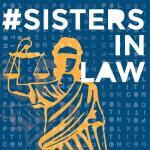 I was reminded of Weil’s essay the other day as I listened to an episode of #SistersInLaw, a new podcast featuring Jill Wine-Banks, Barbara McQuade, Joyce Vance, and Kimberley Atkins, described in their promo material as a “brilliant team of political and legal masterminds” who “pull the curtain back on how our government actually works, take on the corrupt, share their wisdom, and give us their rulings on the latest in politics, law, and culture.” If you are a regular viewer of MSNBC, you’ll recognize these women as regular contributors to any number of shows. I highly recommend their podcast.
In their 2/19/21 episode, titled #SayThisNotThat, the four contributors discuss why words matter in our national legislation and dialogue. The starting point for the conversation was the Biden administration’s new directive to various governmental agencies, including the Department of Homeland Security, that terms like “alien” and “illegal alien” should not be used in internal or public communication, replacing such terms with less dehumanizing words like “non-citizen.” This diretictive reverses directives from the former Trump administration in 2018 when then Attorney General Jeff Sessions told the Justice Department to use the word “alien” in their legal pleadings and communications instead of phrases like “undocumented immigrants,” since the word “alien” is used in 1950s and 1960s legislation related to immigration.
The podcast conversation continued to explore the various ways in which words change over time and we are challenged to change our vocabulary accordingly. It is often a challenge to keep abreast of the current word or phrase that is considered appropriate for a demographic or group of people; for many, the task smacks of political correctness and liberal pearl-clutching.
In my experience, such reactions usually come from persons whose gender or race have provided them with a barrier of privileged protection from weaponized words and phrases. As Barb McQuade says in the podcast, “language evolves, and we must evolve with it. It’s on all of us to keep up.” At the end of this section of the podcast, Jill Wine-Banks directs us to #SayThisNotThat, a Twitter hashtag that she has started that calls attention to language that is inaccurate, misleading, and/or offensive. Check it out!
The podcast conversation reminded me of when my youngest son Justin was visiting from out West for a few days a couple of years ago. He joined me on Friday afternoon at the small pub on campus to experience the weekly 4:00 weekly gathering of a dozen or so faculty to share a beer (or two or three) at the end of the academic week (we’ve been doing this weekly on Zoom for the past year). Justin enjoyed meeting my colleagues, but about fifteen minutes into the gathering, I noticed that he was paying more attention to his phone than to us, frequently poking furiously on the screen as he texted someone somewhere.
Thinking this was somewhat rude, I asked him what was so important on his phone that he couldn’t focus on drinking beer with the group.
- Justin: Oh, it’s one of my asshole fraternity brothers! He’s complaining on Facebook about “illegal aliens” and “illegals”; I’m telling him to stop using that word!
- Colleague 1: What word should he use instead?
- Justin (figuring this is a pop quiz): Undocumented immigrants.
- Colleague 2 (with a follow-up quiz question): What’s wrong with “illegal alien?”
- Justin: A human being can’t be “illegal.” A person might do illegal things, but a person can’t be illegal. Anyways, calling someone an “illegal” isn’t even grammatically correct. “Illegal” is an adjective, not a noun.
- Colleague 3: Excellent answer.
- Me: Good home training.
Words do indeed matter.
Last year, I wrote on this blog about challenging myself to eliminate words and expressions having to do with guns, shooting, and firearms from my written and verbal communication.
I am pleased to report that my project is going well. I’ve done particularly well in writing, and have at least advanced far enough in changing my spoken communication to be able to hear it when it arises (it was unconsciously pervasive at first). It takes work, but it’s worth the effort.
For a person of faith, it is important to pay attention to the words you use when engaging with people of similar faith with whom you disagree. The title of this blog, “Freelance Christianity,” by joining two words that don’t usually go together, is specifically intended to let the reader know that what she or he is about to encounter might not always use familiar words and phrases in traditional ways.
Not surprisingly, professed Christians have described me in their comments as a “heretic,” “secularist,” “pretend Christian,” “a servant of Satan,” and a “blasphemer.” I, on the other, am committed to always referring to such critics as “fellow Christians,” even though I would frequently like to drop an f-bomb in between “fellow” and “Christians.” Why? Because “Christianity” is not owned by any version of the faith. It is not a tribal label. Christianity is a big tent, covering a multitude of various commitments. Using the word to reflect that is yet another opportunity to indicate that words matter.
Ludwig Wittgenstein once asked, tongue-in-cheek, “How do I know what I’m thinking until I hear myself say it?” Our words shape our reality—let’s get serious about them.
Previous Post

March 7, 2021
Ah Yes, I Remember It Well . . . or do I?
Next Post
March 11, 2021 Jesus Didn't Care About Family Values
Browse Our Archives
Select a Category abortion Advent AI Angels Artificial intelligence atheism attention baptism Baptists beauty belief Benedictines Bible bicycling Big Bird books Bovina Camaldoli hermitage Canada Catholicism cats certainty change Christianity Christmas Collegeville Covid-19 creativity Development of Western Civilization dogs doubt Easter Enneagram Epiphany Episcopal ethics Eucharist evil extroverts Facebook faith family fear flowers forgiveness freedom friends God goodness grace happiness heaven hell history Holy Spirit Holy Week hope human nature humility humor idolatry incarnation introverts irreverence Islam Jeanne Jesus Joe Biden joy Judaism justice Kamala Harris knowledge Lent listen literature liturgy love Marsue Memorial Day miracles movies music mystery mythology NPR Old Testament optimism paradox peace Penguins philosophy piano podcast politics power prayer Protestantism Providence College Religion Rhode Island sabbatical sacrament science seeing silence Simone Weil Socrates soul sports St. John's College stories suffering tattoo teaching technology television theology thinking time tolerance transcendence travel trees trust truth Uncategorized Vermont wisdom wonder writing
Select a Month May 2026 April 2026 March 2026 February 2026 January 2026 December 2025 November 2025 October 2025 September 2025 August 2025 July 2025 June 2025 May 2025 April 2025 March 2025 February 2025 January 2025 December 2024 November 2024 October 2024 September 2024 August 2024 July 2024 June 2024 May 2024 April 2024 March 2024 February 2024 January 2024 December 2023 November 2023 October 2023 September 2023 August 2023 July 2023 June 2023 May 2023 April 2023 March 2023 February 2023 January 2023 December 2022 November 2022 October 2022 September 2022 August 2022 July 2022 June 2022 May 2022 April 2022 March 2022 February 2022 January 2022 December 2021 November 2021 October 2021 September 2021 August 2021 July 2021 June 2021 May 2021 April 2021 March 2021 February 2021 January 2021 December 2020 November 2020 October 2020 September 2020 August 2020 July 2020 June 2020 May 2020 April 2020 March 2020 February 2020 January 2020 December 2019 November 2019 October 2019 September 2019 August 2019 July 2019 June 2019 May 2019 April 2019 March 2019 February 2019 January 2019 December 2018 November 2018 October 2018 September 2018 August 2018 July 2018 June 2018 May 2018 April 2018 March 2018 February 2018 January 2018 December 2017 November 2017 October 2017 September 2017 August 2017 July 2017 June 2017 May 2017 April 2017 March 2017 February 2017 January 2017 December 2016 November 2016 October 2016 September 2016 August 2016 July 2016 June 2016 May 2016 April 2016 March 2016 February 2016 January 2016 December 2015 November 2015 October 2015 September 2015 August 2015 July 2015 June 2015 May 2015 April 2015 March 2015 February 2015 January 2015 December 2014 November 2014 October 2014 September 2014 August 2014 July 2014 June 2014 May 2014 April 2014 March 2014 February 2014 January 2014 December 2013 November 2013 October 2013 September 2013 August 2013 July 2013 June 2013 May 2013 April 2013 March 2013 February 2013 January 2013 December 2012 November 2012 October 2012 September 2012
Follow Us!
TAKE THE
Religious Wisdom Quiz
What does Proverbs say about a soft answer?
Select your answer to see how you score.
It brings wealth It starts a fight It turns away wrath It is useless
Books by This Author Books by Vance G. Morgan
Related posts from Freelance Christianity

The Lonely Pawn: On Faith, Doubt, and Meaning


AI and Love: When a Chatbot Becomes a...

TRENDING AT PATHEOS Progressive Christian

What Being a Modern-Day Apostle Means to Me
In my last column, I discussed the ins and outs of modern-day...

Did Ancient China Once Worship the God of...
Across human history, a common thread weaves through the origins of the...

Love Your Neighbor – Including Earth-Kin: Lev. 19,...
God’s command to love your neighbor means acting in an ethical and...

Lead a Church Study of “Jesus and Lao...
Guest writer Jack Thomas (The Irreverent Reverend) reflects on leading his church...

Pastoral Wisdom for Responding to Sermon Pushback
Getting sermon pushback on your social justice sermon? Learn practical, Proverbs-based strategies...

Principles for Understanding the Apostolic Ministry Today
Whenever people discover that my formal ministry title is "apostle," as in...
view all Progressive Christian blogs
Ad-Free & Subscriber Log-In Subscription Support
- About Us
- 2026 Calendar
- Videos
- Podcasts
- Library of World Religions
- Faith In Media Tracker
- Advertise With Us
- Write for Us
- Privacy Policy
- Terms of Service
- Do Not Sell My Data
- Contact Us
- Radiant Digital
- Manage Newsletter Subscriptions
- Unsubscribe From Notifications
- Sitemap
Copyright 2008-2026, Patheos. All rights reserved.
Subscription Support Ad-Free & Subscriber Log-In
Follow Patheos