
BuddhistCatholicContemplativeEvangelicalGeneral ChristianHinduJewishLatter-day SaintMuslimNew VisionsProgressive Christian
Beliefs
- Buddhist
- Catholic
- Contemplative
- Evangelical
- General Christian
- Hindu
- Jewish
- Latter-day Saint
- More Voices
- Muslim
- New Visions
- Pagan
- Progressive Christian
Topics
- Religion News
- Food and Religion
- Sports and Religion
- Religious Art
- Religious Music and Entertainment
- Religious Events
- History and Religion
- Style and Religion
- Politics and Religion
- Women in Religion
- Recreation Outdoors and Religion
- Business Finance and Religion
- Careers Workplace and Religion
- Education and Religion
- Family Parenting and Religion
- Health Fitness and Religion
- Home and Religion
- Relationships and Religion
- Technology and Religion
- Travel and Religion
Columnists
- Buddhist Columnists
- Business Finance and Religion Columnists
- Careers Workplace and Religion Columnists
- Catholic Columnists
- Contemplative Columnists
- Education and Religion Columnists
- Evangelists Columnists
- Family Parenting and Religion Columnists
- General Christian Columnists
- Health Fitness and Religion Columnists
- Hindu Columnists
- History and Religion Columnists
- Home and Religion Columnists
- Jewish Columnists
- More Voices Columnists
- Latter Day Columnists
- Muslim Columnists
- New Visions Columnists
- Nonreligious Columnists
- Pagan Columnists
- Politics and Religion Columnists
- Progressive Columnists
- Recreation Outdoors and Religion Columnists
- Relationships and Religion Columnists
- Religion News Columnists
- Religious Art Columnists
- Religious Events Columnists
- Religious Music and Entertainment Columnists
- Sports and Religion Columnists
- Style and Religion Columnists
- Technology and Religion Columnists
- Travel and Religion Columnists
- Women in Religion Columnists
Resource Library
- 2026 Calendar
- Library of World Religions
- The 100 Most Holy Places on Earth
- Patheos Answers
- Podcasts
- Videos
- Faith Leaders Database
- Anglican Episcopalian
- Bahai
- Baptist
- Buddhism
- Christianity
- Confucianism
- Eastern Orthodoxy
- Hinduism
- Holiness and Pentecostal
- ISKCON
- Islam
- Judaism
- Lutheran
- Methodist
- The Church of Jesus Christ of Latter-day Saints
- New Age
- Paganism
- Presbytarian and Reformed
- Protestantism
- Religion Behind the Scenes
- Roman Catholic
- Scientology
- Shia Islam
- Sikhism
- Sufism
- Sunni Islam
- Taoism
- Zen
- See all religions
Research Tools
 Ad-Free & Subscriber Log-In Subscription Support
Ad-Free & Subscriber Log-In Subscription Support
Follow Patheos 

- Trending:
- Forgiveness
- |
- Marriage
- |
- Consciousness
- |
- Death Penalty
- |
- Election
- |
- Halloween

- Home
- Progressive Christian
- Ruining the Christian Brand
Ruining the Christian Brand
Last updated on: May 24, 2018 at 6:14 am by Vance Morgan
Ruining the Christian Brand 2018-05-24T06:14:53-04:00 Vance Morgan
Patheos Explore the world's faith through different perspectives on religion and spirituality! Patheos has the views of the prevalent religions and spiritualities of the world.
In “Slander,” from her latest collection of essays, What Are We Doing Here?, Marilynne Robinson writes that when she applied for the faculty position at the Iowa Writers’ Workshop at the University of Iowa where she spent her teaching career until her retirement in 2016, the job description said that candidates should be able to teach the Bible as literature. And so she did—something that I also have the privilege of doing as a professor at Providence College. She notes, though, that this often made her students uncomfortable, not because they didn’t appreciate the value of understanding the literary importance and influence of the Bible, but for another reason entirely.
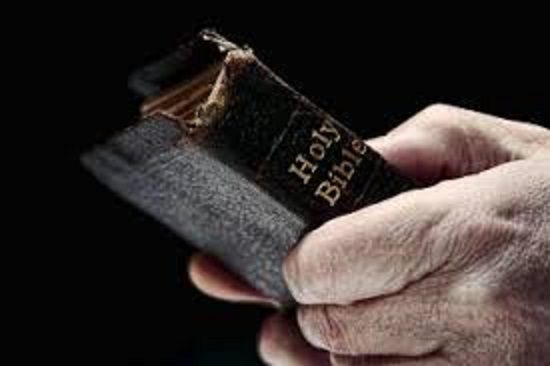
Many of them were uncomfortable at being seen carrying a Bible on campus because the groups who have been so successful at claiming Christianity as their own exclusive province have also been successful in associating it with intolerance, guns, and hostility to science, among other things.
Although I was born and raised in a conservative, evangelical Christian world, I spent much of my adult life keeping my Christian faith to myself as much as possible, at least partially for the reason Robinson describes. I have “come out” as a progressive Christian publicly over the past several years, but I still often wonder how it is that Christianity’s “brand” has become so twisted and tainted.
Robinson wonders the same thing—her reflections over the past decade on precisely how Christianity’s supposedly good name and reputation has been lost are among the best I have read.
In “Awakening,” from her 2014 essay collection The Givenness of Things, Robinson writes that
What some have seen as a resurgence of Christianity, or at least a bold defense of American cultural tradition . . . has brought a harshness, a bitterness, a crudeness, and a high-handedness into the public sphere . . . Its self-righteousness fuels the damnedest things.
Two years before the 2016 Presidential election, Robinson observed that “the word ‘Christian’ now is seen less as identifying an ethic, and more as identifying a demographic.” The role of millions of self-identifying Christians in electing Donald Trump as President is so well-documented that, since the 2016 election, the name “Christian” has come, in many people’s minds, to be synonymous with “white person (most likely male) who voted for Trump.”
For many professed Christians, “Christian” is used to justify a certain type of tribalism, a dividing of oneself from “Others” of various descriptions, and to energize a defensiveness that seeks to convince us that Christianity is a persecuted majority. In “The Sacred, the Human” from What are We Doing Here?, Robinson writes that
There is a large, loud faction who represent themselves as Christians, while speaking and acting with such contempt for “love your neighbor as yourself,” this most difficult commandment, that they have erected a sham moral system based on the principled rejection of it.
In what ways does this “sham moral system,” identified by many as compatible with Christianity, differ from the basic principles of an ethic built from the Gospels? Most basically and profoundly, the Gospels identify each person, regardless of race, gender, social status, power, or homeland, as equally valuable and precious in the eyes of God, as bearers of the divine image. Evidence in action of recognizing this truth, according to Jesus’ reported words, include clothing the naked, giving drink to the thirsty, and beating our swords into ploughshares. The words “stranger” and “alien” never have a negative connotation in Scripture, nor are the poor, disenfranchised, homeless, widows, or orphans ever the recipients of anything less than divine attention and love.
Somehow this essential foundation of a Christian ethic has been replaced with a “Christianity” that is more of a tribal label than a faith that aspires—imperfectly, because human beings are imperfect—to lift and unite human beings rather than to judge and divide them. The “Good news” of the Gospel is truly good news, and as Robinson points out, this is a message that the world hungers and thirsts for. But the “Christianity” that has become a tribal label for those who are “in” and an instrument of offense to those who are not is something entirely different. In “Slander,” Robinson writes that
Christianity is not scorned or rejected because it is the Gospel of faith, hope, and love but because this Christianity of theirs, on whatever pretext, is determined to bring bad news to the poor and the stranger, and is even self-righteous about this . . . the faith they urge on the rest of us is precisely deficient in Christianity. If slander is a factor in all this, the first object of slander, the one traduced, is Jesus of Nazareth. And this is not the work of the atheists.
To be fair, the attractions of tribalism are clear and obvious. The desire to belong, to be accepted, to know who is part of one’s group and to seek security and comfort in like-mindedness is a fundamental part of what human beings are. The problem with the Gospels is that they run contrary to many of our most natural and hard-wired human tendencies. As Robinson writes in “Awakening” from The Givenness of Things,
Christian ethics go steadfastly against the grain of what we consider human nature. The first will be last; to him who asks give; turn the other cheek; judge not. Identity, on the other hand, appeals to a constellation of the worst of human nature. It is worse than ordinary tribalism because it assumes a more than virtuous us on one side, and on the other a them who are very doubtful indeed, who are, in fact, a threat to all we hold dear.
To anyone who is inclined to attempt fitting their Christian faith into political and social straitjackets of separation along economic, racial, or nativist lines, remember from “Slander” the following crystal clear message from the Gospels.
In the great majority of cases, a sin is injury done to another person, other people, who, we must assume, God loves at least as much as he loves us. The loving-kindness Jesus models for us is very largely a matter of feeding and healing those in need of such care . . . Jesus makes it clear that he is one among the hungry, the thirsty, the naked, the imprisoned . . . After all, in order to identify himself with them, he parted the heavens and became a slave obedient unto death.
Christianity is not a brand or a demographic. It is a life, a commitment that cannot and must not be violated by separation, defensiveness, or fear. When great things are at stake, Christians should think and act like Christians. This would mean practicing self-restraint, curbing our speech, and remembering that all people, even those with whom we disagree most strongly and from whom we are most different, are owed the respect due to the divine image.
Previous Post
May 22, 2018
Why the Liberal Arts Matter
Next Post

May 27, 2018 Love and a Honda Accord Stationwagon
Browse Our Archives
Select a Category abortion Advent AI Angels Artificial intelligence atheism attention baptism Baptists beauty belief Benedictines Bible bicycling Big Bird books Bovina Camaldoli hermitage Canada Catholicism cats certainty change Christianity Christmas Collegeville Covid-19 creativity Development of Western Civilization dogs doubt Easter Enneagram Epiphany Episcopal ethics Eucharist evil extroverts Facebook faith family fear flowers forgiveness freedom friends God goodness grace happiness heaven hell history Holy Spirit Holy Week hope human nature humility humor idolatry incarnation introverts irreverence Islam Jeanne Jesus Joe Biden joy Judaism justice Kamala Harris knowledge Lent listen literature liturgy love Marsue Memorial Day miracles movies music mystery mythology NPR Old Testament optimism paradox peace Penguins philosophy piano podcast politics power prayer Protestantism Providence College Religion Rhode Island sabbatical sacrament science seeing silence Simone Weil Socrates soul sports St. John's College stories suffering tattoo teaching technology television theology thinking time tolerance transcendence travel trees trust truth Uncategorized Vermont wisdom wonder writing
Select a Month May 2026 April 2026 March 2026 February 2026 January 2026 December 2025 November 2025 October 2025 September 2025 August 2025 July 2025 June 2025 May 2025 April 2025 March 2025 February 2025 January 2025 December 2024 November 2024 October 2024 September 2024 August 2024 July 2024 June 2024 May 2024 April 2024 March 2024 February 2024 January 2024 December 2023 November 2023 October 2023 September 2023 August 2023 July 2023 June 2023 May 2023 April 2023 March 2023 February 2023 January 2023 December 2022 November 2022 October 2022 September 2022 August 2022 July 2022 June 2022 May 2022 April 2022 March 2022 February 2022 January 2022 December 2021 November 2021 October 2021 September 2021 August 2021 July 2021 June 2021 May 2021 April 2021 March 2021 February 2021 January 2021 December 2020 November 2020 October 2020 September 2020 August 2020 July 2020 June 2020 May 2020 April 2020 March 2020 February 2020 January 2020 December 2019 November 2019 October 2019 September 2019 August 2019 July 2019 June 2019 May 2019 April 2019 March 2019 February 2019 January 2019 December 2018 November 2018 October 2018 September 2018 August 2018 July 2018 June 2018 May 2018 April 2018 March 2018 February 2018 January 2018 December 2017 November 2017 October 2017 September 2017 August 2017 July 2017 June 2017 May 2017 April 2017 March 2017 February 2017 January 2017 December 2016 November 2016 October 2016 September 2016 August 2016 July 2016 June 2016 May 2016 April 2016 March 2016 February 2016 January 2016 December 2015 November 2015 October 2015 September 2015 August 2015 July 2015 June 2015 May 2015 April 2015 March 2015 February 2015 January 2015 December 2014 November 2014 October 2014 September 2014 August 2014 July 2014 June 2014 May 2014 April 2014 March 2014 February 2014 January 2014 December 2013 November 2013 October 2013 September 2013 August 2013 July 2013 June 2013 May 2013 April 2013 March 2013 February 2013 January 2013 December 2012 November 2012 October 2012 September 2012
Follow Us!
TAKE THE
Religious Wisdom Quiz
Which Christian holiday is celebrated on December 25th in most Western churches?
Select your answer to see how you score.
Pentecost Christmas Epiphany Advent
Books by This Author Books by Vance G. Morgan
Related posts from Freelance Christianity

The Lonely Pawn: On Faith, Doubt, and Meaning


AI and Love: When a Chatbot Becomes a...

TRENDING AT PATHEOS Progressive Christian

Why Christians Have a Sacred Duty to Vote:...
The Bible offers strong support for the sacred duty to vote. Here...

What Being a Modern-Day Apostle Means to Me
In my last column, I discussed the ins and outs of modern-day...

Did Ancient China Once Worship the God of...
Across human history, a common thread weaves through the origins of the...

Love Your Neighbor – Including Earth-Kin: Lev. 19,...
God’s command to love your neighbor means acting in an ethical and...

Lead a Church Study of “Jesus and Lao...
Guest writer Jack Thomas (The Irreverent Reverend) reflects on leading his church...

Principles for Understanding the Apostolic Ministry Today
Whenever people discover that my formal ministry title is "apostle," as in...
view all Progressive Christian blogs
Ad-Free & Subscriber Log-In Subscription Support
- About Us
- 2026 Calendar
- Videos
- Podcasts
- Library of World Religions
- Faith In Media Tracker
- Advertise With Us
- Write for Us
- Privacy Policy
- Terms of Service
- Do Not Sell My Data
- Contact Us
- Radiant Digital
- Manage Newsletter Subscriptions
- Unsubscribe From Notifications
- Sitemap
Copyright 2008-2026, Patheos. All rights reserved.
Subscription Support Ad-Free & Subscriber Log-In
Follow Patheos