
BuddhistCatholicContemplativeEvangelicalGeneral ChristianHinduJewishLatter-day SaintMuslimNew VisionsProgressive Christian
Beliefs
- Buddhist
- Catholic
- Contemplative
- Evangelical
- General Christian
- Hindu
- Jewish
- Latter-day Saint
- More Voices
- Muslim
- New Visions
- Pagan
- Progressive Christian
Topics
- Religion News
- Food and Religion
- Sports and Religion
- Religious Art
- Religious Music and Entertainment
- Religious Events
- History and Religion
- Style and Religion
- Politics and Religion
- Women in Religion
- Recreation Outdoors and Religion
- Business Finance and Religion
- Careers Workplace and Religion
- Education and Religion
- Family Parenting and Religion
- Health Fitness and Religion
- Home and Religion
- Relationships and Religion
- Technology and Religion
- Travel and Religion
Columnists
- Buddhist Columnists
- Business Finance and Religion Columnists
- Careers Workplace and Religion Columnists
- Catholic Columnists
- Contemplative Columnists
- Education and Religion Columnists
- Evangelists Columnists
- Family Parenting and Religion Columnists
- General Christian Columnists
- Health Fitness and Religion Columnists
- Hindu Columnists
- History and Religion Columnists
- Home and Religion Columnists
- Jewish Columnists
- More Voices Columnists
- Latter Day Columnists
- Muslim Columnists
- New Visions Columnists
- Nonreligious Columnists
- Pagan Columnists
- Politics and Religion Columnists
- Progressive Columnists
- Recreation Outdoors and Religion Columnists
- Relationships and Religion Columnists
- Religion News Columnists
- Religious Art Columnists
- Religious Events Columnists
- Religious Music and Entertainment Columnists
- Sports and Religion Columnists
- Style and Religion Columnists
- Technology and Religion Columnists
- Travel and Religion Columnists
- Women in Religion Columnists
Resource Library
- 2026 Calendar
- Library of World Religions
- The 100 Most Holy Places on Earth
- Patheos Answers
- Podcasts
- Videos
- Faith Leaders Database
- Anglican Episcopalian
- Bahai
- Baptist
- Buddhism
- Christianity
- Confucianism
- Eastern Orthodoxy
- Hinduism
- Holiness and Pentecostal
- ISKCON
- Islam
- Judaism
- Lutheran
- Methodist
- The Church of Jesus Christ of Latter-day Saints
- New Age
- Paganism
- Presbytarian and Reformed
- Protestantism
- Religion Behind the Scenes
- Roman Catholic
- Scientology
- Shia Islam
- Sikhism
- Sufism
- Sunni Islam
- Taoism
- Zen
- See all religions
Research Tools
 Ad-Free & Subscriber Log-In Subscription Support
Ad-Free & Subscriber Log-In Subscription Support
Follow Patheos 

- Trending:
- Forgiveness
- |
- Marriage
- |
- Consciousness
- |
- Death Penalty
- |
- Election
- |
- Halloween

- Home
- Progressive Christian
- Right-Brain Faith in a Left-Brain World
Right-Brain Faith in a Left-Brain World
Last updated on: June 8, 2022 at 8:37 am by Vance Morgan
Right-Brain Faith in a Left-Brain World 2022-06-08T08:37:54-04:00 Vance Morgan
Patheos Explore the world's faith through different perspectives on religion and spirituality! Patheos has the views of the prevalent religions and spiritualities of the world.
At age thirty-seven, Harvard trained brain scientist Jill Bolte Taylor woke up one morning with a splitting headache. As she tried to get ready for work, her mind began to deteriorate over the course of four hours to the point that she could not walk, talk, read, write, or recall any of her life. Taylor later learned that she had suffered a massive stroke in the left hemisphere of her brain. She lost a large portion of the cognitive skills that she had used, as we all do, to define her self-image and navigate her daily existence. In her book, My Stroke of Insight, Taylor writes that even in the midst of her stroke she recognized the irony of what was happening—a brain scientist suffering a brain hemorrhage. The research possibilities were endless!
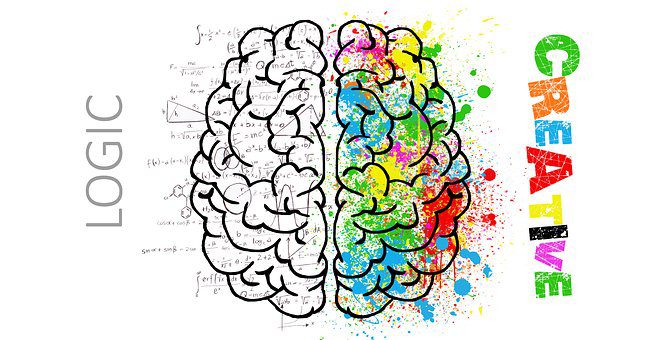
Most of us are familiar with the basics of the remarkable human brain. Between our ears and behind our eyes are the left and right brains, two halves responsible for very different aspects of our experience and personality. The two hemispheres are joined at the bottom by the corpus collosum, the part of the brain responsible for communication between the hemispheres via neural transmission. Briefly put, the left brain is responsible for the concept of time whereby our moments are divided into the past, present, and future. Facts, individuation, logic, separateness, sharp boundaries, details, hierarchical categorization, and the self-image that defines us as uniquely different from everything and everyone else are the domain of the left brain. Jill Bolte Taylor lost virtually all left brain function as a result of her stroke; it took her eight years of difficult and challenging rehabilitation to recover. But in her estimation, her stroke was in many ways a blessing. It allowed her right brain, for the first time, to be unencumbered by its partner.
As Taylor tells the story of her stroke, she notes that despite the confusion of inexorably losing her left brain function (it took her close to an hour to figure out how to dial out for help), she found herself in an unfamiliar internal place as her previously-neglected right brain kicked in.
For the right brain, frequently dominated by the left brain in Western culture, no time exists other than the present moment. While the left brain maintains separateness, difference, and autonomy, the right brain’s energies are directed to oneness, similarity, and connectedness with all things. Our right mind perceives each person as equal members of the human family, generating our ability to be empathetic, to walk in the shoes of another and feel their feelings.
Taylor reveled in the euphoria, peace, silence, and “nirvana” of her new right brain consciousness, so much so that she questioned whether she even wanted to “recover.” Through the long and difficult process of bringing her left brain back on line, Taylor reminded herself and others that she had not so much “lost” something as she was given a gift—the opportunity to choose who she would be and who she would no longer be.
I first met my right brain unencumbered by its neighboring left brain in a far less dramatic way. While on sabbatical as a Resident Scholar at the Collegeville Institute for Ecumenical and Cultural Research in Collegeville, Minnesota several years ago, I spent several times a day saying prayers and the psalms with the Benedictine monks at Saint John’s Abbey. It took a while to “step to the right” (Taylor’s phrase) and stop allowing my mind’s incessant chatter to dominate the underlying stillness and peace that began to poke its head through the quiet contemplation. I learned for the first time what the psalmist meant by “be still and know that I am God” (Ps 46:10). A verse from another psalm became my mantra: “Truly I have set my soul in silence and in peace. As a weaned child at its mother’s breast, so is my soul” (Ps 131:2).
I agree with Taylor that each of us can choose to step from the left brain energies that so frequently define selfhood and success into the joy and peace of the right brain; what I experienced at prayer with the monks changed my life. Even on the most complicated and challenging days, when I find myself bombarded simultaneously with demands from students, colleagues, administrators, friends, family, and the world at large, I can choose to let joy and peace replace frustration and disconnectedness. I can choose to be welcoming rather than judgmental, cooperative rather than combative. But it takes work. As Taylor writes, “If I want to retain my inner peace, I must be willing to consistently and persistently tend the garden of my mind moment by moment.”
The message of the Gospels is infused with right brain energy, as we are called to love those who our left brain identifies as different, step aside from our autonomous selves in the interest of serving others, and build communities of inclusion rather than of separateness. The sad truth, however, is that Christians often present themselves as more interested in splitting doctrinal hairs and sharply defining the differences that separate us both externally from non-Christians and internally from each other. We would do well to ask ourselves what difference it would make if we decided to infuse our daily faith walk with right brain rather than left brain energies.
When Jesus told his followers to stop worrying and “consider the lilies,” he was inviting them to “step to the right.” Not long after my sabbatical semester, I returned to Minnesota for a “Wisdom School” week at the House of Prayer just down the road from the Collegeville Institute. Cynthia Bourgeault, the retreat leader, told us that we should remind ourselves frequently to “be where you are, and do what you are doing.” To my left brain ears, her advice sounded both simplistic and impractical at first. But it has become one of the most important things anyone ever told me. Be mindful. Listen. Be quiet. And above all, be at peace.
Previous Post

September 6, 2018
What the Author Meant May Not Matter
Next Post

September 11, 2018 Seventeen Years Ago Today
Browse Our Archives
Select a Category abortion Advent AI Angels Artificial intelligence atheism attention baptism Baptists beauty belief Benedictines Bible bicycling Big Bird books Bovina Camaldoli hermitage Canada Catholicism cats certainty change Christianity Christmas Collegeville Covid-19 creativity Development of Western Civilization dogs doubt Easter Enneagram Epiphany Episcopal ethics Eucharist evil extroverts Facebook faith family fear flowers forgiveness freedom friends God goodness grace happiness heaven hell history Holy Spirit Holy Week hope human nature humility humor idolatry incarnation introverts irreverence Islam Jeanne Jesus Joe Biden joy Judaism justice Kamala Harris knowledge Lent listen literature liturgy love Marsue Memorial Day miracles movies music mystery mythology NPR Old Testament optimism paradox peace Penguins philosophy piano podcast politics power prayer Protestantism Providence College Religion Rhode Island sabbatical sacrament science seeing silence Simone Weil Socrates soul sports St. John's College stories suffering tattoo teaching technology television theology thinking time tolerance transcendence travel trees trust truth Uncategorized Vermont wisdom wonder writing
Select a Month May 2026 April 2026 March 2026 February 2026 January 2026 December 2025 November 2025 October 2025 September 2025 August 2025 July 2025 June 2025 May 2025 April 2025 March 2025 February 2025 January 2025 December 2024 November 2024 October 2024 September 2024 August 2024 July 2024 June 2024 May 2024 April 2024 March 2024 February 2024 January 2024 December 2023 November 2023 October 2023 September 2023 August 2023 July 2023 June 2023 May 2023 April 2023 March 2023 February 2023 January 2023 December 2022 November 2022 October 2022 September 2022 August 2022 July 2022 June 2022 May 2022 April 2022 March 2022 February 2022 January 2022 December 2021 November 2021 October 2021 September 2021 August 2021 July 2021 June 2021 May 2021 April 2021 March 2021 February 2021 January 2021 December 2020 November 2020 October 2020 September 2020 August 2020 July 2020 June 2020 May 2020 April 2020 March 2020 February 2020 January 2020 December 2019 November 2019 October 2019 September 2019 August 2019 July 2019 June 2019 May 2019 April 2019 March 2019 February 2019 January 2019 December 2018 November 2018 October 2018 September 2018 August 2018 July 2018 June 2018 May 2018 April 2018 March 2018 February 2018 January 2018 December 2017 November 2017 October 2017 September 2017 August 2017 July 2017 June 2017 May 2017 April 2017 March 2017 February 2017 January 2017 December 2016 November 2016 October 2016 September 2016 August 2016 July 2016 June 2016 May 2016 April 2016 March 2016 February 2016 January 2016 December 2015 November 2015 October 2015 September 2015 August 2015 July 2015 June 2015 May 2015 April 2015 March 2015 February 2015 January 2015 December 2014 November 2014 October 2014 September 2014 August 2014 July 2014 June 2014 May 2014 April 2014 March 2014 February 2014 January 2014 December 2013 November 2013 October 2013 September 2013 August 2013 July 2013 June 2013 May 2013 April 2013 March 2013 February 2013 January 2013 December 2012 November 2012 October 2012 September 2012
Follow Us!
TAKE THE
Religious Wisdom Quiz
What are the names of the two witnesses in Revelation who prophesy for 1,260 days?
Select your answer to see how you score.
Moses and Elijah Peter and Paul Enoch and Elijah They are not named
Books by This Author Books by Vance G. Morgan
Related posts from Freelance Christianity

The Lonely Pawn: On Faith, Doubt, and Meaning


AI and Love: When a Chatbot Becomes a...

TRENDING AT PATHEOS Progressive Christian

Why Christians Have a Sacred Duty to Vote:...
The Bible offers strong support for the sacred duty to vote. Here...

What Being a Modern-Day Apostle Means to Me
In my last column, I discussed the ins and outs of modern-day...

Did Ancient China Once Worship the God of...
Across human history, a common thread weaves through the origins of the...

Love Your Neighbor – Including Earth-Kin: Lev. 19,...
God’s command to love your neighbor means acting in an ethical and...

Lead a Church Study of “Jesus and Lao...
Guest writer Jack Thomas (The Irreverent Reverend) reflects on leading his church...

Principles for Understanding the Apostolic Ministry Today
Whenever people discover that my formal ministry title is "apostle," as in...
view all Progressive Christian blogs
Ad-Free & Subscriber Log-In Subscription Support
- About Us
- 2026 Calendar
- Videos
- Podcasts
- Library of World Religions
- Faith In Media Tracker
- Advertise With Us
- Write for Us
- Privacy Policy
- Terms of Service
- Do Not Sell My Data
- Contact Us
- Radiant Digital
- Manage Newsletter Subscriptions
- Unsubscribe From Notifications
- Sitemap
Copyright 2008-2026, Patheos. All rights reserved.
Subscription Support Ad-Free & Subscriber Log-In
Follow Patheos