
BuddhistCatholicContemplativeEvangelicalGeneral ChristianHinduJewishLatter-day SaintMuslimNew VisionsProgressive Christian
Beliefs
- Buddhist
- Catholic
- Contemplative
- Evangelical
- General Christian
- Hindu
- Jewish
- Latter-day Saint
- More Voices
- Muslim
- New Visions
- Pagan
- Progressive Christian
Topics
- Religion News
- Food and Religion
- Sports and Religion
- Religious Art
- Religious Music and Entertainment
- Religious Events
- History and Religion
- Style and Religion
- Politics and Religion
- Women in Religion
- Recreation Outdoors and Religion
- Business Finance and Religion
- Careers Workplace and Religion
- Education and Religion
- Family Parenting and Religion
- Health Fitness and Religion
- Home and Religion
- Relationships and Religion
- Technology and Religion
- Travel and Religion
Columnists
- Buddhist Columnists
- Business Finance and Religion Columnists
- Careers Workplace and Religion Columnists
- Catholic Columnists
- Contemplative Columnists
- Education and Religion Columnists
- Evangelists Columnists
- Family Parenting and Religion Columnists
- General Christian Columnists
- Health Fitness and Religion Columnists
- Hindu Columnists
- History and Religion Columnists
- Home and Religion Columnists
- Jewish Columnists
- More Voices Columnists
- Latter Day Columnists
- Muslim Columnists
- New Visions Columnists
- Nonreligious Columnists
- Pagan Columnists
- Politics and Religion Columnists
- Progressive Columnists
- Recreation Outdoors and Religion Columnists
- Relationships and Religion Columnists
- Religion News Columnists
- Religious Art Columnists
- Religious Events Columnists
- Religious Music and Entertainment Columnists
- Sports and Religion Columnists
- Style and Religion Columnists
- Technology and Religion Columnists
- Travel and Religion Columnists
- Women in Religion Columnists
Resource Library
- 2026 Calendar
- Library of World Religions
- The 100 Most Holy Places on Earth
- Patheos Answers
- Podcasts
- Videos
- Faith Leaders Database
- Anglican Episcopalian
- Bahai
- Baptist
- Buddhism
- Christianity
- Confucianism
- Eastern Orthodoxy
- Hinduism
- Holiness and Pentecostal
- ISKCON
- Islam
- Judaism
- Lutheran
- Methodist
- The Church of Jesus Christ of Latter-day Saints
- New Age
- Paganism
- Presbytarian and Reformed
- Protestantism
- Religion Behind the Scenes
- Roman Catholic
- Scientology
- Shia Islam
- Sikhism
- Sufism
- Sunni Islam
- Taoism
- Zen
- See all religions
Research Tools
 Ad-Free & Subscriber Log-In Subscription Support
Ad-Free & Subscriber Log-In Subscription Support
Follow Patheos 

- Trending:
- Forgiveness
- |
- Marriage
- |
- Consciousness
- |
- Death Penalty
- |
- Election
- |
- Halloween

- Home
- Progressive Christian
- Reading the Fine Print
Reading the Fine Print
Last updated on: October 14, 2015 at 7:30 am by Vance Morgan
Reading the Fine Print 2015-10-14T07:30:43-04:00 Vance Morgan
Patheos Explore the world's faith through different perspectives on religion and spirituality! Patheos has the views of the prevalent religions and spiritualities of the world.
As predictable as the change of seasons is the point in any given semester when students will approach me for the first time and ask for out of class help.  Usually it’s after the first exam or paper has been returned. Students with dreams of an “A” dancing in their heads tend to make an appointment when their first major piece of graded work has a “C” or “D” on the top of it. I’m a user-friendly professor and am more than happy to meet with any student; when first approached, I usually raise the student’s eyebrows when I direct the student to be sure and bring the appropriate texts along for the appointment.
When Jane comes to my office, conversation begins with her saying something along the lines of “I don’t understand why I did so poorly—I’ve done all of the readings and haven’t missed any classes.” I know whether the latter claim is true already, and will be checking on the first claim shortly. First, however, I tell Jane that “whatever I suggest in terms of strategies or help is going to require more time and more work from you. If you’re looking for a way to do better in the class without working harder than you have been already, there is no such way.” This is undoubtedly a disappointment, since the reason Jane made the appointment was to get the “magic bullet” that will slay the dreaded “C” or “D” and make room for the “A” to which she believes she is entitled. Learning that there is no such magic bullet is never good news.
And it gets worse, as I next ask to see her texts. They look as if they had just been taken off the bookstore shelf—no dog-eared pages, no scribbled notes in the margin, no underlined passages, no highlighted texts—and Jane’s name isn’t even in it. Handing my heavily underlined, highlighted and annotated copy of the same text to Jane, I remark that “here’s problem number one. Your text should look like this. ” I even go so far as to provide her with the key to my quirky markings, according to which I highlight in yellow the first time through, focusing the second time through primarily on the highlighted areas and underlining with a black pen those part that appear most crucial. Then after class I return a third time to write notes and comments from class discussion in the margins. Not only will following something like this procedure lock the material into the student’s memory by requiring something more than simply looking at words, but it will also condense the material for reviewing purposes when exam time comes.
I lost Jane’s attention as soon as she saw my copy of the text. Even though Jane doesn’t know what the colors and markings mean, she at least knows that they mean a lot of work. You mean I have to read more than once? That I have to read and think critically? That I have to read it again after class? You’ve got to be kidding! That’s going to take a lot of time and effort! And indeed it will. Jane has been introduced for the first time to the fine print in the life of learning—it’s hard. It requires building good reading and study habits. True education isn’t for lazy people and it isn’t for sissies. And it certainly isn’t for anyone who wants to cut corners, to get to a desired outcome without taking all of the necessary steps in between. Every one of them.
 Mark’s gospel from last Sunday includes a classic “fine print” experience. A young man (called a “certain ruler” in the Luke version of the story) approaches Jesus and asks “What shall I do that I may inherit eternal life?” Jesus answers that the young man knows very well what to do—he should keep the commandments. Jesus lists a few for the guy, just in case he had forgotten them. But the young man replies “Teacher, all these I have done from my youth.” He’s not looking for a “good boy” pat on the head from Jesus; he’s already past the point of thinking that simply following the rules is good enough, or he wouldn’t have asked in the first place. The young man is looking for more. He’s thinks that he’s ready for the fine print.
We all know Jesus’ response—he reads him the fine print. “Go your way, sell whatever you have and give to the poor, and you will have treasure in heaven; and come, take up the cross, and follow me.”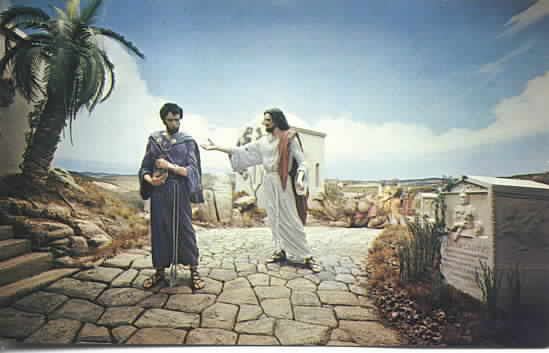 We also know the end of the story—“He was sad at this word, and went away grieved, for he had great possessions.” The fine print demanded the one thing the young man could not do. But what precedes Jesus’ reading of the fine print is even more interesting. Mark says that “Jesus, looking at him, loved him.” This is a man who wants more, Jesus knows it, and Jesus loves him for it. But that damned fine print—the thing that you cannot do, that’s the thing that is required. And it will be something different for each of us. This story isn’t about the incompatibility of wealth and following Jesus at all. It’s about the fact that, as Dietrich Bonhoeffer
  wrote, “ when Christ calls a man, he bids him come and die.” The God of love is not a cure for anything. The God of love is the greatest of all disturbers of the peace. “I did not come to bring peace but a sword,” and this is a sword that cuts deepest in those who are the most obsessed with knowing God.
This is a disturbing story because it absolutely runs roughshod over our idea that human dealings with God are transactional. “What do I need to do in order for X to happen, in order for Y not to happen, in order for Z not to die?” is the question we so often want answered, and this sort of question is always wrong when directed toward the transcendent. While on sabbatical I heard the poet Michael Dennis Browne speak of an insight that unexpectedly came to him as he mourned the tragic death of his younger sister, a woman for whom family and friends had gone hoarse with their prayers and petitions for healing. And she died anyways. What the hell is going on? Browne said “It came to me that this is not a God who intervenes, but one who indwells.” That changes everything, in ways I’m not sure I’m fully ready to think about yet. But the following from Rainer Maria Rilke gives me hope:
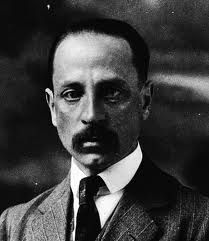 So many are alive who don’t seem to care.
Casual, easy, they move in the world
As though untouched.
But you take pleasure in the faces
Of those who know they thirst.
You cherish those
Who grip you for survival.
You are not dead yet, it’s not too late
To open your depths by plunging into them
And drink in the life
That reveals itself quietly there.
Previous Post

October 10, 2015
All Creatures Great and Small
Next Post
October 16, 2015 Big Brother
Browse Our Archives
Select a Category abortion Advent AI Angels Artificial intelligence atheism attention baptism Baptists beauty belief Benedictines Bible bicycling Big Bird books Bovina Camaldoli hermitage Canada Catholicism cats certainty change Christianity Christmas Collegeville Covid-19 creativity Development of Western Civilization dogs doubt Easter Enneagram Epiphany Episcopal ethics Eucharist evil extroverts Facebook faith family fear flowers forgiveness freedom friends God goodness grace happiness heaven hell history Holy Spirit Holy Week hope human nature humility humor idolatry incarnation introverts irreverence Islam Jeanne Jesus Joe Biden joy Judaism justice Kamala Harris knowledge Lent listen literature liturgy love Marsue Memorial Day miracles movies music mystery mythology NPR Old Testament optimism paradox peace Penguins philosophy piano podcast politics power prayer Protestantism Providence College Religion Rhode Island sabbatical sacrament science seeing silence Simone Weil Socrates soul sports St. John's College stories suffering tattoo teaching technology television theology thinking time tolerance transcendence travel trees trust truth Uncategorized Vermont wisdom wonder writing
Select a Month May 2026 April 2026 March 2026 February 2026 January 2026 December 2025 November 2025 October 2025 September 2025 August 2025 July 2025 June 2025 May 2025 April 2025 March 2025 February 2025 January 2025 December 2024 November 2024 October 2024 September 2024 August 2024 July 2024 June 2024 May 2024 April 2024 March 2024 February 2024 January 2024 December 2023 November 2023 October 2023 September 2023 August 2023 July 2023 June 2023 May 2023 April 2023 March 2023 February 2023 January 2023 December 2022 November 2022 October 2022 September 2022 August 2022 July 2022 June 2022 May 2022 April 2022 March 2022 February 2022 January 2022 December 2021 November 2021 October 2021 September 2021 August 2021 July 2021 June 2021 May 2021 April 2021 March 2021 February 2021 January 2021 December 2020 November 2020 October 2020 September 2020 August 2020 July 2020 June 2020 May 2020 April 2020 March 2020 February 2020 January 2020 December 2019 November 2019 October 2019 September 2019 August 2019 July 2019 June 2019 May 2019 April 2019 March 2019 February 2019 January 2019 December 2018 November 2018 October 2018 September 2018 August 2018 July 2018 June 2018 May 2018 April 2018 March 2018 February 2018 January 2018 December 2017 November 2017 October 2017 September 2017 August 2017 July 2017 June 2017 May 2017 April 2017 March 2017 February 2017 January 2017 December 2016 November 2016 October 2016 September 2016 August 2016 July 2016 June 2016 May 2016 April 2016 March 2016 February 2016 January 2016 December 2015 November 2015 October 2015 September 2015 August 2015 July 2015 June 2015 May 2015 April 2015 March 2015 February 2015 January 2015 December 2014 November 2014 October 2014 September 2014 August 2014 July 2014 June 2014 May 2014 April 2014 March 2014 February 2014 January 2014 December 2013 November 2013 October 2013 September 2013 August 2013 July 2013 June 2013 May 2013 April 2013 March 2013 February 2013 January 2013 December 2012 November 2012 October 2012 September 2012
Follow Us!
TAKE THE
Religious Wisdom Quiz
Who rebelled with 250 men against Moses and Aaron?
Select your answer to see how you score.
Dathan Korah Abihu Nadab
Books by This Author Books by Vance G. Morgan
Related posts from Freelance Christianity

The Lonely Pawn: On Faith, Doubt, and Meaning


AI and Love: When a Chatbot Becomes a...

TRENDING AT PATHEOS Progressive Christian

What Being a Modern-Day Apostle Means to Me
In my last column, I discussed the ins and outs of modern-day...

Did Ancient China Once Worship the God of...
Across human history, a common thread weaves through the origins of the...

Love Your Neighbor – Including Earth-Kin: Lev. 19,...
God’s command to love your neighbor means acting in an ethical and...

Lead a Church Study of “Jesus and Lao...
Guest writer Jack Thomas (The Irreverent Reverend) reflects on leading his church...

Pastoral Wisdom for Responding to Sermon Pushback
Getting sermon pushback on your social justice sermon? Learn practical, Proverbs-based strategies...

Principles for Understanding the Apostolic Ministry Today
Whenever people discover that my formal ministry title is "apostle," as in...
view all Progressive Christian blogs
Ad-Free & Subscriber Log-In Subscription Support
- About Us
- 2026 Calendar
- Videos
- Podcasts
- Library of World Religions
- Faith In Media Tracker
- Advertise With Us
- Write for Us
- Privacy Policy
- Terms of Service
- Do Not Sell My Data
- Contact Us
- Radiant Digital
- Manage Newsletter Subscriptions
- Unsubscribe From Notifications
- Sitemap
Copyright 2008-2026, Patheos. All rights reserved.
Subscription Support Ad-Free & Subscriber Log-In
Follow Patheos