
BuddhistCatholicContemplativeEvangelicalGeneral ChristianHinduJewishLatter-day SaintMuslimNew VisionsProgressive Christian
Beliefs
- Buddhist
- Catholic
- Contemplative
- Evangelical
- General Christian
- Hindu
- Jewish
- Latter-day Saint
- More Voices
- Muslim
- New Visions
- Pagan
- Progressive Christian
Topics
- Religion News
- Food and Religion
- Sports and Religion
- Religious Art
- Religious Music and Entertainment
- Religious Events
- History and Religion
- Style and Religion
- Politics and Religion
- Women in Religion
- Recreation Outdoors and Religion
- Business Finance and Religion
- Careers Workplace and Religion
- Education and Religion
- Family Parenting and Religion
- Health Fitness and Religion
- Home and Religion
- Relationships and Religion
- Technology and Religion
- Travel and Religion
Columnists
- Buddhist Columnists
- Business Finance and Religion Columnists
- Careers Workplace and Religion Columnists
- Catholic Columnists
- Contemplative Columnists
- Education and Religion Columnists
- Evangelists Columnists
- Family Parenting and Religion Columnists
- General Christian Columnists
- Health Fitness and Religion Columnists
- Hindu Columnists
- History and Religion Columnists
- Home and Religion Columnists
- Jewish Columnists
- More Voices Columnists
- Latter Day Columnists
- Muslim Columnists
- New Visions Columnists
- Nonreligious Columnists
- Pagan Columnists
- Politics and Religion Columnists
- Progressive Columnists
- Recreation Outdoors and Religion Columnists
- Relationships and Religion Columnists
- Religion News Columnists
- Religious Art Columnists
- Religious Events Columnists
- Religious Music and Entertainment Columnists
- Sports and Religion Columnists
- Style and Religion Columnists
- Technology and Religion Columnists
- Travel and Religion Columnists
- Women in Religion Columnists
Resource Library
- 2026 Calendar
- Library of World Religions
- The 100 Most Holy Places on Earth
- Patheos Answers
- Podcasts
- Videos
- Faith Leaders Database
- Anglican Episcopalian
- Bahai
- Baptist
- Buddhism
- Christianity
- Confucianism
- Eastern Orthodoxy
- Hinduism
- Holiness and Pentecostal
- ISKCON
- Islam
- Judaism
- Lutheran
- Methodist
- The Church of Jesus Christ of Latter-day Saints
- New Age
- Paganism
- Presbytarian and Reformed
- Protestantism
- Religion Behind the Scenes
- Roman Catholic
- Scientology
- Shia Islam
- Sikhism
- Sufism
- Sunni Islam
- Taoism
- Zen
- See all religions
Research Tools
 Ad-Free & Subscriber Log-In Subscription Support
Ad-Free & Subscriber Log-In Subscription Support
Follow Patheos 

- Trending:
- Forgiveness
- |
- Marriage
- |
- Consciousness
- |
- Death Penalty
- |
- Election
- |
- Halloween

- Home
- Progressive Christian
- Reading and Writing
Reading and Writing
Last updated on: January 4, 2016 at 7:07 am by Vance Morgan
Reading and Writing 2016-01-04T07:07:10-04:00 Vance Morgan
Patheos Explore the world's faith through different perspectives on religion and spirituality! Patheos has the views of the prevalent religions and spiritualities of the world.
My twenty-plus years teaching at Providence College have afforded me an opportunity every semester for team-teaching in the large interdisciplinary program that is the heart of our core curriculum (a program I directed for four years ending last July).  Team-teaching is fun, exhilarating, and demanding; this begins with the planning of the next semester’s syllabus. Faculty from different departments having different experiences with and notions about pedagogy bring all sorts of ideas to the table and do not always agree, particularly about the amount of daily and weekly work to schedule for our future students. My contribution to the discussion is always the same: “They should read until they drop, then write until they drop again.” In that order—there’s nothing that feeds intelligent writing more effectively than reading.
It is strange that I temporarily forgot this important connection between reading and writing during the past few months. The working highlight of the first half of my sabbatical was an intense spurt of writing from September to Thanksgiving, surely energized by a bicycle mishap in early October; I all of a sudden had to find something to do with the four to five hours per day during which I had been riding my bicycle and getting into the best shape of my life prior to the mishap. In addition to completing a second draft of my current book project, I was able to maintain my established blog routine of two new 1200-1500 posts per week—something that my most famous writing friend, 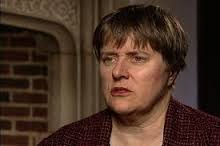 Kathleen Norris, suggested last May that I would probably not be able to do while writing a book. It didn’t hurt, of course, that the book is closely related to my past three-and-a-half years of blog work.
But since Thanksgiving, the writing energies have begun to dry up. I still have been able to produce new blog posts, but a couple of them seemed forced and I was often writing under self-imposed deadline pressure. The proposal that needs to be written for my book draft wasn’t getting written. Just a few days before Christmas I realized one of the main reasons for my current writing malaise— I haven’t been reading much for the past few months. There are a number of excuses I might offer, but none of them fully explain why, when I actually have more unstructured time than any grown-up should have, I have been neglecting my first love—reading. I’ve even gotten out of the habit of reading the daily psalms every morning. Very bad idea.
A quick review of my blog posts from a year ago was illuminating. Many of my late December and early January posts either mention or focus directly on either Barbara Taylor Brown or Christian Wiman. Why? Because just before Christmas break last year the work of these two authors was recommended to me by two different friends, so I spent Christmas break reading several of Brown’s books and a memoir by Wiman. The point? I write about what I am reading—the ideas, images, and insights of a good book never fail to be evocative. 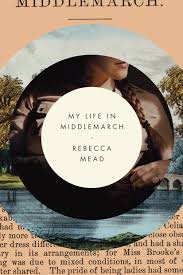 Since I think best when I am writing, that’s where these ideas, images and insights become my own.
Awareness frequently produces change, and this time was no exception. Awareness of my reading slump caused me to pick up Rebecca Mead’s My Life in Middlemarch, a biography/memoir centered on George Eliot’s masterpiece (and my favorite novel). Sure enough, several passages inspired by Mead’s book are central to my New Year’s Eve blog post, and others will form the core of my forthcoming Valentine’s Day post for Jeanne. Then for Christmas Jeanne gave me The Good Book, a collection of essays, edited by Andrew Blaumer, in which thirty-two writers from all sorts of angles write about their favorite passages and characters from the Bible. Although the older I get the less I believe in mere coincidence, 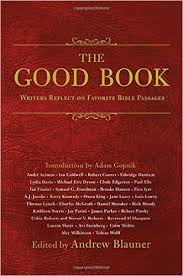 I “coincidentally” opened first to “The Womb and the Cistern Cell,” an essay by Brooks Hansen about John the Baptist.
John “just happens” to be one of my favorite characters from the New Testament; twice in the past four years I have had the privilege of giving an Advent sermon on John the Baptist Sunday in early December. On one end of his life is a miraculous birth narrative that in my estimation rivals that of his younger cousin Jesus, and at the end of his life he finds himself in a dungeon (a cistern well) and a state of despairing doubt. He sends a question via his disciples to Jesus: Are you the one who is to come, or shall we look for another? These are the last words we hear from this man, the first person recorded to recognize adult Jesus for who he was. Hansen finds this remarkable, and so do I; he concludes his essay by reflecting on the intimate connection between belief and doubt.
Light is born of darkness. Darkness is the necessary precondition of light. Belief, likewise, is born of doubt, 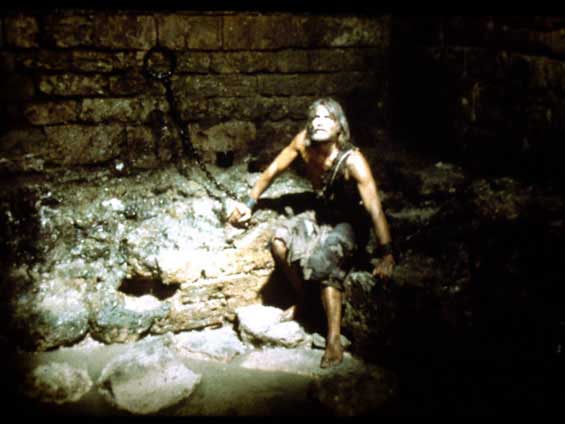 which is its necessary precondition. Doubt is the soil from which faith grows. Therefore, if one is determined to imagine John the Baptist as the first and most authoritative voice to recognize Jesus as savior—the first, in other words, to believe—then John must, by that token have been the first to doubt. That, too, is Law. And if we ever encounter any teaching, or feel ourselves succumbing to any creed or system of belief, that does not admit this, and does not struggle intimately and often—in the cistern of its soul—with the fear that it is mistaken, misdirected, falsely premised, or corrupt at its heart—we should take heed:
That is not faith. That, in fact, is a fairy tale.
I wish I had read this before my most recent sermon three weeks ago—it would have made the cut. I frequently say and write that in just about all aspects of belief, certainty is vastly overrated—Hansen makes the same point much more eloquently. This is why reading feeds writing. Reading enlarges one’s vocabulary, broadens one’s perspective, and provides examples of the richness of language and experience. And it is fun—what’s not to love?
Previous Post

January 2, 2016
Goliath was a Wimp: Random Observations for the New Year
Next Post
January 8, 2016 Losing is not as much fun as Winning
Browse Our Archives
Select a Category abortion Advent AI Angels Artificial intelligence atheism attention baptism Baptists beauty belief Benedictines Bible bicycling Big Bird books Bovina Camaldoli hermitage Canada Catholicism cats certainty change Christianity Christmas Collegeville Covid-19 creativity Development of Western Civilization dogs doubt Easter Enneagram Epiphany Episcopal ethics Eucharist evil extroverts Facebook faith family fear flowers forgiveness freedom friends God goodness grace happiness heaven hell history Holy Spirit Holy Week hope human nature humility humor idolatry incarnation introverts irreverence Islam Jeanne Jesus Joe Biden joy Judaism justice Kamala Harris knowledge Lent listen literature liturgy love Marsue Memorial Day miracles movies music mystery mythology NPR Old Testament optimism paradox peace Penguins philosophy piano podcast politics power prayer Protestantism Providence College Religion Rhode Island sabbatical sacrament science seeing silence Simone Weil Socrates soul sports St. John's College stories suffering tattoo teaching technology television theology thinking time tolerance transcendence travel trees trust truth Uncategorized Vermont wisdom wonder writing
Select a Month May 2026 April 2026 March 2026 February 2026 January 2026 December 2025 November 2025 October 2025 September 2025 August 2025 July 2025 June 2025 May 2025 April 2025 March 2025 February 2025 January 2025 December 2024 November 2024 October 2024 September 2024 August 2024 July 2024 June 2024 May 2024 April 2024 March 2024 February 2024 January 2024 December 2023 November 2023 October 2023 September 2023 August 2023 July 2023 June 2023 May 2023 April 2023 March 2023 February 2023 January 2023 December 2022 November 2022 October 2022 September 2022 August 2022 July 2022 June 2022 May 2022 April 2022 March 2022 February 2022 January 2022 December 2021 November 2021 October 2021 September 2021 August 2021 July 2021 June 2021 May 2021 April 2021 March 2021 February 2021 January 2021 December 2020 November 2020 October 2020 September 2020 August 2020 July 2020 June 2020 May 2020 April 2020 March 2020 February 2020 January 2020 December 2019 November 2019 October 2019 September 2019 August 2019 July 2019 June 2019 May 2019 April 2019 March 2019 February 2019 January 2019 December 2018 November 2018 October 2018 September 2018 August 2018 July 2018 June 2018 May 2018 April 2018 March 2018 February 2018 January 2018 December 2017 November 2017 October 2017 September 2017 August 2017 July 2017 June 2017 May 2017 April 2017 March 2017 February 2017 January 2017 December 2016 November 2016 October 2016 September 2016 August 2016 July 2016 June 2016 May 2016 April 2016 March 2016 February 2016 January 2016 December 2015 November 2015 October 2015 September 2015 August 2015 July 2015 June 2015 May 2015 April 2015 March 2015 February 2015 January 2015 December 2014 November 2014 October 2014 September 2014 August 2014 July 2014 June 2014 May 2014 April 2014 March 2014 February 2014 January 2014 December 2013 November 2013 October 2013 September 2013 August 2013 July 2013 June 2013 May 2013 April 2013 March 2013 February 2013 January 2013 December 2012 November 2012 October 2012 September 2012
Follow Us!
TAKE THE
Religious Wisdom Quiz
How did God protect Daniel in the lion’s den?
Select your answer to see how you score.
He made the lions fall asleep He blinded the guards He sent an angel to shut the lions’ mouths He made Daniel invisible
Books by This Author Books by Vance G. Morgan
Related posts from Freelance Christianity

The Lonely Pawn: On Faith, Doubt, and Meaning


AI and Love: When a Chatbot Becomes a...

TRENDING AT PATHEOS Progressive Christian

What Being a Modern-Day Apostle Means to Me
In my last column, I discussed the ins and outs of modern-day...

Did Ancient China Once Worship the God of...
Across human history, a common thread weaves through the origins of the...

Love Your Neighbor – Including Earth-Kin: Lev. 19,...
God’s command to love your neighbor means acting in an ethical and...

Lead a Church Study of “Jesus and Lao...
Guest writer Jack Thomas (The Irreverent Reverend) reflects on leading his church...

Pastoral Wisdom for Responding to Sermon Pushback
Getting sermon pushback on your social justice sermon? Learn practical, Proverbs-based strategies...

Principles for Understanding the Apostolic Ministry Today
Whenever people discover that my formal ministry title is "apostle," as in...
view all Progressive Christian blogs
Ad-Free & Subscriber Log-In Subscription Support
- About Us
- 2026 Calendar
- Videos
- Podcasts
- Library of World Religions
- Faith In Media Tracker
- Advertise With Us
- Write for Us
- Privacy Policy
- Terms of Service
- Do Not Sell My Data
- Contact Us
- Radiant Digital
- Manage Newsletter Subscriptions
- Unsubscribe From Notifications
- Sitemap
Copyright 2008-2026, Patheos. All rights reserved.
Subscription Support Ad-Free & Subscriber Log-In
Follow Patheos