
BuddhistCatholicContemplativeEvangelicalGeneral ChristianHinduJewishLatter-day SaintMuslimNew VisionsProgressive Christian
Beliefs
- Buddhist
- Catholic
- Contemplative
- Evangelical
- General Christian
- Hindu
- Jewish
- Latter-day Saint
- More Voices
- Muslim
- New Visions
- Pagan
- Progressive Christian
Topics
- Religion News
- Food and Religion
- Sports and Religion
- Religious Art
- Religious Music and Entertainment
- Religious Events
- History and Religion
- Style and Religion
- Politics and Religion
- Women in Religion
- Recreation Outdoors and Religion
- Business Finance and Religion
- Careers Workplace and Religion
- Education and Religion
- Family Parenting and Religion
- Health Fitness and Religion
- Home and Religion
- Relationships and Religion
- Technology and Religion
- Travel and Religion
Columnists
- Buddhist Columnists
- Business Finance and Religion Columnists
- Careers Workplace and Religion Columnists
- Catholic Columnists
- Contemplative Columnists
- Education and Religion Columnists
- Evangelists Columnists
- Family Parenting and Religion Columnists
- General Christian Columnists
- Health Fitness and Religion Columnists
- Hindu Columnists
- History and Religion Columnists
- Home and Religion Columnists
- Jewish Columnists
- More Voices Columnists
- Latter Day Columnists
- Muslim Columnists
- New Visions Columnists
- Nonreligious Columnists
- Pagan Columnists
- Politics and Religion Columnists
- Progressive Columnists
- Recreation Outdoors and Religion Columnists
- Relationships and Religion Columnists
- Religion News Columnists
- Religious Art Columnists
- Religious Events Columnists
- Religious Music and Entertainment Columnists
- Sports and Religion Columnists
- Style and Religion Columnists
- Technology and Religion Columnists
- Travel and Religion Columnists
- Women in Religion Columnists
Resource Library
- 2026 Calendar
- Library of World Religions
- The 100 Most Holy Places on Earth
- Patheos Answers
- Podcasts
- Videos
- Faith Leaders Database
- Anglican Episcopalian
- Bahai
- Baptist
- Buddhism
- Christianity
- Confucianism
- Eastern Orthodoxy
- Hinduism
- Holiness and Pentecostal
- ISKCON
- Islam
- Judaism
- Lutheran
- Methodist
- The Church of Jesus Christ of Latter-day Saints
- New Age
- Paganism
- Presbytarian and Reformed
- Protestantism
- Religion Behind the Scenes
- Roman Catholic
- Scientology
- Shia Islam
- Sikhism
- Sufism
- Sunni Islam
- Taoism
- Zen
- See all religions
Research Tools
 Ad-Free & Subscriber Log-In Subscription Support
Ad-Free & Subscriber Log-In Subscription Support
Follow Patheos 

- Trending:
- Forgiveness
- |
- Marriage
- |
- Consciousness
- |
- Death Penalty
- |
- Election
- |
- Halloween

- Home
- Progressive Christian
- Raising the Bar
Raising the Bar
Last updated on: June 29, 2016 at 7:30 am by Vance Morgan
Raising the Bar 2016-06-29T07:30:42-04:00 Vance Morgan
Patheos Explore the world's faith through different perspectives on religion and spirituality! Patheos has the views of the prevalent religions and spiritualities of the world.
One of my greatest joys as a philosophy professor is that I get to be bad on a regular basis. There were a number of people about whom I was told little growing up, other than that they are dangerous and to be avoided like the plague.  I work out my rebellion against these restrictions now by ensuring that these thinkers make as many appearances on my syllabi as professional integrity will allow. So I teach Darwin, for instance, with gusto in the interdisciplinary program I direct and participate in, and took great delight a few years ago in hearing an older Benedictine monk—a biologist by training—say that “Darwin has taught us more about God than all the theologians put together.”
  I take a perverse pleasure in making sure that my mostly parochial school educated students know that Marx is more than a four letter word and, more importantly, is not an irrelevancy simply because the Berlin Wall fell twenty-five years ago.
And then there is the the biggest and the baddest of all the dangerous thinkers I was taught to fear in my youth—Friedrich Nietzsche. He’s the philosopher who infamously proclaimed that “God is Dead,” after all. But humor me for a bit, because a few moments with Friedrich will help illuminate just how radical and subversive today’s gospel—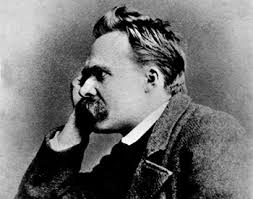 the conclusion of the Sermon on the Mount—actually is. And yet it this very text, hopelessly beyond the highest standards we can imagine for ourselves, that completes the road map for the life of faith that we all profess.
Friedrich Nietzsche was an atheist, despite the fact that his father and grandfather were Lutheran ministers. Yet throughout his life he focused his philosophical and creative energies on ethics, on the ways in which human beings make moral choices and use them to shape their lives, to create their character, and to influence others.  It was this intense interest in morality that caused him to be one of the most eloquent and influential critics of Christianity who has ever lived. He developed his critique in response to texts such as the final paragraphs of the Sermon on the Mount.
You have heard that it was said, “An eye for an eye and a tooth for a tooth.”  But I say to you, do not resist an evildoer. But if anyone strikes you on the right cheek, turn the other also; and if anyone wants to sue you and take your coat, give your cloak as well; and if anyone forces you to go one mile, go also the second mile. Give to everyone who begs from you, and do not refuse anyone who wants to borrow from you.
Nietzsche complained that this is a moral framework for the weak, for those who are incapable of asserting their own excellence or even protecting themselves. Jesus is telling those lacking the power or will to be independent that it is okay to be mediocre or weak. In so doing, Nietzsche complains, Jesus is turning the natural moral order of things upside down. Nietzsche’s critique is borne out in the very next paragraph from today’s gospel.
 You have heard that it was said, “You shall love your neighbor and hate your enemy.” But I say to you, Love your enemies and pray for those who persecute you, so that you may be children of your Father in heaven; for he makes his sun rise on the evil and on the good, and sends rain on the righteous and on the unrighteous.
Our natural wiring inclines us to love our friends and hate our enemies, but Jesus is asking us to embrace and love those who we should hate, as He does throughout the Sermon on the Mount. As do many moral philosophers, Nietzsche insists that moral requirements should be fitted to what human beings actually are, not to what someone might wish them to be—hence his charge that Jesus’ challenge is inhuman and unnatural. We expect that good people will be rewarded and bad people will be punished, but Jesus reminds us, just as Job found out, that it rains on both the good and the evil, that the sun shines on everyone regardless of whether they have earned or deserve it.  Eventually, in one of his most important works on ethics—**Beyond Good and Evil—**Nietzsche summarizes his critique of today’s gospel and of the moral standards that arise from it.
What is it I protest against? That people should regard this paltry and peaceful mediocrity, this spiritual equilibrium which knows nothing of the fine impulses of great accumulations of strength, as something high, or possibly as the standard of all things.
Jesus is describing a moral framework for losers, one that enables the weak and exalts those who cannot make it on their own. This is a powerful critique, one that over the century and a half since it was written has for many been the basis for an outright dismissal of Christianity as a workable moral system. For persons who take a faith commitment to Christ seriously, these should be fighting words. But how should we respond? 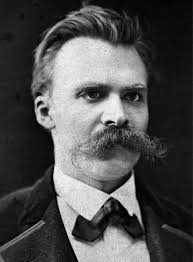
We might start with a certain amount of defensiveness, by noting that if Friedrich thinks that what is described in the Sermon on the Mount is for sissies or for the weak, he ought to stop pontificating about it and actually try living it for a day. Anyone who has ever turned the other cheek, who has been harmed or betrayed and has actually tried to love that person in response, knows what extraordinary strength doing this even once requires. This is not a morality for wimps, Friedrich; this requires strength of character of which most persons only dream.
Recall, though, that the heart of Nietzsche’s critique is that the blueprint for a human life laid out in the Sermon on the Mount is unnatural—it does not square with what we actually are. And the gospels confirm, in no uncertain terms, that Nietzsche is exactly right. Jesus’ final words in the Sermon on the Mount?
Be perfect, therefore, as your heavenly Father is perfect.
Really? Are you serious, Jesus? Iris Murdoch once responded to this command by asking “Wouldn’t it have made more sense to say ‘be ye therefore slightly improved?’’ The standard of divine perfection is so out of the reach of human effort that it blows our first response to Nietzsche out of the water. We might be able to turn the other cheek once in a while or even convince ourselves that we forgive and love those who have hurt us and who wish us harm, but who but an insane person would claim to have attained perfection? Nietzsche is right—Jesus is asking us to do what no one could possibly do, except by watering it down so far as to be unrecognizable. The demands of the Sermon on the Mount are humanly impossible and entirely ill-fitted to what human beings are capable of achieving.
 Each of us , in a moment of honesty, should tell God “I can’t do this. This is impossible. I quit.” In the spirit of Elijah hiding in a cave from the wrath of Queen Jezebel, we might as well say “I can’t do what you are requiring of me.” And in the same still, small voice that Elijah heard, we hear “you’re right. You can’t do this. And that’s the whole point.” Nietzsche’s mistake is not in his judgment that the demands of the Sermon on the Mount are ill-fitted to human nature. His mistake is not realizing that this is the whole point—Jesus is describing a transformed human nature, a transformation made possible by the Incarnation. The bar has been raised to a level that cannot be reached by the greatest of human effort, but is the hallmark of a human life infused with divine energy and love. Those who follow Jesus can expect to see every expectation that is natural to human beings turned on its head. As Paul wrote, every person who is in Christ “is a new creature.
  Old things are passed away; behold, all things are become new.” The Sermon on the Mount is an invitation, not to endless frustration and falling short of the mark, but to the discovery of divine life within, a life that Jesus promises will “overcome the world.”
Previous Post

June 24, 2016
A Reluctant Rose
Next Post
July 1, 2016 Even Introverts Get Lonely
Browse Our Archives
Select a Category abortion Advent AI Angels Artificial intelligence atheism attention baptism Baptists beauty belief Benedictines Bible bicycling Big Bird books Bovina Camaldoli hermitage Canada Catholicism cats certainty change Christianity Christmas Collegeville Covid-19 creativity Development of Western Civilization dogs doubt Easter Enneagram Epiphany Episcopal ethics Eucharist evil extroverts Facebook faith family fear flowers forgiveness freedom friends God goodness grace happiness heaven hell history Holy Spirit Holy Week hope human nature humility humor idolatry incarnation introverts irreverence Islam Jeanne Jesus Joe Biden joy Judaism justice Kamala Harris knowledge Lent listen literature liturgy love Marsue Memorial Day miracles movies music mystery mythology NPR Old Testament optimism paradox peace Penguins philosophy piano podcast politics power prayer Protestantism Providence College Religion Rhode Island sabbatical sacrament science seeing silence Simone Weil Socrates soul sports St. John's College stories suffering tattoo teaching technology television theology thinking time tolerance transcendence travel trees trust truth Uncategorized Vermont wisdom wonder writing
Select a Month May 2026 April 2026 March 2026 February 2026 January 2026 December 2025 November 2025 October 2025 September 2025 August 2025 July 2025 June 2025 May 2025 April 2025 March 2025 February 2025 January 2025 December 2024 November 2024 October 2024 September 2024 August 2024 July 2024 June 2024 May 2024 April 2024 March 2024 February 2024 January 2024 December 2023 November 2023 October 2023 September 2023 August 2023 July 2023 June 2023 May 2023 April 2023 March 2023 February 2023 January 2023 December 2022 November 2022 October 2022 September 2022 August 2022 July 2022 June 2022 May 2022 April 2022 March 2022 February 2022 January 2022 December 2021 November 2021 October 2021 September 2021 August 2021 July 2021 June 2021 May 2021 April 2021 March 2021 February 2021 January 2021 December 2020 November 2020 October 2020 September 2020 August 2020 July 2020 June 2020 May 2020 April 2020 March 2020 February 2020 January 2020 December 2019 November 2019 October 2019 September 2019 August 2019 July 2019 June 2019 May 2019 April 2019 March 2019 February 2019 January 2019 December 2018 November 2018 October 2018 September 2018 August 2018 July 2018 June 2018 May 2018 April 2018 March 2018 February 2018 January 2018 December 2017 November 2017 October 2017 September 2017 August 2017 July 2017 June 2017 May 2017 April 2017 March 2017 February 2017 January 2017 December 2016 November 2016 October 2016 September 2016 August 2016 July 2016 June 2016 May 2016 April 2016 March 2016 February 2016 January 2016 December 2015 November 2015 October 2015 September 2015 August 2015 July 2015 June 2015 May 2015 April 2015 March 2015 February 2015 January 2015 December 2014 November 2014 October 2014 September 2014 August 2014 July 2014 June 2014 May 2014 April 2014 March 2014 February 2014 January 2014 December 2013 November 2013 October 2013 September 2013 August 2013 July 2013 June 2013 May 2013 April 2013 March 2013 February 2013 January 2013 December 2012 November 2012 October 2012 September 2012
Follow Us!
TAKE THE
Religious Wisdom Quiz
Who was the father of John the Baptist?
Select your answer to see how you score.
Joseph Nathan Zechariah Simeon
Books by This Author Books by Vance G. Morgan
Related posts from Freelance Christianity

The Lonely Pawn: On Faith, Doubt, and Meaning


AI and Love: When a Chatbot Becomes a...

TRENDING AT PATHEOS Progressive Christian

What Being a Modern-Day Apostle Means to Me
In my last column, I discussed the ins and outs of modern-day...

Did Ancient China Once Worship the God of...
Across human history, a common thread weaves through the origins of the...

Love Your Neighbor – Including Earth-Kin: Lev. 19,...
God’s command to love your neighbor means acting in an ethical and...

Lead a Church Study of “Jesus and Lao...
Guest writer Jack Thomas (The Irreverent Reverend) reflects on leading his church...

Pastoral Wisdom for Responding to Sermon Pushback
Getting sermon pushback on your social justice sermon? Learn practical, Proverbs-based strategies...

Principles for Understanding the Apostolic Ministry Today
Whenever people discover that my formal ministry title is "apostle," as in...
view all Progressive Christian blogs
Ad-Free & Subscriber Log-In Subscription Support
- About Us
- 2026 Calendar
- Videos
- Podcasts
- Library of World Religions
- Faith In Media Tracker
- Advertise With Us
- Write for Us
- Privacy Policy
- Terms of Service
- Do Not Sell My Data
- Contact Us
- Radiant Digital
- Manage Newsletter Subscriptions
- Unsubscribe From Notifications
- Sitemap
Copyright 2008-2026, Patheos. All rights reserved.
Subscription Support Ad-Free & Subscriber Log-In
Follow Patheos