
BuddhistCatholicContemplativeEvangelicalGeneral ChristianHinduJewishLatter-day SaintMuslimNew VisionsProgressive Christian
Beliefs
- Buddhist
- Catholic
- Contemplative
- Evangelical
- General Christian
- Hindu
- Jewish
- Latter-day Saint
- More Voices
- Muslim
- New Visions
- Pagan
- Progressive Christian
Topics
- Religion News
- Food and Religion
- Sports and Religion
- Religious Art
- Religious Music and Entertainment
- Religious Events
- History and Religion
- Style and Religion
- Politics and Religion
- Women in Religion
- Recreation Outdoors and Religion
- Business Finance and Religion
- Careers Workplace and Religion
- Education and Religion
- Family Parenting and Religion
- Health Fitness and Religion
- Home and Religion
- Relationships and Religion
- Technology and Religion
- Travel and Religion
Columnists
- Buddhist Columnists
- Business Finance and Religion Columnists
- Careers Workplace and Religion Columnists
- Catholic Columnists
- Contemplative Columnists
- Education and Religion Columnists
- Evangelists Columnists
- Family Parenting and Religion Columnists
- General Christian Columnists
- Health Fitness and Religion Columnists
- Hindu Columnists
- History and Religion Columnists
- Home and Religion Columnists
- Jewish Columnists
- More Voices Columnists
- Latter Day Columnists
- Muslim Columnists
- New Visions Columnists
- Nonreligious Columnists
- Pagan Columnists
- Politics and Religion Columnists
- Progressive Columnists
- Recreation Outdoors and Religion Columnists
- Relationships and Religion Columnists
- Religion News Columnists
- Religious Art Columnists
- Religious Events Columnists
- Religious Music and Entertainment Columnists
- Sports and Religion Columnists
- Style and Religion Columnists
- Technology and Religion Columnists
- Travel and Religion Columnists
- Women in Religion Columnists
Resource Library
- 2026 Calendar
- Library of World Religions
- The 100 Most Holy Places on Earth
- Patheos Answers
- Podcasts
- Videos
- Faith Leaders Database
- Anglican Episcopalian
- Bahai
- Baptist
- Buddhism
- Christianity
- Confucianism
- Eastern Orthodoxy
- Hinduism
- Holiness and Pentecostal
- ISKCON
- Islam
- Judaism
- Lutheran
- Methodist
- The Church of Jesus Christ of Latter-day Saints
- New Age
- Paganism
- Presbytarian and Reformed
- Protestantism
- Religion Behind the Scenes
- Roman Catholic
- Scientology
- Shia Islam
- Sikhism
- Sufism
- Sunni Islam
- Taoism
- Zen
- See all religions
Research Tools
 Ad-Free & Subscriber Log-In Subscription Support
Ad-Free & Subscriber Log-In Subscription Support
Follow Patheos 

- Trending:
- Forgiveness
- |
- Marriage
- |
- Consciousness
- |
- Death Penalty
- |
- Election
- |
- Halloween

- Home
- Progressive Christian
- Quiet Ignorance
Quiet Ignorance
Last updated on: March 31, 2017 at 7:00 am by Vance Morgan
Quiet Ignorance 2017-03-31T07:00:43-04:00 Vance Morgan
Patheos Explore the world's faith through different perspectives on religion and spirituality! Patheos has the views of the prevalent religions and spiritualities of the world.
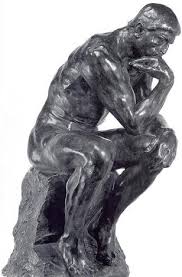 Over the past several years, I have frequently returned to a question that a friend asked me many years ago, the question that in many ways is the central question I have been considering in this blog over the past four-and-a-half years: How can you be a Christian and a philosopher at the same time? There are all sorts of answers available to this question, the simplest of which is “I can’t.” This would open the door to choosing one or the other. I know myself well enough to realize that if “choose you this day whom you will serve” was truly the only option, I would choose philosophy and try to find ways to walk away from my faith tradition. The spirit of critical thinking and skepticism is too strong in me to accept a framework of belief without constant challenge and questioning. I spent many years—most of my life, in fact—attempting to compartmentalize philosophy and faith. For me, at least, it did not work.
 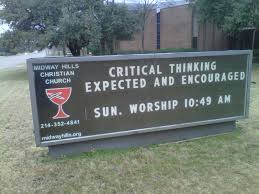 The time came to either walk away from faith, as many philosophers have done over the centuries, or to find a new way.
That “new way,” for me at least, involves allowing the energies of critical thinking and faith to interact with each other regularly and vigorously without pre-conception. It requires re-imagining basic concepts such as “evidence” and “fact,” as well as learning to create a large foundational space for subjective experience in my edifice of belief. This new way demands that I both allow that there are limitations to our natural human powers of reason and logical thinking, while at the same time never assuming that I know where those boundaries lie nor when I have reached them. Perhaps most importantly, this new way embraces both the reality of what is greater than us and the expectation that the lines of communication between that transcendent place and our human reality are open and available for exploration. My most recent engagement with these issues is focusing on the relationship between critical thinking and hope, the tension between cynicism (too much critical thinking) and naïveté (too much hope). As is often the case, I have found the work of Marilynne Robinson useful here.
In “Metaphysics,” one of the later chapters in her recent collection of essays, The Givenness of Things, Robinson engages with the dynamic interplay of faith and critical thinking. Her baseline commitments are similar to my own—she is committed to excellence in reasoning and critical thinking, but is equally committed to her faith. Her faith commitments are to Calvinism; her essays frequently include advocacy for a faith framework which in the minds of many is rigidly conservative and suffocatingly restrictive. The faith I was raised in has many Calvinist features, most of which I no longer accept. Robinson’s effective use of reason in defending her faith is always impressive and occasionally convincing; in “Metaphysics,” however, she bumps directly into a boundary from the reason and critical thinking side.
Some issues are just beyond the reach of our natural abilities, Robinson thinks—predestination and the problem of evil are her two examples—in such cases she suggests that we take the advice of the great philosopher and occasional theologian John Locke. 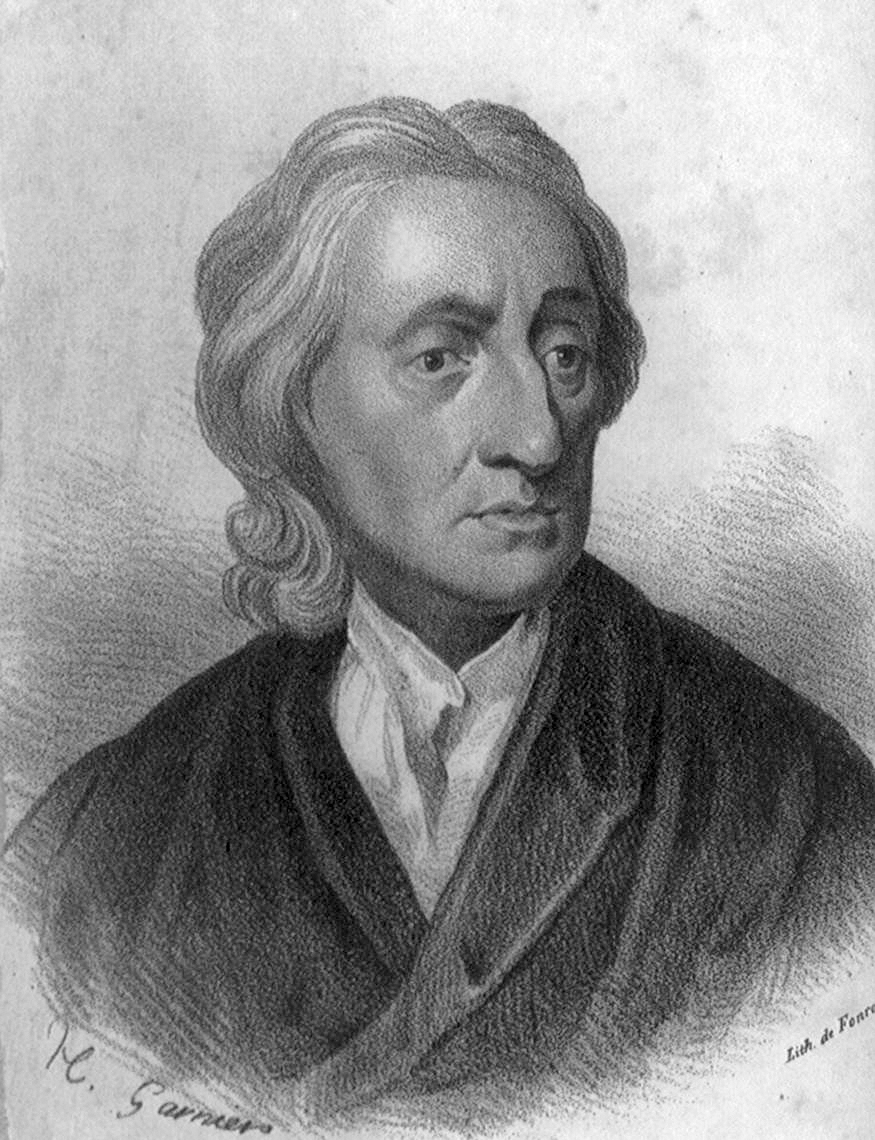 Noting that Locke seeks to “free thinking of artificial constraints by acknowledging real and insuperable limits to the kinds of things we can think about fruitfully,” Robinson writes that
When there is no way to understand without compromising the nature of what is to be understood, I heed Locke’s advice. I am content to “sit down in a quiet ignorance” of those things I take to be beyond the reach of my capacities.
This is a loaded suggestion, to say the least. As much as I admire Robinson’s work, I find at least two troubling matters here.
First is “the nature of what is to be understood.” It is one thing to believe that beyond the reach of our natural capacities there is something we should seek to understand—with that I fully agree. It is quite another thing to assume that the nature of what is to be understood is known clearly enough that we can sort between which proposed ideas compromise that nature and those that do not. Their is an inherent contradiction in saying that “there is something important beyond the reach of our natural capacities, and the nature of that something is as follows . . .” Such parameters are far too close to dogma and doctrine for my taste. Robinson’s own example of the problem of evil is a case in point. For centuries thinkers have approached this problem armed with various assumptions concerning the nature of God— God is omniscient, omnibenevolent, omnipotent, and so on. And with these assumptions, the problem cannot be solved or even addressed fruitfully.
Robinson chooses at this point to adopt “a quiet ignorance”—we cannot figure this out. I choose, instead, to test the assumptions—what if one or more of our “givens” concerning God are wrong? How might taking that possibility seriously open new avenues of thought and exploration? Perhaps my favorite of all the courses I have taught in the past twenty-five years, a course that I am currently teaching, is built on just that possibility. Maybe rather than giving up in reverential ignorance, we should step into the tension between what we think we know and what lies beyond. Citing Locke, Robinson writes that “thinking that we know more than we do . . . blinds us to our ignorance, which is the deep darkness where truth abides.” I suggest that to assume that we know much about the nature of the divine is a prime example of “thinking that we know more than we do.”
My second concern has to do with “the reach of my capacities.” A number of months ago I read an interview with a philosopher who is also an atheist. She said that the issue of God’s existence “is settled to my satisfaction”—God doesn’t exist. 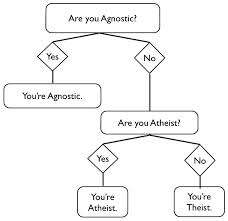 The larger issue is “when do I stop asking? When is enough enough?” This is a highly subjective matter, one that will be settled by many things in addition to logic and reason. In this Marilynne Robinson is not different from the atheist philosopher. Each of them has established the extent of “the reach of my capacities” to her satisfaction, something that all of us do but that no one should pretend to be an objective boundary that applies to all human beings. Each of us has a self-imposed limit beyond which we choose a “quiet ignorance.” I find more and more that wherever my boundary is, I have yet to reach it. Accordingly, “quiet ignorance” is not an attractive alternative.
Channeling John Locke one more time, Marilynne Robinson writes that “assumptions and certitudes imposed on matters that should in fact be conceded to ignorance warp and obstruct legitimate thought.” Point taken. Let’s also be aware that these very assumptions and certitudes frequently are clothed in the garb of unquestioned preconceptions. One person’s ignorance is another person’s legitimate thought.
Previous Post

March 29, 2017
I Think It's Going To Rain Today
Next Post
April 3, 2017 The Lazarus Cycle
Browse Our Archives
Select a Category abortion Advent AI Angels Artificial intelligence atheism attention baptism Baptists beauty belief Benedictines Bible bicycling Big Bird books Bovina Camaldoli hermitage Canada Catholicism cats certainty change Christianity Christmas Collegeville Covid-19 creativity Development of Western Civilization dogs doubt Easter Enneagram Epiphany Episcopal ethics Eucharist evil extroverts Facebook faith family fear flowers forgiveness freedom friends God goodness grace happiness heaven hell history Holy Spirit Holy Week hope human nature humility humor idolatry incarnation introverts irreverence Islam Jeanne Jesus Joe Biden joy Judaism justice Kamala Harris knowledge Lent listen literature liturgy love Marsue Memorial Day miracles movies music mystery mythology NPR Old Testament optimism paradox peace Penguins philosophy piano podcast politics power prayer Protestantism Providence College Religion Rhode Island sabbatical sacrament science seeing silence Simone Weil Socrates soul sports St. John's College stories suffering tattoo teaching technology television theology thinking time tolerance transcendence travel trees trust truth Uncategorized Vermont wisdom wonder writing
Select a Month May 2026 April 2026 March 2026 February 2026 January 2026 December 2025 November 2025 October 2025 September 2025 August 2025 July 2025 June 2025 May 2025 April 2025 March 2025 February 2025 January 2025 December 2024 November 2024 October 2024 September 2024 August 2024 July 2024 June 2024 May 2024 April 2024 March 2024 February 2024 January 2024 December 2023 November 2023 October 2023 September 2023 August 2023 July 2023 June 2023 May 2023 April 2023 March 2023 February 2023 January 2023 December 2022 November 2022 October 2022 September 2022 August 2022 July 2022 June 2022 May 2022 April 2022 March 2022 February 2022 January 2022 December 2021 November 2021 October 2021 September 2021 August 2021 July 2021 June 2021 May 2021 April 2021 March 2021 February 2021 January 2021 December 2020 November 2020 October 2020 September 2020 August 2020 July 2020 June 2020 May 2020 April 2020 March 2020 February 2020 January 2020 December 2019 November 2019 October 2019 September 2019 August 2019 July 2019 June 2019 May 2019 April 2019 March 2019 February 2019 January 2019 December 2018 November 2018 October 2018 September 2018 August 2018 July 2018 June 2018 May 2018 April 2018 March 2018 February 2018 January 2018 December 2017 November 2017 October 2017 September 2017 August 2017 July 2017 June 2017 May 2017 April 2017 March 2017 February 2017 January 2017 December 2016 November 2016 October 2016 September 2016 August 2016 July 2016 June 2016 May 2016 April 2016 March 2016 February 2016 January 2016 December 2015 November 2015 October 2015 September 2015 August 2015 July 2015 June 2015 May 2015 April 2015 March 2015 February 2015 January 2015 December 2014 November 2014 October 2014 September 2014 August 2014 July 2014 June 2014 May 2014 April 2014 March 2014 February 2014 January 2014 December 2013 November 2013 October 2013 September 2013 August 2013 July 2013 June 2013 May 2013 April 2013 March 2013 February 2013 January 2013 December 2012 November 2012 October 2012 September 2012
Follow Us!
TAKE THE
Religious Wisdom Quiz
Who became Moses' spokesperson to Pharaoh?
Select your answer to see how you score.
Joshua Aaron Hur Miriam
Books by This Author Books by Vance G. Morgan
Related posts from Freelance Christianity

The Lonely Pawn: On Faith, Doubt, and Meaning


AI and Love: When a Chatbot Becomes a...

TRENDING AT PATHEOS Progressive Christian

What Being a Modern-Day Apostle Means to Me
In my last column, I discussed the ins and outs of modern-day...

Did Ancient China Once Worship the God of...
Across human history, a common thread weaves through the origins of the...

Love Your Neighbor – Including Earth-Kin: Lev. 19,...
God’s command to love your neighbor means acting in an ethical and...

Lead a Church Study of “Jesus and Lao...
Guest writer Jack Thomas (The Irreverent Reverend) reflects on leading his church...

Pastoral Wisdom for Responding to Sermon Pushback
Getting sermon pushback on your social justice sermon? Learn practical, Proverbs-based strategies...

Principles for Understanding the Apostolic Ministry Today
Whenever people discover that my formal ministry title is "apostle," as in...
view all Progressive Christian blogs
Ad-Free & Subscriber Log-In Subscription Support
- About Us
- 2026 Calendar
- Videos
- Podcasts
- Library of World Religions
- Faith In Media Tracker
- Advertise With Us
- Write for Us
- Privacy Policy
- Terms of Service
- Do Not Sell My Data
- Contact Us
- Radiant Digital
- Manage Newsletter Subscriptions
- Unsubscribe From Notifications
- Sitemap
Copyright 2008-2026, Patheos. All rights reserved.
Subscription Support Ad-Free & Subscriber Log-In
Follow Patheos