
BuddhistCatholicContemplativeEvangelicalGeneral ChristianHinduJewishLatter-day SaintMuslimNew VisionsProgressive Christian
Beliefs
- Buddhist
- Catholic
- Contemplative
- Evangelical
- General Christian
- Hindu
- Jewish
- Latter-day Saint
- More Voices
- Muslim
- New Visions
- Pagan
- Progressive Christian
Topics
- Religion News
- Food and Religion
- Sports and Religion
- Religious Art
- Religious Music and Entertainment
- Religious Events
- History and Religion
- Style and Religion
- Politics and Religion
- Women in Religion
- Recreation Outdoors and Religion
- Business Finance and Religion
- Careers Workplace and Religion
- Education and Religion
- Family Parenting and Religion
- Health Fitness and Religion
- Home and Religion
- Relationships and Religion
- Technology and Religion
- Travel and Religion
Columnists
- Buddhist Columnists
- Business Finance and Religion Columnists
- Careers Workplace and Religion Columnists
- Catholic Columnists
- Contemplative Columnists
- Education and Religion Columnists
- Evangelists Columnists
- Family Parenting and Religion Columnists
- General Christian Columnists
- Health Fitness and Religion Columnists
- Hindu Columnists
- History and Religion Columnists
- Home and Religion Columnists
- Jewish Columnists
- More Voices Columnists
- Latter Day Columnists
- Muslim Columnists
- New Visions Columnists
- Nonreligious Columnists
- Pagan Columnists
- Politics and Religion Columnists
- Progressive Columnists
- Recreation Outdoors and Religion Columnists
- Relationships and Religion Columnists
- Religion News Columnists
- Religious Art Columnists
- Religious Events Columnists
- Religious Music and Entertainment Columnists
- Sports and Religion Columnists
- Style and Religion Columnists
- Technology and Religion Columnists
- Travel and Religion Columnists
- Women in Religion Columnists
Resource Library
- 2026 Calendar
- Library of World Religions
- The 100 Most Holy Places on Earth
- Patheos Answers
- Podcasts
- Videos
- Faith Leaders Database
- Anglican Episcopalian
- Bahai
- Baptist
- Buddhism
- Christianity
- Confucianism
- Eastern Orthodoxy
- Hinduism
- Holiness and Pentecostal
- ISKCON
- Islam
- Judaism
- Lutheran
- Methodist
- The Church of Jesus Christ of Latter-day Saints
- New Age
- Paganism
- Presbytarian and Reformed
- Protestantism
- Religion Behind the Scenes
- Roman Catholic
- Scientology
- Shia Islam
- Sikhism
- Sufism
- Sunni Islam
- Taoism
- Zen
- See all religions
Research Tools
 Ad-Free & Subscriber Log-In Subscription Support
Ad-Free & Subscriber Log-In Subscription Support
Follow Patheos 

- Trending:
- Forgiveness
- |
- Marriage
- |
- Consciousness
- |
- Death Penalty
- |
- Election
- |
- Halloween

- Home
- Progressive Christian
- Pursue the Truth, and Run Like Hell from Anyone Who Claims to Have It
Pursue the Truth, and Run Like Hell from Anyone Who Claims to Have It
Last updated on: May 27, 2020 at 4:43 pm by Vance Morgan
Pursue the Truth, and Run Like Hell from Anyone Who Claims to Have It 2020-05-27T16:43:29-04:00 Vance Morgan
Patheos Explore the world's faith through different perspectives on religion and spirituality! Patheos has the views of the prevalent religions and spiritualities of the world.
I am currently in the middle of reading Sue Monk Kidd’s new novel, The Book of Longings. I purchased it for Jeanne for Mother’s Day, and it was a home run as a gift. Jeanne devoured it in just a few days, regularly commenting on what a great book it is and how much I would love it. The premise of the novel is simple, and might be shocking to the more theologically conservative: What if Jesus was married? The novel fleshes out that uncomplicated, but baggage-laden question. I’m a bit over halfway through the story, so other than telling you the premise, I can’t spoil it for you. I don’t know how it will end—but it is fascinating, engaging, and beautifully written.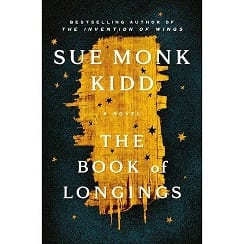
Early in the novel, Ana—the girl whom Jesus will marry—has an important conversation with her beloved and iconoclastic aunt, Yaltha. Ana is a misfit, a young girl who reads, writes, and has visions—none of which fit the traditional template for a Jewish woman of the time. Ana is betrothed to a much older man and is seeking an escape route. After a particularly vivid vision, she asks her aunt hopefully what the vision might mean. Her question leads to a brief, but profound, conversation.
- Ana: Do you believe it’s a sign I’ll avoid this marriage and realize my hopes?
- Yaltha: How can we know the ways of God?
- Ana: But a vision such as this can’t mean I’m fated to disappear to live out my days in misery. It must be a promise of some kind.
- Yaltha: Your vision means what you want it to mean. It will mean what you make it to mean.
- Ana: Why would God send me a vision if it has no meaning other than what I give to it? What is the point of his sending it is to make you search yourself for the answer?
Reflecting back on this conversation a page later, Ana wonders
Could we know the ways of God or not? Did he possess an intention for us, his people, as our religion believed, or was it up to us to invent meaning for ourselves?
In this brief conversation, Ana and Yaltha have plugged into one of my favorite issues to raise with students in virtually every class: Is the truth something that we find or something that we create? Is our engagement with the truth like a treasure hunt or more like the making of a work of art? Jesus is reported to have said that “you shall know the truth, and the truth shall set you free,” but this is maddeningly imprecise. What exactly is the nature of what will set us free? If the truth is something that we seek for and find, like the pot of gold at the end of the rainbow, then possessing it is the end of a process. But if the truth is the product of a creative act, then arguably the process is as important, if not more important, than the product itself.
In the conversation above, Ana wants an interpretation of her vision that is true, the correct interpretation as opposed to alternative, but false, interpretations. She wants the Truth, in other words, something she can possess as a precious object that will sustain her through changes to come. Yaltha suggests, however, that the truth is not like that at all.
I spent last semester, first in person then on Zoom, with my students in two different courses studying the limitless ways in which human beings have used truths they claim to be in possession of—religious, political, what have you—to justify violence against and killing of fellow human beings who happen to embrace different and incompatible Truths—the capital “T” signifying something unchanging and absolute. The Crusades, various wars of religion, the Nazis—virtually any truth can be dressed up as a Truth, then used as a weapon of mass destruction. The best comment on this dynamic I ever read came from the author of a letter to the editor in the local newspaper a number of years ago: Pursue the truth, and run like hell from anyone who claims to have it.
As Joe Biden might say, here’s the deal. The fact of the matter concerning the truth was clearly expressed by one of my colloquium students who wrote the following in her intellectual notebook this past semester: “The truth will not set you free, but it will definitely mess your life up.” This is because the truth about the truth for human beings is that it is a process rather than a thing. The truth is more like a continuing creative act than a treasure hunt that will hopefully stumble into the pot of gold at the end of an evanescent rainbow.
The truth is something that we make. This is not a surprise, because as a matter of fact all ways of seeing reality are human constructions. Truth is not an exception. Everything we believe is a product of a complex filtering and organizing process through any number of filters, from genetic to experiential. Truth is a relative business—relative to each human being since each of our filters are uniquely ours. These filters change over time as each of us changes. Supposing truth to be something to be discovered and “owned” is not only a mistake, but is also damaging. As Christian Wiman writes, Nothing poisons truth so quickly as an assurance that one has found it.
This does not mean, however, that just anything goes. It does not mean that we simply get to make truth up as we go along, as those who fear the ogre “relativism” would claim. Jesus said something else about truth that is directly applicable—“I am the way, the truth, and the life.” Truth is not something we find at the end of a search—it is in fact the search itself, a search that in many traditions is connected directly to a way of life, a person. The only motivations for the process of truth are not self-interest and power. The “I am the way” alternative is that truth is a divine process in which we participate; our participation is energized positively by the things for which we hope and the things which we love.
Previous Post

May 26, 2020
Why Are You Such a Person?
Next Post
May 30, 2020 A Pentecost Reflection: Sometimes Fast Food Isn't Good Enough
Browse Our Archives
Select a Category abortion Advent AI Angels Artificial intelligence atheism attention baptism Baptists beauty belief Benedictines Bible bicycling Big Bird books Bovina Camaldoli hermitage Canada Catholicism cats certainty change Christianity Christmas Collegeville Covid-19 creativity Development of Western Civilization dogs doubt Easter Enneagram Epiphany Episcopal ethics Eucharist evil extroverts Facebook faith family fear flowers forgiveness freedom friends God goodness grace happiness heaven hell history Holy Spirit Holy Week hope human nature humility humor idolatry incarnation introverts irreverence Islam Jeanne Jesus Joe Biden joy Judaism justice Kamala Harris knowledge Lent listen literature liturgy love Marsue Memorial Day miracles movies music mystery mythology NPR Old Testament optimism paradox peace Penguins philosophy piano podcast politics power prayer Protestantism Providence College Religion Rhode Island sabbatical sacrament science seeing silence Simone Weil Socrates soul sports St. John's College stories suffering tattoo teaching technology television theology thinking time tolerance transcendence travel trees trust truth Uncategorized Vermont wisdom wonder writing
Select a Month May 2026 April 2026 March 2026 February 2026 January 2026 December 2025 November 2025 October 2025 September 2025 August 2025 July 2025 June 2025 May 2025 April 2025 March 2025 February 2025 January 2025 December 2024 November 2024 October 2024 September 2024 August 2024 July 2024 June 2024 May 2024 April 2024 March 2024 February 2024 January 2024 December 2023 November 2023 October 2023 September 2023 August 2023 July 2023 June 2023 May 2023 April 2023 March 2023 February 2023 January 2023 December 2022 November 2022 October 2022 September 2022 August 2022 July 2022 June 2022 May 2022 April 2022 March 2022 February 2022 January 2022 December 2021 November 2021 October 2021 September 2021 August 2021 July 2021 June 2021 May 2021 April 2021 March 2021 February 2021 January 2021 December 2020 November 2020 October 2020 September 2020 August 2020 July 2020 June 2020 May 2020 April 2020 March 2020 February 2020 January 2020 December 2019 November 2019 October 2019 September 2019 August 2019 July 2019 June 2019 May 2019 April 2019 March 2019 February 2019 January 2019 December 2018 November 2018 October 2018 September 2018 August 2018 July 2018 June 2018 May 2018 April 2018 March 2018 February 2018 January 2018 December 2017 November 2017 October 2017 September 2017 August 2017 July 2017 June 2017 May 2017 April 2017 March 2017 February 2017 January 2017 December 2016 November 2016 October 2016 September 2016 August 2016 July 2016 June 2016 May 2016 April 2016 March 2016 February 2016 January 2016 December 2015 November 2015 October 2015 September 2015 August 2015 July 2015 June 2015 May 2015 April 2015 March 2015 February 2015 January 2015 December 2014 November 2014 October 2014 September 2014 August 2014 July 2014 June 2014 May 2014 April 2014 March 2014 February 2014 January 2014 December 2013 November 2013 October 2013 September 2013 August 2013 July 2013 June 2013 May 2013 April 2013 March 2013 February 2013 January 2013 December 2012 November 2012 October 2012 September 2012
Follow Us!
TAKE THE
Religious Wisdom Quiz
Which prophet lamented over Israel's oppression of the poor?
Select your answer to see how you score.
Amos Hosea Obadiah Joel
Books by This Author Books by Vance G. Morgan
Related posts from Freelance Christianity

The Lonely Pawn: On Faith, Doubt, and Meaning


AI and Love: When a Chatbot Becomes a...

TRENDING AT PATHEOS Progressive Christian

What Being a Modern-Day Apostle Means to Me
In my last column, I discussed the ins and outs of modern-day...

Did Ancient China Once Worship the God of...
Across human history, a common thread weaves through the origins of the...

Love Your Neighbor – Including Earth-Kin: Lev. 19,...
God’s command to love your neighbor means acting in an ethical and...

Lead a Church Study of “Jesus and Lao...
Guest writer Jack Thomas (The Irreverent Reverend) reflects on leading his church...

Pastoral Wisdom for Responding to Sermon Pushback
Getting sermon pushback on your social justice sermon? Learn practical, Proverbs-based strategies...

Principles for Understanding the Apostolic Ministry Today
Whenever people discover that my formal ministry title is "apostle," as in...
view all Progressive Christian blogs
Ad-Free & Subscriber Log-In Subscription Support
- About Us
- 2026 Calendar
- Videos
- Podcasts
- Library of World Religions
- Faith In Media Tracker
- Advertise With Us
- Write for Us
- Privacy Policy
- Terms of Service
- Do Not Sell My Data
- Contact Us
- Radiant Digital
- Manage Newsletter Subscriptions
- Unsubscribe From Notifications
- Sitemap
Copyright 2008-2026, Patheos. All rights reserved.
Subscription Support Ad-Free & Subscriber Log-In
Follow Patheos