
BuddhistCatholicContemplativeEvangelicalGeneral ChristianHinduJewishLatter-day SaintMuslimNew VisionsProgressive Christian
Beliefs
- Buddhist
- Catholic
- Contemplative
- Evangelical
- General Christian
- Hindu
- Jewish
- Latter-day Saint
- More Voices
- Muslim
- New Visions
- Pagan
- Progressive Christian
Topics
- Religion News
- Food and Religion
- Sports and Religion
- Religious Art
- Religious Music and Entertainment
- Religious Events
- History and Religion
- Style and Religion
- Politics and Religion
- Women in Religion
- Recreation Outdoors and Religion
- Business Finance and Religion
- Careers Workplace and Religion
- Education and Religion
- Family Parenting and Religion
- Health Fitness and Religion
- Home and Religion
- Relationships and Religion
- Technology and Religion
- Travel and Religion
Columnists
- Buddhist Columnists
- Business Finance and Religion Columnists
- Careers Workplace and Religion Columnists
- Catholic Columnists
- Contemplative Columnists
- Education and Religion Columnists
- Evangelists Columnists
- Family Parenting and Religion Columnists
- General Christian Columnists
- Health Fitness and Religion Columnists
- Hindu Columnists
- History and Religion Columnists
- Home and Religion Columnists
- Jewish Columnists
- More Voices Columnists
- Latter Day Columnists
- Muslim Columnists
- New Visions Columnists
- Nonreligious Columnists
- Pagan Columnists
- Politics and Religion Columnists
- Progressive Columnists
- Recreation Outdoors and Religion Columnists
- Relationships and Religion Columnists
- Religion News Columnists
- Religious Art Columnists
- Religious Events Columnists
- Religious Music and Entertainment Columnists
- Sports and Religion Columnists
- Style and Religion Columnists
- Technology and Religion Columnists
- Travel and Religion Columnists
- Women in Religion Columnists
Resource Library
- 2026 Calendar
- Library of World Religions
- The 100 Most Holy Places on Earth
- Patheos Answers
- Podcasts
- Videos
- Faith Leaders Database
- Anglican Episcopalian
- Bahai
- Baptist
- Buddhism
- Christianity
- Confucianism
- Eastern Orthodoxy
- Hinduism
- Holiness and Pentecostal
- ISKCON
- Islam
- Judaism
- Lutheran
- Methodist
- The Church of Jesus Christ of Latter-day Saints
- New Age
- Paganism
- Presbytarian and Reformed
- Protestantism
- Religion Behind the Scenes
- Roman Catholic
- Scientology
- Shia Islam
- Sikhism
- Sufism
- Sunni Islam
- Taoism
- Zen
- See all religions
Research Tools
 Ad-Free & Subscriber Log-In Subscription Support
Ad-Free & Subscriber Log-In Subscription Support
Follow Patheos 

- Trending:
- Forgiveness
- |
- Marriage
- |
- Consciousness
- |
- Death Penalty
- |
- Election
- |
- Halloween

- Home
- Progressive Christian
- Pragmatic Christianity: Why Doctrine Often Does Not Matter
Pragmatic Christianity: Why Doctrine Often Does Not Matter
Last updated on: November 19, 2017 at 7:50 am by Vance Morgan
Pragmatic Christianity: Why Doctrine Often Does Not Matter 2017-11-19T07:50:39-04:00 Vance Morgan
Patheos Explore the world's faith through different perspectives on religion and spirituality! Patheos has the views of the prevalent religions and spiritualities of the world.
It’s always an awkward situation, no matter how many times it has happened in my twenty-five plus years of teaching. Fifteen minutes into a planned two-hour seminar, it isn’t working. Not that this was surprising last Monday. In the interdisciplinary course I teach in, we were in the middle of early Christianity; the readings for the day were essays about two of the central doctrines of the Christian faith from two fourth-century theologians: Hilary of Poitiers on the Trinity, and Athanasius on the Incarnation. And despite my best efforts, my eighteen freshmen—many of them the products of twelve years of Catholic parochial education—had nothing to say.
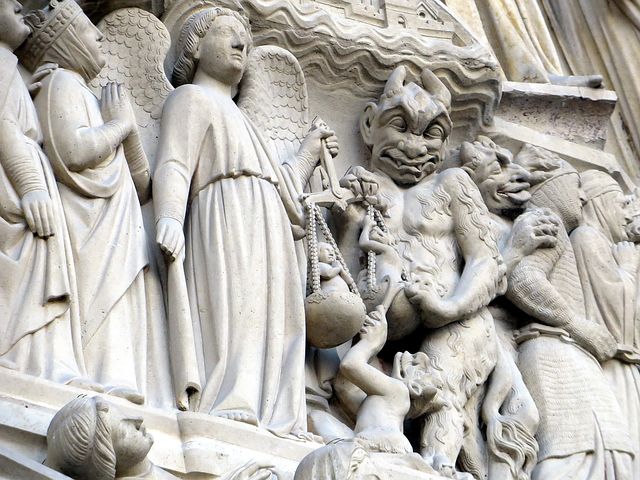
I can’t say that I blame them. These texts were definitely heavier lifting than seminar texts like the Iliad or even Plato’s Symposium from earlier in the semester. Choosing to focus on the Incarnation, I reminded them of the underlying issue at the heart of Athanasius’ discussion: How are Christians to understand the Second Person of the Trinity? I also reminded them of the various competing possibilities raised by my theologian colleague in his setup lecture a few days earlier. Sabellius, Ebion, Arius, the Monophysites, the Docetists, and many others were jockeying for position with their varying suggestions along with the eventual winning idea promoted by Athanasius and others, the position ultimately incorporated into the Nicene Creed:
We believe in one Lord, Jesus Christ, the only Son of God, eternally begotten of the Father, God from God, Light from Light, true God from true God, begotten, not made, of one Being with the Father. Through him all things were made.
The creed’s claim concerning Jesus is that he was not just a human being with special divine favor, nor was he a divine being pretending to be human, nor was he less than God the Father, nor was he some strange mixture or brew of divinity and humanity stirred together in a new ontological concoction. He was “begotten,” not “created.” “Whatever,” my students’ faces were saying. “Is this going to be on the test?’ they were wondering. So I decided to ask them the question that none of them dared but all of them wanted to ask.
“Suppose you were a fourth-century Christian woman or man,” I began. “Not a theologian or anyone special, just an ordinary, garden variety person claiming to be a Christian. All you want to know is ‘How should I live today in real time, at my job, with my family and friends, as a Christian? What does this faith I profess require of me today?’ Would either of the texts we read for today provide such a person with any practical guidance? Would reading Hilary or Athanasius help an aspiring Christian figure out how to live her or his faith more effectively and fruitfully?” No one said anything immediately, but several students began slowly shaking their heads. “I don’t think so,” one of them finally offered tentatively. And I addressed the elephant in the room: Then what is the point? Who cares? Why are we wasting our time with this?
I have told my freshmen before that “So what?’ is the best philosophical question one can ask, but they didn’t expect me to actually ask it in the context of matters that many of them have been taught involve one’s eternal soul. My thinking about this has been greatly influenced by William James, a American pragmatist philosopher whose work we are focusing on currently in one of my other classes. James suggests that the test of whether esoteric debates about abstract matters are worthwhile is a very practical one.
The pragmatic method in such cases is to try to interpret each notion by tracing its respective practical consequences. What differences would it practically make to anyone if this notion rather than that notion were true? If no practical difference whatever can be traced, then the alternatives mean practically the same thing, and all dispute is idle. Whenever a dispute is serious, we ought to be able to show some practical difference that must follow from one side or the other’s being right.
I’m sure that Athanasius’ discussion and the niceties of doctrinal hairsplitting has meant and does mean something practical to many people over the centuries. As one of my teaching colleagues noted, in the fourth century it seemed that one’s eternal life might depend on getting this right. And maybe it does. But try selling that to eighteen college freshmen, especially when I myself am not convinced that the various distinctions really make a practical difference.
Where, during “Christianity week” in this interdisciplinary course, could examples of early Christians seeking to “get it right” in practical ways and in real time be found? Fortunately passages from the Gospel of John had been assigned as well for seminar, so the students had Bibles with them. I took them to two brief passages early in the Book of Acts (not assigned for the day) and had them read descriptions of how followers of Jesus (not even called “Christian” yet) chose to organize their fledgling communities in the early years after Jesus was gone. After hearing how the members of these communities sold their property and brought the proceeds to the community leaders, who then “distributed to each as anyone had need,” I asked the students for their initial thoughts and reactions. And they were quick in coming.
“They were like a bunch of Communists!” was the general reaction, immediately creating cognitive dissonance in this group of late teens, many of whom were raised in a religious upbringing and all of whom had been taught that Communism/socialism/anything not capitalism is a bad idea. After sharing all of the reasons they have been taught that an economic system built on the elimination of private property is guaranteed to fail, I asked them to consider why they supposed the followers of Jesus chose to economically organize their fledgling communities in this way. It’s not as if the Roman empire knew nothing of private property. Why did they choose to live out the directive that “each contributes according to their ability, and each receives according to their need” centuries before the phrase was coined?
Most of the members of these communities knew of Jesus only through stories told second- and third-hand; little to nothing had been written down yet. No one had yet even thought of “Christian doctrine” yet. The leaders of the communities might perhaps have met or seen Jesus in person; a few of the leaders had been part of Jesus’ inner circle. As my students considered my question, they eventually came to an obvious possibility—these early followers of Jesus simply were asking themselves “If Jesus was here with us, how would he want us to organize our community economically? What is the most ‘Jesus-like’ way to deal with property, the things that people need, and the demands of community life?” Acts tells us the answer.
Now all who believed were together, and had all things in common, and sold their possessions and goods, and divided them among all, as anyone had need.
When faced with the practical challenge of how to live a life guided by Jesus’ example, they formed communities of mutual support and sharing—because such communities seemed most in keeping with what they knew of Jesus’ teaching and life. We, two centuries later, know from the gospels—which they did not have—that they got it right. Their communities were attempts to live out what Jesus taught in the Sermon on the Mount and elsewhere.
The ensuing class discussion was active and fascinating. Students began to consider what it might be like to live in a community of individuals with shared beliefs and commitments, where the needs of each member were considered to be as important as one’s own needs. Might traditional critiques of “socialism” be less effective when individual rights and self-interest were not the primary concern of community members? Most importantly, students realized that the questions the early followers of Jesus were asking are just as relevant to persons of faith today. Rather than wondering whether our doctrinal beliefs and commitments are sufficiently pure and orthodox, we would do better to ask how we are going to live our faith out in the various circumstances and challenges that face us each day. As the author of Acts asks, how are we to follow Jesus with “gladness and simplicity of heart”?
Previous Post
November 16, 2017
Spiritual Punctuation
Next Post

November 21, 2017 Another Book That May Change Your Life
Browse Our Archives
Select a Category abortion Advent AI Angels Artificial intelligence atheism attention baptism Baptists beauty belief Benedictines Bible bicycling Big Bird books Bovina Camaldoli hermitage Canada Catholicism cats certainty change Christianity Christmas Collegeville Covid-19 creativity Development of Western Civilization dogs doubt Easter Enneagram Epiphany Episcopal ethics Eucharist evil extroverts Facebook faith family fear flowers forgiveness freedom friends God goodness grace happiness heaven hell history Holy Spirit Holy Week hope human nature humility humor idolatry incarnation introverts irreverence Islam Jeanne Jesus Joe Biden joy Judaism justice Kamala Harris knowledge Lent listen literature liturgy love Marsue Memorial Day miracles movies music mystery mythology NPR Old Testament optimism paradox peace Penguins philosophy piano podcast politics power prayer Protestantism Providence College Religion Rhode Island sabbatical sacrament science seeing silence Simone Weil Socrates soul sports St. John's College stories suffering tattoo teaching technology television theology thinking time tolerance transcendence travel trees trust truth Uncategorized Vermont wisdom wonder writing
Select a Month May 2026 April 2026 March 2026 February 2026 January 2026 December 2025 November 2025 October 2025 September 2025 August 2025 July 2025 June 2025 May 2025 April 2025 March 2025 February 2025 January 2025 December 2024 November 2024 October 2024 September 2024 August 2024 July 2024 June 2024 May 2024 April 2024 March 2024 February 2024 January 2024 December 2023 November 2023 October 2023 September 2023 August 2023 July 2023 June 2023 May 2023 April 2023 March 2023 February 2023 January 2023 December 2022 November 2022 October 2022 September 2022 August 2022 July 2022 June 2022 May 2022 April 2022 March 2022 February 2022 January 2022 December 2021 November 2021 October 2021 September 2021 August 2021 July 2021 June 2021 May 2021 April 2021 March 2021 February 2021 January 2021 December 2020 November 2020 October 2020 September 2020 August 2020 July 2020 June 2020 May 2020 April 2020 March 2020 February 2020 January 2020 December 2019 November 2019 October 2019 September 2019 August 2019 July 2019 June 2019 May 2019 April 2019 March 2019 February 2019 January 2019 December 2018 November 2018 October 2018 September 2018 August 2018 July 2018 June 2018 May 2018 April 2018 March 2018 February 2018 January 2018 December 2017 November 2017 October 2017 September 2017 August 2017 July 2017 June 2017 May 2017 April 2017 March 2017 February 2017 January 2017 December 2016 November 2016 October 2016 September 2016 August 2016 July 2016 June 2016 May 2016 April 2016 March 2016 February 2016 January 2016 December 2015 November 2015 October 2015 September 2015 August 2015 July 2015 June 2015 May 2015 April 2015 March 2015 February 2015 January 2015 December 2014 November 2014 October 2014 September 2014 August 2014 July 2014 June 2014 May 2014 April 2014 March 2014 February 2014 January 2014 December 2013 November 2013 October 2013 September 2013 August 2013 July 2013 June 2013 May 2013 April 2013 March 2013 February 2013 January 2013 December 2012 November 2012 October 2012 September 2012
Follow Us!
TAKE THE
Religious Wisdom Quiz
How old was Jesus when He started His public ministry?
Select your answer to see how you score.
About 12 About 30 About 21 About 50
Books by This Author Books by Vance G. Morgan
Related posts from Freelance Christianity

The Lonely Pawn: On Faith, Doubt, and Meaning


AI and Love: When a Chatbot Becomes a...

TRENDING AT PATHEOS Progressive Christian

What Being a Modern-Day Apostle Means to Me
In my last column, I discussed the ins and outs of modern-day...

Did Ancient China Once Worship the God of...
Across human history, a common thread weaves through the origins of the...

Love Your Neighbor – Including Earth-Kin: Lev. 19,...
God’s command to love your neighbor means acting in an ethical and...

Lead a Church Study of “Jesus and Lao...
Guest writer Jack Thomas (The Irreverent Reverend) reflects on leading his church...

Pastoral Wisdom for Responding to Sermon Pushback
Getting sermon pushback on your social justice sermon? Learn practical, Proverbs-based strategies...

Principles for Understanding the Apostolic Ministry Today
Whenever people discover that my formal ministry title is "apostle," as in...
view all Progressive Christian blogs
Ad-Free & Subscriber Log-In Subscription Support
- About Us
- 2026 Calendar
- Videos
- Podcasts
- Library of World Religions
- Faith In Media Tracker
- Advertise With Us
- Write for Us
- Privacy Policy
- Terms of Service
- Do Not Sell My Data
- Contact Us
- Radiant Digital
- Manage Newsletter Subscriptions
- Unsubscribe From Notifications
- Sitemap
Copyright 2008-2026, Patheos. All rights reserved.
Subscription Support Ad-Free & Subscriber Log-In
Follow Patheos