
BuddhistCatholicContemplativeEvangelicalGeneral ChristianHinduJewishLatter-day SaintMuslimNew VisionsProgressive Christian
Beliefs
- Buddhist
- Catholic
- Contemplative
- Evangelical
- General Christian
- Hindu
- Jewish
- Latter-day Saint
- More Voices
- Muslim
- New Visions
- Pagan
- Progressive Christian
Topics
- Religion News
- Food and Religion
- Sports and Religion
- Religious Art
- Religious Music and Entertainment
- Religious Events
- History and Religion
- Style and Religion
- Politics and Religion
- Women in Religion
- Recreation Outdoors and Religion
- Business Finance and Religion
- Careers Workplace and Religion
- Education and Religion
- Family Parenting and Religion
- Health Fitness and Religion
- Home and Religion
- Relationships and Religion
- Technology and Religion
- Travel and Religion
Columnists
- Buddhist Columnists
- Business Finance and Religion Columnists
- Careers Workplace and Religion Columnists
- Catholic Columnists
- Contemplative Columnists
- Education and Religion Columnists
- Evangelists Columnists
- Family Parenting and Religion Columnists
- General Christian Columnists
- Health Fitness and Religion Columnists
- Hindu Columnists
- History and Religion Columnists
- Home and Religion Columnists
- Jewish Columnists
- More Voices Columnists
- Latter Day Columnists
- Muslim Columnists
- New Visions Columnists
- Nonreligious Columnists
- Pagan Columnists
- Politics and Religion Columnists
- Progressive Columnists
- Recreation Outdoors and Religion Columnists
- Relationships and Religion Columnists
- Religion News Columnists
- Religious Art Columnists
- Religious Events Columnists
- Religious Music and Entertainment Columnists
- Sports and Religion Columnists
- Style and Religion Columnists
- Technology and Religion Columnists
- Travel and Religion Columnists
- Women in Religion Columnists
Resource Library
- 2026 Calendar
- Library of World Religions
- The 100 Most Holy Places on Earth
- Patheos Answers
- Podcasts
- Videos
- Faith Leaders Database
- Anglican Episcopalian
- Bahai
- Baptist
- Buddhism
- Christianity
- Confucianism
- Eastern Orthodoxy
- Hinduism
- Holiness and Pentecostal
- ISKCON
- Islam
- Judaism
- Lutheran
- Methodist
- The Church of Jesus Christ of Latter-day Saints
- New Age
- Paganism
- Presbytarian and Reformed
- Protestantism
- Religion Behind the Scenes
- Roman Catholic
- Scientology
- Shia Islam
- Sikhism
- Sufism
- Sunni Islam
- Taoism
- Zen
- See all religions
Research Tools
 Ad-Free & Subscriber Log-In Subscription Support
Ad-Free & Subscriber Log-In Subscription Support
Follow Patheos 

- Trending:
- Forgiveness
- |
- Marriage
- |
- Consciousness
- |
- Death Penalty
- |
- Election
- |
- Halloween

- Home
- Progressive Christian
- Playing with Fire
Playing with Fire
Last updated on: February 1, 2017 at 7:30 am by Vance Morgan
Playing with Fire 2017-02-01T07:30:06-04:00 Vance Morgan
Patheos Explore the world's faith through different perspectives on religion and spirituality! Patheos has the views of the prevalent religions and spiritualities of the world.
Somewhere I heard or read that one of the top television programs in Finland (or Sweden or Norway) is a few hours of watching a fire burn in a fireplace. I don’t know whether or not this is true—I would hope that my Scandinavian cousins might go for a real fire in a fireplace rather than one on a screen. But Google “fireplace youtube video” and you will find several dozen to choose from.
During the two-hour final exam in one of my classes a couple of years ago, I put a fireplace video on the big screen up front while the students worked on their exams. Nobody commented on what I thought was a stroke of genius. I didn’t notice a significant increase in the quality of the exams, but I’d like to believe that it might have reduced the stress a bit. There is something mesmerizing and comforting about such videos; the one I chose is complete with the crackling of the logs (and no elevator music in the background). It’s low maintenance, too. No heat, but no kindling, no mess to clean up, no chance of the fire jumping out of the fireplace and causing damage, and no burns. There’s a lot to be said for domesticated fire—except that it isn’t fire. That’s what usually happens when we try to domesticate something wild and dangerous. It becomes something else entirely.
Domesticating the wild and dangerous is a favorite and necessary human activity, beginning with the domestication of the small human barbarians we call “children.” As a child, my favorite character in the pantheon of classic Bugs Bunny characters was the Tasmanian Devil. I lived vicariously through his uncontrolled and destructive energy. Who doesn’t occasionally wish for the opportunity to make a god-awful mess with impunity and without repercussions, just because you can? Mom doesn’t like the way I picked up my room? I’ll show you “picked up”! I whirl into a tornado of destructive frenzy, clothes and bedding flying everywhere, leaving a child-sized hole in the wall as I exit the scene. Dad doesn’t like my attitude? I’ll show you an attitude, as I leave flying paper and debris in the wake of my Tasmanian exit through your floor-to-ceiling bookcases. Just as the Tasmanian Devil was an infrequent visitor to the Bugs Bunny Show (maybe once every third Saturday),
  so I wasn’t looking to be destructive on a regular basis. Infrequent and arbitrary scenes of total chaos would have been enough to keep everyone on edge and suitably respectful.
I thought of the Tasmanian devil not long ago when Psalm 29 was one of my morning psalms:
The voice of the LORD is over the waters; the God of glory thunders, the LORD, over mighty waters.
The voice of the LORD is powerful; the voice of the LORD is full of majesty.
The voice of the LORD breaks the cedars; the LORD breaks the cedars of Lebanon.
The voice of the LORD flashes forth flames of fire.
The voice of the LORD shakes the wilderness; the LORD shakes the wilderness of Kadesh.
The voice of the LORD causes the oaks to whirl, and strips the forest bare . . .
 Broken cedars, whirling oaks, naked forests—sounds like the Tasmanian devil has been here. But for the most part, this is not the God we encounter in church (or anywhere else for that matter). As Annie Dillard writes, we tend to “come at God with an unwarranted air of professionalism, with authority and pomp, as though [we] knew what [we] were doing, as though people in themselves were an appropriate set of creatures to have dealings with God.” We want contact with the divine, but not with the Tasmanian Devil deity or with the
  God that Deuteronomy and Hebrews describe as “a consuming fire.” We want a domesticated God that we can predict and perhaps control. Why is that?
In When God is Silent, Barbara Brown Taylor suggests that we opt for a domesticated God because we suspect that the alternative is too disturbing to consider. Religious history is littered with stories of those who asked to meet God face to face and barely survived to tell about it. “Many pray for an encounter with the living God. Those whose prayers are answered rarely ask for the same thing twice.” Persons of faith complain (frequently, endlessly) that God is silent, that no direct communication from the divine is ever forthcoming, at least not in a language anyone can understand. Just ask Job. But it just might be that God is silent because this is what, in our heart of hearts, we have asked for. As the children of Israel quaking in their boots at Mount Sinai after God’s direct communication, we would rather dabble around the edges, and we would much rather hire someone to represent God to us (and us to God) than take the face to face risk.
 We are not up to direct encounter with God. We want it but we don’t want it. We want to be warmed, not burned, except where God is concerned there is no such thing as a safe fire. Safe fire is our own invention. It is what we preach to people who, like us, would rather be bored than scared.
The next time I am in church I’ll have a hard time forgetting the YouTube video of a fireplace burning. A pleasant enough experience, I suppose, but offering nothing of the warmth and danger of the original. As we proceed through the various portions of the liturgy—Gloria, Sanctus, sermon, creed, confession, collection, Sanctus, Agnus Dei and so on—Annie Dillard will be poking me in the side.
I often think of set pieces of liturgy as certain words that people have successfully addressed to God without their getting killed . . . If God were to blast such a service to bits, the congregation would be, I believe, genuinely shocked.
Indeed we would be—and attendance the following Sunday would be affected. Much better to pretend that we know what we are doing and that God somehow is entertained. Because the alternative—that God might actually show up and do something, including making us responsible for what we so blithely parrot every week—makes us uncomfortable. And above all else, human beings want to be comfortable.
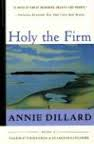 Why do we people in churches seem like cheerful, brainless tourists on a packaged tour of the Absolute? . . . On the whole, I do not find Christians, outside of the catacombs, sufficiently sensible of conditions. Does anyone have the foggiest idea what sort of power we so blithely invoke? Or, as I suspect, does no one believe a word of it? The churches are children playing on the floor with their chemistry sets, mixing up a batch of TNT to kill a Sunday morning. It is madness to wear ladies’ straw hats and velvet hats to church; we should all be wearing crash helmets. Ushers should issue life preservers and signal flares; they should lash us to our pews. For the sleeping god may wake someday and take offense, or the waking god may draw us out to where we can never return. Annie Dillard
Previous Post

January 30, 2017
I Was a Stranger
Next Post
February 3, 2017 Turning Around
Browse Our Archives
Select a Category abortion Advent AI Angels Artificial intelligence atheism attention baptism Baptists beauty belief Benedictines Bible bicycling Big Bird books Bovina Camaldoli hermitage Canada Catholicism cats certainty change Christianity Christmas Collegeville Covid-19 creativity Development of Western Civilization dogs doubt Easter Enneagram Epiphany Episcopal ethics Eucharist evil extroverts Facebook faith family fear flowers forgiveness freedom friends God goodness grace happiness heaven hell history Holy Spirit Holy Week hope human nature humility humor idolatry incarnation introverts irreverence Islam Jeanne Jesus Joe Biden joy Judaism justice Kamala Harris knowledge Lent listen literature liturgy love Marsue Memorial Day miracles movies music mystery mythology NPR Old Testament optimism paradox peace Penguins philosophy piano podcast politics power prayer Protestantism Providence College Religion Rhode Island sabbatical sacrament science seeing silence Simone Weil Socrates soul sports St. John's College stories suffering tattoo teaching technology television theology thinking time tolerance transcendence travel trees trust truth Uncategorized Vermont wisdom wonder writing
Select a Month May 2026 April 2026 March 2026 February 2026 January 2026 December 2025 November 2025 October 2025 September 2025 August 2025 July 2025 June 2025 May 2025 April 2025 March 2025 February 2025 January 2025 December 2024 November 2024 October 2024 September 2024 August 2024 July 2024 June 2024 May 2024 April 2024 March 2024 February 2024 January 2024 December 2023 November 2023 October 2023 September 2023 August 2023 July 2023 June 2023 May 2023 April 2023 March 2023 February 2023 January 2023 December 2022 November 2022 October 2022 September 2022 August 2022 July 2022 June 2022 May 2022 April 2022 March 2022 February 2022 January 2022 December 2021 November 2021 October 2021 September 2021 August 2021 July 2021 June 2021 May 2021 April 2021 March 2021 February 2021 January 2021 December 2020 November 2020 October 2020 September 2020 August 2020 July 2020 June 2020 May 2020 April 2020 March 2020 February 2020 January 2020 December 2019 November 2019 October 2019 September 2019 August 2019 July 2019 June 2019 May 2019 April 2019 March 2019 February 2019 January 2019 December 2018 November 2018 October 2018 September 2018 August 2018 July 2018 June 2018 May 2018 April 2018 March 2018 February 2018 January 2018 December 2017 November 2017 October 2017 September 2017 August 2017 July 2017 June 2017 May 2017 April 2017 March 2017 February 2017 January 2017 December 2016 November 2016 October 2016 September 2016 August 2016 July 2016 June 2016 May 2016 April 2016 March 2016 February 2016 January 2016 December 2015 November 2015 October 2015 September 2015 August 2015 July 2015 June 2015 May 2015 April 2015 March 2015 February 2015 January 2015 December 2014 November 2014 October 2014 September 2014 August 2014 July 2014 June 2014 May 2014 April 2014 March 2014 February 2014 January 2014 December 2013 November 2013 October 2013 September 2013 August 2013 July 2013 June 2013 May 2013 April 2013 March 2013 February 2013 January 2013 December 2012 November 2012 October 2012 September 2012
Follow Us!
TAKE THE
Religious Wisdom Quiz
What does the name "Moses" mean?
Select your answer to see how you score.
Delivered Drawn out (of water) Judge Saved
Books by This Author Books by Vance G. Morgan
Related posts from Freelance Christianity

The Lonely Pawn: On Faith, Doubt, and Meaning


AI and Love: When a Chatbot Becomes a...

TRENDING AT PATHEOS Progressive Christian

What Being a Modern-Day Apostle Means to Me
In my last column, I discussed the ins and outs of modern-day...

Did Ancient China Once Worship the God of...
Across human history, a common thread weaves through the origins of the...

Love Your Neighbor – Including Earth-Kin: Lev. 19,...
God’s command to love your neighbor means acting in an ethical and...

Lead a Church Study of “Jesus and Lao...
Guest writer Jack Thomas (The Irreverent Reverend) reflects on leading his church...

Pastoral Wisdom for Responding to Sermon Pushback
Getting sermon pushback on your social justice sermon? Learn practical, Proverbs-based strategies...

Principles for Understanding the Apostolic Ministry Today
Whenever people discover that my formal ministry title is "apostle," as in...
view all Progressive Christian blogs
Ad-Free & Subscriber Log-In Subscription Support
- About Us
- 2026 Calendar
- Videos
- Podcasts
- Library of World Religions
- Faith In Media Tracker
- Advertise With Us
- Write for Us
- Privacy Policy
- Terms of Service
- Do Not Sell My Data
- Contact Us
- Radiant Digital
- Manage Newsletter Subscriptions
- Unsubscribe From Notifications
- Sitemap
Copyright 2008-2026, Patheos. All rights reserved.
Subscription Support Ad-Free & Subscriber Log-In
Follow Patheos