
BuddhistCatholicContemplativeEvangelicalGeneral ChristianHinduJewishLatter-day SaintMuslimNew VisionsProgressive Christian
Beliefs
- Buddhist
- Catholic
- Contemplative
- Evangelical
- General Christian
- Hindu
- Jewish
- Latter-day Saint
- More Voices
- Muslim
- New Visions
- Pagan
- Progressive Christian
Topics
- Religion News
- Food and Religion
- Sports and Religion
- Religious Art
- Religious Music and Entertainment
- Religious Events
- History and Religion
- Style and Religion
- Politics and Religion
- Women in Religion
- Recreation Outdoors and Religion
- Business Finance and Religion
- Careers Workplace and Religion
- Education and Religion
- Family Parenting and Religion
- Health Fitness and Religion
- Home and Religion
- Relationships and Religion
- Technology and Religion
- Travel and Religion
Columnists
- Buddhist Columnists
- Business Finance and Religion Columnists
- Careers Workplace and Religion Columnists
- Catholic Columnists
- Contemplative Columnists
- Education and Religion Columnists
- Evangelists Columnists
- Family Parenting and Religion Columnists
- General Christian Columnists
- Health Fitness and Religion Columnists
- Hindu Columnists
- History and Religion Columnists
- Home and Religion Columnists
- Jewish Columnists
- More Voices Columnists
- Latter Day Columnists
- Muslim Columnists
- New Visions Columnists
- Nonreligious Columnists
- Pagan Columnists
- Politics and Religion Columnists
- Progressive Columnists
- Recreation Outdoors and Religion Columnists
- Relationships and Religion Columnists
- Religion News Columnists
- Religious Art Columnists
- Religious Events Columnists
- Religious Music and Entertainment Columnists
- Sports and Religion Columnists
- Style and Religion Columnists
- Technology and Religion Columnists
- Travel and Religion Columnists
- Women in Religion Columnists
Resource Library
- 2026 Calendar
- Library of World Religions
- The 100 Most Holy Places on Earth
- Patheos Answers
- Podcasts
- Videos
- Faith Leaders Database
- Anglican Episcopalian
- Bahai
- Baptist
- Buddhism
- Christianity
- Confucianism
- Eastern Orthodoxy
- Hinduism
- Holiness and Pentecostal
- ISKCON
- Islam
- Judaism
- Lutheran
- Methodist
- The Church of Jesus Christ of Latter-day Saints
- New Age
- Paganism
- Presbytarian and Reformed
- Protestantism
- Religion Behind the Scenes
- Roman Catholic
- Scientology
- Shia Islam
- Sikhism
- Sufism
- Sunni Islam
- Taoism
- Zen
- See all religions
Research Tools
 Ad-Free & Subscriber Log-In Subscription Support
Ad-Free & Subscriber Log-In Subscription Support
Follow Patheos 

- Trending:
- Forgiveness
- |
- Marriage
- |
- Consciousness
- |
- Death Penalty
- |
- Election
- |
- Halloween

- Home
- Progressive Christian
- On the Days when I Believe . . .
On the Days when I Believe . . .
Last updated on: March 27, 2022 at 8:04 am by Vance Morgan
On the Days when I Believe . . . 2022-03-27T08:04:24-04:00 Vance Morgan
Patheos Explore the world's faith through different perspectives on religion and spirituality! Patheos has the views of the prevalent religions and spiritualities of the world.
After spending six and a half decades in the middle of this faith thing, one would think that I might have made some definitive conclusions about faith and real life by now. After all, that’s what the decade of this blog’s existence has been about. But I am continually reminded that any attempts to “figure faith out,” by me or anyone else, are doomed to failure. “Doomed” not because faith can’t be figured out. “Doomed” because, as we philosophers might say, trying to figure faith out is a “category error.” Faith isn’t the sort of thing to be “figured out.”
My students tend to think of faith as both a constant and something that one either has or does not have—something more like an object than a state of being. When I pay attention to the ways in which I often speak of faith, I clearly share their point of view. I often describe myself, particularly when writing, as a “person of faith,” as if faith is something that defines me in the same way that my maleness and whiteness does. But more and more I am coming to realize that faith is not something that anyone “has” so much as something that one participates in, enters and leaves—only to enter again (and leave). Faith is not a possession nor an adjectival attribute. It is far more dynamic and slippery than that.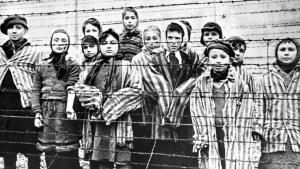
I found new ways of thinking about the nature of faith over the past two months as I prepared for a class on “Jewish theological responses to the Holocaust” in the interdisciplinary honors sophomore course that I am teaching in this semester. The class was the capstone of two weeks focusing on the Holocaust. The topic is not my area of expertise; with the help of a close friend who is a Catholic theologian and works, among other things, on Catholic-Jewish interfaith relationships, I selected a handful of articles and excerpts from longer texts that are representative of distinct theological categories of response.
Representing what might be called the “Death of God” perspective which understands the Holocaust to be the end of the Covenant, Rabbi Michael Berenbaum asks “What can we say of the covenant in the wake of Auschwitz? . . . How can we talk of God’s attributes of compassion and mercy in a world of death camps?” while Richard Rubenstein writes:
I have often stated that the idea that a God worthy of human adoration could have inflicted Auschwitz on what was allegedly his people is obscene . . . I have elected to accept what Camus has rightly called the courage of the absurd, the courage to live in a meaningless, purposeless Cosmos rather than believe in a God who inflicts Auschwitz on his people.
At the other end of the interpretive spectrum is “Orthodoxy” which locates the Holocaust in the continuing and unfolding history of the Jewish people and the Covenant with God, a history that includes slavery, pogroms, exile, and genocide. As horrific as it was, the Holocaust was the latest chapter in this covenantal history that defines the Jewish soul. Rabbi David Weiss writes that
Judaism has survived until 1939, as it shall now, without denying its God and the covenant with Him . . . A “new covenant,” a “new epoch”—that is a closing of the book of Judaism . . . The covenant is not for review, neither is the eternity of Jewish existence.
The perspective my students and I found most thought-provoking was what might be called the “All is Altered by the Holocaust” framework. We read an extended excerpt from Irving Greenberg’s 1976 Cloud of Smoke, Pillar of Fire, in which Greenberg frames his (and any other) discussion with the following warning:
Let us offer, then, as a working principle the following: No statement, theological or otherwise, should be made that would not be credible in the presence of the burning children.
Greenberg rejects both the “Death of God” and “Orthodoxy” interpretive frameworks because
Both positions give a definitive interpretation of the Holocaust which subsumes it under known classical categories. Neither classical theism nor atheism is adequate to incorporate the incommensurability of the Holocaust.
Modelling Jesus’ suggestion that we should not put new wine into old wineskins, Greenberg argues that traditional theological categories, whether Jewish or Christian, are not credible in the presence of the burning children, in the wake of the Holocaust.
In the aftermath of the Holocaust and other horrific events that human beings have caused and continue to cause, we need to reimagine faith in terms of ebb and flow, presence and absence.
We now have to speak of “moment faiths,” moments when redeemer and vision of redemption are present, interspersed with times when the flames and smoke of the burning children blog out faith—though it flickers again . . . Faith is a life response of the whole person to the Presence in life and history. Like life, this response ebbs and flows. The difference between the skeptic and the believer is frequency of faith, and not certitude of position.
“Moment faith.” This simple phrase provided me with new vocabulary to describe something that I know to be true but that has never fit into the traditional categories that I was taught and have spent my adult life trying to accommodate.
Greenberg’s insight is that when the shit hits the fan, when the worst imaginable becomes a reality, it is a waste of time to try to sustain “faith” in the midst of darkness or to pretend that one’s faith is still as strong as ever. Rather,
Faith is living in the presence of the Redeemer, and in the moment of utter chaos, of genocide, one does not live in his presence. One must be faithful to the reality of the nothingness. Faith is a moment truth, but there are moments when it is not true.
Faith mirrors the ebb and flow of life itself—which should not have been as surprising to me as it actually is. When the worst happens, don’t pretend that you are okay or solid in your faith. Lean into the abyss.
Neither Exodus nor Easter wins out or is totally blotted out by Buchenwald, but we encounter both polar experiences: the life of faith is lived between them. And this dialectic opens new models of response to God.
In her final book Wholehearted Faith, Rachel Held Evans often prefaces an insight with “On the days when I believe,” immediately followed by “And then there are the other days.” I love that because it is so honest and matches my own experience. There are days when the presence of the divine is palpable and I revel in the mystery of my relationship with what is greater than me. There are other days when the existence of God is as unlikely as the existence of unicorns. The only thing that makes me a person of faith rather than an agnostic or skeptic is that there are more of the first kind of day than the second kind of day.
Previous Post
March 23, 2022
Have Yourself an Introspective Day
Next Post
March 28, 2022 Wild West Ethics
Browse Our Archives
Select a Category abortion Advent AI Angels Artificial intelligence atheism attention baptism Baptists beauty belief Benedictines Bible bicycling Big Bird books Bovina Camaldoli hermitage Canada Catholicism cats certainty change Christianity Christmas Collegeville Covid-19 creativity Development of Western Civilization dogs doubt Easter Enneagram Epiphany Episcopal ethics Eucharist evil extroverts Facebook faith family fear flowers forgiveness freedom friends God goodness grace happiness heaven hell history Holy Spirit Holy Week hope human nature humility humor idolatry incarnation introverts irreverence Islam Jeanne Jesus Joe Biden joy Judaism justice Kamala Harris knowledge Lent listen literature liturgy love Marsue Memorial Day miracles movies music mystery mythology NPR Old Testament optimism paradox peace Penguins philosophy piano podcast politics power prayer Protestantism Providence College Religion Rhode Island sabbatical sacrament science seeing silence Simone Weil Socrates soul sports St. John's College stories suffering tattoo teaching technology television theology thinking time tolerance transcendence travel trees trust truth Uncategorized Vermont wisdom wonder writing
Select a Month May 2026 April 2026 March 2026 February 2026 January 2026 December 2025 November 2025 October 2025 September 2025 August 2025 July 2025 June 2025 May 2025 April 2025 March 2025 February 2025 January 2025 December 2024 November 2024 October 2024 September 2024 August 2024 July 2024 June 2024 May 2024 April 2024 March 2024 February 2024 January 2024 December 2023 November 2023 October 2023 September 2023 August 2023 July 2023 June 2023 May 2023 April 2023 March 2023 February 2023 January 2023 December 2022 November 2022 October 2022 September 2022 August 2022 July 2022 June 2022 May 2022 April 2022 March 2022 February 2022 January 2022 December 2021 November 2021 October 2021 September 2021 August 2021 July 2021 June 2021 May 2021 April 2021 March 2021 February 2021 January 2021 December 2020 November 2020 October 2020 September 2020 August 2020 July 2020 June 2020 May 2020 April 2020 March 2020 February 2020 January 2020 December 2019 November 2019 October 2019 September 2019 August 2019 July 2019 June 2019 May 2019 April 2019 March 2019 February 2019 January 2019 December 2018 November 2018 October 2018 September 2018 August 2018 July 2018 June 2018 May 2018 April 2018 March 2018 February 2018 January 2018 December 2017 November 2017 October 2017 September 2017 August 2017 July 2017 June 2017 May 2017 April 2017 March 2017 February 2017 January 2017 December 2016 November 2016 October 2016 September 2016 August 2016 July 2016 June 2016 May 2016 April 2016 March 2016 February 2016 January 2016 December 2015 November 2015 October 2015 September 2015 August 2015 July 2015 June 2015 May 2015 April 2015 March 2015 February 2015 January 2015 December 2014 November 2014 October 2014 September 2014 August 2014 July 2014 June 2014 May 2014 April 2014 March 2014 February 2014 January 2014 December 2013 November 2013 October 2013 September 2013 August 2013 July 2013 June 2013 May 2013 April 2013 March 2013 February 2013 January 2013 December 2012 November 2012 October 2012 September 2012
Follow Us!
TAKE THE
Religious Wisdom Quiz
What does the rider of the White Horse in Revelations carry?
Select your answer to see how you score.
A bow Scales A scroll A sword
Books by This Author Books by Vance G. Morgan
Related posts from Freelance Christianity

The Lonely Pawn: On Faith, Doubt, and Meaning


AI and Love: When a Chatbot Becomes a...

TRENDING AT PATHEOS Progressive Christian

What Being a Modern-Day Apostle Means to Me
In my last column, I discussed the ins and outs of modern-day...

Did Ancient China Once Worship the God of...
Across human history, a common thread weaves through the origins of the...

Love Your Neighbor – Including Earth-Kin: Lev. 19,...
God’s command to love your neighbor means acting in an ethical and...

Lead a Church Study of “Jesus and Lao...
Guest writer Jack Thomas (The Irreverent Reverend) reflects on leading his church...

Pastoral Wisdom for Responding to Sermon Pushback
Getting sermon pushback on your social justice sermon? Learn practical, Proverbs-based strategies...

Principles for Understanding the Apostolic Ministry Today
Whenever people discover that my formal ministry title is "apostle," as in...
view all Progressive Christian blogs
Ad-Free & Subscriber Log-In Subscription Support
- About Us
- 2026 Calendar
- Videos
- Podcasts
- Library of World Religions
- Faith In Media Tracker
- Advertise With Us
- Write for Us
- Privacy Policy
- Terms of Service
- Do Not Sell My Data
- Contact Us
- Radiant Digital
- Manage Newsletter Subscriptions
- Unsubscribe From Notifications
- Sitemap
Copyright 2008-2026, Patheos. All rights reserved.
Subscription Support Ad-Free & Subscriber Log-In
Follow Patheos