
BuddhistCatholicContemplativeEvangelicalGeneral ChristianHinduJewishLatter-day SaintMuslimNew VisionsProgressive Christian
Beliefs
- Buddhist
- Catholic
- Contemplative
- Evangelical
- General Christian
- Hindu
- Jewish
- Latter-day Saint
- More Voices
- Muslim
- New Visions
- Pagan
- Progressive Christian
Topics
- Religion News
- Food and Religion
- Sports and Religion
- Religious Art
- Religious Music and Entertainment
- Religious Events
- History and Religion
- Style and Religion
- Politics and Religion
- Women in Religion
- Recreation Outdoors and Religion
- Business Finance and Religion
- Careers Workplace and Religion
- Education and Religion
- Family Parenting and Religion
- Health Fitness and Religion
- Home and Religion
- Relationships and Religion
- Technology and Religion
- Travel and Religion
Columnists
- Buddhist Columnists
- Business Finance and Religion Columnists
- Careers Workplace and Religion Columnists
- Catholic Columnists
- Contemplative Columnists
- Education and Religion Columnists
- Evangelists Columnists
- Family Parenting and Religion Columnists
- General Christian Columnists
- Health Fitness and Religion Columnists
- Hindu Columnists
- History and Religion Columnists
- Home and Religion Columnists
- Jewish Columnists
- More Voices Columnists
- Latter Day Columnists
- Muslim Columnists
- New Visions Columnists
- Nonreligious Columnists
- Pagan Columnists
- Politics and Religion Columnists
- Progressive Columnists
- Recreation Outdoors and Religion Columnists
- Relationships and Religion Columnists
- Religion News Columnists
- Religious Art Columnists
- Religious Events Columnists
- Religious Music and Entertainment Columnists
- Sports and Religion Columnists
- Style and Religion Columnists
- Technology and Religion Columnists
- Travel and Religion Columnists
- Women in Religion Columnists
Resource Library
- 2026 Calendar
- Library of World Religions
- The 100 Most Holy Places on Earth
- Patheos Answers
- Podcasts
- Videos
- Faith Leaders Database
- Anglican Episcopalian
- Bahai
- Baptist
- Buddhism
- Christianity
- Confucianism
- Eastern Orthodoxy
- Hinduism
- Holiness and Pentecostal
- ISKCON
- Islam
- Judaism
- Lutheran
- Methodist
- The Church of Jesus Christ of Latter-day Saints
- New Age
- Paganism
- Presbytarian and Reformed
- Protestantism
- Religion Behind the Scenes
- Roman Catholic
- Scientology
- Shia Islam
- Sikhism
- Sufism
- Sunni Islam
- Taoism
- Zen
- See all religions
Research Tools
 Ad-Free & Subscriber Log-In Subscription Support
Ad-Free & Subscriber Log-In Subscription Support
Follow Patheos 

- Trending:
- Forgiveness
- |
- Marriage
- |
- Consciousness
- |
- Death Penalty
- |
- Election
- |
- Halloween

- Home
- Progressive Christian
- A Question for the 20th Anniversary of 9/11: Are We Tired of Hating People Yet?
A Question for the 20th Anniversary of 9/11: Are We Tired of Hating People Yet?
Last updated on: September 9, 2021 at 6:00 am by Vance Morgan
A Question for the 20th Anniversary of 9/11: Are We Tired of Hating People Yet? 2021-09-05T15:10:56-04:00 Vance Morgan
Patheos Explore the world's faith through different perspectives on religion and spirituality! Patheos has the views of the prevalent religions and spiritualities of the world.
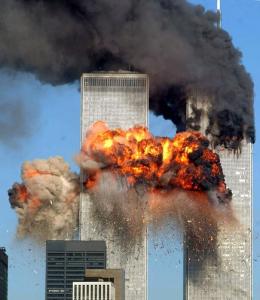 Everyone beyond a certain age can remember clearly what they were doing twenty years ago when they heard the news. I was in my college’s main cafeteria getting coffee and noticed something weird happening on the Today Show broadcast on a television hanging from the ceiling in the corner. At that point all they knew was that one of the Twin Towers was on fire, apparently because an airplane had crashed into it. I had scheduled office hours that morning, so I listened to live radio reports on NPR of the second tower being hit and the collapse of both towers. There was a surreal air to the broadcast—I wanted to believe that it wasn’t true, some sort of elaborate hoax along the lines of Orson Welles’ “War of the Worlds” broadcast many decades earlier. But it was true.
Classes were encouraged to meet and decide individually how best to deal with the day’s events. Several students in my first class of the day at 12:30 had family and friends who lived and/or worked in Manhattan—it was clear that the best thing for these students to do was to continue their frantic attempts to contact their loved ones. About half the class stayed and shared their thoughts—what they said and the nature of our conversation is difficult to recall. I know that many students (as well as many of my colleagues) were understandably angry and wanted retribution; as we gathered our things to leave about half way through the class period I said “the one thing I’m feeling is that my best response to what has happened is to become a better person. A better teacher, husband, father, friend. That’s all I’ve got right now.”
There will be any number of retrospective reports throughout the day and evening today. Neither Jeanne nor I lost any immediate family or close friends in that day’s terrible events, but we did lose a neighbor from a couple of blocks away who was a flight attendant on the second plane that hit the Twin Towers. Two decades removed, when I think about 9/11 and its aftermath as I have been over the past few days, I think of patriotism, wars that seem never to end, and the realization that because of the swift passage of time, my freshman and sophomore students this semester were not even born yet when 9/11 happened. It has been several years since any of my students could remember it. But most of all, the lasting effect in this country of the terrorist attacks on that day has been a persistent atmosphere of fear and suspicion—as well as of the hatred that fear and suspicion produce.
Not that long ago, the theme of the weekly “TED Radio Hour” on NPR was “Transformation—stories and ideas about becoming a completely different person.” The first story up that day was titled “How Did the Son of a Terrorist Choose Peace?”
How Did the Son of a Terrorist Choose Peace?
The story teller, Zak Ebrahim, is a peace activist and the author of The Terrorist’s Son: A Story of Choice. Ebrahim’s father, El-Sayyid Nosair, for a number of years plotted with other radicals to attack a number of New York City landmarks, including tunnels, synagogues and the United Nations headquarters. Many of these planned attacks were thwarted by an FBI informant, but one of the attacks—the 1993 bombing of the World Trade Center–was not. Nosair and his fellow terrorists were convicted of placing a van filled with 1,500 pounds of explosives into the sublevel parking lot of the North Tower; the subsequent explosion killed six people and injured over a thousand others. Ebrahim was seven years old at the time of his father’s conviction and incarceration—Nosair was sentenced to life imprisonment plus fifteen years.
Ebrahim’s father had become radicalized in the early years of his son’s life; in his TED talk Ebrahim describes how shortly before his father was arrested he took Ebrahim, along with several of the men who turned out to be co-conspirators, to a shooting range for Ebrahim’s first lessons in using a rifle. Even after Nosair’s arrest, the impact of his worldview on his young son continued to be strong.
Growing up in a bigoted household, I wasn’t prepared for the real world. I had been raised to judge people based on arbitrary measurements, like a person’s race or religion. He would just talk about Jews being evil. And I would hear similar things from the men that were with him. You know, gay people being evil and them wanting to turn you gay so that you would go to hell too. And just gay people being all-around terrible people and a bad influence. And he used to say things like, a bad Muslim is better than a good non-Muslim. That’s pretty much what indoctrination is. You have authority figures around you telling you that the world is one way and you don’t get to see another perspective.
This radical indoctrination began to crumble when Ebrahim, as a teenager, began through school to be exposed to some of the people he had been taught to hate. One of his fellow group members at the National Youth Conference in Philadelphia leading up to the 2000 Presidential election was Jewish. Ebrahim did not learn that his new friend was Jewish until several days after their friendship had started developing; he says that “I felt a sense of pride in having been able to overcome a barrier that, for most of my life, I had been led to believe was insurmountable.” That summer he found a job at a Busch Gardens amusement park and for the first time had the opportunity to meet some gay people performing in one of the park’s shows. “I soon found that many were the kindest, least judgmental people I had ever met.”
One day I had a conversation with my mother about how my worldview was starting to change. And she said something to me that I will hold dear to my heart for as long as I live. She looked at me with the weary eyes of someone who’d experienced enough dogmatism to last a lifetime, and said “I’m tired of hating people.” In that instant, I realized how much negative energy it takes to hold that hatred inside of you.
On one level it’s easy to hate because a world made of “Us” vs. “Them” is simple to define and make judgments from within. On a deeper level, though, Ebrahim is right—the negative energy of fear and hate is psychologically exhausting, an exhaustion that is symptomatic of our culture. It’s almost as if it isn’t natural for humans to hate.
It is of course, no surprise to anyone that the tones of fear and anger pervade our national conversation about almost everything. That such attitudes exist is nothing new; what is new is that we have reached the point where hatred and intolerance have found a new foothold in the public square and conversation. And even for those who seek a moderate position that avoids anger and fear, the current atmosphere is infectious. A character in Eric Bennett’s novel A Big Enough Lie explains the dynamic well:
There are people in the world whose opinions differ from yours so much that the difference implies violence, urges it, supplies a will for it. And if you stand on the side of moderation, this implication, this will to violence, upsets you even more than the mere difference of opinion itself. Because you are complicit in it—you become complicit in extremism by loathing extremism. You are reduced by your enemy to what you despise in your enemy. The world excuses only saints and lunatics from its economy of hatred, is what you realize. Pick a side.
As we approach the twentieth anniversary of one of the darkest days in American history, my hope is that we as a nation, as a culture, will someday decide, as Zak Ibrahim’s mother did, that we are tired of hating people. Tired of dividing our tiny little universes up into “Us” and “Them” as we vilify those who do not look like, act like, or believe the same as those in our self-defined groups of specialness do, often in the name of rigidly dogmatic beliefs that cannot accommodate the complex and shades-of-grey world in which we live. As Zak Ebrahim discovered, the best cure for fear and hatred is simple experience. But such experience can only happen if each of us has the courage to step outside our ossified comfort zones and dare to meet the most frightening thing in the universe—someone who is not the same as me.
The good news is that we, as people of faith, as followers of Jesus, are fully equipped to swim against the tide of hatred and fear that often threatens to overwhelm us. Jesus’ life and the parables attributed to him are never about groups of people, whether defined by race, religion, gender, disability, or any of the other categories we use to separate ourselves from each other. God’s love is always about the individual, whoever and wherever he or she is. Each human being is infinitely valuable, a lost sheep or misplaced coin who, in the divine economy, is worthy of God’s undivided attention and love. Each of us is regularly tempted to be fearful and to hate. When we are, let’s remember that, as the Scriptures tell us, perfect love casts out fear.
Previous Post

September 7, 2021
When Life Gets Messy
Next Post

September 12, 2021 The Stories We Tell and the Lies We Believe
Browse Our Archives
Select a Category abortion Advent AI Angels Artificial intelligence atheism attention baptism Baptists beauty belief Benedictines Bible bicycling Big Bird books Bovina Camaldoli hermitage Canada Catholicism cats certainty change Christianity Christmas Collegeville Covid-19 creativity Development of Western Civilization dogs doubt Easter Enneagram Epiphany Episcopal ethics Eucharist evil extroverts Facebook faith family fear flowers forgiveness freedom friends God goodness grace happiness heaven hell history Holy Spirit Holy Week hope human nature humility humor idolatry incarnation introverts irreverence Islam Jeanne Jesus Joe Biden joy Judaism justice Kamala Harris knowledge Lent listen literature liturgy love Marsue Memorial Day miracles movies music mystery mythology NPR Old Testament optimism paradox peace Penguins philosophy piano podcast politics power prayer Protestantism Providence College Religion Rhode Island sabbatical sacrament science seeing silence Simone Weil Socrates soul sports St. John's College stories suffering tattoo teaching technology television theology thinking time tolerance transcendence travel trees trust truth Uncategorized Vermont wisdom wonder writing
Select a Month May 2026 April 2026 March 2026 February 2026 January 2026 December 2025 November 2025 October 2025 September 2025 August 2025 July 2025 June 2025 May 2025 April 2025 March 2025 February 2025 January 2025 December 2024 November 2024 October 2024 September 2024 August 2024 July 2024 June 2024 May 2024 April 2024 March 2024 February 2024 January 2024 December 2023 November 2023 October 2023 September 2023 August 2023 July 2023 June 2023 May 2023 April 2023 March 2023 February 2023 January 2023 December 2022 November 2022 October 2022 September 2022 August 2022 July 2022 June 2022 May 2022 April 2022 March 2022 February 2022 January 2022 December 2021 November 2021 October 2021 September 2021 August 2021 July 2021 June 2021 May 2021 April 2021 March 2021 February 2021 January 2021 December 2020 November 2020 October 2020 September 2020 August 2020 July 2020 June 2020 May 2020 April 2020 March 2020 February 2020 January 2020 December 2019 November 2019 October 2019 September 2019 August 2019 July 2019 June 2019 May 2019 April 2019 March 2019 February 2019 January 2019 December 2018 November 2018 October 2018 September 2018 August 2018 July 2018 June 2018 May 2018 April 2018 March 2018 February 2018 January 2018 December 2017 November 2017 October 2017 September 2017 August 2017 July 2017 June 2017 May 2017 April 2017 March 2017 February 2017 January 2017 December 2016 November 2016 October 2016 September 2016 August 2016 July 2016 June 2016 May 2016 April 2016 March 2016 February 2016 January 2016 December 2015 November 2015 October 2015 September 2015 August 2015 July 2015 June 2015 May 2015 April 2015 March 2015 February 2015 January 2015 December 2014 November 2014 October 2014 September 2014 August 2014 July 2014 June 2014 May 2014 April 2014 March 2014 February 2014 January 2014 December 2013 November 2013 October 2013 September 2013 August 2013 July 2013 June 2013 May 2013 April 2013 March 2013 February 2013 January 2013 December 2012 November 2012 October 2012 September 2012
Follow Us!
TAKE THE
Religious Wisdom Quiz
What vision did Daniel have of four beasts representing empires?
Select your answer to see how you score.
Ox, ram, goat, lion Lion, bear, leopard, terrifying beast Horse, eagle, serpent, leopard Four dragons
Books by This Author Books by Vance G. Morgan
Related posts from Freelance Christianity

The Lonely Pawn: On Faith, Doubt, and Meaning


AI and Love: When a Chatbot Becomes a...

TRENDING AT PATHEOS Progressive Christian

What Being a Modern-Day Apostle Means to Me
In my last column, I discussed the ins and outs of modern-day...

Did Ancient China Once Worship the God of...
Across human history, a common thread weaves through the origins of the...

Love Your Neighbor – Including Earth-Kin: Lev. 19,...
God’s command to love your neighbor means acting in an ethical and...

Lead a Church Study of “Jesus and Lao...
Guest writer Jack Thomas (The Irreverent Reverend) reflects on leading his church...

Pastoral Wisdom for Responding to Sermon Pushback
Getting sermon pushback on your social justice sermon? Learn practical, Proverbs-based strategies...

Principles for Understanding the Apostolic Ministry Today
Whenever people discover that my formal ministry title is "apostle," as in...
view all Progressive Christian blogs
Ad-Free & Subscriber Log-In Subscription Support
- About Us
- 2026 Calendar
- Videos
- Podcasts
- Library of World Religions
- Faith In Media Tracker
- Advertise With Us
- Write for Us
- Privacy Policy
- Terms of Service
- Do Not Sell My Data
- Contact Us
- Radiant Digital
- Manage Newsletter Subscriptions
- Unsubscribe From Notifications
- Sitemap
Copyright 2008-2026, Patheos. All rights reserved.
Subscription Support Ad-Free & Subscriber Log-In
Follow Patheos