
BuddhistCatholicContemplativeEvangelicalGeneral ChristianHinduJewishLatter-day SaintMuslimNew VisionsProgressive Christian
Beliefs
- Buddhist
- Catholic
- Contemplative
- Evangelical
- General Christian
- Hindu
- Jewish
- Latter-day Saint
- More Voices
- Muslim
- New Visions
- Pagan
- Progressive Christian
Topics
- Religion News
- Food and Religion
- Sports and Religion
- Religious Art
- Religious Music and Entertainment
- Religious Events
- History and Religion
- Style and Religion
- Politics and Religion
- Women in Religion
- Recreation Outdoors and Religion
- Business Finance and Religion
- Careers Workplace and Religion
- Education and Religion
- Family Parenting and Religion
- Health Fitness and Religion
- Home and Religion
- Relationships and Religion
- Technology and Religion
- Travel and Religion
Columnists
- Buddhist Columnists
- Business Finance and Religion Columnists
- Careers Workplace and Religion Columnists
- Catholic Columnists
- Contemplative Columnists
- Education and Religion Columnists
- Evangelists Columnists
- Family Parenting and Religion Columnists
- General Christian Columnists
- Health Fitness and Religion Columnists
- Hindu Columnists
- History and Religion Columnists
- Home and Religion Columnists
- Jewish Columnists
- More Voices Columnists
- Latter Day Columnists
- Muslim Columnists
- New Visions Columnists
- Nonreligious Columnists
- Pagan Columnists
- Politics and Religion Columnists
- Progressive Columnists
- Recreation Outdoors and Religion Columnists
- Relationships and Religion Columnists
- Religion News Columnists
- Religious Art Columnists
- Religious Events Columnists
- Religious Music and Entertainment Columnists
- Sports and Religion Columnists
- Style and Religion Columnists
- Technology and Religion Columnists
- Travel and Religion Columnists
- Women in Religion Columnists
Resource Library
- 2026 Calendar
- Library of World Religions
- The 100 Most Holy Places on Earth
- Patheos Answers
- Podcasts
- Videos
- Faith Leaders Database
- Anglican Episcopalian
- Bahai
- Baptist
- Buddhism
- Christianity
- Confucianism
- Eastern Orthodoxy
- Hinduism
- Holiness and Pentecostal
- ISKCON
- Islam
- Judaism
- Lutheran
- Methodist
- The Church of Jesus Christ of Latter-day Saints
- New Age
- Paganism
- Presbytarian and Reformed
- Protestantism
- Religion Behind the Scenes
- Roman Catholic
- Scientology
- Shia Islam
- Sikhism
- Sufism
- Sunni Islam
- Taoism
- Zen
- See all religions
Research Tools
 Ad-Free & Subscriber Log-In Subscription Support
Ad-Free & Subscriber Log-In Subscription Support
Follow Patheos 

- Trending:
- Forgiveness
- |
- Marriage
- |
- Consciousness
- |
- Death Penalty
- |
- Election
- |
- Halloween

- Home
- Progressive Christian
- Of Introverts and Sheep
Of Introverts and Sheep
Last updated on: July 18, 2021 at 6:00 am by Vance Morgan
Of Introverts and Sheep 2021-07-17T14:40:52-04:00 Vance Morgan
Patheos Explore the world's faith through different perspectives on religion and spirituality! Patheos has the views of the prevalent religions and spiritualities of the world.
I have the privilege of giving the sermone at Trinity Episcopal Church in Pawtuxet, RI this morning. Here’s what I will say.
If you are able, everyone stand up! Really—good to get a bit of exercise at the beginning of a sermon! If you suspect or know for sure that you are an extrovert, sit down. Now, if you suspect or know that you are an introvert, sit down. Those of you still standing are part of the balanced few. My mother used to regularly test as equally balanced between extrovert and introvert on various personality texts. She thought it was evidence that she was wishy-washy and boring. I told her that, no Mom, this means that you are a rarity: A well-adjusted human being.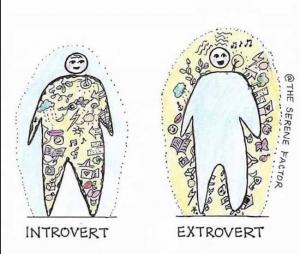
It will not surprise anyone who knows me, or even anyone who has seen me in operation around other people for more than a minute or so, to learn that I am an introvert. Big time. Just to make sure I haven’t significantly changed over the past decade or so, I took an online version of the Myers/Briggs personality test this past week. I’m still an extreme introvert.
When I have shared the news of my off the charts introversion with my students in class over the years (usually when seeking to inspire the quieter students to be more actively engaged in discussion), they are usually shocked. How can an incurable introvert do what I do for a living? In order to challenge the common impression that introverts don’t like people, I provide them with the distinction between extroverts and introverts that I learned from my father (who was also an introvert).
Extrovert: A person who is fine being alone, but gets her batteries recharged by being with people.
Introvert: A person who is fine being with people, but gets her batteries recharged by being alone.
What do you need when you are exhausted and are running on fumes? Do you need to be with other people, or do you need to be alone? As an introvert, I absolutely love being a teacher and being with people for several hours every day. But after a full day of teaching, I’m exhausted. I feel like I’ve run a marathon (or at least I feel like I think I would feel if I could run a marathon). Jeanne knows that when I get home at the end of the day, what I need most is to be alone in our little library room for a while or to veg out in front of mindless TV. I love being with people, in other words, but it exhausts me.
Jeanne is as extroverted as I am introverted. She works from home by herself, interviewing applicants to veterinary on Skype or Zoom. She reports that on occasion she needs to take some time to go to the grocery store even when we don’t need anything, just so she can be with people for a little while. It takes all kinds.
According to the Myers/Briggs personality test, I’m in good company with my particular type of introversion. I’m an INFJ—other famous people with INFJ traits include MLK Jr., Nelson Mandela, Mother Teresa, and Lady Gaga. But the Myers/Briggs website fails to mention the most influential and important introvert of all: Jesus. How do I know that Jesus was an introvert? All I can say is that it takes one to know one. This morning’s gospel reading is a case in point.
There are few chapters in the Gospels in which more happens than in Mark 6. It’s enough to keep the lectionary selectors busy for a full month.
- Jesus is rejected in his hometown of Nazareth, then sends his disciples out in pairs, empowering them to heal the sick and cast out demons (gospel reading from two weeks ago)
- John the Baptist is murdered by King Herod (last week’s gospel reading)
- The disciples return and report on their experiences (beginning of today’s gospel)
- Jesus feeds the 5000, then walks on water (John’s version of these events is next week’s reading gospel reading)
- Jesus heals the sick at Genessaret (second part of today’s gospel)
Jesus is surrounded by multitudes over and over again in Mark 6; notice how he processes his growing fame.
First, Jesus knows how to delegate; realizing that he cannot do everything himself, he empowers the disciples by taking the training wheels off and sending them out to spread the good news in pairs. When the disciples return with plenty of exciting stories to tell about their initial forays into the countryside carrying the message and power of God’s love, he invites them to “Come away to a deserted place all by yourselves and rest a while.”
There’s no reason to think that all of the disciples are introverts—Simon Peter strikes me as an extrovert, for instance—but Jesus knows that for some, at least, solitude and quiet are needed in order to recharge. Next week in the gospel reading from John, after the miracle of feeding the 5000, Jesus once again withdraws by himself to a solitary place, intending to catch up with the disciples later as they sail across the Sea of Galilee. He does so by walking on the sea in the middle of a storm.
Despite evidence that Jesus was often exhausted by extended engagement with large groups of people, he undoubtedly knew that his ministry, for however long it lasted, would involve just that. And he never sought to avoid it. Why does he not withdraw and become a hermit or a guru that people have to come to? Because he has compassion for the multitude. According to today’s gospel, he saw that those thronging about him “were like sheep not having a shepherd.”
The Bible is full of sheep and shepherd texts, from Psalm 23 to Jesus’ parable about the shepherd who seeks and finds a single lost sheep. As a youngster, I always bristled at the frequent Biblical comparison of human beings to sheep, because I knew (or had read at least) that sheep were both smelly and stupid. My resistance to being called a sheep was reinforced when our youngest son Justin, who spent several years working as a veterinary technician, reported that sheep were his least favorite animal he ever had to deal with. Goats apparently are interesting, but not sheep.
It is not a compliment when a group of people are referred to as a “flock” or as a bunch of sheep. Sheep are mindless followers with little independent thought; people who mindlessly follow a political agenda or leader are often disparagingly called “sheeple.” But in the summer of 2018, Jeanne and I spent 10 days on vacation in Scotland. This wonderful week and a half began to change my opinion of sheep, providing some new possibilities for why Jesus likens us to sheep so often. One of my prized possessions, purchased on that vacation, is a Harris Tweed wool cap. I bought it in a small shop in Oban, a beautiful port on the west coast of Scotland that is the gateway to the Hebrides islands (where they make Islay single malt scotch, the real reason we went to Scotland in the first place). I wear this cap to work frequently when it isn’t hot and am pleased to report that I have managed not to lose it yet, although it has gone temporarily missing a few times.
Once at the beginning of an oral exam, I set my cap on a nearby bookshelf and asked my colleague and the student who had just arrived for her exam not to let me forget my cap when we were done, noting that “I can’t lose this hat. It’s from Scotland.” “Is it made out of wool?” my colleague asked; upon finding out that it is, he reported that “it’s waterproof then—wool is naturally waterproof.”
I estimate, conservatively, that Jeanne and I saw about seven billion sheep in our ten days in Scotland. Actually, according to 2019 numbers, there a bit over one million more sheep in Scotland than people. Sheep were everywhere, including across the road from two of the B and B’s we stayed in, as well as along the side of (and sometimes in the middle of) virtually every road that we drove on the wrong side of.
I don’t recall that we ever saw a shepherd. We experienced all sorts of weather, as one expects in Scotland, and saw sheep out in the middle of all of them. When I asked someone about this, she seemed surprised by the idea that sheep might need constant shepherding. Most of the sheep Jeanne and I saw had a some sort of symbol on their rear flank for identification purposes—these “brands” had clearly been spray painted on the unfortunate animal. Finally, sheep in Scotland are clearly for wool growing, not eating. I don’t recall seeing mutton or lamb chops on the menu at any of the restaurants we visited.
Our experience in Scotland revealed several features of sheep that make the God-as-shepherd-and-we-as-sheep metaphor very interesting. Sheep are tough and resilient. A shepherd can stick his or her sheep out in a pasture, mark them as his or her own, then walk away—apparently for days or weeks at a time. Sheep don’t need constant pampering and attention. They are naturally equipped to survive all sorts of weather, all the time slowly but surely growing the wool that is, after all, the primary purpose of their existence.
If God is the shepherd and we are the sheep, we can expect to be left alone and to have to rely on our own devices for long stretches of time. But the slow work of growth and productivity continues reliably whether the divine shepherd is in the pasture or not. As the sheep of God’s flock, we are naturally designed and intended to be useful and productive in all sorts of ways, no matter what the circumstances are, and regardless of whether it seems as if nothing is happening and that the shepherd has left for good. The shepherd knows that we are both tougher than we think we are and are a lot more valuable than we might appear. And when the storms come, as they always will, the shepherd knows that we can handle that as well. Sheep are waterproof, after all.
Previous Post

July 16, 2021
How to Defund the Police
Next Post

July 20, 2021 Dear Evangelical Christians: You're Ruining the Brand
Browse Our Archives
Select a Category abortion Advent AI Angels Artificial intelligence atheism attention baptism Baptists beauty belief Benedictines Bible bicycling Big Bird books Bovina Camaldoli hermitage Canada Catholicism cats certainty change Christianity Christmas Collegeville Covid-19 creativity Development of Western Civilization dogs doubt Easter Enneagram Epiphany Episcopal ethics Eucharist evil extroverts Facebook faith family fear flowers forgiveness freedom friends God goodness grace happiness heaven hell history Holy Spirit Holy Week hope human nature humility humor idolatry incarnation introverts irreverence Islam Jeanne Jesus Joe Biden joy Judaism justice Kamala Harris knowledge Lent listen literature liturgy love Marsue Memorial Day miracles movies music mystery mythology NPR Old Testament optimism paradox peace Penguins philosophy piano podcast politics power prayer Protestantism Providence College Religion Rhode Island sabbatical sacrament science seeing silence Simone Weil Socrates soul sports St. John's College stories suffering tattoo teaching technology television theology thinking time tolerance transcendence travel trees trust truth Uncategorized Vermont wisdom wonder writing
Select a Month May 2026 April 2026 March 2026 February 2026 January 2026 December 2025 November 2025 October 2025 September 2025 August 2025 July 2025 June 2025 May 2025 April 2025 March 2025 February 2025 January 2025 December 2024 November 2024 October 2024 September 2024 August 2024 July 2024 June 2024 May 2024 April 2024 March 2024 February 2024 January 2024 December 2023 November 2023 October 2023 September 2023 August 2023 July 2023 June 2023 May 2023 April 2023 March 2023 February 2023 January 2023 December 2022 November 2022 October 2022 September 2022 August 2022 July 2022 June 2022 May 2022 April 2022 March 2022 February 2022 January 2022 December 2021 November 2021 October 2021 September 2021 August 2021 July 2021 June 2021 May 2021 April 2021 March 2021 February 2021 January 2021 December 2020 November 2020 October 2020 September 2020 August 2020 July 2020 June 2020 May 2020 April 2020 March 2020 February 2020 January 2020 December 2019 November 2019 October 2019 September 2019 August 2019 July 2019 June 2019 May 2019 April 2019 March 2019 February 2019 January 2019 December 2018 November 2018 October 2018 September 2018 August 2018 July 2018 June 2018 May 2018 April 2018 March 2018 February 2018 January 2018 December 2017 November 2017 October 2017 September 2017 August 2017 July 2017 June 2017 May 2017 April 2017 March 2017 February 2017 January 2017 December 2016 November 2016 October 2016 September 2016 August 2016 July 2016 June 2016 May 2016 April 2016 March 2016 February 2016 January 2016 December 2015 November 2015 October 2015 September 2015 August 2015 July 2015 June 2015 May 2015 April 2015 March 2015 February 2015 January 2015 December 2014 November 2014 October 2014 September 2014 August 2014 July 2014 June 2014 May 2014 April 2014 March 2014 February 2014 January 2014 December 2013 November 2013 October 2013 September 2013 August 2013 July 2013 June 2013 May 2013 April 2013 March 2013 February 2013 January 2013 December 2012 November 2012 October 2012 September 2012
Follow Us!
TAKE THE
Religious Wisdom Quiz
What does the name "Elijah" mean?
Select your answer to see how you score.
God is Light My God is Yahweh God Saves God Provides
Books by This Author Books by Vance G. Morgan
Related posts from Freelance Christianity

The Lonely Pawn: On Faith, Doubt, and Meaning


AI and Love: When a Chatbot Becomes a...

TRENDING AT PATHEOS Progressive Christian

What Being a Modern-Day Apostle Means to Me
In my last column, I discussed the ins and outs of modern-day...

Did Ancient China Once Worship the God of...
Across human history, a common thread weaves through the origins of the...

Love Your Neighbor – Including Earth-Kin: Lev. 19,...
God’s command to love your neighbor means acting in an ethical and...

Lead a Church Study of “Jesus and Lao...
Guest writer Jack Thomas (The Irreverent Reverend) reflects on leading his church...

Pastoral Wisdom for Responding to Sermon Pushback
Getting sermon pushback on your social justice sermon? Learn practical, Proverbs-based strategies...

Principles for Understanding the Apostolic Ministry Today
Whenever people discover that my formal ministry title is "apostle," as in...
view all Progressive Christian blogs
Ad-Free & Subscriber Log-In Subscription Support
- About Us
- 2026 Calendar
- Videos
- Podcasts
- Library of World Religions
- Faith In Media Tracker
- Advertise With Us
- Write for Us
- Privacy Policy
- Terms of Service
- Do Not Sell My Data
- Contact Us
- Radiant Digital
- Manage Newsletter Subscriptions
- Unsubscribe From Notifications
- Sitemap
Copyright 2008-2026, Patheos. All rights reserved.
Subscription Support Ad-Free & Subscriber Log-In
Follow Patheos