
BuddhistCatholicContemplativeEvangelicalGeneral ChristianHinduJewishLatter-day SaintMuslimNew VisionsProgressive Christian
Beliefs
- Buddhist
- Catholic
- Contemplative
- Evangelical
- General Christian
- Hindu
- Jewish
- Latter-day Saint
- More Voices
- Muslim
- New Visions
- Pagan
- Progressive Christian
Topics
- Religion News
- Food and Religion
- Sports and Religion
- Religious Art
- Religious Music and Entertainment
- Religious Events
- History and Religion
- Style and Religion
- Politics and Religion
- Women in Religion
- Recreation Outdoors and Religion
- Business Finance and Religion
- Careers Workplace and Religion
- Education and Religion
- Family Parenting and Religion
- Health Fitness and Religion
- Home and Religion
- Relationships and Religion
- Technology and Religion
- Travel and Religion
Columnists
- Buddhist Columnists
- Business Finance and Religion Columnists
- Careers Workplace and Religion Columnists
- Catholic Columnists
- Contemplative Columnists
- Education and Religion Columnists
- Evangelists Columnists
- Family Parenting and Religion Columnists
- General Christian Columnists
- Health Fitness and Religion Columnists
- Hindu Columnists
- History and Religion Columnists
- Home and Religion Columnists
- Jewish Columnists
- More Voices Columnists
- Latter Day Columnists
- Muslim Columnists
- New Visions Columnists
- Nonreligious Columnists
- Pagan Columnists
- Politics and Religion Columnists
- Progressive Columnists
- Recreation Outdoors and Religion Columnists
- Relationships and Religion Columnists
- Religion News Columnists
- Religious Art Columnists
- Religious Events Columnists
- Religious Music and Entertainment Columnists
- Sports and Religion Columnists
- Style and Religion Columnists
- Technology and Religion Columnists
- Travel and Religion Columnists
- Women in Religion Columnists
Resource Library
- 2026 Calendar
- Library of World Religions
- The 100 Most Holy Places on Earth
- Patheos Answers
- Podcasts
- Videos
- Faith Leaders Database
- Anglican Episcopalian
- Bahai
- Baptist
- Buddhism
- Christianity
- Confucianism
- Eastern Orthodoxy
- Hinduism
- Holiness and Pentecostal
- ISKCON
- Islam
- Judaism
- Lutheran
- Methodist
- The Church of Jesus Christ of Latter-day Saints
- New Age
- Paganism
- Presbytarian and Reformed
- Protestantism
- Religion Behind the Scenes
- Roman Catholic
- Scientology
- Shia Islam
- Sikhism
- Sufism
- Sunni Islam
- Taoism
- Zen
- See all religions
Research Tools
 Ad-Free & Subscriber Log-In Subscription Support
Ad-Free & Subscriber Log-In Subscription Support
Follow Patheos 

- Trending:
- Forgiveness
- |
- Marriage
- |
- Consciousness
- |
- Death Penalty
- |
- Election
- |
- Halloween

- Home
- Progressive Christian
- Religious Events
- Now My Eyes Have Seen You: An Easter Reflection
Now My Eyes Have Seen You: An Easter Reflection
Last updated on: April 5, 2026 at 5:40 pm by Vance Morgan
Now My Eyes Have Seen You: An Easter Reflection 2026-04-05T17:40:26-04:00 Vance Morgan
Patheos Explore the world's faith through different perspectives on religion and spirituality! Patheos has the views of the prevalent religions and spiritualities of the world.
Easter Sunday–the most triumphant day on the Christian liturgical calendar. According to New Testament scholar and theologian N. T. Wright, “The practical, theological, spiritual, ethical, pastoral, political, missionary, and hermeneutical implications of the mission and message of Jesus differ radically depending upon what one believes happened at Easter.” That very well may be true–and it’s a problem for me, since I’m not sure what I believe happened that day. I believe in resurrection. I believe in the beauty of the Christian narrative. And to be honest, I’m gripped more powerfully by the many meanings of the story than by questions about the historical accuracy of its details.
Evidence of the eclectic nature of how I think and feel about Easter is that it makes me think first of Job in a different way than the one I explored in my Good Friday essay a couple of days ago.
Several years ago, I led a discussion group focused, among other things, on the inadequacy of traditional religious structures to address real spiritual hunger. 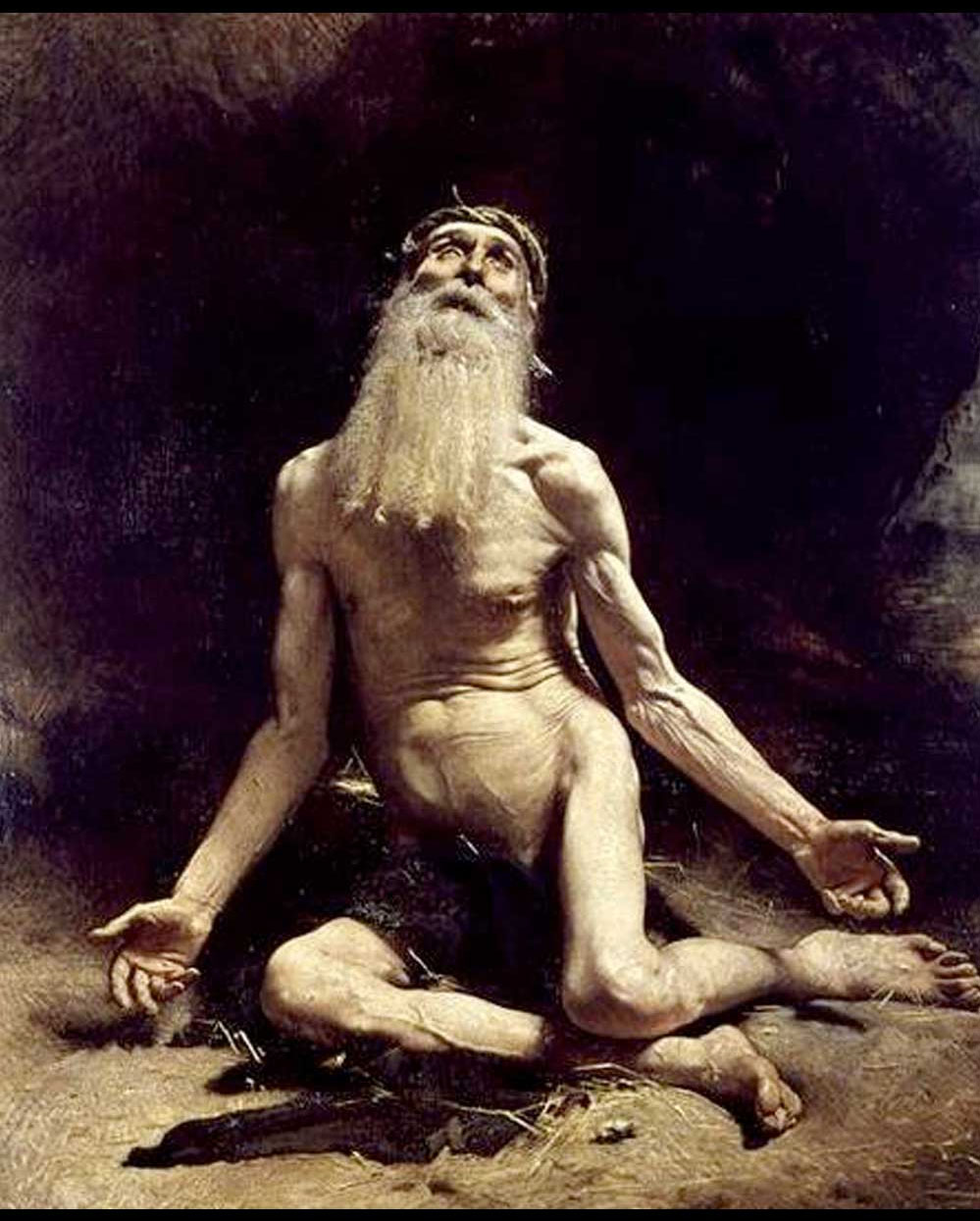 At one of our weekly meetings, we were talking about Job’s reaction to what God has to say about the unfairness of Job’s suffering after many chapters of silence from the Divine end of things. I have heard of you with my ears, but now my eyes have seen you.
Job, described by God to Satan in chapter one as the most righteous man on earth, has heard all about God. He knows the stories, the texts, the rules, how to worship, how to sacrifice—in short, Job has heard everything there is to hear about how to make God happy and stay on a good relationship with what is greater than us. None of that seems to matter as load after load of shit is dumped on Job, everything falls apart, and his complaints and demands for explanation meet with stony silence from on high.
When God finally does respond, the divine answer to Job’s questions boils down to “who the hell are you to ask for explanations from me?” I’m God and you’re not, in other words. But the content of God’s response to Job’s complaints is not what has a lasting impact on Job. What changes his life is that for the first time, God is not something Job has just heard about second-hand. He now has had a first-hand, face to face encounter with God—and everything he has heard throughout his life pales in comparison.
As members of the group engaged with Job’s description of this encounter, one person noted both that such experiences are indeed life-changing and that they are extraordinarily difficult to put into words. How is it possible to describe or explain such a powerfully personal experience, especially to those whose knowledge of the divine is entirely in the “I have heard of you” category? One likely answer—it isn’t possible.
The discussion reminded me of a character in one of Iris Murdoch’s novels who unexpectedly has a Job-like encounter that shatters his world. In The Unicorn, we are introduced to Effingham Cooper, a stuffy, well-intentioned but ultimately annoyingly foolish busybody. He sees himself as a man of action, striving for everyone to be happy, but actually through his actions is simply attempting to manipulate others and create the world around him in his own image. By literally immobilizing him in a quicksand-like bog, into which he has stumbled while on a twilight walk, Murdoch sets the scene for Cooper to have a revelation that is one of the most central passages in all of her twenty-four novels.
He could still feel himself slowly sinking. . . . He began to feel dazed and light-headed. . . . Max [a dying philosopher whose pupil Cooper once had been] had always known about death, had always sat there like a judge in his chair facing toward death, like a judge or like a victim. Why had Effingham never realized that this was the only fact that mattered, perhaps the only fact there was? If one realized this one could have lived all one’s life in the light. . .
Something had been withdrawn, had slipped away from him in the moment of his attention and that something was himself.
Effingham has lived his life to this point as most human beings do, under the impression that he is the center of the universe. Preparing for what appears to be his imminent demise, he’s faced with the possibility that perhaps his existence is not as important as he thought.
Perhaps he was dead already, the darkening image of the self forever removed. Yet what was left, for something was surely left, something existed still? It came to him with the simplicity of a simple sum. What was left was everything else, all that was not himself, that object which he had never before seen and upon which he now gazed with the passion of a lover. And indeed he could always have known this for the fact of death stretches the length of life. Since he was mortal he was nothing and since he was nothing all that was not himself was filled to the brim with being and it was from this that the light streamed. This then was love, to look and look until one exists no more, this was the love which was the same as death. He looked, and knew with a clarity which was one with the increasing light, that with the death of the self the world becomes quite automatically the object of a perfect love.
Cooper is unexpectedly rescued, by a stranger leading a donkey, no less, but his experience of near physical death provides a framework for spiritual insight. His physical entrapment has been the catalyst for recognizing that he has been psychologically and spiritually unfree. Sinking physically in the bog causes him to experience a sublime release from the burden of his own self-consciousness and self-centeredness. His moral rescue precedes his physical rescue. In an epiphany, the beauty of the universe is revealed to him through the momentary extinction of his own self-presence.
Cooper’s experience is a secular companion to the sort of encounter that Job has with a God who cannot be engaged second-hand. Both men have been brought by unexpected and unexplained circumstances to an experience and realization that shows what they previously thought they knew to be, at best, woefully inadequate. As the person in my discussion group suggested, the most important issue now is “What do I do with this?” How does one capture lightning in a bottle and channel this new energy going forward? We are not told much about Job’s life after his divine encounter other than that he gets everything back that he had lost.
In the case of Effingham Cooper, we find out a bit more—and it isn’t encouraging news. After his rescue, in the afterglow of the experience, he tries to explain his vision to three others, all of whom fail to understand. Sadly, but believably, the impact of his experience wholly fades. As much as we would like to believe that a transformative encounter with what is greater than us will be the catalyst for permanent and positive change, we still have to live out the rest of our mundane and normal days, weeks, months and years. There is no “once and for all” salvation from the self and ego—it is a piecemeal, imperfect and continuing process.
As N. T. Wright suggests, each person who engages with the Christian faith eventually has to grapple with the meaning of Easter. I submit that this grappling is not primarily about whether the resurrection was an historical event–either it was or it wasn’t. The more important question for each of us to ask is: What difference does this story make in my life? The answer to that question will be intensely personal.
So how does one communicate the content of intensely personal and private transformative encounters? How does one say what cannot be said? One doesn’t.  Instead, a face to face encounter with the divine, with the infinite, must work itself out in the far less spectacular and far less dynamic grind of daily life. And this is as it should be. Even though most of us would prefer living from one energizing mountain top experience to the next, that’s not the way it works.
There is a reason why the Kingdom of God is likened in Jesus’ parables to leaven, to a mustard seed, to salt, to things that work powerfully over time in unnoticeable ways. There is a reason why Jesus regularly tells his disciples and followers not to spread the word of his miracles or reveal his identity publicly. Despite occasional evidence to the contrary, the divine works slowly and secretly in the world, embedded in human lives.
General Christian
Religious Events
History and Religion
Previous Post
April 3, 2026
God is With Us--Even In the Darkness
Next Post
April 12, 2026 Thomas--My Doubting Hero
Recent Comments
"Mary did have a choice. And she was able to make it before the Holy ..."
"i cannot read beyond your recommendations for the books since i like to have a ..."
"AI will never be able to utter with honesty, feeling, or humility, the greeting: "Namaste".It ..."
"They do. I'm sure you could find discussions of the same topic from any of ..."
Browse Our Archives
Select a Category abortion Advent AI Angels Artificial intelligence atheism attention baptism Baptists beauty belief Benedictines Bible bicycling Big Bird books Bovina Camaldoli hermitage Canada Catholicism cats certainty change Christianity Christmas Collegeville Covid-19 creativity Development of Western Civilization dogs doubt Easter Enneagram Epiphany Episcopal ethics Eucharist evil extroverts Facebook faith family fear flowers forgiveness freedom friends God goodness grace happiness heaven hell history Holy Spirit Holy Week hope human nature humility humor idolatry incarnation introverts irreverence Islam Jeanne Jesus Joe Biden joy Judaism justice Kamala Harris knowledge Lent listen literature liturgy love Marsue Memorial Day miracles movies music mystery mythology NPR Old Testament optimism paradox peace Penguins philosophy piano podcast politics power prayer Protestantism Providence College Religion Rhode Island sabbatical sacrament science seeing silence Simone Weil Socrates soul sports St. John's College stories suffering tattoo teaching technology television theology thinking time tolerance transcendence travel trees trust truth Uncategorized Vermont wisdom wonder writing
Select a Month May 2026 April 2026 March 2026 February 2026 January 2026 December 2025 November 2025 October 2025 September 2025 August 2025 July 2025 June 2025 May 2025 April 2025 March 2025 February 2025 January 2025 December 2024 November 2024 October 2024 September 2024 August 2024 July 2024 June 2024 May 2024 April 2024 March 2024 February 2024 January 2024 December 2023 November 2023 October 2023 September 2023 August 2023 July 2023 June 2023 May 2023 April 2023 March 2023 February 2023 January 2023 December 2022 November 2022 October 2022 September 2022 August 2022 July 2022 June 2022 May 2022 April 2022 March 2022 February 2022 January 2022 December 2021 November 2021 October 2021 September 2021 August 2021 July 2021 June 2021 May 2021 April 2021 March 2021 February 2021 January 2021 December 2020 November 2020 October 2020 September 2020 August 2020 July 2020 June 2020 May 2020 April 2020 March 2020 February 2020 January 2020 December 2019 November 2019 October 2019 September 2019 August 2019 July 2019 June 2019 May 2019 April 2019 March 2019 February 2019 January 2019 December 2018 November 2018 October 2018 September 2018 August 2018 July 2018 June 2018 May 2018 April 2018 March 2018 February 2018 January 2018 December 2017 November 2017 October 2017 September 2017 August 2017 July 2017 June 2017 May 2017 April 2017 March 2017 February 2017 January 2017 December 2016 November 2016 October 2016 September 2016 August 2016 July 2016 June 2016 May 2016 April 2016 March 2016 February 2016 January 2016 December 2015 November 2015 October 2015 September 2015 August 2015 July 2015 June 2015 May 2015 April 2015 March 2015 February 2015 January 2015 December 2014 November 2014 October 2014 September 2014 August 2014 July 2014 June 2014 May 2014 April 2014 March 2014 February 2014 January 2014 December 2013 November 2013 October 2013 September 2013 August 2013 July 2013 June 2013 May 2013 April 2013 March 2013 February 2013 January 2013 December 2012 November 2012 October 2012 September 2012
Follow Us!
TAKE THE
Religious Wisdom Quiz
What miraculous catch did Peter witness after obeying Jesus?
Select your answer to see how you score.
A boat sinking A gold coin A sea turning red A net full of fish
Books by This Author Books by Vance G. Morgan
Related posts from Freelance Christianity

The Lonely Pawn: On Faith, Doubt, and Meaning


AI and Love: When a Chatbot Becomes a...

TRENDING AT PATHEOS Progressive Christian

What Being a Modern-Day Apostle Means to Me
In my last column, I discussed the ins and outs of modern-day...

Did Ancient China Once Worship the God of...
Across human history, a common thread weaves through the origins of the...

Love Your Neighbor – Including Earth-Kin: Lev. 19,...
God’s command to love your neighbor means acting in an ethical and...

Lead a Church Study of “Jesus and Lao...
Guest writer Jack Thomas (The Irreverent Reverend) reflects on leading his church...

Pastoral Wisdom for Responding to Sermon Pushback
Getting sermon pushback on your social justice sermon? Learn practical, Proverbs-based strategies...

Principles for Understanding the Apostolic Ministry Today
Whenever people discover that my formal ministry title is "apostle," as in...
view all Progressive Christian blogs
What Are Your Thoughts?leave a comment
Ad-Free & Subscriber Log-In Subscription Support
- About Us
- 2026 Calendar
- Videos
- Podcasts
- Library of World Religions
- Faith In Media Tracker
- Advertise With Us
- Write for Us
- Privacy Policy
- Terms of Service
- Do Not Sell My Data
- Contact Us
- Radiant Digital
- Manage Newsletter Subscriptions
- Unsubscribe From Notifications
- Sitemap
Copyright 2008-2026, Patheos. All rights reserved.
Subscription Support Ad-Free & Subscriber Log-In
Follow Patheos