
BuddhistCatholicContemplativeEvangelicalGeneral ChristianHinduJewishLatter-day SaintMuslimNew VisionsProgressive Christian
Beliefs
- Buddhist
- Catholic
- Contemplative
- Evangelical
- General Christian
- Hindu
- Jewish
- Latter-day Saint
- More Voices
- Muslim
- New Visions
- Pagan
- Progressive Christian
Topics
- Religion News
- Food and Religion
- Sports and Religion
- Religious Art
- Religious Music and Entertainment
- Religious Events
- History and Religion
- Style and Religion
- Politics and Religion
- Women in Religion
- Recreation Outdoors and Religion
- Business Finance and Religion
- Careers Workplace and Religion
- Education and Religion
- Family Parenting and Religion
- Health Fitness and Religion
- Home and Religion
- Relationships and Religion
- Technology and Religion
- Travel and Religion
Columnists
- Buddhist Columnists
- Business Finance and Religion Columnists
- Careers Workplace and Religion Columnists
- Catholic Columnists
- Contemplative Columnists
- Education and Religion Columnists
- Evangelists Columnists
- Family Parenting and Religion Columnists
- General Christian Columnists
- Health Fitness and Religion Columnists
- Hindu Columnists
- History and Religion Columnists
- Home and Religion Columnists
- Jewish Columnists
- More Voices Columnists
- Latter Day Columnists
- Muslim Columnists
- New Visions Columnists
- Nonreligious Columnists
- Pagan Columnists
- Politics and Religion Columnists
- Progressive Columnists
- Recreation Outdoors and Religion Columnists
- Relationships and Religion Columnists
- Religion News Columnists
- Religious Art Columnists
- Religious Events Columnists
- Religious Music and Entertainment Columnists
- Sports and Religion Columnists
- Style and Religion Columnists
- Technology and Religion Columnists
- Travel and Religion Columnists
- Women in Religion Columnists
Resource Library
- 2026 Calendar
- Library of World Religions
- The 100 Most Holy Places on Earth
- Patheos Answers
- Podcasts
- Videos
- Faith Leaders Database
- Anglican Episcopalian
- Bahai
- Baptist
- Buddhism
- Christianity
- Confucianism
- Eastern Orthodoxy
- Hinduism
- Holiness and Pentecostal
- ISKCON
- Islam
- Judaism
- Lutheran
- Methodist
- The Church of Jesus Christ of Latter-day Saints
- New Age
- Paganism
- Presbytarian and Reformed
- Protestantism
- Religion Behind the Scenes
- Roman Catholic
- Scientology
- Shia Islam
- Sikhism
- Sufism
- Sunni Islam
- Taoism
- Zen
- See all religions
Research Tools
 Ad-Free & Subscriber Log-In Subscription Support
Ad-Free & Subscriber Log-In Subscription Support
Follow Patheos 

- Trending:
- Forgiveness
- |
- Marriage
- |
- Consciousness
- |
- Death Penalty
- |
- Election
- |
- Halloween

- Home
- Progressive Christian
- Now It Begins . . .
Now It Begins . . .
Last updated on: August 26, 2021 at 6:00 am by Vance Morgan
Now It Begins . . . 2021-08-19T12:23:50-04:00 Vance Morgan
Patheos Explore the world's faith through different perspectives on religion and spirituality! Patheos has the views of the prevalent religions and spiritualities of the world.
In last few minutes of Franco Zefferelli’s Jesus of Nazareth, Zerah pokes his head into the tomb where he observed the dead Jesus of Nazareth being buried three days earlier. Zerah is a politically astute, power-hungry Pharisee who has been an enemy of Jesus since he first heard about the roving rabbi three years earlier. Zerah is the one who manipulates Judas into betraying Jesus. Zerah is the one who convinces the Romans to put a beefed-up military presence in front of the tomb just in case Jesus’ disciples try to steal the corpse and claim that Jesus has risen from the dead.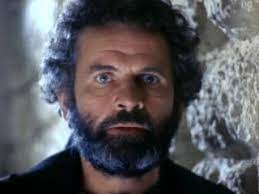
Of course, the tomb is empty. As Zerah looks at the neatly folded clothes on the slab where the body had been placed, he says . . . “Now it begins.” Zerah knows that this is a classic “the horse has been let out of the barn” or “the genie has been let out of the bottle” moment. Nothing will ever be the same again. And he’s right.
Every August, college professors across the country find themselves moving closer and closer to a “Now it begins” moment. August is very quiet on campus, particularly this year as we continue to emerge from the pandemic–no classes, few hosted events, few visitors other than prospective students and their parents taking tours. It’s all a wonderful period of solitude; but just as Louis XV reportedly commented in anticipation of the Revolution that would cost his grandson Louis XVI his head, August says to the academic “après moi le deluge.” Before long, the floodgates will open. They’re baaack . . .!
Actually, they will be back on Monday, our first day of regular classes. This is great news; I’m more than ready to be back in the classroom–so far promised to be entirely in person with everyone wearing a mask. I’m not one of those professors who regularly moans and complains about their students. They are the reason I am in the profession to begin with, they keep me young (at heart if not in outward appearance), and let’s be practical: for an academic, a world sans students would be a world sans paycheck.
I got a fictional look at the dark side of academic attitudes about students, fellow faculty, administrators, and reality in general when reading Julie Schumacher’s Dear Committee Members not long ago. Billed by Amazon as “A novel that puts the pissed back in epistolary,” it follows Jason Fitger, Professor of Creative Writing at Payne University, from the beginning to the end of an academic year through the exclusive lens of letters and emails of reference and support written for current and former students, colleagues, and acquaintances from graduate school days. Billed by reviewers as “funny as hell,” “hilarious,” “fun-as-heck,” and “funny and lacerating,” I must confess that although I smiled occasionally, I found the novel more sad than anything else. Sad because I know that the never-ending bureaucratic and pedagogical challenges of the academic life can turn someone into a jaded, sarcastic, and cynical curmudgeon like Jake Fitger (he’s eight years younger than I am), and even sadder because it doesn’t have to be that way.
Fitger is the graduate product of what he calls the “Seminar,” a graduate writing program that sounds a lot like the Iowa Writers’ Workshop (which produced a few of my friends and colleagues—and none of them are like Fitger). After a reasonably successful first novel, followed by a couple more that fell still-born from the press, he finds himself in the final decade or so of a mediocre career at a mediocre public university in an English department whose infrastructure, both psychological and physical, is falling apart.
As faculty lines are closed down and the plumbing in the men’s bathroom fails, the Economics Department on the floor directly above is being treated to a complete upgrade of facilities. Fitger is the embodiment of what is actually happening across the country in more universities and colleges than I care to consider—the neglect and downsizing of the humanities while departments and programs perceived as job-producers and money-makers receive the lion’s share of funding and attention.
I am extraordinarily fortunate and privileged to have spent the last twenty-seven years (and hopefully the next ten) at an institution that consciously attempts to swim against that tide. Accordingly, Fitger is for me the fictional embodiment of what could have happened had I not been as fortunate. I have few cynical and dedicated negative bones in my body, but some might have been created had I lived the professional life of Jason Fitger. Of course, many of the most problematic aspects of Fitger’s life are self-created. He is hated across campus for various justifiable reasons, his marriage to a fellow professor on campus fell apart when she became aware of his continuing infidelities with an administrative assistant, and his affair with the administrative assistant ends when he accidentally hits the “Send All” button on an email intended for one individual in which he expresses his continuing sexual attraction for his ex-wife that remains strong even after five years of divorce.
I don’t know anyone on campus like Jason Fitger (although he might be lurking somewhere). But hidden like buried treasure underneath page upon page of sarcasm and nastiness, I was pleased to find occasional and brief homages to the academic life. In an email to a former colleague from the Seminar, an epistle drenched in anger, regret and bitterness, Fitger steps back for a moment.
The stately academic career featuring black-robed professors striding confidently across the campus square is already fading; and, though I’ve often railed against its eccentricities, I want to proclaim here that I believe our mission and our way of life to have been admirable and lovely, steeped with purpose and worth defending.
Amen to that. I only get to wear black robes a couple of times a year (including next week at covocation)—although it would be sort of cool to wear them all of the time—and I agree that the eccentricities of the academic process and of academics themselves can be a pain in the ass. But what a wonderful profession. It’s the best thing going, not because of money, fame, or notoriety (which come to only a miniscule percentage), but because of the privilege of making a living in the midst of the most exciting environment imaginable—the life of continual learning. 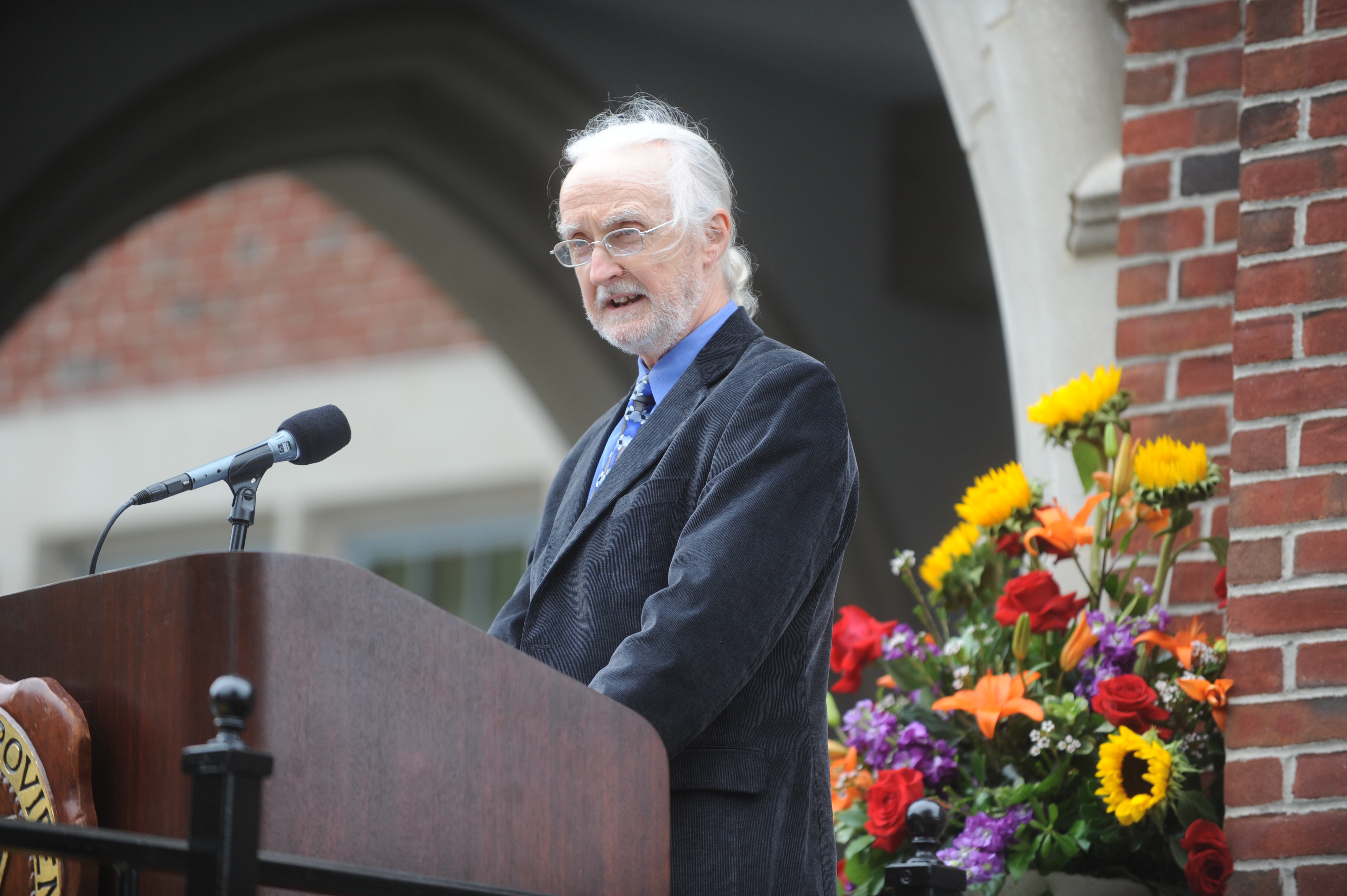 As I noted in my remarks at the dedication of our new humanities building almost eight years ago, the Apostle Paul’s words ring true at this time of year for every academic: Old things are passed away; behold, all things are become new. And Jason Fitger knows it, in spite of himself:
There is nothing more promising or hopeful than the start of the academic cycle: another chance for self-improvement, for putting into practice what one has learned—or failed to learn—during the previous year.
They’re baaack . . . and I’ve been waiting for them. Bring it on.
Development of Western Civilization
Previous Post

August 24, 2021
Remembering Winnie: What Our Pets Teach Us About What's Important
Next Post
August 28, 2021 Why Am I a Liberal? Because I Am a Christian
Browse Our Archives
Select a Category abortion Advent AI Angels Artificial intelligence atheism attention baptism Baptists beauty belief Benedictines Bible bicycling Big Bird books Bovina Camaldoli hermitage Canada Catholicism cats certainty change Christianity Christmas Collegeville Covid-19 creativity Development of Western Civilization dogs doubt Easter Enneagram Epiphany Episcopal ethics Eucharist evil extroverts Facebook faith family fear flowers forgiveness freedom friends God goodness grace happiness heaven hell history Holy Spirit Holy Week hope human nature humility humor idolatry incarnation introverts irreverence Islam Jeanne Jesus Joe Biden joy Judaism justice Kamala Harris knowledge Lent listen literature liturgy love Marsue Memorial Day miracles movies music mystery mythology NPR Old Testament optimism paradox peace Penguins philosophy piano podcast politics power prayer Protestantism Providence College Religion Rhode Island sabbatical sacrament science seeing silence Simone Weil Socrates soul sports St. John's College stories suffering tattoo teaching technology television theology thinking time tolerance transcendence travel trees trust truth Uncategorized Vermont wisdom wonder writing
Select a Month May 2026 April 2026 March 2026 February 2026 January 2026 December 2025 November 2025 October 2025 September 2025 August 2025 July 2025 June 2025 May 2025 April 2025 March 2025 February 2025 January 2025 December 2024 November 2024 October 2024 September 2024 August 2024 July 2024 June 2024 May 2024 April 2024 March 2024 February 2024 January 2024 December 2023 November 2023 October 2023 September 2023 August 2023 July 2023 June 2023 May 2023 April 2023 March 2023 February 2023 January 2023 December 2022 November 2022 October 2022 September 2022 August 2022 July 2022 June 2022 May 2022 April 2022 March 2022 February 2022 January 2022 December 2021 November 2021 October 2021 September 2021 August 2021 July 2021 June 2021 May 2021 April 2021 March 2021 February 2021 January 2021 December 2020 November 2020 October 2020 September 2020 August 2020 July 2020 June 2020 May 2020 April 2020 March 2020 February 2020 January 2020 December 2019 November 2019 October 2019 September 2019 August 2019 July 2019 June 2019 May 2019 April 2019 March 2019 February 2019 January 2019 December 2018 November 2018 October 2018 September 2018 August 2018 July 2018 June 2018 May 2018 April 2018 March 2018 February 2018 January 2018 December 2017 November 2017 October 2017 September 2017 August 2017 July 2017 June 2017 May 2017 April 2017 March 2017 February 2017 January 2017 December 2016 November 2016 October 2016 September 2016 August 2016 July 2016 June 2016 May 2016 April 2016 March 2016 February 2016 January 2016 December 2015 November 2015 October 2015 September 2015 August 2015 July 2015 June 2015 May 2015 April 2015 March 2015 February 2015 January 2015 December 2014 November 2014 October 2014 September 2014 August 2014 July 2014 June 2014 May 2014 April 2014 March 2014 February 2014 January 2014 December 2013 November 2013 October 2013 September 2013 August 2013 July 2013 June 2013 May 2013 April 2013 March 2013 February 2013 January 2013 December 2012 November 2012 October 2012 September 2012
Follow Us!
TAKE THE
Religious Wisdom Quiz
Who said, "The just shall live by faith"?
Select your answer to see how you score.
Paul John Jesus Peter
Books by This Author Books by Vance G. Morgan
Related posts from Freelance Christianity

The Lonely Pawn: On Faith, Doubt, and Meaning


AI and Love: When a Chatbot Becomes a...

TRENDING AT PATHEOS Progressive Christian

What Being a Modern-Day Apostle Means to Me
In my last column, I discussed the ins and outs of modern-day...

Did Ancient China Once Worship the God of...
Across human history, a common thread weaves through the origins of the...

Love Your Neighbor – Including Earth-Kin: Lev. 19,...
God’s command to love your neighbor means acting in an ethical and...

Lead a Church Study of “Jesus and Lao...
Guest writer Jack Thomas (The Irreverent Reverend) reflects on leading his church...

Pastoral Wisdom for Responding to Sermon Pushback
Getting sermon pushback on your social justice sermon? Learn practical, Proverbs-based strategies...

Principles for Understanding the Apostolic Ministry Today
Whenever people discover that my formal ministry title is "apostle," as in...
view all Progressive Christian blogs
Ad-Free & Subscriber Log-In Subscription Support
- About Us
- 2026 Calendar
- Videos
- Podcasts
- Library of World Religions
- Faith In Media Tracker
- Advertise With Us
- Write for Us
- Privacy Policy
- Terms of Service
- Do Not Sell My Data
- Contact Us
- Radiant Digital
- Manage Newsletter Subscriptions
- Unsubscribe From Notifications
- Sitemap
Copyright 2008-2026, Patheos. All rights reserved.
Subscription Support Ad-Free & Subscriber Log-In
Follow Patheos