
BuddhistCatholicContemplativeEvangelicalGeneral ChristianHinduJewishLatter-day SaintMuslimNew VisionsProgressive Christian
Beliefs
- Buddhist
- Catholic
- Contemplative
- Evangelical
- General Christian
- Hindu
- Jewish
- Latter-day Saint
- More Voices
- Muslim
- New Visions
- Pagan
- Progressive Christian
Topics
- Religion News
- Food and Religion
- Sports and Religion
- Religious Art
- Religious Music and Entertainment
- Religious Events
- History and Religion
- Style and Religion
- Politics and Religion
- Women in Religion
- Recreation Outdoors and Religion
- Business Finance and Religion
- Careers Workplace and Religion
- Education and Religion
- Family Parenting and Religion
- Health Fitness and Religion
- Home and Religion
- Relationships and Religion
- Technology and Religion
- Travel and Religion
Columnists
- Buddhist Columnists
- Business Finance and Religion Columnists
- Careers Workplace and Religion Columnists
- Catholic Columnists
- Contemplative Columnists
- Education and Religion Columnists
- Evangelists Columnists
- Family Parenting and Religion Columnists
- General Christian Columnists
- Health Fitness and Religion Columnists
- Hindu Columnists
- History and Religion Columnists
- Home and Religion Columnists
- Jewish Columnists
- More Voices Columnists
- Latter Day Columnists
- Muslim Columnists
- New Visions Columnists
- Nonreligious Columnists
- Pagan Columnists
- Politics and Religion Columnists
- Progressive Columnists
- Recreation Outdoors and Religion Columnists
- Relationships and Religion Columnists
- Religion News Columnists
- Religious Art Columnists
- Religious Events Columnists
- Religious Music and Entertainment Columnists
- Sports and Religion Columnists
- Style and Religion Columnists
- Technology and Religion Columnists
- Travel and Religion Columnists
- Women in Religion Columnists
Resource Library
- 2026 Calendar
- Library of World Religions
- The 100 Most Holy Places on Earth
- Patheos Answers
- Podcasts
- Videos
- Faith Leaders Database
- Anglican Episcopalian
- Bahai
- Baptist
- Buddhism
- Christianity
- Confucianism
- Eastern Orthodoxy
- Hinduism
- Holiness and Pentecostal
- ISKCON
- Islam
- Judaism
- Lutheran
- Methodist
- The Church of Jesus Christ of Latter-day Saints
- New Age
- Paganism
- Presbytarian and Reformed
- Protestantism
- Religion Behind the Scenes
- Roman Catholic
- Scientology
- Shia Islam
- Sikhism
- Sufism
- Sunni Islam
- Taoism
- Zen
- See all religions
Research Tools
 Ad-Free & Subscriber Log-In Subscription Support
Ad-Free & Subscriber Log-In Subscription Support
Follow Patheos 

- Trending:
- Forgiveness
- |
- Marriage
- |
- Consciousness
- |
- Death Penalty
- |
- Election
- |
- Halloween

- Home
- Progressive Christian
- I Am Not Special, and Neither Are You
I Am Not Special, and Neither Are You
Last updated on: October 19, 2017 at 7:00 am by Vance Morgan
I Am Not Special, and Neither Are You 2017-10-17T21:59:23-04:00 Vance Morgan
Patheos Explore the world's faith through different perspectives on religion and spirituality! Patheos has the views of the prevalent religions and spiritualities of the world.
The Disrupter-in-Chief threw a verbal grenade into a Rose Garden event with Mitch McConnell by his side a couple of days ago when he implied that while he has made it a practice to call the families of fallen soldiers, former President Obama and other former Presidents did not. Rather than jumping into the middle of this latest mess, I started thinking about ways in which we honor members of the military in this country–and what those ways might say about us.
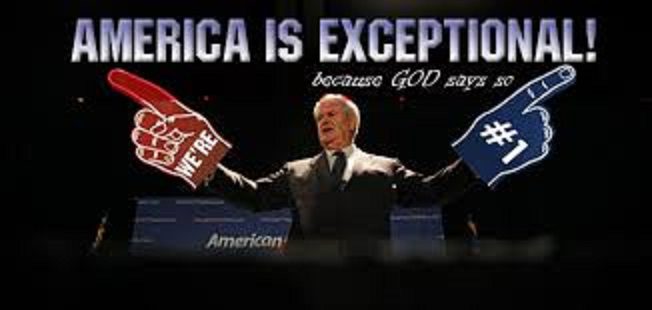
A regular occurrence at home Providence Friars basketball games is when, during one of the first media timeouts in the first half, the crowd is introduced to an armed forces veteran with local roots. As the veteran’s accomplishments in the military are read over the public address system, he or she is brought onto the court along with family to the increasing cheers of the thousands of fans in the crowd. By the time it’s over virtually everyone is on their feet, many in the student section are chanting U-S-A! U-S-A!, and a little more American exceptionalism steam has been released.
Every time this happens, I am reminded of a recent NPR interview with a former member of the Joint Chiefs of Staff in which the interviewee expressed an unexpected opinion concerning such patriotic displays. “Ever since 9/11 it has become not only typical but expected for every person in uniform to be called a hero,” the general said. “This is not a good thing. Just putting a uniform on doesn’t make anyone a hero.” His point was that indiscriminately calling every soldier a hero is not patriotic—it’s actually a dangerous mistake. If every soldier is a hero, then the military gets a free pass on everything it does. But, he went on, the military should be held to a higher standard of moral behavior than any other group of citizens. “Every soldier is a hero” is a subset of “America—Love It or Leave It” and “My Country, Right or Wrong.”
In the seven-plus years of his Presidency, President Obama often annoyed and outraged many of his fellow citizens by his frequent refusal to play the game of American Exceptionalism by the accepted rules. He didn’t even seem to be able to say the ubiquitous “God bless the United States of America” that ends virtually every American politician’s speech with the proper tone. It sounded more like a request or prayer when he said it than a command or expectation Speaking of prayers, at the 2015 National Prayer Breakfast, during a time of global anxiety over Islamist terrorism, Obama noted pointedly that his fellow Christians, who make up a vast majority of Americans, should perhaps not be the ones who cast the first stone.
Humanity has been grappling with these questions throughout human history. And lest we get on our high horse and think this is unique to some other place, remember that during the Crusades and the Inquisition, people committed terrible deeds in the name of Christ. In our home country, slavery and Jim Crow all too often was justified in the name of Christ.
In less than ten minutes, the President managed to throw both American and Christian exceptionalism under the bus. Almost four centuries after John Winthrop told the citizens of his future Massachusetts Bay Colony that they would be the “city on a hill” spoken of by Jesus in the Gospel of Matthew, Americans still want to believe that they are that shining beacon, a God-blessed fusion of the best people, best opportunities, best religion and best everything. And they don’t enjoy having it pointed out that they have seldom, if ever, lived up to the hype.
The reaction to the President’s remarks from many quarters was swift and negative. The former governor of Virginia, for instance, said “The president’s comments this morning at the prayer breakfast are the most offensive I’ve ever heard a president make in my lifetime. He has offended every believing Christian in the United States. This goes further to the point that Mr. Obama does not believe in America or the values we all share.”
And what exactly might those values be? That my faith or my country cannot possibly be wrong? That history doesn’t matter? That regardless of what the history of Christianity or this country is, using it to put people at a prayer breakfast in a thoughtful, introspective, or (God forbid) repentant frame of heart and mind is contrary to important moral values? Or is it simply that it is bad taste to remind anyone that triumphalism and exceptionalism are always reflective of willful ignorance and blindness? I’m just wondering, because I am a believing Christian in the United States and found absolutely nothing offensive in the former President’s remarks. Just saying.
Exceptionalism is an example of a basic human way of understanding the world, particularly those parts of the world that directly challenge one’s own comfort zone. In my “Markets and Morals” colloquium seminar a couple of semesters ago, our texts were two late 19th/early 20th century Christian voices responding to the social upheaval that had arisen world-wide from the Industrial Revolution that had imprinted itself in a range of ways on human society.
Pope Leo XIII and Walter Rauschenbusch agreed that the class divisions and devastating impoverishment arising from unfettered capitalism must be addressed, but disagreed sharply in their proposed prescriptions to their shared diagnosis. Leo begins his influential 1891 encyclical Rerum Novarum with a clear and thorough rejection of the socialist alternative to capitalism, claiming that socialism’s proposed elimination of private property is contrary to the right of every human being to own the fruit of her or his labor, a right established by God-designed natural law. After disposing of socialism, Leo proposes a retooling of various features of capitalism while preserving its most foundational features.
In the final chapter of his 1913 book Christianity and the Social Crisis, Walter Rauschenbusch takes a sharply different approach. Although he does not advocate a Communist revolution as Marx and Engels had over a half century earlier, he does believe that socialism is the only possible solution to the ravages of capitalism. Furthermore, Rauschenbusch argues that both Christianity and patriotism lead directly to this conclusion.
Man is Christianized when he puts God before self; political economy will be Christianized when it puts man before wealth. Socialistic political economy does that. . . . If such a solution is even approximately feasible, it should be hailed with joy by every patriot and Christian, for it would put a stop to our industrial war, drain off the miasmatic swamp of undeserved poverty, save our political democracy, and lift the great working class to an altogether different footing of comfort, intelligence, security and moral strength.
To say that my students had a problem with Rauschenbusch here is a serious understatement. I had asked each of my eighteen sophomores to submit a 500-word reflection on the sharp disagreement between the Pope and Rauschenbusch prior to seminar. It came as no surprise that my students—seventy-five percent of whom are business or economics majors—unanimously favored Leo’s position.
But this led to a fascinating seminar discussion, in which several students incrementally realized that their real problem with Rauschenbusch was not so much his insights and arguments (which they frequently resonated with) but rather simply that his conclusion presented a Christianity and patriotism radically different from what they were accustomed to. Upon reminding them that “I disagree with X, therefore X is wrong” is a very poor argument, we had the opportunity to evaluate both men’s arguments on their merits and for a short time see just how different the world looks from perspectives other than those we are accustomed to and comfortable with.
As I listened to a packed movie theater erupt into applause at the end of American Sniper not long after that class, I wondered why. Was the applause similar to that at the Dunkin’ Donuts Center whenever a veteran is introduced, applause that swells simply because a person in uniform is a hero who needs to be thanked for her/his service and who represents the greatest country in the world? Or did the movie viewers applaud because they resonated with the less-discussed but very clear anti-war message of the movie? It reminded me of something else from Rauschenbusch, written just before the world erupted into a war that kicked off the bloodiest century in human history:
If war is ever to be relegated to the limbo of outgrown barbarism, we must shake off its magic. When we comprehend how few wars have ever been fought for the sake of justice or the people; how personal spite, the ambition of military professionals, and the protection of capitalistic ventures are the real moving powers; how the governing classes pour out the blood and wealth of nations for private ends and exude patriotic enthusiasm like a squid secreting ink to hide its retreat—then the mythology of war will no longer bring us to our knees, and we shall fail to get drunk with the rest when martial intoxication sweeps the people off their feet.
Development of Western Civilization
Development of Western Civilization
Previous Post

October 17, 2017
Will the Truth Set You Free?
Next Post

October 22, 2017 Have You Not Lived?
Browse Our Archives
Select a Category abortion Advent AI Angels Artificial intelligence atheism attention baptism Baptists beauty belief Benedictines Bible bicycling Big Bird books Bovina Camaldoli hermitage Canada Catholicism cats certainty change Christianity Christmas Collegeville Covid-19 creativity Development of Western Civilization dogs doubt Easter Enneagram Epiphany Episcopal ethics Eucharist evil extroverts Facebook faith family fear flowers forgiveness freedom friends God goodness grace happiness heaven hell history Holy Spirit Holy Week hope human nature humility humor idolatry incarnation introverts irreverence Islam Jeanne Jesus Joe Biden joy Judaism justice Kamala Harris knowledge Lent listen literature liturgy love Marsue Memorial Day miracles movies music mystery mythology NPR Old Testament optimism paradox peace Penguins philosophy piano podcast politics power prayer Protestantism Providence College Religion Rhode Island sabbatical sacrament science seeing silence Simone Weil Socrates soul sports St. John's College stories suffering tattoo teaching technology television theology thinking time tolerance transcendence travel trees trust truth Uncategorized Vermont wisdom wonder writing
Select a Month May 2026 April 2026 March 2026 February 2026 January 2026 December 2025 November 2025 October 2025 September 2025 August 2025 July 2025 June 2025 May 2025 April 2025 March 2025 February 2025 January 2025 December 2024 November 2024 October 2024 September 2024 August 2024 July 2024 June 2024 May 2024 April 2024 March 2024 February 2024 January 2024 December 2023 November 2023 October 2023 September 2023 August 2023 July 2023 June 2023 May 2023 April 2023 March 2023 February 2023 January 2023 December 2022 November 2022 October 2022 September 2022 August 2022 July 2022 June 2022 May 2022 April 2022 March 2022 February 2022 January 2022 December 2021 November 2021 October 2021 September 2021 August 2021 July 2021 June 2021 May 2021 April 2021 March 2021 February 2021 January 2021 December 2020 November 2020 October 2020 September 2020 August 2020 July 2020 June 2020 May 2020 April 2020 March 2020 February 2020 January 2020 December 2019 November 2019 October 2019 September 2019 August 2019 July 2019 June 2019 May 2019 April 2019 March 2019 February 2019 January 2019 December 2018 November 2018 October 2018 September 2018 August 2018 July 2018 June 2018 May 2018 April 2018 March 2018 February 2018 January 2018 December 2017 November 2017 October 2017 September 2017 August 2017 July 2017 June 2017 May 2017 April 2017 March 2017 February 2017 January 2017 December 2016 November 2016 October 2016 September 2016 August 2016 July 2016 June 2016 May 2016 April 2016 March 2016 February 2016 January 2016 December 2015 November 2015 October 2015 September 2015 August 2015 July 2015 June 2015 May 2015 April 2015 March 2015 February 2015 January 2015 December 2014 November 2014 October 2014 September 2014 August 2014 July 2014 June 2014 May 2014 April 2014 March 2014 February 2014 January 2014 December 2013 November 2013 October 2013 September 2013 August 2013 July 2013 June 2013 May 2013 April 2013 March 2013 February 2013 January 2013 December 2012 November 2012 October 2012 September 2012
Follow Us!
TAKE THE
Religious Wisdom Quiz
Who prayed for rain after a long drought and sent his servant to look seven times?
Select your answer to see how you score.
Isaiah Samuel Elijah Hosea
Books by This Author Books by Vance G. Morgan
Related posts from Freelance Christianity

The Lonely Pawn: On Faith, Doubt, and Meaning


AI and Love: When a Chatbot Becomes a...

TRENDING AT PATHEOS Progressive Christian

Why Christians Have a Sacred Duty to Vote:...
The Bible offers strong support for the sacred duty to vote. Here...

What Being a Modern-Day Apostle Means to Me
In my last column, I discussed the ins and outs of modern-day...

Did Ancient China Once Worship the God of...
Across human history, a common thread weaves through the origins of the...

Love Your Neighbor – Including Earth-Kin: Lev. 19,...
God’s command to love your neighbor means acting in an ethical and...

Lead a Church Study of “Jesus and Lao...
Guest writer Jack Thomas (The Irreverent Reverend) reflects on leading his church...

Principles for Understanding the Apostolic Ministry Today
Whenever people discover that my formal ministry title is "apostle," as in...
view all Progressive Christian blogs
Ad-Free & Subscriber Log-In Subscription Support
- About Us
- 2026 Calendar
- Videos
- Podcasts
- Library of World Religions
- Faith In Media Tracker
- Advertise With Us
- Write for Us
- Privacy Policy
- Terms of Service
- Do Not Sell My Data
- Contact Us
- Radiant Digital
- Manage Newsletter Subscriptions
- Unsubscribe From Notifications
- Sitemap
Copyright 2008-2026, Patheos. All rights reserved.
Subscription Support Ad-Free & Subscriber Log-In
Follow Patheos