
BuddhistCatholicContemplativeEvangelicalGeneral ChristianHinduJewishLatter-day SaintMuslimNew VisionsProgressive Christian
Beliefs
- Buddhist
- Catholic
- Contemplative
- Evangelical
- General Christian
- Hindu
- Jewish
- Latter-day Saint
- More Voices
- Muslim
- New Visions
- Pagan
- Progressive Christian
Topics
- Religion News
- Food and Religion
- Sports and Religion
- Religious Art
- Religious Music and Entertainment
- Religious Events
- History and Religion
- Style and Religion
- Politics and Religion
- Women in Religion
- Recreation Outdoors and Religion
- Business Finance and Religion
- Careers Workplace and Religion
- Education and Religion
- Family Parenting and Religion
- Health Fitness and Religion
- Home and Religion
- Relationships and Religion
- Technology and Religion
- Travel and Religion
Columnists
- Buddhist Columnists
- Business Finance and Religion Columnists
- Careers Workplace and Religion Columnists
- Catholic Columnists
- Contemplative Columnists
- Education and Religion Columnists
- Evangelists Columnists
- Family Parenting and Religion Columnists
- General Christian Columnists
- Health Fitness and Religion Columnists
- Hindu Columnists
- History and Religion Columnists
- Home and Religion Columnists
- Jewish Columnists
- More Voices Columnists
- Latter Day Columnists
- Muslim Columnists
- New Visions Columnists
- Nonreligious Columnists
- Pagan Columnists
- Politics and Religion Columnists
- Progressive Columnists
- Recreation Outdoors and Religion Columnists
- Relationships and Religion Columnists
- Religion News Columnists
- Religious Art Columnists
- Religious Events Columnists
- Religious Music and Entertainment Columnists
- Sports and Religion Columnists
- Style and Religion Columnists
- Technology and Religion Columnists
- Travel and Religion Columnists
- Women in Religion Columnists
Resource Library
- 2026 Calendar
- Library of World Religions
- The 100 Most Holy Places on Earth
- Patheos Answers
- Podcasts
- Videos
- Faith Leaders Database
- Anglican Episcopalian
- Bahai
- Baptist
- Buddhism
- Christianity
- Confucianism
- Eastern Orthodoxy
- Hinduism
- Holiness and Pentecostal
- ISKCON
- Islam
- Judaism
- Lutheran
- Methodist
- The Church of Jesus Christ of Latter-day Saints
- New Age
- Paganism
- Presbytarian and Reformed
- Protestantism
- Religion Behind the Scenes
- Roman Catholic
- Scientology
- Shia Islam
- Sikhism
- Sufism
- Sunni Islam
- Taoism
- Zen
- See all religions
Research Tools
 Ad-Free & Subscriber Log-In Subscription Support
Ad-Free & Subscriber Log-In Subscription Support
Follow Patheos 

- Trending:
- Forgiveness
- |
- Marriage
- |
- Consciousness
- |
- Death Penalty
- |
- Election
- |
- Halloween

- Home
- Progressive Christian
- The Never-Ending Prayer
The Never-Ending Prayer
Last updated on: July 26, 2018 at 6:00 am by Vance Morgan
The Never-Ending Prayer 2018-07-24T16:12:11-04:00 Vance Morgan
Patheos Explore the world's faith through different perspectives on religion and spirituality! Patheos has the views of the prevalent religions and spiritualities of the world.
As I do initial work on my new book on prayer (contract now signed!), I am following my usual procedure of paying close attention to whatever the author I am currently reading has to say about the topic.
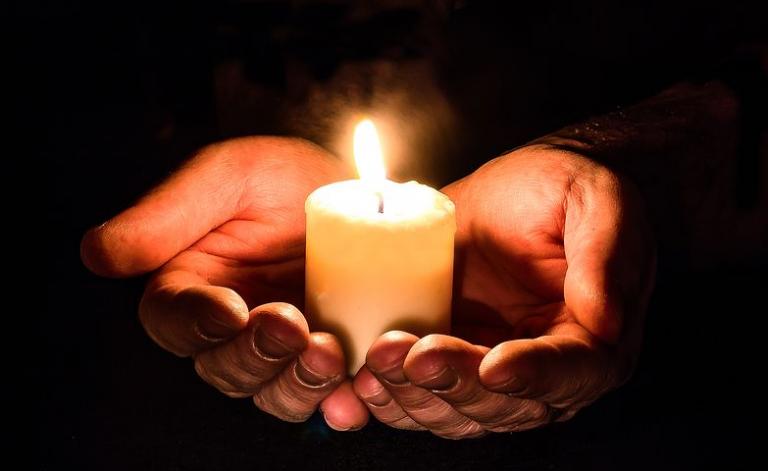
In her spiritual memoir Still, Lauren Winner begins a brief chapter on prayer by noting that “it is easier to read about prayer than to pray” (tell me about it), then describes the results of a fifty-year-old study of children and prayer, the aim of which was to discover how children’s concepts of prayer evolve as they grow older.
The results of the study reveal a hierarchy similar to Kohlberg’s stages of moral development, in which children’s ideas about prayer become more and more sophisticated. The four-year-old’s notion that prayer is about God, rabbits, deer, Santa Claus, turkeys, Mary, and Mary’s baby, evolves through the seven-year-old’s idea that “prayer is when you ask for something you need,” to the twelve-year-old’s proto-theological belief that prayer is an attempt to communicate with God, particularly when seeking forgiveness.
Winner is particularly interested in the portion of the study where its authors note with approval that older children realize that they are “the author of their own prayer,” an improvement on the younger child’s belief that prayers “come from God, or from heaven, or from Fairyland in the sky.” But Winner is not sure that the older child’s realization is an improvement. As a person’s experience with prayer continues,
I think they will come to know that the youngest children are right. I think they will come to know that their prayers do not, in fact, come from within themselves. I can participate in prayer (or not), show up to pray (or not), but I am not the author of my prayers; when they come, they come from God.
In keeping with my frequent practice of free association, a three-decades-old memory bubbled to the surface.
Over thirty years ago, I regularly sang in an Episcopal church choir. Since the church was the largest church in a college town, as well as the cathedral of the diocese, the music was slightly better than garden-variety church stuff, but the choir was still pretty much a mixed bag. There were five or six sopranos and an equal number of altos, including one close-to-professional quality ringer in each section. We had only two tenors, one a fellow over seventy years old who probably once had a good voice when he was younger and a much younger fellow who sang with gusto but was tone-deaf. The baritones (my section) were more numerous, usually at least four or five. I don’t have a good solo voice, but I am a good choir singer because I read music well and have good pitch. I was the guy all of the other baritones crowded around with a new piece in order to get things right.
One Easter season, our primary Easter Sunday piece was going to be Randall Thomson’s “Alleluia.” The words are easy—all you sing is “Alleluia” all the way through with one “Amen” on the end. The notes are moderately challenging, but this was by no means the most technically difficult piece the choir had ever sung. The piece is sung a capella; for it to work, the singers need the same sort of “oneness” that Gregorian chant requires—they have to become one voice, rather than fifteen or so individual ones. Furthermore, they have to stay in tune for five minutes without accompaniment. And it wasn’t happening.
After several mediocre attempts in rehearsal, Charles, our organist and choirmaster, yelled “STOP!” After regaining his composure, he said “the Bible says that around the throne of God, the cherubim and seraphim continually sing ‘Alleluia’ in never-ending praise. For the next five minutes let’s plug into that eternal song, joining ‘with angels and archangels and with all the company of heaven,’ just as the Sanctus from mass every Sunday says. Begin.” And for the next five minutes, that’s where we were. We left our individual, fragmented and discordant existences and joined “all the company of heaven who forever sing this hymn to proclaim the glory of your Name.” I get chills as I remember and write about it, more than thirty years later. As we ended Alleluia with a hushed “Amen,” our tone-deaf tenor said it all: “Whoa! Where did that come from?”
To my ears, there was nothing mystical or magical about our Easter morning performance a few days later. We were in tune, we didn’t embarrass ourselves, but we were not inspired. Afterwards, though, I overheard an old parishioner say to two of my fellow choristers that “you sang like angels today.” Maybe so, I thought. I know that we did at least once—maybe on Easter morning, she was the one who had “ears to hear.” I have the gnawing suspicion that this transcendence is there all the time. I’m grateful when, every once in a while, I can say “surely God was in this place” and mean it.
This may not be what Lauren Winner means when she writes in Still that “I can participate in prayer (or not), show up to pray (or not), but I am not the author of my prayers; when they come, they come from God,” but I like the idea of prayer not being something that each of us has to strive to construct, create, or “do.” Just as my choir plugged, almost accidentally, into a river of praise that is always flowing, regardless of whether we tune in or not, perhaps when we pray we are opening ourselves to a river of transcendence and sacrament that is always there, whether we notice it or not. Prayer then becomes something I become more and more aware of by becoming a person more carefully attuned to the sacred. Perhaps prayer is something that is done to me rather than something that I do.
Previous Post

July 24, 2018
What I Learned About My Faith When I Visited Cuba
Next Post
July 28, 2018 I Forgot What You Said
Browse Our Archives
Select a Category abortion Advent AI Angels Artificial intelligence atheism attention baptism Baptists beauty belief Benedictines Bible bicycling Big Bird books Bovina Camaldoli hermitage Canada Catholicism cats certainty change Christianity Christmas Collegeville Covid-19 creativity Development of Western Civilization dogs doubt Easter Enneagram Epiphany Episcopal ethics Eucharist evil extroverts Facebook faith family fear flowers forgiveness freedom friends God goodness grace happiness heaven hell history Holy Spirit Holy Week hope human nature humility humor idolatry incarnation introverts irreverence Islam Jeanne Jesus Joe Biden joy Judaism justice Kamala Harris knowledge Lent listen literature liturgy love Marsue Memorial Day miracles movies music mystery mythology NPR Old Testament optimism paradox peace Penguins philosophy piano podcast politics power prayer Protestantism Providence College Religion Rhode Island sabbatical sacrament science seeing silence Simone Weil Socrates soul sports St. John's College stories suffering tattoo teaching technology television theology thinking time tolerance transcendence travel trees trust truth Uncategorized Vermont wisdom wonder writing
Select a Month May 2026 April 2026 March 2026 February 2026 January 2026 December 2025 November 2025 October 2025 September 2025 August 2025 July 2025 June 2025 May 2025 April 2025 March 2025 February 2025 January 2025 December 2024 November 2024 October 2024 September 2024 August 2024 July 2024 June 2024 May 2024 April 2024 March 2024 February 2024 January 2024 December 2023 November 2023 October 2023 September 2023 August 2023 July 2023 June 2023 May 2023 April 2023 March 2023 February 2023 January 2023 December 2022 November 2022 October 2022 September 2022 August 2022 July 2022 June 2022 May 2022 April 2022 March 2022 February 2022 January 2022 December 2021 November 2021 October 2021 September 2021 August 2021 July 2021 June 2021 May 2021 April 2021 March 2021 February 2021 January 2021 December 2020 November 2020 October 2020 September 2020 August 2020 July 2020 June 2020 May 2020 April 2020 March 2020 February 2020 January 2020 December 2019 November 2019 October 2019 September 2019 August 2019 July 2019 June 2019 May 2019 April 2019 March 2019 February 2019 January 2019 December 2018 November 2018 October 2018 September 2018 August 2018 July 2018 June 2018 May 2018 April 2018 March 2018 February 2018 January 2018 December 2017 November 2017 October 2017 September 2017 August 2017 July 2017 June 2017 May 2017 April 2017 March 2017 February 2017 January 2017 December 2016 November 2016 October 2016 September 2016 August 2016 July 2016 June 2016 May 2016 April 2016 March 2016 February 2016 January 2016 December 2015 November 2015 October 2015 September 2015 August 2015 July 2015 June 2015 May 2015 April 2015 March 2015 February 2015 January 2015 December 2014 November 2014 October 2014 September 2014 August 2014 July 2014 June 2014 May 2014 April 2014 March 2014 February 2014 January 2014 December 2013 November 2013 October 2013 September 2013 August 2013 July 2013 June 2013 May 2013 April 2013 March 2013 February 2013 January 2013 December 2012 November 2012 October 2012 September 2012
Follow Us!
TAKE THE
Religious Wisdom Quiz
Who said, "Father, I have sinned against heaven and against you"?
Select your answer to see how you score.
The Lost Sheep The Rich Young Ruler The Prodigal Son The Pharisee
Books by This Author Books by Vance G. Morgan
Related posts from Freelance Christianity

The Lonely Pawn: On Faith, Doubt, and Meaning


AI and Love: When a Chatbot Becomes a...

TRENDING AT PATHEOS Progressive Christian

What Being a Modern-Day Apostle Means to Me
In my last column, I discussed the ins and outs of modern-day...

Did Ancient China Once Worship the God of...
Across human history, a common thread weaves through the origins of the...

Love Your Neighbor – Including Earth-Kin: Lev. 19,...
God’s command to love your neighbor means acting in an ethical and...

Lead a Church Study of “Jesus and Lao...
Guest writer Jack Thomas (The Irreverent Reverend) reflects on leading his church...

Pastoral Wisdom for Responding to Sermon Pushback
Getting sermon pushback on your social justice sermon? Learn practical, Proverbs-based strategies...

Principles for Understanding the Apostolic Ministry Today
Whenever people discover that my formal ministry title is "apostle," as in...
view all Progressive Christian blogs
Ad-Free & Subscriber Log-In Subscription Support
- About Us
- 2026 Calendar
- Videos
- Podcasts
- Library of World Religions
- Faith In Media Tracker
- Advertise With Us
- Write for Us
- Privacy Policy
- Terms of Service
- Do Not Sell My Data
- Contact Us
- Radiant Digital
- Manage Newsletter Subscriptions
- Unsubscribe From Notifications
- Sitemap
Copyright 2008-2026, Patheos. All rights reserved.
Subscription Support Ad-Free & Subscriber Log-In
Follow Patheos