
BuddhistCatholicContemplativeEvangelicalGeneral ChristianHinduJewishLatter-day SaintMuslimNew VisionsProgressive Christian
Beliefs
- Buddhist
- Catholic
- Contemplative
- Evangelical
- General Christian
- Hindu
- Jewish
- Latter-day Saint
- More Voices
- Muslim
- New Visions
- Pagan
- Progressive Christian
Topics
- Religion News
- Food and Religion
- Sports and Religion
- Religious Art
- Religious Music and Entertainment
- Religious Events
- History and Religion
- Style and Religion
- Politics and Religion
- Women in Religion
- Recreation Outdoors and Religion
- Business Finance and Religion
- Careers Workplace and Religion
- Education and Religion
- Family Parenting and Religion
- Health Fitness and Religion
- Home and Religion
- Relationships and Religion
- Technology and Religion
- Travel and Religion
Columnists
- Buddhist Columnists
- Business Finance and Religion Columnists
- Careers Workplace and Religion Columnists
- Catholic Columnists
- Contemplative Columnists
- Education and Religion Columnists
- Evangelists Columnists
- Family Parenting and Religion Columnists
- General Christian Columnists
- Health Fitness and Religion Columnists
- Hindu Columnists
- History and Religion Columnists
- Home and Religion Columnists
- Jewish Columnists
- More Voices Columnists
- Latter Day Columnists
- Muslim Columnists
- New Visions Columnists
- Nonreligious Columnists
- Pagan Columnists
- Politics and Religion Columnists
- Progressive Columnists
- Recreation Outdoors and Religion Columnists
- Relationships and Religion Columnists
- Religion News Columnists
- Religious Art Columnists
- Religious Events Columnists
- Religious Music and Entertainment Columnists
- Sports and Religion Columnists
- Style and Religion Columnists
- Technology and Religion Columnists
- Travel and Religion Columnists
- Women in Religion Columnists
Resource Library
- 2026 Calendar
- Library of World Religions
- The 100 Most Holy Places on Earth
- Patheos Answers
- Podcasts
- Videos
- Faith Leaders Database
- Anglican Episcopalian
- Bahai
- Baptist
- Buddhism
- Christianity
- Confucianism
- Eastern Orthodoxy
- Hinduism
- Holiness and Pentecostal
- ISKCON
- Islam
- Judaism
- Lutheran
- Methodist
- The Church of Jesus Christ of Latter-day Saints
- New Age
- Paganism
- Presbytarian and Reformed
- Protestantism
- Religion Behind the Scenes
- Roman Catholic
- Scientology
- Shia Islam
- Sikhism
- Sufism
- Sunni Islam
- Taoism
- Zen
- See all religions
Research Tools
 Ad-Free & Subscriber Log-In Subscription Support
Ad-Free & Subscriber Log-In Subscription Support
Follow Patheos 

- Trending:
- Forgiveness
- |
- Marriage
- |
- Consciousness
- |
- Death Penalty
- |
- Election
- |
- Halloween

- Home
- Progressive Christian
- Naming Our Demons
Naming Our Demons
Last updated on: September 27, 2017 at 6:30 am by Vance Morgan
Naming Our Demons 2017-09-27T05:27:44-04:00 Vance Morgan
Patheos Explore the world's faith through different perspectives on religion and spirituality! Patheos has the views of the prevalent religions and spiritualities of the world.
My youngest son was a vet tech for a number of years and had many informed opinions about different types of animals. The stupidest animals he ever dealt with were sheep—I always knew that it is not a compliment when human beings are regularly likened to sheep in the Bible. For instance, Justin tells me that all one has to do to get a sheep to behave is to put it on its back. Once feet up, a sheep apparently believes that she or he has been conquered and will not struggle, no matter what is done to it. Just watch the movie “Babe” and you’ll find out how dumb sheep are.

“Babe” also lets us know which animal occupies the other end of the intelligence spectrum from sheep. Despite a lot of bad press of various sorts, pigs are incredibly intelligent; Justin says that the some of the pigs he dealt with were smarter than a lot of the humans he knows. Pigs get a bad rap—they have the reputation of being lazy, they are fat, they are dirty, and there is no situation in which being called a “pig” is a good thing. Pigs are animals-non-grata in the Bible—on the unclean and “don’t eat” list along with a number of other beasts. And pigs are major players in one of the strangest episodes to emerge from the stories of Jesus.
In Luke 8 Jesus and his entourage are in the land of the Gerasenes, in what would be modern-day Jordan. There he encounters a man “who had demons,” a man who has been living naked “among the tombs” for many years. The man (or the demons) knows Jesus on sight and begs for mercy. After a brief exchange, Jesus casts the demons out of the man and, agreeing to their request sends them into a herd of swine minding their own business close by. The pigs rush down a hill into a nearby lake and drown. The swineherds run to town reporting what just happened (and undoubtedly also to file a legal claim against Jesus for ruining their livelihood). Although somewhat unusual, on one level the story is just another tale of Jesus’ compassion and healing powers; hidden in the narrative, however, are at least a couple of details worth considering.
The man knows Jesus’ name, but Jesus does not know his, nor apparently does he know the identity of the entities possessing the man. Jesus asks “What is your name?” to which the man answers “‘Legion;’ for many demons had entered him.” Contemporary scholars often stress that ailments identified as possession by evil spirits in the ancient world were almost certainly diseases such as epilepsy, psychological disorders, or any medical problem manifesting itself in unusual behavior or appearance. But we need not delve into a discussion of whether Satan and demons are real in order to find value in Jesus’ question to the man.
In a Sunday sermon on this text not long ago, my good friend Marsue, who is an Episcopal priest, advised her congregation to “Name your demon.” “Have you ever felt that something just isn’t right, that something inside is out of whack but you don’t know what?” Marsue asked. As the saying tells us, your giant goes with you wherever you go. And so do your demons. Thoreau once wrote that most of us live lives of quiet desperation and go to the grave never grappling with the sources of that desperation.
This applies not only on an individual but on a collective level. It is much easier to project our fears and concerns onto the “Other,” whether defined by religious commitment, racial identity, countries of origin, or sexual orientation, than it is to realize that our fears and concerns always are rooted much more closely to home than we choose to accept.
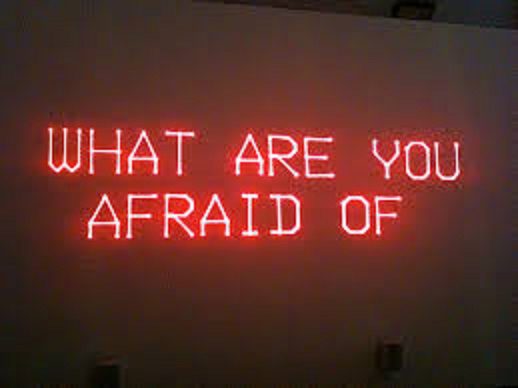
Iris Murdoch once suggested that one of the best questions one can ask oneself regularly is “What are you afraid of?” If our consistent answer is “those who are most unlike us,” it is time to consider the possibility that we are turning others into what we are most uncomfortable with and fear about ourselves. The first steps toward naming my demons begin with identifying those persons and situations I am most uncomfortable with and asking “what am I so afraid of? What is its name?” Just like vampires, our demons cannot survive when we shine light on them.
In the story from Luke, after Jesus casts the demons into the pigs, the news spreads quickly and the community comes to see the healed man “clothed and in his right mind.” Jesus is a rock star because he has made a man who everyone avoided like the plague whole again and the townspeople invite Jesus and the man into their town for a big celebration. Well . . . not so much. Instead, “all the people of the surrounding country of the Gerasenes asked Jesus to leave them; for they were seized with great fear.”
There’s that “f” word again—what were these people afraid of? Their disturbing reaction to the healing of a tormented and troubled neighbor raises another important question. Not only does each of us need to ask “what am I afraid of?” but each of us also needs to ask “do I want to be free of that fear?” For years, the residents of Gerasa were very clear about who this demon-possessed man was and how to handle him. “Stay away from him.” “Don’t let the kids go near the cemetery where he lurks unaccompanied.” “He’s dangerous.” “There’s no hope for him—best to ignore him as much as possible.” But now, all of a sudden, everything has changed.
Dealing with demons is a risky business. Risky because I might be so used to and comfortable with my demons that I cannot imagine life without them. As Jesus asked the man at the pool of Bethsaida, “do you want to be made whole?” Although we might deny it, the immediate answer for many of us is undoubtedly “I’m not so sure.” I can’t imagine myself without my prejudices, my preconceptions, my weaknesses—many of which I did not choose but which have defined me for longer than I can remember.
This is also risky for those around me, because now all of their preconceptions are brought to light as well. All of the categories that defined the previously demon-possessed man—someone to be avoided, a dangerous person, insane, and so on—now have to be rethought. More generally, they have discovered that the “Other” is exactly the same as they are.
Retooling our preconceptions and discovering what is common among us rather than what divides us is very difficult work, work that directly challenges our comfortable categorizations. Do we really want to know that those whom we regularly keep at arm’s length are, regardless of religious commitment, race, or sexual orientation exactly the same as we are in every respect that matters? The citizens of Gerasa knew that what had just happened to the demon-possessed man was a total game changer—and they were not ready or willing to play the new game.
We are not told how they responded to the newly healed man over time, but we do know that they asked the man responsible for the healing to leave. Naming our demons requires also taking responsibility for what comes afterward—a radical retooling and rethinking of everything we think, say, and do. That’s a lot of work—it’s a lot easier just to hang on to our demons. Unless we actually want to be made well.
Previous Post

September 21, 2017
Flesh and Blood
Next Post

September 29, 2017 What Happiness Really Amounts To
Browse Our Archives
Select a Category abortion Advent AI Angels Artificial intelligence atheism attention baptism Baptists beauty belief Benedictines Bible bicycling Big Bird books Bovina Camaldoli hermitage Canada Catholicism cats certainty change Christianity Christmas Collegeville Covid-19 creativity Development of Western Civilization dogs doubt Easter Enneagram Epiphany Episcopal ethics Eucharist evil extroverts Facebook faith family fear flowers forgiveness freedom friends God goodness grace happiness heaven hell history Holy Spirit Holy Week hope human nature humility humor idolatry incarnation introverts irreverence Islam Jeanne Jesus Joe Biden joy Judaism justice Kamala Harris knowledge Lent listen literature liturgy love Marsue Memorial Day miracles movies music mystery mythology NPR Old Testament optimism paradox peace Penguins philosophy piano podcast politics power prayer Protestantism Providence College Religion Rhode Island sabbatical sacrament science seeing silence Simone Weil Socrates soul sports St. John's College stories suffering tattoo teaching technology television theology thinking time tolerance transcendence travel trees trust truth Uncategorized Vermont wisdom wonder writing
Select a Month May 2026 April 2026 March 2026 February 2026 January 2026 December 2025 November 2025 October 2025 September 2025 August 2025 July 2025 June 2025 May 2025 April 2025 March 2025 February 2025 January 2025 December 2024 November 2024 October 2024 September 2024 August 2024 July 2024 June 2024 May 2024 April 2024 March 2024 February 2024 January 2024 December 2023 November 2023 October 2023 September 2023 August 2023 July 2023 June 2023 May 2023 April 2023 March 2023 February 2023 January 2023 December 2022 November 2022 October 2022 September 2022 August 2022 July 2022 June 2022 May 2022 April 2022 March 2022 February 2022 January 2022 December 2021 November 2021 October 2021 September 2021 August 2021 July 2021 June 2021 May 2021 April 2021 March 2021 February 2021 January 2021 December 2020 November 2020 October 2020 September 2020 August 2020 July 2020 June 2020 May 2020 April 2020 March 2020 February 2020 January 2020 December 2019 November 2019 October 2019 September 2019 August 2019 July 2019 June 2019 May 2019 April 2019 March 2019 February 2019 January 2019 December 2018 November 2018 October 2018 September 2018 August 2018 July 2018 June 2018 May 2018 April 2018 March 2018 February 2018 January 2018 December 2017 November 2017 October 2017 September 2017 August 2017 July 2017 June 2017 May 2017 April 2017 March 2017 February 2017 January 2017 December 2016 November 2016 October 2016 September 2016 August 2016 July 2016 June 2016 May 2016 April 2016 March 2016 February 2016 January 2016 December 2015 November 2015 October 2015 September 2015 August 2015 July 2015 June 2015 May 2015 April 2015 March 2015 February 2015 January 2015 December 2014 November 2014 October 2014 September 2014 August 2014 July 2014 June 2014 May 2014 April 2014 March 2014 February 2014 January 2014 December 2013 November 2013 October 2013 September 2013 August 2013 July 2013 June 2013 May 2013 April 2013 March 2013 February 2013 January 2013 December 2012 November 2012 October 2012 September 2012
Follow Us!
TAKE THE
Religious Wisdom Quiz
What queen led Israel into idol worship with Ahab?
Select your answer to see how you score.
Jezebel Athaliah Vashti Bathsheba
Books by This Author Books by Vance G. Morgan
Related posts from Freelance Christianity

The Lonely Pawn: On Faith, Doubt, and Meaning


AI and Love: When a Chatbot Becomes a...

TRENDING AT PATHEOS Progressive Christian

What Being a Modern-Day Apostle Means to Me
In my last column, I discussed the ins and outs of modern-day...

Did Ancient China Once Worship the God of...
Across human history, a common thread weaves through the origins of the...

Love Your Neighbor – Including Earth-Kin: Lev. 19,...
God’s command to love your neighbor means acting in an ethical and...

Lead a Church Study of “Jesus and Lao...
Guest writer Jack Thomas (The Irreverent Reverend) reflects on leading his church...

Pastoral Wisdom for Responding to Sermon Pushback
Getting sermon pushback on your social justice sermon? Learn practical, Proverbs-based strategies...

Principles for Understanding the Apostolic Ministry Today
Whenever people discover that my formal ministry title is "apostle," as in...
view all Progressive Christian blogs
Ad-Free & Subscriber Log-In Subscription Support
- About Us
- 2026 Calendar
- Videos
- Podcasts
- Library of World Religions
- Faith In Media Tracker
- Advertise With Us
- Write for Us
- Privacy Policy
- Terms of Service
- Do Not Sell My Data
- Contact Us
- Radiant Digital
- Manage Newsletter Subscriptions
- Unsubscribe From Notifications
- Sitemap
Copyright 2008-2026, Patheos. All rights reserved.
Subscription Support Ad-Free & Subscriber Log-In
Follow Patheos