
BuddhistCatholicContemplativeEvangelicalGeneral ChristianHinduJewishLatter-day SaintMuslimNew VisionsProgressive Christian
Beliefs
- Buddhist
- Catholic
- Contemplative
- Evangelical
- General Christian
- Hindu
- Jewish
- Latter-day Saint
- More Voices
- Muslim
- New Visions
- Pagan
- Progressive Christian
Topics
- Religion News
- Food and Religion
- Sports and Religion
- Religious Art
- Religious Music and Entertainment
- Religious Events
- History and Religion
- Style and Religion
- Politics and Religion
- Women in Religion
- Recreation Outdoors and Religion
- Business Finance and Religion
- Careers Workplace and Religion
- Education and Religion
- Family Parenting and Religion
- Health Fitness and Religion
- Home and Religion
- Relationships and Religion
- Technology and Religion
- Travel and Religion
Columnists
- Buddhist Columnists
- Business Finance and Religion Columnists
- Careers Workplace and Religion Columnists
- Catholic Columnists
- Contemplative Columnists
- Education and Religion Columnists
- Evangelists Columnists
- Family Parenting and Religion Columnists
- General Christian Columnists
- Health Fitness and Religion Columnists
- Hindu Columnists
- History and Religion Columnists
- Home and Religion Columnists
- Jewish Columnists
- More Voices Columnists
- Latter Day Columnists
- Muslim Columnists
- New Visions Columnists
- Nonreligious Columnists
- Pagan Columnists
- Politics and Religion Columnists
- Progressive Columnists
- Recreation Outdoors and Religion Columnists
- Relationships and Religion Columnists
- Religion News Columnists
- Religious Art Columnists
- Religious Events Columnists
- Religious Music and Entertainment Columnists
- Sports and Religion Columnists
- Style and Religion Columnists
- Technology and Religion Columnists
- Travel and Religion Columnists
- Women in Religion Columnists
Resource Library
- 2026 Calendar
- Library of World Religions
- The 100 Most Holy Places on Earth
- Patheos Answers
- Podcasts
- Videos
- Faith Leaders Database
- Anglican Episcopalian
- Bahai
- Baptist
- Buddhism
- Christianity
- Confucianism
- Eastern Orthodoxy
- Hinduism
- Holiness and Pentecostal
- ISKCON
- Islam
- Judaism
- Lutheran
- Methodist
- The Church of Jesus Christ of Latter-day Saints
- New Age
- Paganism
- Presbytarian and Reformed
- Protestantism
- Religion Behind the Scenes
- Roman Catholic
- Scientology
- Shia Islam
- Sikhism
- Sufism
- Sunni Islam
- Taoism
- Zen
- See all religions
Research Tools
 Ad-Free & Subscriber Log-In Subscription Support
Ad-Free & Subscriber Log-In Subscription Support
Follow Patheos 

- Trending:
- Forgiveness
- |
- Marriage
- |
- Consciousness
- |
- Death Penalty
- |
- Election
- |
- Halloween

- Home
- Progressive Christian
- My Relationship with the Word of God
My Relationship with the Word of God
Last updated on: October 24, 2023 at 6:00 am by Vance Morgan
My Relationship with the Word of God 2023-10-23T13:25:54-04:00 Vance Morgan
Patheos Explore the world's faith through different perspectives on religion and spirituality! Patheos has the views of the prevalent religions and spiritualities of the world.
My two sabbatical book projects have, without my explicitly planning it, turned out to be in rhythms that compliment each other well. The first draft of my teaching memoir is in the hands of two trusted colleague friends, probabably for the next two or three week at the very least. My attention has turned to my other book project, one that I have mentioned less often on this blog. Tentatively titled The Freelance Christian’s Guide to the Liturgical Year, this book is my attempt to show, within the structure of the liturgical calendar from Advent through Ordinary Time, how the ebb and flow of liturgical worship and lectionary readings have deepened and enriched my spiritual growth over the past four decades. I sent a full draft (minus introduciton and conclusion) to a couple of close friends during the summer; they sent their very helpful comments and insights to me in early September, just as I was in the midst of the first draft of the other book.
Although I’m hoping that this book will be of interest to all sorts of people, I’m aiming it first at people whose religious pedigree is similar to mine, namely those who were born into and perhaps remain in faith traditions for whom concepts like “Advent,” “Epiphany,” and “Lent” are foreign. I am working on the introduction this week (I always write the introduction to a book last). As I do so, I am reminded of just how formative my early exposure to sacred texts has been in my life.
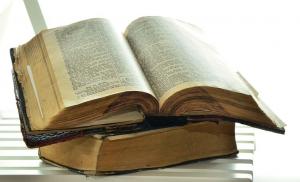 I come from a very evangelical, fundamentalist Protestant world, where I learned that when the Bible is referred to as the “Word of God,” it means that every word of it is literally true. Before the time I hit double digits in age, I was pretty sure that didn’t make sense; my Sunday School questions about how everything in this book could be true when it contradicts itself regularly were greeted first with “just believe it,” then with an invitation to leave the Sunday School room.
Part of being a young person in my Baptist church was memorizing Bible verses. From the time I was six years old, I spent twelve to fifteen weeks per year memorizing verses, then reciting them to my “hearer” (who was usually my aunt) on Sunday. At age six, I memorized four verses per week. By the time I was in high school, I was memorizing as many as fifteen verses per week, often one extended passage. All of the young folk did this; we earned various prizes throughout the process, capped with a week at Bible camp in the summer (I despised Bible Memory Association Camp, which went by the name “Miracle Camp”).
My brother did it, my cousins did it, my church friends did it, the girl to whom I would be married for eleven years in the future did it. I don’t remember anyone particularly complaining about this forced memorization; neither do I recall that anyone enjoyed it. It was simply a rite of passage—one that left hundreds of Bible texts in my memory files by the time I went to college. And by the way, I also read the Bible through each year from cover to cover, following a “Through the Bible In a Year” pamphlet provided by the church at the beginning of the new year, from when I was around 10 until I graduated from high school.
It truly wasn’t until I was in my early thirties and entered the college classroom as a newly-minted professor for the first time that I began to realize just how deeply the Bible had shaped me. I had stopped believing that the book is the literal “Word of God” years before, but its stories, lessons, quirks, contradictions, rants, genealogies, wild and crazy prophecies, and moralizing were part of my DNA. I’m a philosophy professor, not a theologian or religious studies scholar, so I wasn’t using the Bible to preach, proselytize, or convict. I was using it to illustrate the best and worst that human beings can be, the various ways that different cultures over time have sought to understand and describe what is greater than us and our relationship to it. I still do this—there are few classes during which I don’t pull something out of my memory banks from the Bible that is relevant to whatever is on the table for discussion.
When advising incoming freshmen to my college concerning how to best prepare for the large interdisciplinary humanities program that is the centerpiece of our required core curriculum, a program required of all freshmen and sophomores, I always say the same thing. “Know your Greek mythology, and know your Bible. Not as the ‘Word of God’ to be handled reverently with kid gloves, but as arguably the most influential book in the Western literary tradition. You will not be able to understand the literature of the West if you don’t know the Bible well.”
Away from my professional life as a teacher, my relationship to the Bible is a challenging one to describe. It is not my moral touchstone or guide in the way that many persons of faith might describe it. It certainly isn’t my go-to source for answers to tough questions. My relationship with the Bible is more like my relationship with the weather—it’s both as familiar as the air that I breathe and as unpredictable as the wind. It truly is part of me, not always in ways that I appreciate. I frequently am asked, particularly by readers of this blog, whether I believe that the Bible is “the Word of God.” I used to answer “that depends on what you mean by ‘Word’ and ‘God,’” which didn’t turn out to be a very effective response. Now I tell a story, one that I have told occasionally on this blog.
One Sunday evening over forty years ago, I heard a well-known and much-loved Baptist minister, a family friend and the godfather of my firstborn son, say something shocking from the pulpit. He lifted his well-worn Bible above his head with his right arm and said in a loud voice: “This is not the Word of God!” Gasps filled the sanctuary, followed by an uncomfortable silence. After a dramatic pause of several moments, he continued. “This is just ink on paper between leather covers. This is just a book. This becomes the Word of God when the Holy Spirit makes it so to each of us individually.”
My son’s godfather was right. The divine word changes and grows in each of us, often in apparent conflict with what we thought was already fixed and settled. When temptations arise to find security and safety in inflexible interpretations of scripture, it is worth taking the words of Paul to the church at Corinth to heart: “The letter kills, but the Spirit gives life.”;
Previous Post
October 22, 2023
Pragmatic Love
Next Post
October 26, 2023 What is the Most Awesome Country, and Why is it Canada?
Recent Comments
"Mary did have a choice. And she was able to make it before the Holy ..."
"i cannot read beyond your recommendations for the books since i like to have a ..."
"AI will never be able to utter with honesty, feeling, or humility, the greeting: "Namaste".It ..."
"They do. I'm sure you could find discussions of the same topic from any of ..."
Browse Our Archives
Select a Category abortion Advent AI Angels Artificial intelligence atheism attention baptism Baptists beauty belief Benedictines Bible bicycling Big Bird books Bovina Camaldoli hermitage Canada Catholicism cats certainty change Christianity Christmas Collegeville Covid-19 creativity Development of Western Civilization dogs doubt Easter Enneagram Epiphany Episcopal ethics Eucharist evil extroverts Facebook faith family fear flowers forgiveness freedom friends God goodness grace happiness heaven hell history Holy Spirit Holy Week hope human nature humility humor idolatry incarnation introverts irreverence Islam Jeanne Jesus Joe Biden joy Judaism justice Kamala Harris knowledge Lent listen literature liturgy love Marsue Memorial Day miracles movies music mystery mythology NPR Old Testament optimism paradox peace Penguins philosophy piano podcast politics power prayer Protestantism Providence College Religion Rhode Island sabbatical sacrament science seeing silence Simone Weil Socrates soul sports St. John's College stories suffering tattoo teaching technology television theology thinking time tolerance transcendence travel trees trust truth Uncategorized Vermont wisdom wonder writing
Select a Month May 2026 April 2026 March 2026 February 2026 January 2026 December 2025 November 2025 October 2025 September 2025 August 2025 July 2025 June 2025 May 2025 April 2025 March 2025 February 2025 January 2025 December 2024 November 2024 October 2024 September 2024 August 2024 July 2024 June 2024 May 2024 April 2024 March 2024 February 2024 January 2024 December 2023 November 2023 October 2023 September 2023 August 2023 July 2023 June 2023 May 2023 April 2023 March 2023 February 2023 January 2023 December 2022 November 2022 October 2022 September 2022 August 2022 July 2022 June 2022 May 2022 April 2022 March 2022 February 2022 January 2022 December 2021 November 2021 October 2021 September 2021 August 2021 July 2021 June 2021 May 2021 April 2021 March 2021 February 2021 January 2021 December 2020 November 2020 October 2020 September 2020 August 2020 July 2020 June 2020 May 2020 April 2020 March 2020 February 2020 January 2020 December 2019 November 2019 October 2019 September 2019 August 2019 July 2019 June 2019 May 2019 April 2019 March 2019 February 2019 January 2019 December 2018 November 2018 October 2018 September 2018 August 2018 July 2018 June 2018 May 2018 April 2018 March 2018 February 2018 January 2018 December 2017 November 2017 October 2017 September 2017 August 2017 July 2017 June 2017 May 2017 April 2017 March 2017 February 2017 January 2017 December 2016 November 2016 October 2016 September 2016 August 2016 July 2016 June 2016 May 2016 April 2016 March 2016 February 2016 January 2016 December 2015 November 2015 October 2015 September 2015 August 2015 July 2015 June 2015 May 2015 April 2015 March 2015 February 2015 January 2015 December 2014 November 2014 October 2014 September 2014 August 2014 July 2014 June 2014 May 2014 April 2014 March 2014 February 2014 January 2014 December 2013 November 2013 October 2013 September 2013 August 2013 July 2013 June 2013 May 2013 April 2013 March 2013 February 2013 January 2013 December 2012 November 2012 October 2012 September 2012
Follow Us!
TAKE THE
Religious Wisdom Quiz
True or False: John's Gospel does not record any parables.
Select your answer to see how you score.
TRUE FALSE
Books by This Author Books by Vance G. Morgan
Related posts from Freelance Christianity

The Lonely Pawn: On Faith, Doubt, and Meaning


AI and Love: When a Chatbot Becomes a...

TRENDING AT PATHEOS Progressive Christian

Why Christians Have a Sacred Duty to Vote:...
The Bible offers strong support for the sacred duty to vote. Here...

What Being a Modern-Day Apostle Means to Me
In my last column, I discussed the ins and outs of modern-day...

Did Ancient China Once Worship the God of...
Across human history, a common thread weaves through the origins of the...

Love Your Neighbor – Including Earth-Kin: Lev. 19,...
God’s command to love your neighbor means acting in an ethical and...

Lead a Church Study of “Jesus and Lao...
Guest writer Jack Thomas (The Irreverent Reverend) reflects on leading his church...

Principles for Understanding the Apostolic Ministry Today
Whenever people discover that my formal ministry title is "apostle," as in...
view all Progressive Christian blogs
What Are Your Thoughts?leave a comment
Ad-Free & Subscriber Log-In Subscription Support
- About Us
- 2026 Calendar
- Videos
- Podcasts
- Library of World Religions
- Faith In Media Tracker
- Advertise With Us
- Write for Us
- Privacy Policy
- Terms of Service
- Do Not Sell My Data
- Contact Us
- Radiant Digital
- Manage Newsletter Subscriptions
- Unsubscribe From Notifications
- Sitemap
Copyright 2008-2026, Patheos. All rights reserved.
Subscription Support Ad-Free & Subscriber Log-In
Follow Patheos