
BuddhistCatholicContemplativeEvangelicalGeneral ChristianHinduJewishLatter-day SaintMuslimNew VisionsProgressive Christian
Beliefs
- Buddhist
- Catholic
- Contemplative
- Evangelical
- General Christian
- Hindu
- Jewish
- Latter-day Saint
- More Voices
- Muslim
- New Visions
- Pagan
- Progressive Christian
Topics
- Religion News
- Food and Religion
- Sports and Religion
- Religious Art
- Religious Music and Entertainment
- Religious Events
- History and Religion
- Style and Religion
- Politics and Religion
- Women in Religion
- Recreation Outdoors and Religion
- Business Finance and Religion
- Careers Workplace and Religion
- Education and Religion
- Family Parenting and Religion
- Health Fitness and Religion
- Home and Religion
- Relationships and Religion
- Technology and Religion
- Travel and Religion
Columnists
- Buddhist Columnists
- Business Finance and Religion Columnists
- Careers Workplace and Religion Columnists
- Catholic Columnists
- Contemplative Columnists
- Education and Religion Columnists
- Evangelists Columnists
- Family Parenting and Religion Columnists
- General Christian Columnists
- Health Fitness and Religion Columnists
- Hindu Columnists
- History and Religion Columnists
- Home and Religion Columnists
- Jewish Columnists
- More Voices Columnists
- Latter Day Columnists
- Muslim Columnists
- New Visions Columnists
- Nonreligious Columnists
- Pagan Columnists
- Politics and Religion Columnists
- Progressive Columnists
- Recreation Outdoors and Religion Columnists
- Relationships and Religion Columnists
- Religion News Columnists
- Religious Art Columnists
- Religious Events Columnists
- Religious Music and Entertainment Columnists
- Sports and Religion Columnists
- Style and Religion Columnists
- Technology and Religion Columnists
- Travel and Religion Columnists
- Women in Religion Columnists
Resource Library
- 2026 Calendar
- Library of World Religions
- The 100 Most Holy Places on Earth
- Patheos Answers
- Podcasts
- Videos
- Faith Leaders Database
- Anglican Episcopalian
- Bahai
- Baptist
- Buddhism
- Christianity
- Confucianism
- Eastern Orthodoxy
- Hinduism
- Holiness and Pentecostal
- ISKCON
- Islam
- Judaism
- Lutheran
- Methodist
- The Church of Jesus Christ of Latter-day Saints
- New Age
- Paganism
- Presbytarian and Reformed
- Protestantism
- Religion Behind the Scenes
- Roman Catholic
- Scientology
- Shia Islam
- Sikhism
- Sufism
- Sunni Islam
- Taoism
- Zen
- See all religions
Research Tools
 Ad-Free & Subscriber Log-In Subscription Support
Ad-Free & Subscriber Log-In Subscription Support
Follow Patheos 

- Trending:
- Forgiveness
- |
- Marriage
- |
- Consciousness
- |
- Death Penalty
- |
- Election
- |
- Halloween

- Home
- Progressive Christian
- My Own Skin
My Own Skin
Last updated on: November 6, 2013 at 7:30 am by Vance Morgan
My Own Skin 2013-11-06T07:30:45-04:00 Vance Morgan
Patheos Explore the world's faith through different perspectives on religion and spirituality! Patheos has the views of the prevalent religions and spiritualities of the world.
 As has happened more often in the last 25 years than I could possibly recall, Jeanne dropped something unexpected into my consciousness during a phone conversation several months ago. I was in Minnesota getting
 ready for a week-long retreat and conference; she was driving to Vermont on business and planned to see some close friends who we have not seen in a long time. “They’ll be wondering how you are doing,” she said. “I think I’ll just say that you’re comfortable in your own skin. You’re just comfortable with who you are.” Somewhat taken aback, in response I said something lame like, “Well I guess that’s true some of the time but not all of the time.” But long after the phone call that phrase—“comfortable in your own skin”—remained embedded in my brain. It certainly wasn’t the first time I’ve heard the phrase, but it was definitely the first time that I ever heard someone use it to describe me.
Recent Sunday gospels have provided me with some insight into this “comfortable in your own skin” thing. For instance, a few weeks ago we heard the highlights of just another random day in Jesus’ life in Mark’s usual straightforward and sometimes uncomfortably honest style. In Mark’s gospel, we get the sense that Jesus knew who he was—and I’m primarily referring to who he was as a human being, not that he was the Son of God. He knew his gifts and talents, what he had to offer. And he knew his limitations.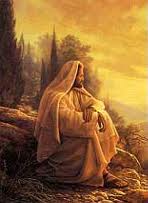 He knew, for instance, that he was an introvert. That is why the gospels so often report him as trying to get away from the daily crowds pressing around and demanding things from him. That explains why at the beginning of this gospel we find him sneaking into the back door of someone’s house because he “did not want anyone to know he was there.” But of course it doesn’t work,
  and in short order a Syrophoenician woman is begging him to cast a demon out of her daughter.
Jesus’ response to this Gentile woman is spectacularly dismissive: “Let the children be fed first, for it is not fair to take the children’s food and throw it to the dogs.” What’s wrong with him? Does he say this because she’s a Gentile? A woman? Both? Whatever his problem is, this vignette certainly doesn’t fit the traditional picture of “gentle Jesus, meek and mild,” who accepted and loved everyone without exception all the time. This doesn’t look like the Sermon on the Mount in action. This sounds more like what a narrow-minded, judgmental jerk might say, the sort of thing that we all have thought but probably pride ourselves in never actually saying out loud. Is this the Son of God, the Savior of the World?
Strangely, that often seems to be a question that Jesus is asking himself in Mark’s gospel. One thing’s for sure—this is the reaction of a tired, worn-out human being who would like to have his first day off in three years. But then Jesus does something remarkable—he realizes that he is wrong and, by his actions, apologizes for his rudeness. The woman’s clever and intelligent response— “Sir, even the dogs under the table eat the children’s crumbs”—reveals to Jesus just how wrong his first response was. “Touché,” he says (or at least thinks), and then casts out the demon from the woman’s daughter from long distance.
Jesus having a bad day—not exactly what we are asked to consider on a regular basis when in “religious mode.” But this is a powerful passage because it reveals Jesus as a total package, in his full humanity. This is a Jesus I can relate to far more easily than the traditional description of Jesus who is so far removed from my own human weaknesses and foibles as to be unapproachable. I get no sense that Jesus on a bad day berates or kicks himself for not being his best self. Instead, he still is able to listen in spite of his limitations, to change, and to embrace his complete humanity. That, I take it, is what being comfortable in your own skin is all about.
Several weeks ago, I went to the philosophy department on lower campus to pick up my office mail  for the first time in a week. Being director of a large program on campus precludes me from getting to the philosophy department more than once or twice a week, unfortunate because my philosophy department office is beautiful and peaceful, while my other office is often the vortex of an administrative whirlwind. It was late in the afternoon of a long day filled with meetings, admistratia, containing none of the parts of the academic life that give me energy. As I sifted through a small pile of book catalogs, memos, junk mail, hoping to find at least one thing that would make my trip to the department worthwhile, I let out a deep sigh. From inside the office on the other side of the mailbox-bank wall, I heard a voice call out: “Long day, Vance?” It was Michael, our current department chair who now occupies the office that I occupied several years ago when I was department chair. “How did you know it was me?” I asked. “I recognized your sigh,” Michael replied. “No one sighs like you do.”
 Wonderful—my sigh of frustration due to overwork is my most recognizable calling card. But shortly after his exchange with the Syrophoenician woman, Jesus encounters a deaf man with a speech impediment. This time Jesus seems to make it up as he goes along, sticking his fingers in the guy’s ears and spitting on his tongue. “Then looking up to heaven, he sighed and said to him, ‘Ephphatha,’ that is, ‘Be opened.’ And immediately his ears were opened, his tongue was released, and he spoke plainly.” He sighed—he may still be tired and having a bad day. But Jesus knew who he was and was comfortable in his own skin. His halo did not need to be in place for him to accomplish miraculous things.
 Such things flowed from his core naturally even when his halo was askew. That’s worth remembering—my own sighs and impatience are as much a part of me as my best teaching moments. To the extent that I remember that the best that is in me need not be hindered by my less-than-best, even on an off day, to that same extent I’m becoming comfortable in my own skin. And that’s good because it is, after all, not only the only skin I’ve got—it’s the skin that the divine lives in.
Previous Post

November 4, 2013
More Random Thoughts
Next Post
November 8, 2013 Not the Dead, but the Living
Browse Our Archives
Select a Category abortion Advent AI Angels Artificial intelligence atheism attention baptism Baptists beauty belief Benedictines Bible bicycling Big Bird books Bovina Camaldoli hermitage Canada Catholicism cats certainty change Christianity Christmas Collegeville Covid-19 creativity Development of Western Civilization dogs doubt Easter Enneagram Epiphany Episcopal ethics Eucharist evil extroverts Facebook faith family fear flowers forgiveness freedom friends God goodness grace happiness heaven hell history Holy Spirit Holy Week hope human nature humility humor idolatry incarnation introverts irreverence Islam Jeanne Jesus Joe Biden joy Judaism justice Kamala Harris knowledge Lent listen literature liturgy love Marsue Memorial Day miracles movies music mystery mythology NPR Old Testament optimism paradox peace Penguins philosophy piano podcast politics power prayer Protestantism Providence College Religion Rhode Island sabbatical sacrament science seeing silence Simone Weil Socrates soul sports St. John's College stories suffering tattoo teaching technology television theology thinking time tolerance transcendence travel trees trust truth Uncategorized Vermont wisdom wonder writing
Select a Month May 2026 April 2026 March 2026 February 2026 January 2026 December 2025 November 2025 October 2025 September 2025 August 2025 July 2025 June 2025 May 2025 April 2025 March 2025 February 2025 January 2025 December 2024 November 2024 October 2024 September 2024 August 2024 July 2024 June 2024 May 2024 April 2024 March 2024 February 2024 January 2024 December 2023 November 2023 October 2023 September 2023 August 2023 July 2023 June 2023 May 2023 April 2023 March 2023 February 2023 January 2023 December 2022 November 2022 October 2022 September 2022 August 2022 July 2022 June 2022 May 2022 April 2022 March 2022 February 2022 January 2022 December 2021 November 2021 October 2021 September 2021 August 2021 July 2021 June 2021 May 2021 April 2021 March 2021 February 2021 January 2021 December 2020 November 2020 October 2020 September 2020 August 2020 July 2020 June 2020 May 2020 April 2020 March 2020 February 2020 January 2020 December 2019 November 2019 October 2019 September 2019 August 2019 July 2019 June 2019 May 2019 April 2019 March 2019 February 2019 January 2019 December 2018 November 2018 October 2018 September 2018 August 2018 July 2018 June 2018 May 2018 April 2018 March 2018 February 2018 January 2018 December 2017 November 2017 October 2017 September 2017 August 2017 July 2017 June 2017 May 2017 April 2017 March 2017 February 2017 January 2017 December 2016 November 2016 October 2016 September 2016 August 2016 July 2016 June 2016 May 2016 April 2016 March 2016 February 2016 January 2016 December 2015 November 2015 October 2015 September 2015 August 2015 July 2015 June 2015 May 2015 April 2015 March 2015 February 2015 January 2015 December 2014 November 2014 October 2014 September 2014 August 2014 July 2014 June 2014 May 2014 April 2014 March 2014 February 2014 January 2014 December 2013 November 2013 October 2013 September 2013 August 2013 July 2013 June 2013 May 2013 April 2013 March 2013 February 2013 January 2013 December 2012 November 2012 October 2012 September 2012
Follow Us!
TAKE THE
Religious Wisdom Quiz
Who was the first high priest of Israel?
Select your answer to see how you score.
Aaron Moses Caleb Joshua
Books by This Author Books by Vance G. Morgan
Related posts from Freelance Christianity

The Lonely Pawn: On Faith, Doubt, and Meaning


AI and Love: When a Chatbot Becomes a...

TRENDING AT PATHEOS Progressive Christian

What Being a Modern-Day Apostle Means to Me
In my last column, I discussed the ins and outs of modern-day...

Did Ancient China Once Worship the God of...
Across human history, a common thread weaves through the origins of the...

Love Your Neighbor – Including Earth-Kin: Lev. 19,...
God’s command to love your neighbor means acting in an ethical and...

Lead a Church Study of “Jesus and Lao...
Guest writer Jack Thomas (The Irreverent Reverend) reflects on leading his church...

Pastoral Wisdom for Responding to Sermon Pushback
Getting sermon pushback on your social justice sermon? Learn practical, Proverbs-based strategies...

Principles for Understanding the Apostolic Ministry Today
Whenever people discover that my formal ministry title is "apostle," as in...
view all Progressive Christian blogs
Ad-Free & Subscriber Log-In Subscription Support
- About Us
- 2026 Calendar
- Videos
- Podcasts
- Library of World Religions
- Faith In Media Tracker
- Advertise With Us
- Write for Us
- Privacy Policy
- Terms of Service
- Do Not Sell My Data
- Contact Us
- Radiant Digital
- Manage Newsletter Subscriptions
- Unsubscribe From Notifications
- Sitemap
Copyright 2008-2026, Patheos. All rights reserved.
Subscription Support Ad-Free & Subscriber Log-In
Follow Patheos