
BuddhistCatholicContemplativeEvangelicalGeneral ChristianHinduJewishLatter-day SaintMuslimNew VisionsProgressive Christian
Beliefs
- Buddhist
- Catholic
- Contemplative
- Evangelical
- General Christian
- Hindu
- Jewish
- Latter-day Saint
- More Voices
- Muslim
- New Visions
- Pagan
- Progressive Christian
Topics
- Religion News
- Food and Religion
- Sports and Religion
- Religious Art
- Religious Music and Entertainment
- Religious Events
- History and Religion
- Style and Religion
- Politics and Religion
- Women in Religion
- Recreation Outdoors and Religion
- Business Finance and Religion
- Careers Workplace and Religion
- Education and Religion
- Family Parenting and Religion
- Health Fitness and Religion
- Home and Religion
- Relationships and Religion
- Technology and Religion
- Travel and Religion
Columnists
- Buddhist Columnists
- Business Finance and Religion Columnists
- Careers Workplace and Religion Columnists
- Catholic Columnists
- Contemplative Columnists
- Education and Religion Columnists
- Evangelists Columnists
- Family Parenting and Religion Columnists
- General Christian Columnists
- Health Fitness and Religion Columnists
- Hindu Columnists
- History and Religion Columnists
- Home and Religion Columnists
- Jewish Columnists
- More Voices Columnists
- Latter Day Columnists
- Muslim Columnists
- New Visions Columnists
- Nonreligious Columnists
- Pagan Columnists
- Politics and Religion Columnists
- Progressive Columnists
- Recreation Outdoors and Religion Columnists
- Relationships and Religion Columnists
- Religion News Columnists
- Religious Art Columnists
- Religious Events Columnists
- Religious Music and Entertainment Columnists
- Sports and Religion Columnists
- Style and Religion Columnists
- Technology and Religion Columnists
- Travel and Religion Columnists
- Women in Religion Columnists
Resource Library
- 2026 Calendar
- Library of World Religions
- The 100 Most Holy Places on Earth
- Patheos Answers
- Podcasts
- Videos
- Faith Leaders Database
- Anglican Episcopalian
- Bahai
- Baptist
- Buddhism
- Christianity
- Confucianism
- Eastern Orthodoxy
- Hinduism
- Holiness and Pentecostal
- ISKCON
- Islam
- Judaism
- Lutheran
- Methodist
- The Church of Jesus Christ of Latter-day Saints
- New Age
- Paganism
- Presbytarian and Reformed
- Protestantism
- Religion Behind the Scenes
- Roman Catholic
- Scientology
- Shia Islam
- Sikhism
- Sufism
- Sunni Islam
- Taoism
- Zen
- See all religions
Research Tools
 Ad-Free & Subscriber Log-In Subscription Support
Ad-Free & Subscriber Log-In Subscription Support
Follow Patheos 

- Trending:
- Forgiveness
- |
- Marriage
- |
- Consciousness
- |
- Death Penalty
- |
- Election
- |
- Halloween

- Home
- Progressive Christian
- Love That Will Not Let Me Go
Love That Will Not Let Me Go
Last updated on: August 17, 2015 at 7:30 am by Vance Morgan
Love That Will Not Let Me Go 2015-08-17T07:30:27-04:00 Vance Morgan
Patheos Explore the world's faith through different perspectives on religion and spirituality! Patheos has the views of the prevalent religions and spiritualities of the world.
One of the required performances for a professor returning from sabbatical is a public talk on campus related to her or his research and writing during the months away from the classroom and campus.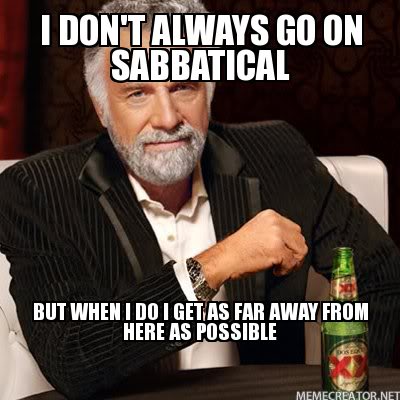 During the first weeks of my current sabbatical, I’ve been looking at some of the results of my Spring 2009 sabbatical, including the talk that I gave in Fall 2009 once I returned. Here is the beginning and end of it—a reminder of where I was then and where I have been going since then.
Introduction: The student of Western philosophy confronts a series of either/or dualisms which apparently demands that a side be taken on a number of matters, ranging from metaphysical through epistemological to ethical. Although contemporary philosophers have frequently and successfully attacked dualism in all areas of philosophy, surface level dualistic descriptions of the playing field are sometimes helpful in getting oriented to the strange and wonderful world of philosophy. After more than twenty-five years as a student and teacher of philosophy, I find that my own orientation on the dualistic playing field reveals some important patterns.
In no particular order of importance, I lean toward Heraclitus rather than Parmenides, Aristotle rather than Plato, Locke rather than Leibniz, 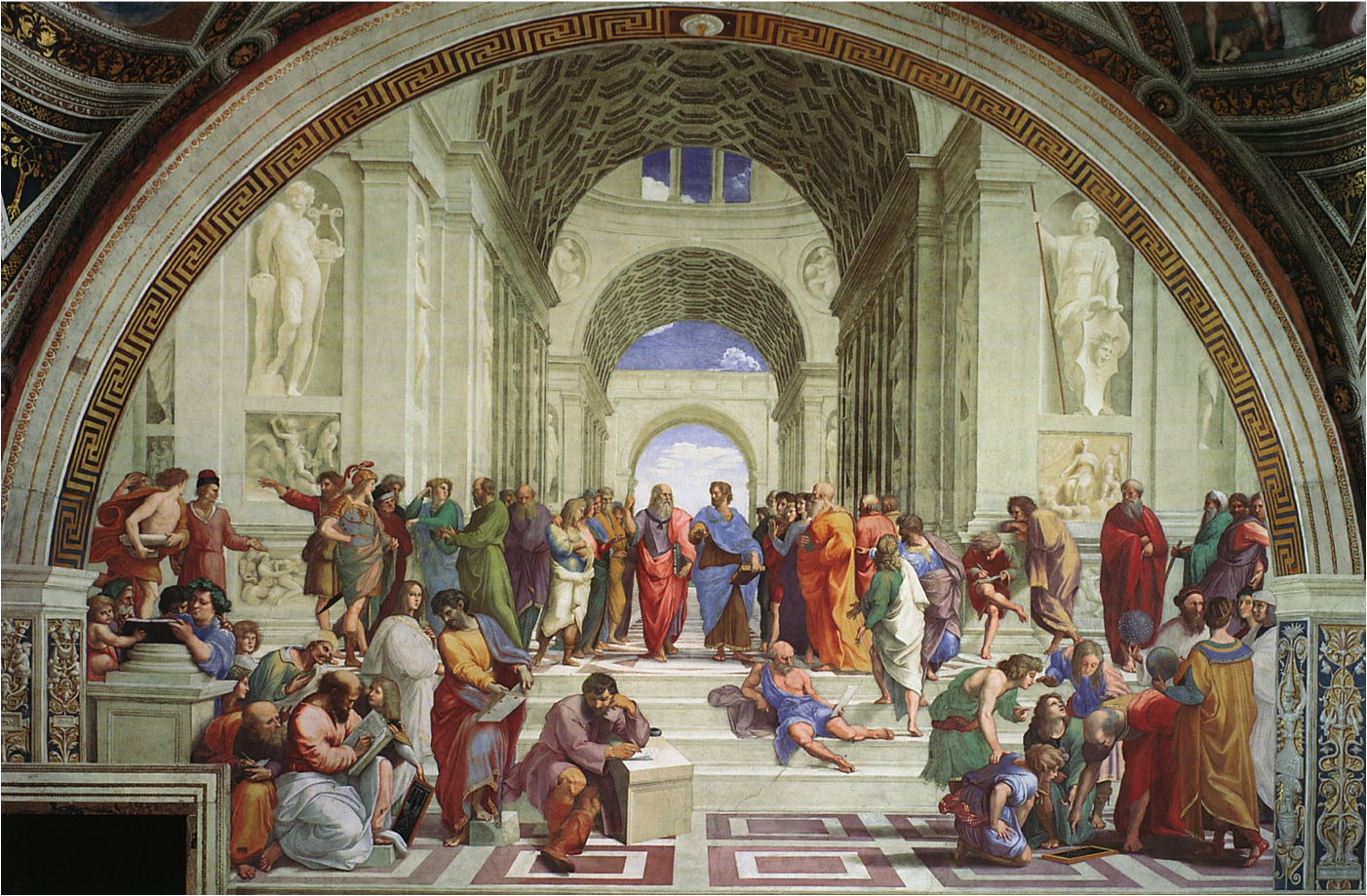 Aquinas rather than Augustine but Ockham rather than Aquinas, Hume rather than Kant but Kant rather than Hegel, empiricism rather than rationalism, realism rather than idealism, virtue ethics rather than rule oriented ethics, plurality rather than unity, Darwin rather than any of his multifarious opponents, Nietzsche rather than the majority of his opponents, the late Wittgenstein rather than the early Wittgenstein, and, in most cases, the particular rather than the universal. I can make intellectual arguments in favor of all of these inclinations, but I can also make arguments in support of the other side of the dualism in each instance—that’s what philosophers do. I simply know that I am philosophically most “at home” in a framework within which knowledge is constructed piecemeal from the bottom up through sense activity and experience rather than top down through the intuition or imposition of universal principles and truths.
  If there is such a thing as human nature apart from particular human beings, I believe it is, to use Flannery O’Connor’s wonderful phrase, “something under construction” rather than a fixed form. These preferences incline me toward doubt and open-endedness in epistemology, toward suspicion in metaphysics, and cause me to both embrace pluralism and venture close to the kingdom of relativism in ethics.
These preferences are also, at least at first look, in direct conflict with the religious worldview within which I was raised. In my conservative and fundamentalist Protestant upbringing, I was taught to believe in the literal inerrancy of the Bible, to accept dozens of statements and claims concerning God and His relationship to human beings as factually true and immune to challenge or question. To ask questions or to doubt, or at least to do these things publicly, was to reveal the weakness of my faith.  The primary reason for being a Christian, for being “born again,” was to be saved from hell and to go to heaven. The faith I was taught was largely a faith motivated by fear, resulting in a great deal of exclusivity toward and judgment of those who did not believe as we did.
I’m quite sure that one of the primary reasons I ended up in academia and the vocation of teaching was the working out of a very poor fit between the religion I was taught and the person that I naturally am. My natural resonance with questioning and doubt, as well as with what is particular, open-ended, provisional, “this-worldly,” and contingent prepared me well for the academic life and the vocation of teaching philosophy. It is, at the same time, at odds with the faith of my youth at almost every significant point. Yet my Christian faith is part of my heritage, my history, my tradition. It is not an item of clothing given to me as a child that I was free to take off once I “put away childish things.” It is part of my fabric, my DNA. And I have carried it uncomfortably for many years.
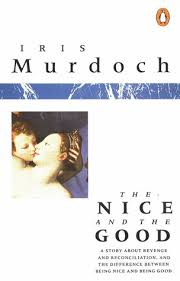 A friend’s question from long ago—“How can you be both a philosopher and a Christian?”—has lurked below the surface waiting to be addressed. One of the characters in Iris Murdoch’s novel The Nice and the Good speaks of “the faculty of colouring and structuring [one’s] surroundings into a moral habitation, the faculty which is sometimes called moral sense.” Many of the tools used to build a moral habitation come from one’s tradition and history, including one’s religion. A few years ago, I began the exhilarating but uncomfortable process of bringing the details of my faith up from below the surface where they had lain dormant for years, in the hope of finding for the first time ways to use the tools of my faith along with the tools of my vocation in constructing my moral habitation. How is that project going?
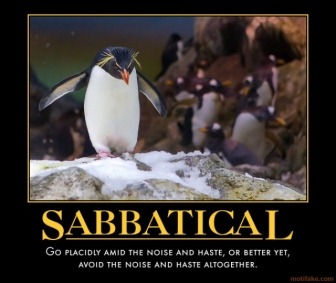 Conclusion Outside the windows of my sabbatical apartment, windows which stretch from floor to ceiling along the entire width of the south side of the apartment, is a beautiful lake.
  Over the months I lived there, I watched hundreds of birds of dozens of sorts alight on this lake, stay for a while, and then move on. Sometimes they just floated for a while before flying away. Sometimes they plunged beneath the surface for an uncomfortably long time, then popped up way on the other side of the lake. A few I saw only once; maybe they found a better, more private lake where people aren’t staring at them all the time. But the people who are permanent Minnesota residents rather than a visitor as I was say that there are some pairs of birds—all sorts of ducks, loons, grebes, Canadian geese, eagles—who come back every year. For at least a part of every year, Stumpf Lake in Collegeville, Minnesota is their home.
These days I think of faith as being like this lake. I spent time on this lake as a young child, and had no idea it was this big. The portion I thought was the whole world turns out to be the shallow part of one corner of the lake. Upon return, I’m discovering depths that no one’s ever found the bottom of. I’ve never been a big fan of the water, and I’m not a very good swimmer.  But I’m getting better at it, and I don’t need blow-up water wings to stay afloat any more. I’m not sure what I want to call this place where I’ve landed. It’s disturbingly new, yet absolutely familiar. I believe I’m entitled to call it Christianity; as my wife told me a few months ago, I can put whatever label I want on myself. The following from Annie Dillard describes this place pretty well.
I know only enough of God to want to worship him, by any means ready to hand. There is an anomalous specificity to all our experience in space, a scandal of particularity, by which God burgeons up or showers down into the shabbiest of occasions, and leaves his creation’s dealings with him in the hands of purblind and clumsy amateurs.
If the stories in the Bible have any truth to them, apparently God has an inexplicable love for “purblind and clumsy amateurs”— just look at the disciples and others who followed Jesus. Just look at me and everyone else I know who is trying the Christian incarnational narrative on for size. The only people who regularly annoyed Jesus were the people who professed to be something other than clumsy amateurs in matters of faith. But the root of “amateur” is “amator,” the Latin word for “lover.” And that’s what I find here—a love that will not let me go. I find that to be amazing.
And I still do. Thanks to those of you who have been sharing this journey with me on this blog!
Previous Post

August 14, 2015
Sabbatical Report--The Early Returns
Next Post
August 21, 2015 A Few Summer Observations
Browse Our Archives
Select a Category abortion Advent AI Angels Artificial intelligence atheism attention baptism Baptists beauty belief Benedictines Bible bicycling Big Bird books Bovina Camaldoli hermitage Canada Catholicism cats certainty change Christianity Christmas Collegeville Covid-19 creativity Development of Western Civilization dogs doubt Easter Enneagram Epiphany Episcopal ethics Eucharist evil extroverts Facebook faith family fear flowers forgiveness freedom friends God goodness grace happiness heaven hell history Holy Spirit Holy Week hope human nature humility humor idolatry incarnation introverts irreverence Islam Jeanne Jesus Joe Biden joy Judaism justice Kamala Harris knowledge Lent listen literature liturgy love Marsue Memorial Day miracles movies music mystery mythology NPR Old Testament optimism paradox peace Penguins philosophy piano podcast politics power prayer Protestantism Providence College Religion Rhode Island sabbatical sacrament science seeing silence Simone Weil Socrates soul sports St. John's College stories suffering tattoo teaching technology television theology thinking time tolerance transcendence travel trees trust truth Uncategorized Vermont wisdom wonder writing
Select a Month May 2026 April 2026 March 2026 February 2026 January 2026 December 2025 November 2025 October 2025 September 2025 August 2025 July 2025 June 2025 May 2025 April 2025 March 2025 February 2025 January 2025 December 2024 November 2024 October 2024 September 2024 August 2024 July 2024 June 2024 May 2024 April 2024 March 2024 February 2024 January 2024 December 2023 November 2023 October 2023 September 2023 August 2023 July 2023 June 2023 May 2023 April 2023 March 2023 February 2023 January 2023 December 2022 November 2022 October 2022 September 2022 August 2022 July 2022 June 2022 May 2022 April 2022 March 2022 February 2022 January 2022 December 2021 November 2021 October 2021 September 2021 August 2021 July 2021 June 2021 May 2021 April 2021 March 2021 February 2021 January 2021 December 2020 November 2020 October 2020 September 2020 August 2020 July 2020 June 2020 May 2020 April 2020 March 2020 February 2020 January 2020 December 2019 November 2019 October 2019 September 2019 August 2019 July 2019 June 2019 May 2019 April 2019 March 2019 February 2019 January 2019 December 2018 November 2018 October 2018 September 2018 August 2018 July 2018 June 2018 May 2018 April 2018 March 2018 February 2018 January 2018 December 2017 November 2017 October 2017 September 2017 August 2017 July 2017 June 2017 May 2017 April 2017 March 2017 February 2017 January 2017 December 2016 November 2016 October 2016 September 2016 August 2016 July 2016 June 2016 May 2016 April 2016 March 2016 February 2016 January 2016 December 2015 November 2015 October 2015 September 2015 August 2015 July 2015 June 2015 May 2015 April 2015 March 2015 February 2015 January 2015 December 2014 November 2014 October 2014 September 2014 August 2014 July 2014 June 2014 May 2014 April 2014 March 2014 February 2014 January 2014 December 2013 November 2013 October 2013 September 2013 August 2013 July 2013 June 2013 May 2013 April 2013 March 2013 February 2013 January 2013 December 2012 November 2012 October 2012 September 2012
Follow Us!
TAKE THE
Religious Wisdom Quiz
In Revelation, what do the four living creatures say day and night without ceasing?
Select your answer to see how you score.
Blessing and honor and glory Worthy is the Lamb Holy, holy, holy is the Lord God Almighty Come, Lord Jesus
Books by This Author Books by Vance G. Morgan
Related posts from Freelance Christianity

The Lonely Pawn: On Faith, Doubt, and Meaning


AI and Love: When a Chatbot Becomes a...

TRENDING AT PATHEOS Progressive Christian

What Being a Modern-Day Apostle Means to Me
In my last column, I discussed the ins and outs of modern-day...

Did Ancient China Once Worship the God of...
Across human history, a common thread weaves through the origins of the...

Love Your Neighbor – Including Earth-Kin: Lev. 19,...
God’s command to love your neighbor means acting in an ethical and...

Lead a Church Study of “Jesus and Lao...
Guest writer Jack Thomas (The Irreverent Reverend) reflects on leading his church...

Pastoral Wisdom for Responding to Sermon Pushback
Getting sermon pushback on your social justice sermon? Learn practical, Proverbs-based strategies...

Principles for Understanding the Apostolic Ministry Today
Whenever people discover that my formal ministry title is "apostle," as in...
view all Progressive Christian blogs
Ad-Free & Subscriber Log-In Subscription Support
- About Us
- 2026 Calendar
- Videos
- Podcasts
- Library of World Religions
- Faith In Media Tracker
- Advertise With Us
- Write for Us
- Privacy Policy
- Terms of Service
- Do Not Sell My Data
- Contact Us
- Radiant Digital
- Manage Newsletter Subscriptions
- Unsubscribe From Notifications
- Sitemap
Copyright 2008-2026, Patheos. All rights reserved.
Subscription Support Ad-Free & Subscriber Log-In
Follow Patheos