
BuddhistCatholicContemplativeEvangelicalGeneral ChristianHinduJewishLatter-day SaintMuslimNew VisionsProgressive Christian
Beliefs
- Buddhist
- Catholic
- Contemplative
- Evangelical
- General Christian
- Hindu
- Jewish
- Latter-day Saint
- More Voices
- Muslim
- New Visions
- Pagan
- Progressive Christian
Topics
- Religion News
- Food and Religion
- Sports and Religion
- Religious Art
- Religious Music and Entertainment
- Religious Events
- History and Religion
- Style and Religion
- Politics and Religion
- Women in Religion
- Recreation Outdoors and Religion
- Business Finance and Religion
- Careers Workplace and Religion
- Education and Religion
- Family Parenting and Religion
- Health Fitness and Religion
- Home and Religion
- Relationships and Religion
- Technology and Religion
- Travel and Religion
Columnists
- Buddhist Columnists
- Business Finance and Religion Columnists
- Careers Workplace and Religion Columnists
- Catholic Columnists
- Contemplative Columnists
- Education and Religion Columnists
- Evangelists Columnists
- Family Parenting and Religion Columnists
- General Christian Columnists
- Health Fitness and Religion Columnists
- Hindu Columnists
- History and Religion Columnists
- Home and Religion Columnists
- Jewish Columnists
- More Voices Columnists
- Latter Day Columnists
- Muslim Columnists
- New Visions Columnists
- Nonreligious Columnists
- Pagan Columnists
- Politics and Religion Columnists
- Progressive Columnists
- Recreation Outdoors and Religion Columnists
- Relationships and Religion Columnists
- Religion News Columnists
- Religious Art Columnists
- Religious Events Columnists
- Religious Music and Entertainment Columnists
- Sports and Religion Columnists
- Style and Religion Columnists
- Technology and Religion Columnists
- Travel and Religion Columnists
- Women in Religion Columnists
Resource Library
- 2026 Calendar
- Library of World Religions
- The 100 Most Holy Places on Earth
- Patheos Answers
- Podcasts
- Videos
- Faith Leaders Database
- Anglican Episcopalian
- Bahai
- Baptist
- Buddhism
- Christianity
- Confucianism
- Eastern Orthodoxy
- Hinduism
- Holiness and Pentecostal
- ISKCON
- Islam
- Judaism
- Lutheran
- Methodist
- The Church of Jesus Christ of Latter-day Saints
- New Age
- Paganism
- Presbytarian and Reformed
- Protestantism
- Religion Behind the Scenes
- Roman Catholic
- Scientology
- Shia Islam
- Sikhism
- Sufism
- Sunni Islam
- Taoism
- Zen
- See all religions
Research Tools
 Ad-Free & Subscriber Log-In Subscription Support
Ad-Free & Subscriber Log-In Subscription Support
Follow Patheos 

- Trending:
- Forgiveness
- |
- Marriage
- |
- Consciousness
- |
- Death Penalty
- |
- Election
- |
- Halloween

- Home
- Progressive Christian
- What I Would Love to Find
What I Would Love to Find
Last updated on: January 19, 2015 at 7:30 am by Vance Morgan
What I Would Love to Find 2015-01-19T07:30:10-04:00 Vance Morgan
Patheos Explore the world's faith through different perspectives on religion and spirituality! Patheos has the views of the prevalent religions and spiritualities of the world.
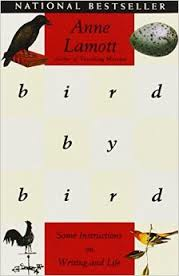 In Bird by Bird, the best book on writing that I have read, Anne Lamott tells the writing wannabe to “write what you would love to find.” That’s great advice—but of course that means the prospective writer has to do a lot of reading. At least I do, since I often don’t know what I would “love to find” until I find it. When things get busy, when I tell myself that I don’t have the time to read anything other than what I’ve assigned my students for the week (since it’s always a good idea to be a class or two ahead of them), my blog writing begins to resonate like vibrations in an echo chamber or the sound of one hand clapping.
  When I tack a new paragraph at the beginning of an essay I wrote a year ago and call it a new essay, I know it’s time to find another hand to clap with.
In my current state of affairs, this happens during semester or summer break. Last summer was filled with reading multiple volumes of Scandinavian noir mysteries which provided me with new ways to consider the familiar. What would I discover during the all-too-short Christmas break between semesters that just ended? I have learned to trust the apparently random suggestions of friends and colleagues for new reading material over the years, and once again they delivered. Thanks to two friends, I have discovered two more authors to love and to use as new sparks of writing energy.
The first suggestion came from my friend and colleague Bill, who occupies the office directly across the hall from mine in our still-new cathedral to the humanities. Bill and I know each other well; we have taught on an interdisciplinary faculty team together, have frequently talked about pedagogical issues, and share the privilege (?) of having directed the program I currently run (he was the director before I was). 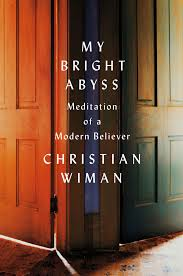 Bill brings his sons to his office on occasion—they like to peek into my office to see the penguins. And Bill reads my blog. One morning not long ago he said “I’m reading a book you would like. It’s called My Bright Abyss; Christian Wiman is a poet, but this is sort of a spiritual memoir. It’s tough reading at times, but he writes about the sort of things you write about.” On Bill’s recommendation I ordered it from Amazon, despite Wiman’s being a poet (I have frequently described myself as “poetry challenged”).
Boy was Bill right. One of the many things I love to find is well-trampled territory described as if the author just discovered it for the first time.
Faith steals upon you like dew: some days you wake and it is there. And like dew, it gets burned off in the rising sun of anxieties, ambitions, distractions.
Ain’t it the truth? I call myself a “person of faith” regularly, but that makes faith sound like something that—once the decision is made—is a regular part of one’s daily apparel like shoes or underwear. But faith is much more ephemeral than that, something that Wiman captures perfectly. When Jesus asks Peter, whom he has just rescued from drowning at the end of Peter’s ill-fated effort to walk on water,  “Oh you of little faith, why did you doubt?” I’m hoping Peter answered (or at least thought) “Because I’m a human being and this faith thing is like a magic trick: Now you see it, now you don’t.”
Wiman also has little resonance with the notion of finding comfort in religious belief. My students often suggest that “comfort” is the main attraction of faith commitment: comfort that “all things work together for good” and comfort that in an afterlife “everything will work out.” The next time I hear that in a classroom discussion (or anywhere else), I’ll introduce this from My Bright Abyss:
 Christ is a shard of glass in your gut. Christ is God crying I am here, and here not only in what exalts and completes and uplifts you, but here in what appalls, offends, and degrades you, here in what activates and exacerbates all that you would call not-God. To walk through the fog of God toward the clarity of Christ is difficult because of how unlovely, how “ungodly” that clarity often turns out to be.
Imagine if Jesus had said that “following me will be like a shard of glass in your gut.” How many followers would that have attracted? Come to think of it, though, the gospels claim that Jesus said many things like that. We just tend to ignore them.
My other Christmas break discovery came to me when my good friend Marsue asked if I had ever read  Learning to Walk in the Dark by Barbara Brown Taylor. “I want to get it for you,” she said, “but the last time I got you a book you already had it.” I had not read any of Taylor’s work, but her books have showed up frequently enough in the “Suggested Reading” on my Amazon Prime site (which I guess is generated based on what I have purchased in the past) that I have had this very book on my “Wish List” for a few months. Not wanting to undermine Marsue’s intended generosity, but taking this suggestion from a trusted friend seriously, I read three of Taylor’s other books over break. Not only have I found another literary soul mate, Jeanne is reading these books as well.
Barbara Brown Taylor’s Leaving Church is her memoir of how tending for her own spiritual health and growth required her leaving the active Episcopal priesthood, a story that I resonated with at many points. Her treatment of suffering and the book of Job in  An Altar in the World, however, was unforgettable, beginning with her memorable description of why pain and suffering are not logical puzzles to be solved or abstract challenges to faith to be overcome.
Pain is so real that less-real things like who you thought you were and how you meant to act can vanish like drops of water flung on a hot stove. Your virtues can become as abstract as algebra, your beliefs as porous as clouds.
I have for the most part been mercifully free in my life thus far from the sort of paralyzing pain that she is describing. I also have no reason to believe that the faith I care about and profess would mean much of anything in the face of such pain. But her directness and honesty is unusual and much appreciated from a priest and theologian. She’s excellent at “making it real”—something I continue to strive for both in my writing and in my life.
What would I like to find (and what am I interested in writing)? Anne Lamott is right—the answer is often the same to both questions. A friend and colleague the other day asked who the audience is for what I write. I couldn’t believe it when I answered “I guess my audience is people like me.” I’m writing in the hope that once in a while something I write will be what someone else will love to find. I write for people who might resonate, as I do, with Christian Wiman’s analogy for the life of faith:
To live in faith is to live like the Jesus lizard, quick and nimble on the water into which a moment’s pause would make it sink.
Previous Post

January 9, 2015
Computer Sabbath
Next Post
January 21, 2015 Zombie Jesus
Browse Our Archives
Select a Category abortion Advent AI Angels Artificial intelligence atheism attention baptism Baptists beauty belief Benedictines Bible bicycling Big Bird books Bovina Camaldoli hermitage Canada Catholicism cats certainty change Christianity Christmas Collegeville Covid-19 creativity Development of Western Civilization dogs doubt Easter Enneagram Epiphany Episcopal ethics Eucharist evil extroverts Facebook faith family fear flowers forgiveness freedom friends God goodness grace happiness heaven hell history Holy Spirit Holy Week hope human nature humility humor idolatry incarnation introverts irreverence Islam Jeanne Jesus Joe Biden joy Judaism justice Kamala Harris knowledge Lent listen literature liturgy love Marsue Memorial Day miracles movies music mystery mythology NPR Old Testament optimism paradox peace Penguins philosophy piano podcast politics power prayer Protestantism Providence College Religion Rhode Island sabbatical sacrament science seeing silence Simone Weil Socrates soul sports St. John's College stories suffering tattoo teaching technology television theology thinking time tolerance transcendence travel trees trust truth Uncategorized Vermont wisdom wonder writing
Select a Month May 2026 April 2026 March 2026 February 2026 January 2026 December 2025 November 2025 October 2025 September 2025 August 2025 July 2025 June 2025 May 2025 April 2025 March 2025 February 2025 January 2025 December 2024 November 2024 October 2024 September 2024 August 2024 July 2024 June 2024 May 2024 April 2024 March 2024 February 2024 January 2024 December 2023 November 2023 October 2023 September 2023 August 2023 July 2023 June 2023 May 2023 April 2023 March 2023 February 2023 January 2023 December 2022 November 2022 October 2022 September 2022 August 2022 July 2022 June 2022 May 2022 April 2022 March 2022 February 2022 January 2022 December 2021 November 2021 October 2021 September 2021 August 2021 July 2021 June 2021 May 2021 April 2021 March 2021 February 2021 January 2021 December 2020 November 2020 October 2020 September 2020 August 2020 July 2020 June 2020 May 2020 April 2020 March 2020 February 2020 January 2020 December 2019 November 2019 October 2019 September 2019 August 2019 July 2019 June 2019 May 2019 April 2019 March 2019 February 2019 January 2019 December 2018 November 2018 October 2018 September 2018 August 2018 July 2018 June 2018 May 2018 April 2018 March 2018 February 2018 January 2018 December 2017 November 2017 October 2017 September 2017 August 2017 July 2017 June 2017 May 2017 April 2017 March 2017 February 2017 January 2017 December 2016 November 2016 October 2016 September 2016 August 2016 July 2016 June 2016 May 2016 April 2016 March 2016 February 2016 January 2016 December 2015 November 2015 October 2015 September 2015 August 2015 July 2015 June 2015 May 2015 April 2015 March 2015 February 2015 January 2015 December 2014 November 2014 October 2014 September 2014 August 2014 July 2014 June 2014 May 2014 April 2014 March 2014 February 2014 January 2014 December 2013 November 2013 October 2013 September 2013 August 2013 July 2013 June 2013 May 2013 April 2013 March 2013 February 2013 January 2013 December 2012 November 2012 October 2012 September 2012
Follow Us!
TAKE THE
Religious Wisdom Quiz
True or False: Animals that chew the cud but do not have split hooves are considered clean to eat.
Select your answer to see how you score.
FALSE TRUE
Books by This Author Books by Vance G. Morgan
Related posts from Freelance Christianity

The Lonely Pawn: On Faith, Doubt, and Meaning


AI and Love: When a Chatbot Becomes a...

TRENDING AT PATHEOS Progressive Christian

What Being a Modern-Day Apostle Means to Me
In my last column, I discussed the ins and outs of modern-day...

Did Ancient China Once Worship the God of...
Across human history, a common thread weaves through the origins of the...

Love Your Neighbor – Including Earth-Kin: Lev. 19,...
God’s command to love your neighbor means acting in an ethical and...

Lead a Church Study of “Jesus and Lao...
Guest writer Jack Thomas (The Irreverent Reverend) reflects on leading his church...

Pastoral Wisdom for Responding to Sermon Pushback
Getting sermon pushback on your social justice sermon? Learn practical, Proverbs-based strategies...

Principles for Understanding the Apostolic Ministry Today
Whenever people discover that my formal ministry title is "apostle," as in...
view all Progressive Christian blogs
Ad-Free & Subscriber Log-In Subscription Support
- About Us
- 2026 Calendar
- Videos
- Podcasts
- Library of World Religions
- Faith In Media Tracker
- Advertise With Us
- Write for Us
- Privacy Policy
- Terms of Service
- Do Not Sell My Data
- Contact Us
- Radiant Digital
- Manage Newsletter Subscriptions
- Unsubscribe From Notifications
- Sitemap
Copyright 2008-2026, Patheos. All rights reserved.
Subscription Support Ad-Free & Subscriber Log-In
Follow Patheos