
BuddhistCatholicContemplativeEvangelicalGeneral ChristianHinduJewishLatter-day SaintMuslimNew VisionsProgressive Christian
Beliefs
- Buddhist
- Catholic
- Contemplative
- Evangelical
- General Christian
- Hindu
- Jewish
- Latter-day Saint
- More Voices
- Muslim
- New Visions
- Pagan
- Progressive Christian
Topics
- Religion News
- Food and Religion
- Sports and Religion
- Religious Art
- Religious Music and Entertainment
- Religious Events
- History and Religion
- Style and Religion
- Politics and Religion
- Women in Religion
- Recreation Outdoors and Religion
- Business Finance and Religion
- Careers Workplace and Religion
- Education and Religion
- Family Parenting and Religion
- Health Fitness and Religion
- Home and Religion
- Relationships and Religion
- Technology and Religion
- Travel and Religion
Columnists
- Buddhist Columnists
- Business Finance and Religion Columnists
- Careers Workplace and Religion Columnists
- Catholic Columnists
- Contemplative Columnists
- Education and Religion Columnists
- Evangelists Columnists
- Family Parenting and Religion Columnists
- General Christian Columnists
- Health Fitness and Religion Columnists
- Hindu Columnists
- History and Religion Columnists
- Home and Religion Columnists
- Jewish Columnists
- More Voices Columnists
- Latter Day Columnists
- Muslim Columnists
- New Visions Columnists
- Nonreligious Columnists
- Pagan Columnists
- Politics and Religion Columnists
- Progressive Columnists
- Recreation Outdoors and Religion Columnists
- Relationships and Religion Columnists
- Religion News Columnists
- Religious Art Columnists
- Religious Events Columnists
- Religious Music and Entertainment Columnists
- Sports and Religion Columnists
- Style and Religion Columnists
- Technology and Religion Columnists
- Travel and Religion Columnists
- Women in Religion Columnists
Resource Library
- 2026 Calendar
- Library of World Religions
- The 100 Most Holy Places on Earth
- Patheos Answers
- Podcasts
- Videos
- Faith Leaders Database
- Anglican Episcopalian
- Bahai
- Baptist
- Buddhism
- Christianity
- Confucianism
- Eastern Orthodoxy
- Hinduism
- Holiness and Pentecostal
- ISKCON
- Islam
- Judaism
- Lutheran
- Methodist
- The Church of Jesus Christ of Latter-day Saints
- New Age
- Paganism
- Presbytarian and Reformed
- Protestantism
- Religion Behind the Scenes
- Roman Catholic
- Scientology
- Shia Islam
- Sikhism
- Sufism
- Sunni Islam
- Taoism
- Zen
- See all religions
Research Tools
 Ad-Free & Subscriber Log-In Subscription Support
Ad-Free & Subscriber Log-In Subscription Support
Follow Patheos 

- Trending:
- Forgiveness
- |
- Marriage
- |
- Consciousness
- |
- Death Penalty
- |
- Election
- |
- Halloween

- Home
- Progressive Christian
- Living an Autumn Faith
Living an Autumn Faith
Last updated on: September 24, 2019 at 6:00 am by Vance Morgan
Living an Autumn Faith 2019-09-23T10:57:50-04:00 Vance Morgan
Patheos Explore the world's faith through different perspectives on religion and spirituality! Patheos has the views of the prevalent religions and spiritualities of the world.
Yesterday was the first day of autumn, which is good thing, because autumn is (by far) my favorite season. This is not surprising for a native New Englander—fall weather is the best that the Northeast has to offer, promising cloudless skies, reducing temperatures, turning leaves, and no humidity. I love it.
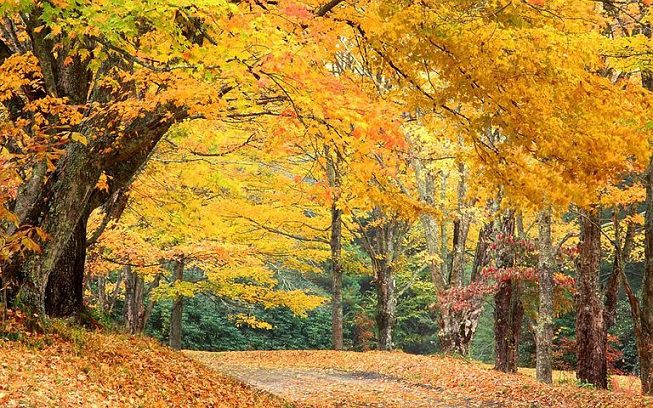
But those of us fortunate enough to be living the academic life welcome the beginning of autumn, as well as the advent of October in a week, for more reasons than beautiful weather. By the time autumn arrives, the fall semester has been in session for a few weeks, the first major papers have been assigned, those papers have been submitted (usually by the deadline), and for the first time since last spring professors are buried under piles of grading (or at least virtual piles, since all of my student papers are submitted, read, graded, and returned online). Then just because it loves teachers, October gives us Columbus Day, a twenty-four hour gift from the calendar gods providing a bit of extra time to breathe, reflect, adjust expectations, and take a walk or bike ride. And grade papers.
There is an underlying truth to autumn that many find disturbing. While spring promises new beginnings—as they say, hope “springs” eternal (couldn’t help myself)—autumn is about things winding down and ending. Aristotle tells us that “generation and corruption” is the defining process of the natural world. Things are born, they live, and then they die. Over and over again.
A person in the autumn of her life, who stopped being a spring chicken decades ago, may be happy, beautiful, productive, and full of energy. But she’s also inching toward a final truth that most of us over a lifetime learn to expertly ignore. As Job tells us, “mortals die and are laid low.” The autumn leaves that turn orange, yellow or red in spectacular display are dying and will fall to the ground within a couple of weeks. And so, comparatively speaking, will we. Autumn is the doorway into the corruption side of generation and corruption.
Now in my early sixties, I not only continue to love autumn—I am living autumn. This fall I find myself more aware than ever of something I first learned a few years ago: It is possible to create and sustain a space of peace and centeredness in the middle of a world that provides reasons to be stressed, overworked, distressed, angry, and depressed on a daily basis. This is sometimes hard to believe; as an infantile President, a dysfunctional Congress, a polarized citizenry, mass shootings, and nuclear threats compete to define our lives and drain every ounce of energy dry, where is any sort of respite to be found? I have been reminded recently in various ways that we each possess within us sufficient tools to create such a respite.
In my Philosophy of Knowledge course a year ago, we spent several classes on the work of Michel de Montaigne, perhaps my favorite philosopher in the Western tradition. (Side note: I’ll be teaching an Honors colloquium on Montaigne next semester, so you’ll be reading a lot more about him). Around that same time, I discovered that a regular commenter on my blog is also a dedicated member of the Montaigne fan club. As we wrote back in forth about why we love Montaigne, a guy whose response to the religious violence surrounding him in 16th century France was a radical skepticism questioning just about everything we claim to know with certainty, my conversant, who revealed that he is an ordained minister, wrote
- I like to mortify my religiously devout friends by saying Montaigne has had as large an impact on my spiritual formation as Jesus himself did.
In response to his asking why I love Montaigne; I wrote
- His honesty, humility, open-endedness, skepticism, good humor (usually), and ability to find the fascinating just beneath the surface of the mundane–just to name a few. I love his essay style–I have used him as a model for my own writing many times. If he were alive today, he would be an incurable blogger! The older I get, the more I resonate with him.
It turns out that it isn’t just people who’ve been around the block a few times who resonate with Montaigne. Last year, the day before the first Philosophy of Knowledge class where we would be considering Montaigne, one of my students emailed me:
- I had never read Montaigne before but what a guy. This reading is awesome. Looking forward to class tomorrow!
I shared my student’s email with my blog-commenting pastor friend; he responded
- Introducing young (and older:) minds to Montaigne must be one of the joys of your profession — living in a pseudo-“Christian” country, I can’t say I’ve ever had the pleasure of doing that as a pastor with Jesus . . .
In his essay “On Presumption,” Montaigne writes something that only someone in the autumn of his life could have truthfully written.
I have come to the point where except for health and life, there is nothing for which I am willing to bite my nails, nothing that I am willing to buy at the price of mental torment and constraint.
Montaigne insists, and my own experience over the past several years has confirmed, that peace and contentment are not random events that might occasionally surprise us as we run the daily rat race. Peace and contentment are choices.
In his letter to the church at Philippi, Paul writes in his autumn years from prison, undoubtedly aware that his life would be ending before long.
I have learned in whatever state I am, to be content: I know how to be abased, and I know how to abound. Everywhere and in all things I have learned both to be full and to be hungry, both to abound and to suffer need.
Wow, Paul must have read his Montaigne. In truth, it would not be at all surprising if Montaigne had such passages from Scripture in mind as he wrote about contentment and peace. He regularly reflected on the difference between what being a Christian might require (he was a lifelong Catholic) and the carnage being caused in the name of competing Christian orthodoxies around him. He often described this difference in terms of silence and centeredness, balance and humility, rather than aggressive conviction and doctrinal certainty.
I also would not be surprised if this shared insight between Paul and Montaigne is part of what my blog-commenting friend had in mind when he said that he owes as much of his spiritual development to Montaigne as he does to Jesus. The Christian faith at its best reawakens and energizes what is in each of us naturally from the start—an ability to orient ourselves to the beating heart of the universe. This is why Paul was able, a few verses earlier in Philippians, from his prison cell to express a beautiful promise and to provide sage advice that still resonates two millennia later.
Let your gentleness be known to all . . . Be anxious for nothing . . . and the peace of God, which surpasses all understanding, will guard your hearts and minds through Christ Jesus. Finally, whatever things are true . . noble . . . just . . . pure . . . lovely . . . of good report, if there is any virtue and if there is anything praiseworthy—meditate on these things.
Why could Jesus walk on troubled waters? Because he knew what Paul and Montaigne came to know—there is nothing, absolutely nothing, that is worth sacrificing one’s peace and contentment. Because it is in that quiet space that we find our truest selves . . . and God is there.
Previous Post

September 22, 2019
Are You Jesus? A Prophetic Challenge from Joan Chittister
Next Post
September 26, 2019 Lessons learned from a "glow in the dark" cross
Browse Our Archives
Select a Category abortion Advent AI Angels Artificial intelligence atheism attention baptism Baptists beauty belief Benedictines Bible bicycling Big Bird books Bovina Camaldoli hermitage Canada Catholicism cats certainty change Christianity Christmas Collegeville Covid-19 creativity Development of Western Civilization dogs doubt Easter Enneagram Epiphany Episcopal ethics Eucharist evil extroverts Facebook faith family fear flowers forgiveness freedom friends God goodness grace happiness heaven hell history Holy Spirit Holy Week hope human nature humility humor idolatry incarnation introverts irreverence Islam Jeanne Jesus Joe Biden joy Judaism justice Kamala Harris knowledge Lent listen literature liturgy love Marsue Memorial Day miracles movies music mystery mythology NPR Old Testament optimism paradox peace Penguins philosophy piano podcast politics power prayer Protestantism Providence College Religion Rhode Island sabbatical sacrament science seeing silence Simone Weil Socrates soul sports St. John's College stories suffering tattoo teaching technology television theology thinking time tolerance transcendence travel trees trust truth Uncategorized Vermont wisdom wonder writing
Select a Month May 2026 April 2026 March 2026 February 2026 January 2026 December 2025 November 2025 October 2025 September 2025 August 2025 July 2025 June 2025 May 2025 April 2025 March 2025 February 2025 January 2025 December 2024 November 2024 October 2024 September 2024 August 2024 July 2024 June 2024 May 2024 April 2024 March 2024 February 2024 January 2024 December 2023 November 2023 October 2023 September 2023 August 2023 July 2023 June 2023 May 2023 April 2023 March 2023 February 2023 January 2023 December 2022 November 2022 October 2022 September 2022 August 2022 July 2022 June 2022 May 2022 April 2022 March 2022 February 2022 January 2022 December 2021 November 2021 October 2021 September 2021 August 2021 July 2021 June 2021 May 2021 April 2021 March 2021 February 2021 January 2021 December 2020 November 2020 October 2020 September 2020 August 2020 July 2020 June 2020 May 2020 April 2020 March 2020 February 2020 January 2020 December 2019 November 2019 October 2019 September 2019 August 2019 July 2019 June 2019 May 2019 April 2019 March 2019 February 2019 January 2019 December 2018 November 2018 October 2018 September 2018 August 2018 July 2018 June 2018 May 2018 April 2018 March 2018 February 2018 January 2018 December 2017 November 2017 October 2017 September 2017 August 2017 July 2017 June 2017 May 2017 April 2017 March 2017 February 2017 January 2017 December 2016 November 2016 October 2016 September 2016 August 2016 July 2016 June 2016 May 2016 April 2016 March 2016 February 2016 January 2016 December 2015 November 2015 October 2015 September 2015 August 2015 July 2015 June 2015 May 2015 April 2015 March 2015 February 2015 January 2015 December 2014 November 2014 October 2014 September 2014 August 2014 July 2014 June 2014 May 2014 April 2014 March 2014 February 2014 January 2014 December 2013 November 2013 October 2013 September 2013 August 2013 July 2013 June 2013 May 2013 April 2013 March 2013 February 2013 January 2013 December 2012 November 2012 October 2012 September 2012
Follow Us!
TAKE THE
Religious Wisdom Quiz
What did Nebuchadnezzar see inside the fiery furnace along with the three men?
Select your answer to see how you score.
A vision of his own kingdom An angel with a sword A fourth figure like "a son of the gods" A great cloud of smoke
Books by This Author Books by Vance G. Morgan
Related posts from Freelance Christianity

The Lonely Pawn: On Faith, Doubt, and Meaning


AI and Love: When a Chatbot Becomes a...

TRENDING AT PATHEOS Progressive Christian

Why Christians Have a Sacred Duty to Vote:...
The Bible offers strong support for the sacred duty to vote. Here...

What Being a Modern-Day Apostle Means to Me
In my last column, I discussed the ins and outs of modern-day...

Did Ancient China Once Worship the God of...
Across human history, a common thread weaves through the origins of the...

Love Your Neighbor – Including Earth-Kin: Lev. 19,...
God’s command to love your neighbor means acting in an ethical and...

Lead a Church Study of “Jesus and Lao...
Guest writer Jack Thomas (The Irreverent Reverend) reflects on leading his church...

Principles for Understanding the Apostolic Ministry Today
Whenever people discover that my formal ministry title is "apostle," as in...
view all Progressive Christian blogs
Ad-Free & Subscriber Log-In Subscription Support
- About Us
- 2026 Calendar
- Videos
- Podcasts
- Library of World Religions
- Faith In Media Tracker
- Advertise With Us
- Write for Us
- Privacy Policy
- Terms of Service
- Do Not Sell My Data
- Contact Us
- Radiant Digital
- Manage Newsletter Subscriptions
- Unsubscribe From Notifications
- Sitemap
Copyright 2008-2026, Patheos. All rights reserved.
Subscription Support Ad-Free & Subscriber Log-In
Follow Patheos