
BuddhistCatholicContemplativeEvangelicalGeneral ChristianHinduJewishLatter-day SaintMuslimNew VisionsProgressive Christian
Beliefs
- Buddhist
- Catholic
- Contemplative
- Evangelical
- General Christian
- Hindu
- Jewish
- Latter-day Saint
- More Voices
- Muslim
- New Visions
- Pagan
- Progressive Christian
Topics
- Religion News
- Food and Religion
- Sports and Religion
- Religious Art
- Religious Music and Entertainment
- Religious Events
- History and Religion
- Style and Religion
- Politics and Religion
- Women in Religion
- Recreation Outdoors and Religion
- Business Finance and Religion
- Careers Workplace and Religion
- Education and Religion
- Family Parenting and Religion
- Health Fitness and Religion
- Home and Religion
- Relationships and Religion
- Technology and Religion
- Travel and Religion
Columnists
- Buddhist Columnists
- Business Finance and Religion Columnists
- Careers Workplace and Religion Columnists
- Catholic Columnists
- Contemplative Columnists
- Education and Religion Columnists
- Evangelists Columnists
- Family Parenting and Religion Columnists
- General Christian Columnists
- Health Fitness and Religion Columnists
- Hindu Columnists
- History and Religion Columnists
- Home and Religion Columnists
- Jewish Columnists
- More Voices Columnists
- Latter Day Columnists
- Muslim Columnists
- New Visions Columnists
- Nonreligious Columnists
- Pagan Columnists
- Politics and Religion Columnists
- Progressive Columnists
- Recreation Outdoors and Religion Columnists
- Relationships and Religion Columnists
- Religion News Columnists
- Religious Art Columnists
- Religious Events Columnists
- Religious Music and Entertainment Columnists
- Sports and Religion Columnists
- Style and Religion Columnists
- Technology and Religion Columnists
- Travel and Religion Columnists
- Women in Religion Columnists
Resource Library
- 2026 Calendar
- Library of World Religions
- The 100 Most Holy Places on Earth
- Patheos Answers
- Podcasts
- Videos
- Faith Leaders Database
- Anglican Episcopalian
- Bahai
- Baptist
- Buddhism
- Christianity
- Confucianism
- Eastern Orthodoxy
- Hinduism
- Holiness and Pentecostal
- ISKCON
- Islam
- Judaism
- Lutheran
- Methodist
- The Church of Jesus Christ of Latter-day Saints
- New Age
- Paganism
- Presbytarian and Reformed
- Protestantism
- Religion Behind the Scenes
- Roman Catholic
- Scientology
- Shia Islam
- Sikhism
- Sufism
- Sunni Islam
- Taoism
- Zen
- See all religions
Research Tools
 Ad-Free & Subscriber Log-In Subscription Support
Ad-Free & Subscriber Log-In Subscription Support
Follow Patheos 

- Trending:
- Forgiveness
- |
- Marriage
- |
- Consciousness
- |
- Death Penalty
- |
- Election
- |
- Halloween

- Home
- Progressive Christian
- My Life as Lady Macbeth
My Life as Lady Macbeth
Last updated on: July 13, 2016 at 7:30 am by Vance Morgan
My Life as Lady Macbeth 2016-07-13T07:30:04-04:00 Vance Morgan
Patheos Explore the world's faith through different perspectives on religion and spirituality! Patheos has the views of the prevalent religions and spiritualities of the world.
The new semester begins in less than two months and I’m pumped! I’m particularly anxious to be back in the classroom again because I’m coming off a year’s sabbatical and have not been in front of a class for fifteen months. In addition, this will be the first time in over ten years that I have not had to balance my teaching energies with significant administrative duties. I’ve already been asked to chair one committee and be a member of two others this coming year, but that’s nothing compared to running a department or program. I’m not complaining, though–I learned a lot about myself and my leadership style over the past decade. I wrote about this a couple of years ago as I entered my final year of running a large interdisciplinary program on my campus . . .
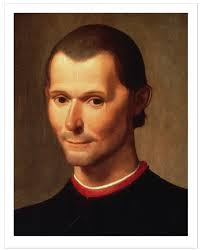 Over five hundred years ago, Niccolò Machiavelli raised a classic question in The Prince: for a person with power seeking to keep or increase that power, Is it better to be loved or to be feared? This question came up in two separate seminars during Old Testament week with my freshmen in only their second week of college. The texts for the day were the first twenty-five chapters of Genesis along with the first twenty-five of Exodus; the main character in these texts—God—seems in his omniscience to have decided Machiavelli’s question millennia before Machiavelli ever showed up. For an extraordinarily powerful being who also happens to be capricious, vengeful, manipulative, insecure and self-absorbed, fear is far more effective than love. My students frequently wondered why God so often found it necessary to express divine power in over-the-top and destructive ways, given that nobody doubted who was more powerful in a God-human comparison, nor was it likely that anyone was plotting an overthrow of God’s rule.
  The ancient Israelites and their forebears had probably read Milton’s Paradise Lost and found out what happened to Lucifer when he tried that. And apparently God wasn’t aware that Machiavelli’s question applies only to those whose power can actually be lost. If one is omnipotent, one can do whatever the hell one wants.
But for mere mortals lacking the ability to generate world-wide floods or to drop creative plagues on non-compliant people, Machiavelli’s question remains pressing. If one finds oneself in a position of power or authority and is seeking to use that power effectively, is it better to cultivate love or fear among those under one’s authority? Although teachers sometimes sound as if they are entirely powerless in the face of pressures from all constituencies, in fact a teacher in the classroom finds herself in a situation of almost complete power that demands a constant, flexible, lived answer to Machiavelli’s question. A teacher’s success or failure depends on how she or he shapes love and fear into a structure solid enough to withstand challenge but flexible enough to address the ever-changing atmosphere of the classroom on a daily basis.  I’ve been at it for over twenty-five years and am still working on it.
I had to think through the “love or fear” issue in an entirely different manner when I found myself in an academic administrative position for the first time. As the chair of the twenty-two-member philosophy department, knowing that if trying to lead faculty is like herding cats, then trying to lead philosophers is like herding a breed of cats who believe that ideas alone are enough and that simply thinking something makes it so, I worried about how to even begin. At the end of four sometimes exhausting years, I was surprised to look back on my term as chair and conclude that it had largely been a success. We rewrote the department mission statement, entirely revised our major and minor, and hired six tenure-track faculty, all without anyone getting killed or maimed. Not known for my “people skills,” it turned out that I had a knack for what might be called “diplomatic persuasion.” I sometimes described this new-found skill as the ability to “diss someone without their knowing they’ve been dissed until a day later,” or to “convince people that what you want them to do is actually their idea.” 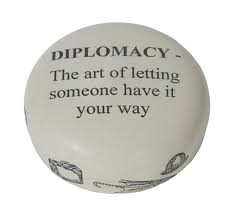 Amid tedious solitary hours of paperwork and tedium, the people management thing was sort of fun—and no one hated me (that I’m aware of) at the end of four years.
When I was asked a couple of years later to step into much larger and more challenging administrative role—leading the large interdisciplinary program that is the centerpiece of my college’s core curriculum—I dusted off my “diplomatic persuasion” skills and retooled them for the task of leading and cajoling four times as many faculty down a much more treacherous path than I traveled with the philosophy department in my years as chair. Within the first couple of my first semester as director, I established a few new policies and started some difficult collective conversations that I fully expected to generate significant pushback. Surprisingly, I received almost none—everyone actually started doing what I asked. “Wow!” I thought. “My ‘diplomatic persuasion’ leadership skills really work! I actually know what I’m doing!”
Early one morning shortly before the day’s classes began I mentioned to a colleague who was a teaching veteran in the program my pleasant surprise that no one had (yet) directly complained about the new directions the program was turning toward. “That’s because everyone’s afraid of you,” my colleague suggested. Afraid of ME? Really? Introverted little ole me??  Although my colleague is not known for her sense of humor, I assumed she was kidding. “Yeah, right (ha ha ha)” I said. She replied by revealing something about me that I never knew “No, really. You can be very intimidating at times.” Add fifteen years in the program, tenure, full professorship, introversion, a teaching award and a gray ponytail together and apparently the illusion of intimidation is produced. “Fine,” I thought. “If people are under the false impression that I’m scary on some level and it’s causing them to actually pull together in a good direction, then that’s a card worth playing as long as it works.” When I reported a couple of weeks later to my two sons at our annual Thanksgiving gathering that the faculty in my program is afraid of me, the news produced guffaws and laughter of a rolling-on-the-ground-and-gasping-for-air variety.
I was reminded of all of this three years later just the other day as the latest Facebook personality quiz caught my attention. “Which Shakespeare character are you?” Fully expecting the typical bland “You are Hamlet” or “You are Prospero,” another unknown feature of myself was unexpectedly revealed.
http://quizsocial.com/which-shakespeare-character-are-you/
 You got: Lady Macbeth! Wow, are you ever good at manipulating people into doing what you want! It is a valuable skill, one that could help you secure a job in government one day, but also a dangerous one. Like Lady Macbeth, you have a love of power that could motivate you to do evil things. Don’t let it overtake you.
Well now—that’s very interesting. Am I really channeling one of the most determined and evil manipulators in all of Western literature? The closest contemporary comparison to Lady Macbeth is Claire Underwood, the amoral, calculating, ambitious and uncompromisingly cold wife of Frank Underwood,  the Senate majority whip who in two seasons has climbed, manipulated, lied and murdered his way to the Presidency in Netfix’s megahit “House of Cards.” The only person more ruthlessly calculating than Frank in the “House of Cards” universe is Claire—she keeps his manipulative batteries charged when they run low. And I’m not making this up—there’s a whole cottage industry on-line that documents just how indebted “House of Cards” is to Shakespeare, especially to “Richard III” and “Macbeth,” and just how much Claire and Frank’s marriage mirrors the relationship between Lady and King (for a short time) Macbeth. (Spoiler alert)
http://www.huffingtonpost.com/2014/02/21/house-of-cards-shakespeare-_n_4823200.html
So apparently my commitment to “diplomatic persuasion” is actually an expression of my deep-seated commitment to power and manipulation.  My expressed desire to lead the program I direct effectively into a new and more creative future is a thinly disguised working out of my need to control. Nietzsche was right after all—all living things seek not just to survive but to extend their dominance and influence as far as possible. Administering an academic department or program has unexpectedly turned out to be an effective way for me to get to do what all human beings secretly want to do but often never get a chance to do—boss other people around and make them dance to your tune. I may end up dead with indelible blood on my hands, but the journey will be a lot of fun.
Or not. I’m not buying this, because I’m not buying that leadership necessarily requires a commitment to manipulation and power.  But I might be wrong. Maybe my sabbatical project should be to establish a new Lady Macbeth School of Leadership on some campus somewhere. It’s a thought. P.S. From Facebook comments generated by the results of the above Shakespeare quiz, I have discovered that friends and colleagues have learned that they are Bottom, Iago, Falstaff or Richard III. But so far I’m the only Lady Macbeth. The “quizsocial” person must have been having a very dark day when he/she put this quiz together.
Development of Western Civilization
Previous Post

July 11, 2016
Are We Better Than This?
Next Post
July 17, 2016 Home for Each Other
Browse Our Archives
Select a Category abortion Advent AI Angels Artificial intelligence atheism attention baptism Baptists beauty belief Benedictines Bible bicycling Big Bird books Bovina Camaldoli hermitage Canada Catholicism cats certainty change Christianity Christmas Collegeville Covid-19 creativity Development of Western Civilization dogs doubt Easter Enneagram Epiphany Episcopal ethics Eucharist evil extroverts Facebook faith family fear flowers forgiveness freedom friends God goodness grace happiness heaven hell history Holy Spirit Holy Week hope human nature humility humor idolatry incarnation introverts irreverence Islam Jeanne Jesus Joe Biden joy Judaism justice Kamala Harris knowledge Lent listen literature liturgy love Marsue Memorial Day miracles movies music mystery mythology NPR Old Testament optimism paradox peace Penguins philosophy piano podcast politics power prayer Protestantism Providence College Religion Rhode Island sabbatical sacrament science seeing silence Simone Weil Socrates soul sports St. John's College stories suffering tattoo teaching technology television theology thinking time tolerance transcendence travel trees trust truth Uncategorized Vermont wisdom wonder writing
Select a Month May 2026 April 2026 March 2026 February 2026 January 2026 December 2025 November 2025 October 2025 September 2025 August 2025 July 2025 June 2025 May 2025 April 2025 March 2025 February 2025 January 2025 December 2024 November 2024 October 2024 September 2024 August 2024 July 2024 June 2024 May 2024 April 2024 March 2024 February 2024 January 2024 December 2023 November 2023 October 2023 September 2023 August 2023 July 2023 June 2023 May 2023 April 2023 March 2023 February 2023 January 2023 December 2022 November 2022 October 2022 September 2022 August 2022 July 2022 June 2022 May 2022 April 2022 March 2022 February 2022 January 2022 December 2021 November 2021 October 2021 September 2021 August 2021 July 2021 June 2021 May 2021 April 2021 March 2021 February 2021 January 2021 December 2020 November 2020 October 2020 September 2020 August 2020 July 2020 June 2020 May 2020 April 2020 March 2020 February 2020 January 2020 December 2019 November 2019 October 2019 September 2019 August 2019 July 2019 June 2019 May 2019 April 2019 March 2019 February 2019 January 2019 December 2018 November 2018 October 2018 September 2018 August 2018 July 2018 June 2018 May 2018 April 2018 March 2018 February 2018 January 2018 December 2017 November 2017 October 2017 September 2017 August 2017 July 2017 June 2017 May 2017 April 2017 March 2017 February 2017 January 2017 December 2016 November 2016 October 2016 September 2016 August 2016 July 2016 June 2016 May 2016 April 2016 March 2016 February 2016 January 2016 December 2015 November 2015 October 2015 September 2015 August 2015 July 2015 June 2015 May 2015 April 2015 March 2015 February 2015 January 2015 December 2014 November 2014 October 2014 September 2014 August 2014 July 2014 June 2014 May 2014 April 2014 March 2014 February 2014 January 2014 December 2013 November 2013 October 2013 September 2013 August 2013 July 2013 June 2013 May 2013 April 2013 March 2013 February 2013 January 2013 December 2012 November 2012 October 2012 September 2012
Follow Us!
TAKE THE
Religious Wisdom Quiz
Who had a coat of many colors?
Select your answer to see how you score.
Jacob Esau Benjamin Joseph
Books by This Author Books by Vance G. Morgan
Related posts from Freelance Christianity

The Lonely Pawn: On Faith, Doubt, and Meaning


AI and Love: When a Chatbot Becomes a...

TRENDING AT PATHEOS Progressive Christian

What Being a Modern-Day Apostle Means to Me
In my last column, I discussed the ins and outs of modern-day...

Did Ancient China Once Worship the God of...
Across human history, a common thread weaves through the origins of the...

Love Your Neighbor – Including Earth-Kin: Lev. 19,...
God’s command to love your neighbor means acting in an ethical and...

Lead a Church Study of “Jesus and Lao...
Guest writer Jack Thomas (The Irreverent Reverend) reflects on leading his church...

Pastoral Wisdom for Responding to Sermon Pushback
Getting sermon pushback on your social justice sermon? Learn practical, Proverbs-based strategies...

Principles for Understanding the Apostolic Ministry Today
Whenever people discover that my formal ministry title is "apostle," as in...
view all Progressive Christian blogs
Ad-Free & Subscriber Log-In Subscription Support
- About Us
- 2026 Calendar
- Videos
- Podcasts
- Library of World Religions
- Faith In Media Tracker
- Advertise With Us
- Write for Us
- Privacy Policy
- Terms of Service
- Do Not Sell My Data
- Contact Us
- Radiant Digital
- Manage Newsletter Subscriptions
- Unsubscribe From Notifications
- Sitemap
Copyright 2008-2026, Patheos. All rights reserved.
Subscription Support Ad-Free & Subscriber Log-In
Follow Patheos