
BuddhistCatholicContemplativeEvangelicalGeneral ChristianHinduJewishLatter-day SaintMuslimNew VisionsProgressive Christian
Beliefs
- Buddhist
- Catholic
- Contemplative
- Evangelical
- General Christian
- Hindu
- Jewish
- Latter-day Saint
- More Voices
- Muslim
- New Visions
- Pagan
- Progressive Christian
Topics
- Religion News
- Food and Religion
- Sports and Religion
- Religious Art
- Religious Music and Entertainment
- Religious Events
- History and Religion
- Style and Religion
- Politics and Religion
- Women in Religion
- Recreation Outdoors and Religion
- Business Finance and Religion
- Careers Workplace and Religion
- Education and Religion
- Family Parenting and Religion
- Health Fitness and Religion
- Home and Religion
- Relationships and Religion
- Technology and Religion
- Travel and Religion
Columnists
- Buddhist Columnists
- Business Finance and Religion Columnists
- Careers Workplace and Religion Columnists
- Catholic Columnists
- Contemplative Columnists
- Education and Religion Columnists
- Evangelists Columnists
- Family Parenting and Religion Columnists
- General Christian Columnists
- Health Fitness and Religion Columnists
- Hindu Columnists
- History and Religion Columnists
- Home and Religion Columnists
- Jewish Columnists
- More Voices Columnists
- Latter Day Columnists
- Muslim Columnists
- New Visions Columnists
- Nonreligious Columnists
- Pagan Columnists
- Politics and Religion Columnists
- Progressive Columnists
- Recreation Outdoors and Religion Columnists
- Relationships and Religion Columnists
- Religion News Columnists
- Religious Art Columnists
- Religious Events Columnists
- Religious Music and Entertainment Columnists
- Sports and Religion Columnists
- Style and Religion Columnists
- Technology and Religion Columnists
- Travel and Religion Columnists
- Women in Religion Columnists
Resource Library
- 2026 Calendar
- Library of World Religions
- The 100 Most Holy Places on Earth
- Patheos Answers
- Podcasts
- Videos
- Faith Leaders Database
- Anglican Episcopalian
- Bahai
- Baptist
- Buddhism
- Christianity
- Confucianism
- Eastern Orthodoxy
- Hinduism
- Holiness and Pentecostal
- ISKCON
- Islam
- Judaism
- Lutheran
- Methodist
- The Church of Jesus Christ of Latter-day Saints
- New Age
- Paganism
- Presbytarian and Reformed
- Protestantism
- Religion Behind the Scenes
- Roman Catholic
- Scientology
- Shia Islam
- Sikhism
- Sufism
- Sunni Islam
- Taoism
- Zen
- See all religions
Research Tools
 Ad-Free & Subscriber Log-In Subscription Support
Ad-Free & Subscriber Log-In Subscription Support
Follow Patheos 

- Trending:
- Forgiveness
- |
- Marriage
- |
- Consciousness
- |
- Death Penalty
- |
- Election
- |
- Halloween

- Home
- Progressive Christian
- Learning Our Lessons
Learning Our Lessons
Last updated on: July 15, 2021 at 4:05 pm by Vance Morgan
Learning Our Lessons 2021-07-15T16:05:43-04:00 Vance Morgan
Patheos Explore the world's faith through different perspectives on religion and spirituality! Patheos has the views of the prevalent religions and spiritualities of the world.
I’ve often said during my close to three decades of teaching philosophy on the college level that I did not enter academia because it’s one of the few places a philosopher can find to make a living. I entered academia because I wanted to be a college professor—philosophy just happened to be the disciplinary vehicle that got me there. If it hadn’t been philosophy, it would have been history (and if it hadn’t been history it would have been literature . . .).  Whatever it took to get me into the academic life. My approach to philosophy has always been contextual and historical; I have taken great delight in teaching regularly in an interdisciplinary course with a historian for over twenty years. As it turns out, my reading for the first ten days or so of Winter Break has reflected my love of history. Moving backwards from the first decade of the twentieth century to Ancient Rome, I have been reminded of just how relevant history is to understanding the present.
Everyone knows a version of the truism that “those who forget the past are doomed to repeat it,” but few know where the original of the truism came from. As it turns out, lots of people have said something along these lines, from  Edmund Burke (“Those who don’t know history are doomed to repeat it”) and George Santayana (“Those who cannot remember the past are condemned to repeat it”) to
  Jesse Ventura (“Learn from history or you’re doomed to repeat it”) and Lemony Snickett (“Those unable to catalog the past are doomed to repeat it”). I finished the second half of Doris Kearns Goodwin’s The Bully Pulpit just before Christmas. Goodwin tells the story of the first decade of the twentieth century, focusing on Theodore Roosevelt and William Howard Taft, two of the towering political figures of the time. I am a great fan of Goodwin’s work and anxiously awaited reading The Bully Pulpit between semesters after her October lecture on campus as part of my college’s centennial celebration.
The period of American history between the Civil War and the Great Depression has always been somewhat of an empty field for me, so I was fascinated to find that the politics of the late nineteenth and early twentieth centuries had a remarkably contemporary feel.  A progressive movement (within the Republican party, no less) favoring the rights and interests of “the little man” is being resisted by big money, huge trusts and corporations run by fabulously wealthy individuals who are loath to release even a molecule of their power. The centers of activity are different from today—the progressive movement is centered in Kansas, Iowa, Minnesota, and the West with conservative resistance centered in the Northeast, but questions about how economics, politics, the common good, and foreign interests should be balanced were the same then as they are today. The Great Depression that followed within a decade after the end of the events in The Bully Pulpit shows that they did not figure things out very well back then—will we do better? The best I can say is that the jury is out on that one.
My favorite takeaway from The Bully Pulpit is entirely personal. Threaded throughout the book are the stories of two remarkable marriages, Teddy and Edith Roosevelt, side by side with William and Nelly Taft. 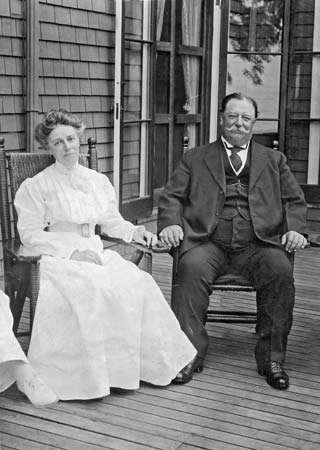 The letters exchanged were intimate and revealing, including the following tribute from William to Nelly which I copied verbatim into Jeanne’s Christmas card:
I cannot tell you what a comfort it is to me to think of you as my wife and helpmeet. I measure every woman I meet with you and they are all found wanting. Your character, your independence, your straight mode of thinking, your quiet planning, your loyalty, your sympathy when I need it (as I do too readily), your affection and love (for I know I have it), all these make me happy just to think about them.
“Wow,” Jeanne said on Christmas morning, “you could have written that!” She also claimed, as did Nellie, that she didn’t deserve such a tribute—but Bill and I know better.

Photo by Chris Boland, www.chrisboland.com
After The Bully Pulpit, it was on to SPQR (Senatus PopulusQue Romanus–“the Senate and people of Rome”), Mary Beard’s recent history of ancient Rome. One of my teaching partners this past semester in the interdisciplinary course in which I regularly teach is a classicist whose specialty is ancient Rome; when Fred gave the book an enthusiastic thumbs-up, I put it on my between-semesters reading list. I’m currently about half way through the book, and am reminded on almost every page to what extent the ancient Romans shaped our contemporary world. The issues they grappled with are still with us, issues almost too numerous to list. One in particular has caught my attention in SPQR, something about the Romans that I did not know until my colleague stressed it in a couple of lectures this past semester. Unique among ancient civilizations, the Romans were remarkably willing to incorporate outsiders into their world, not just as visitors, marginal members of society, or conquered people, but as citizens. The Romans were notably tolerant of different ways of doing things, an attitude that is, at least theoretically, something that we value in our country. Although the Romans were often suspicious and xenophobic in their initial actions toward others, the inhabitants of conquered territories were gradually given full Roman citizenship, along with the legal rights and protections that went with it. This openness, at least in theory, is something that we have aspired to during our country’s short history— which makes the current swing toward suspicion and concern about “the Other” in our politics and social attitudes so disturbing.
There are reasons, of course, to be careful about openness—like Forrest Gump’s box of chocolates, one never knows what one might end up with. One interesting example from SPQR illustrates the point. Roman religion was complex, with a pantheon of gods and goddesses and a dizzying array of practices and festivals to honor them, events that also marked celebration of culture and what it meant to be Roman. But the Romans were also remarkably open to incorporating new deities and practices into their religion. In the early part of the second century BCE, the Great Mother goddess, the focus of worship in part of Roman territories in Asia Minor, was brought with great fanfare into Rome, at the advice of an ancient oracle, to be incorporated into the Roman pantheon. She was the patron deity of Troy, the mythical ancestral home of Rome, so in a sense the Great Mother belonged in Rome. Beard reports that the temple built to house her “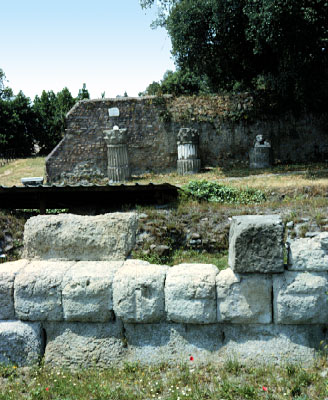 would be the first building in Rome, so far as we know, constructed using that most Roman of materials . . . concrete.” A deputation was sent to Asia Minor to collect the image of the goddess and transport her back—a deputation that included a highly placed senator and a Vestal Virgin. But, as Beard relates, “not everything was quite as it seemed.”
The image of the goddess was not what the Romans could possibly have been expecting. It was a large black meteorite, not a conventional statue in human form. And the meteorite came accompanied by a retinue of priests. These were self-castrated eunuchs, with long hair, tambourines and a passion for self-flagellation. This was all about as un-Roman as you could imagine. And forever after it raised uncomfortable questions about “the Roman” and “the foreign,” and where the boundary between them lay.
These are exactly the sorts of questions we must struggle with today. We might say that we will be accepting of the “Other” just as long as that Other over time becomes like we are. But what exactly are we? Romans regularly welcomed all sorts of people and practices into their sphere, and then had to grapple with the implications of openness. We must do the same, all the time remembering that were it not for a fundamental openness to strangers and the “Other” in our history, most of us would not be here.
Development of Western Civilization
Development of Western Civilization
Previous Post

December 26, 2016
Clouds of Glory
Next Post
December 30, 2016 What's Next?
Browse Our Archives
Select a Category abortion Advent AI Angels Artificial intelligence atheism attention baptism Baptists beauty belief Benedictines Bible bicycling Big Bird books Bovina Camaldoli hermitage Canada Catholicism cats certainty change Christianity Christmas Collegeville Covid-19 creativity Development of Western Civilization dogs doubt Easter Enneagram Epiphany Episcopal ethics Eucharist evil extroverts Facebook faith family fear flowers forgiveness freedom friends God goodness grace happiness heaven hell history Holy Spirit Holy Week hope human nature humility humor idolatry incarnation introverts irreverence Islam Jeanne Jesus Joe Biden joy Judaism justice Kamala Harris knowledge Lent listen literature liturgy love Marsue Memorial Day miracles movies music mystery mythology NPR Old Testament optimism paradox peace Penguins philosophy piano podcast politics power prayer Protestantism Providence College Religion Rhode Island sabbatical sacrament science seeing silence Simone Weil Socrates soul sports St. John's College stories suffering tattoo teaching technology television theology thinking time tolerance transcendence travel trees trust truth Uncategorized Vermont wisdom wonder writing
Select a Month May 2026 April 2026 March 2026 February 2026 January 2026 December 2025 November 2025 October 2025 September 2025 August 2025 July 2025 June 2025 May 2025 April 2025 March 2025 February 2025 January 2025 December 2024 November 2024 October 2024 September 2024 August 2024 July 2024 June 2024 May 2024 April 2024 March 2024 February 2024 January 2024 December 2023 November 2023 October 2023 September 2023 August 2023 July 2023 June 2023 May 2023 April 2023 March 2023 February 2023 January 2023 December 2022 November 2022 October 2022 September 2022 August 2022 July 2022 June 2022 May 2022 April 2022 March 2022 February 2022 January 2022 December 2021 November 2021 October 2021 September 2021 August 2021 July 2021 June 2021 May 2021 April 2021 March 2021 February 2021 January 2021 December 2020 November 2020 October 2020 September 2020 August 2020 July 2020 June 2020 May 2020 April 2020 March 2020 February 2020 January 2020 December 2019 November 2019 October 2019 September 2019 August 2019 July 2019 June 2019 May 2019 April 2019 March 2019 February 2019 January 2019 December 2018 November 2018 October 2018 September 2018 August 2018 July 2018 June 2018 May 2018 April 2018 March 2018 February 2018 January 2018 December 2017 November 2017 October 2017 September 2017 August 2017 July 2017 June 2017 May 2017 April 2017 March 2017 February 2017 January 2017 December 2016 November 2016 October 2016 September 2016 August 2016 July 2016 June 2016 May 2016 April 2016 March 2016 February 2016 January 2016 December 2015 November 2015 October 2015 September 2015 August 2015 July 2015 June 2015 May 2015 April 2015 March 2015 February 2015 January 2015 December 2014 November 2014 October 2014 September 2014 August 2014 July 2014 June 2014 May 2014 April 2014 March 2014 February 2014 January 2014 December 2013 November 2013 October 2013 September 2013 August 2013 July 2013 June 2013 May 2013 April 2013 March 2013 February 2013 January 2013 December 2012 November 2012 October 2012 September 2012
Follow Us!
TAKE THE
Religious Wisdom Quiz
Who said, "I am the Alpha and the Omega"?
Select your answer to see how you score.
John Jesus Paul Moses
Books by This Author Books by Vance G. Morgan
Related posts from Freelance Christianity

The Lonely Pawn: On Faith, Doubt, and Meaning


AI and Love: When a Chatbot Becomes a...

TRENDING AT PATHEOS Progressive Christian

What Being a Modern-Day Apostle Means to Me
In my last column, I discussed the ins and outs of modern-day...

Did Ancient China Once Worship the God of...
Across human history, a common thread weaves through the origins of the...

Love Your Neighbor – Including Earth-Kin: Lev. 19,...
God’s command to love your neighbor means acting in an ethical and...

Lead a Church Study of “Jesus and Lao...
Guest writer Jack Thomas (The Irreverent Reverend) reflects on leading his church...

Pastoral Wisdom for Responding to Sermon Pushback
Getting sermon pushback on your social justice sermon? Learn practical, Proverbs-based strategies...

Principles for Understanding the Apostolic Ministry Today
Whenever people discover that my formal ministry title is "apostle," as in...
view all Progressive Christian blogs
Ad-Free & Subscriber Log-In Subscription Support
- About Us
- 2026 Calendar
- Videos
- Podcasts
- Library of World Religions
- Faith In Media Tracker
- Advertise With Us
- Write for Us
- Privacy Policy
- Terms of Service
- Do Not Sell My Data
- Contact Us
- Radiant Digital
- Manage Newsletter Subscriptions
- Unsubscribe From Notifications
- Sitemap
Copyright 2008-2026, Patheos. All rights reserved.
Subscription Support Ad-Free & Subscriber Log-In
Follow Patheos