
BuddhistCatholicContemplativeEvangelicalGeneral ChristianHinduJewishLatter-day SaintMuslimNew VisionsProgressive Christian
Beliefs
- Buddhist
- Catholic
- Contemplative
- Evangelical
- General Christian
- Hindu
- Jewish
- Latter-day Saint
- More Voices
- Muslim
- New Visions
- Pagan
- Progressive Christian
Topics
- Religion News
- Food and Religion
- Sports and Religion
- Religious Art
- Religious Music and Entertainment
- Religious Events
- History and Religion
- Style and Religion
- Politics and Religion
- Women in Religion
- Recreation Outdoors and Religion
- Business Finance and Religion
- Careers Workplace and Religion
- Education and Religion
- Family Parenting and Religion
- Health Fitness and Religion
- Home and Religion
- Relationships and Religion
- Technology and Religion
- Travel and Religion
Columnists
- Buddhist Columnists
- Business Finance and Religion Columnists
- Careers Workplace and Religion Columnists
- Catholic Columnists
- Contemplative Columnists
- Education and Religion Columnists
- Evangelists Columnists
- Family Parenting and Religion Columnists
- General Christian Columnists
- Health Fitness and Religion Columnists
- Hindu Columnists
- History and Religion Columnists
- Home and Religion Columnists
- Jewish Columnists
- More Voices Columnists
- Latter Day Columnists
- Muslim Columnists
- New Visions Columnists
- Nonreligious Columnists
- Pagan Columnists
- Politics and Religion Columnists
- Progressive Columnists
- Recreation Outdoors and Religion Columnists
- Relationships and Religion Columnists
- Religion News Columnists
- Religious Art Columnists
- Religious Events Columnists
- Religious Music and Entertainment Columnists
- Sports and Religion Columnists
- Style and Religion Columnists
- Technology and Religion Columnists
- Travel and Religion Columnists
- Women in Religion Columnists
Resource Library
- 2026 Calendar
- Library of World Religions
- The 100 Most Holy Places on Earth
- Patheos Answers
- Podcasts
- Videos
- Faith Leaders Database
- Anglican Episcopalian
- Bahai
- Baptist
- Buddhism
- Christianity
- Confucianism
- Eastern Orthodoxy
- Hinduism
- Holiness and Pentecostal
- ISKCON
- Islam
- Judaism
- Lutheran
- Methodist
- The Church of Jesus Christ of Latter-day Saints
- New Age
- Paganism
- Presbytarian and Reformed
- Protestantism
- Religion Behind the Scenes
- Roman Catholic
- Scientology
- Shia Islam
- Sikhism
- Sufism
- Sunni Islam
- Taoism
- Zen
- See all religions
Research Tools
 Ad-Free & Subscriber Log-In Subscription Support
Ad-Free & Subscriber Log-In Subscription Support
Follow Patheos 

- Trending:
- Forgiveness
- |
- Marriage
- |
- Consciousness
- |
- Death Penalty
- |
- Election
- |
- Halloween

- Home
- Progressive Christian
- La Bella Luna: A Lunar Spirituality
La Bella Luna: A Lunar Spirituality
Last updated on: February 8, 2026 at 7:00 am by Vance Morgan
La Bella Luna: A Lunar Spirituality 2026-02-06T13:10:00-04:00 Vance Morgan
Patheos Explore the world's faith through different perspectives on religion and spirituality! Patheos has the views of the prevalent religions and spiritualities of the world.
Shortly before the 2013 conclave that would elect him as Pope Francis I, then Cardinal Jorge Mario Bergoglio urged his fellow cardinals to remember that Christians should live by the light of the moon rather than of the sun. Followers of Christ should reflect the source of light rather than acting as if they are the source. With regard to the hierarchy of the religious structure he would soon be elected to lead, he said that the Church exists to reflect Christ—as soon as it believes it is itself the light, disaster occurs and the Church becomes an idol.
Francis’ insight reminds me of a distinction that Barbara Brown Taylor makes between two types of spirituality in her 2014 book Learning to Walk in the Dark. “Full solar spirituality,” she writes,
focuses on staying in the light of God around the clock, both absorbing and reflecting the sunny side of faith. You can usually recognize a full solar church by its emphasis on the benefits of faith, which include a sure sense of God’s presence, certainty of belief, divine guidance in all things, and reliable answers to prayer.
Brown contrasts this with “lunar spirituality,” in which “the divine light . . . waxes and wanes with the season.” For those gifted with lunar spirituality, the life of faith is not the same from day to day—there are times of light and times of darkness.
 By nature, I am more lunar than solar, attracted in Greek mythology to the reflected light of Artemis and the moon rather than the solar splendor of her twin brother Apollo. Other than the Ents, Tolkien’s lunar elven queen Galadriel is my favorite character in The Lord of the Rings. But Taylor’s categories are about far more than personality types, and Pope Francis’ distinction between the sun and the moon in understanding the Church has deep implications for the life of faith. Almost every important belief and activity in the spiritual realm looks different when viewed from a lunar rather than a solar perspective.
Consider prayer, for instance. 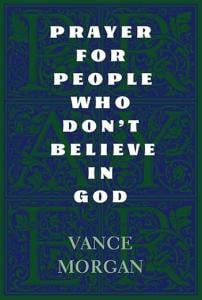 Even after writing a book on prayer a few years ago, I still find prayer to be a mystery. I know a lot more about what prayer is not than about what it might be but, as every student in Philosophy 101 learns, it is logically impossible to define anything by simply making a list of what that thing is not.
I grew up in a fully solar religious world where, as Barbara Brown Taylor describes, prayers were offered positively, consistently, loudly, and in expectation of regular and reliable answers. We loved hearing and talking about stories of answered prayer from scripture and our own experience, celebrating the many ways in which God responded to our prayers. The measure of a prayer’s effectiveness was whether it was answered. Midweek prayer services were filled with testimonies of “what the Lord has done for me” during the past week. The fact that our fervent prayers often went unanswered and the presence of the Divine was often undetectable didn’t matter—we were urged to live out a religious version of “fake it ‘til you make it” because, after all, how can you not be happy when God is on your side?
Prayer according to the solar model is energized by the person doing the praying. We called people who appeared to be particularly successful at attracting God’s attention “prayer warriors,” an unfortunate turn of phrase because from it I learned early on that the spiritual life is a struggle, involving warfare and all of the characteristics that define a good soldier. A prayer warrior, it seemed to me, was someone who could pray for longer periods of time and more loudly than others, but one earned this title only if a few, or even one, of one’s prayers had identifiably been answered at some point.
The solar model of prayer is transactional. I’ll do this for you and you do this for me. This conception of a prayer-answering God has a solid pedigree—the Bible contains many passages in which God clearly invites the believer to ask for things, to express her heart’s desire, to “call upon Me and I will answer you.” But there comes a time in the life of any person of faith when the silence from the other end of the transaction becomes deafening.
I’m reminded of Ruby Turpin in Flannery O’Connor’s short story “Revelation” who, when her expectations concerning God have been disappointed one too many times, shakes her fist at the sky and shouts: “WHO DO YOU THINK YOU ARE?” It’s a place that everyone who believes in the goodness of God will eventually arrive. And it’s all a matter of disappointed expectations. If God is God, why is this happening? If I can’t depend on God to be there when expected, to set things right when I don’t approve of them, to punish the wicked and reward the just, what’s the point of believing? What’s the difference between a God who cannot be detected, understood, explained, or relied upon and no God at all?
This is where I believe thinking about prayer as lunar rather than solar is helpful. A useful question to ask is: “What if prayer is something that you are rather than something that you do?” In the solar model, prayer is an activity, generated by the person praying in hopes that the activity is being done with the energy and content that the Divine approves of. But as Pope Francis told his fellow cardinals, it is a mistake in the life of faith to consider oneself as the energy source.
If prayer is lunar rather than solar, then everything changes. Prayer becomes a matter of reflecting the divine light into the world in whatever way that light is shining on you and in you at the time. It is not up to me to generate the light; rather, it is up to me to reflect divine reality in ways that are unique to me and represent the seasons and cycles of my life. This is the only way that I can make sense of Paul’s directive in First Thessalonians to “pray without ceasing.” No one can pray all of the time, but each of us can become a prayer as we continue to become the persons that God intends us to be. Prayer becomes a matter of becoming a certain sort of person, rather than becoming better and better at doing certain kinds of things.
It is not up to us to draw God’s attention through perfected prayer-performance art—God is already here. Rather, we are to reflect the light of the Divine uniquely as incarnated beings who bear that light within us. Becoming a prayer is undoubtedly a lifelong process, but there is no better place to start than with the advice Paul provides to the church at Philippi. “Finally, whatever things are true . . . honest . . . just . . . pure . . . lovely . . . of good report. If there is any virtue, if there is any praise, think on these things.” As we reflect on these things, we begin to reflect them as we become mirrors of the divine light. We begin to be a prayer.
Previous Post

February 5, 2026
What Does the Lord Require of You?
Next Post
February 11, 2026 The National Prayer Breakfast Gets an Unexpected Visitor
Recent Comments
"Mary did have a choice. And she was able to make it before the Holy ..."
"i cannot read beyond your recommendations for the books since i like to have a ..."
"AI will never be able to utter with honesty, feeling, or humility, the greeting: "Namaste".It ..."
"They do. I'm sure you could find discussions of the same topic from any of ..."
Browse Our Archives
Select a Category abortion Advent AI Angels Artificial intelligence atheism attention baptism Baptists beauty belief Benedictines Bible bicycling Big Bird books Bovina Camaldoli hermitage Canada Catholicism cats certainty change Christianity Christmas Collegeville Covid-19 creativity Development of Western Civilization dogs doubt Easter Enneagram Epiphany Episcopal ethics Eucharist evil extroverts Facebook faith family fear flowers forgiveness freedom friends God goodness grace happiness heaven hell history Holy Spirit Holy Week hope human nature humility humor idolatry incarnation introverts irreverence Islam Jeanne Jesus Joe Biden joy Judaism justice Kamala Harris knowledge Lent listen literature liturgy love Marsue Memorial Day miracles movies music mystery mythology NPR Old Testament optimism paradox peace Penguins philosophy piano podcast politics power prayer Protestantism Providence College Religion Rhode Island sabbatical sacrament science seeing silence Simone Weil Socrates soul sports St. John's College stories suffering tattoo teaching technology television theology thinking time tolerance transcendence travel trees trust truth Uncategorized Vermont wisdom wonder writing
Select a Month May 2026 April 2026 March 2026 February 2026 January 2026 December 2025 November 2025 October 2025 September 2025 August 2025 July 2025 June 2025 May 2025 April 2025 March 2025 February 2025 January 2025 December 2024 November 2024 October 2024 September 2024 August 2024 July 2024 June 2024 May 2024 April 2024 March 2024 February 2024 January 2024 December 2023 November 2023 October 2023 September 2023 August 2023 July 2023 June 2023 May 2023 April 2023 March 2023 February 2023 January 2023 December 2022 November 2022 October 2022 September 2022 August 2022 July 2022 June 2022 May 2022 April 2022 March 2022 February 2022 January 2022 December 2021 November 2021 October 2021 September 2021 August 2021 July 2021 June 2021 May 2021 April 2021 March 2021 February 2021 January 2021 December 2020 November 2020 October 2020 September 2020 August 2020 July 2020 June 2020 May 2020 April 2020 March 2020 February 2020 January 2020 December 2019 November 2019 October 2019 September 2019 August 2019 July 2019 June 2019 May 2019 April 2019 March 2019 February 2019 January 2019 December 2018 November 2018 October 2018 September 2018 August 2018 July 2018 June 2018 May 2018 April 2018 March 2018 February 2018 January 2018 December 2017 November 2017 October 2017 September 2017 August 2017 July 2017 June 2017 May 2017 April 2017 March 2017 February 2017 January 2017 December 2016 November 2016 October 2016 September 2016 August 2016 July 2016 June 2016 May 2016 April 2016 March 2016 February 2016 January 2016 December 2015 November 2015 October 2015 September 2015 August 2015 July 2015 June 2015 May 2015 April 2015 March 2015 February 2015 January 2015 December 2014 November 2014 October 2014 September 2014 August 2014 July 2014 June 2014 May 2014 April 2014 March 2014 February 2014 January 2014 December 2013 November 2013 October 2013 September 2013 August 2013 July 2013 June 2013 May 2013 April 2013 March 2013 February 2013 January 2013 December 2012 November 2012 October 2012 September 2012
Follow Us!
TAKE THE
Religious Wisdom Quiz
Who was Jephthah's daughter?
Select your answer to see how you score.
Unnamed Ruth Deborah Miriam
Books by This Author Books by Vance G. Morgan
Related posts from Freelance Christianity

The Lonely Pawn: On Faith, Doubt, and Meaning


AI and Love: When a Chatbot Becomes a...

TRENDING AT PATHEOS Progressive Christian

Why Christians Have a Sacred Duty to Vote:...
The Bible offers strong support for the sacred duty to vote. Here...

What Being a Modern-Day Apostle Means to Me
In my last column, I discussed the ins and outs of modern-day...

Did Ancient China Once Worship the God of...
Across human history, a common thread weaves through the origins of the...

Love Your Neighbor – Including Earth-Kin: Lev. 19,...
God’s command to love your neighbor means acting in an ethical and...

Lead a Church Study of “Jesus and Lao...
Guest writer Jack Thomas (The Irreverent Reverend) reflects on leading his church...

Principles for Understanding the Apostolic Ministry Today
Whenever people discover that my formal ministry title is "apostle," as in...
view all Progressive Christian blogs
What Are Your Thoughts?leave a comment
Ad-Free & Subscriber Log-In Subscription Support
- About Us
- 2026 Calendar
- Videos
- Podcasts
- Library of World Religions
- Faith In Media Tracker
- Advertise With Us
- Write for Us
- Privacy Policy
- Terms of Service
- Do Not Sell My Data
- Contact Us
- Radiant Digital
- Manage Newsletter Subscriptions
- Unsubscribe From Notifications
- Sitemap
Copyright 2008-2026, Patheos. All rights reserved.
Subscription Support Ad-Free & Subscriber Log-In
Follow Patheos