
BuddhistCatholicContemplativeEvangelicalGeneral ChristianHinduJewishLatter-day SaintMuslimNew VisionsProgressive Christian
Beliefs
- Buddhist
- Catholic
- Contemplative
- Evangelical
- General Christian
- Hindu
- Jewish
- Latter-day Saint
- More Voices
- Muslim
- New Visions
- Pagan
- Progressive Christian
Topics
- Religion News
- Food and Religion
- Sports and Religion
- Religious Art
- Religious Music and Entertainment
- Religious Events
- History and Religion
- Style and Religion
- Politics and Religion
- Women in Religion
- Recreation Outdoors and Religion
- Business Finance and Religion
- Careers Workplace and Religion
- Education and Religion
- Family Parenting and Religion
- Health Fitness and Religion
- Home and Religion
- Relationships and Religion
- Technology and Religion
- Travel and Religion
Columnists
- Buddhist Columnists
- Business Finance and Religion Columnists
- Careers Workplace and Religion Columnists
- Catholic Columnists
- Contemplative Columnists
- Education and Religion Columnists
- Evangelists Columnists
- Family Parenting and Religion Columnists
- General Christian Columnists
- Health Fitness and Religion Columnists
- Hindu Columnists
- History and Religion Columnists
- Home and Religion Columnists
- Jewish Columnists
- More Voices Columnists
- Latter Day Columnists
- Muslim Columnists
- New Visions Columnists
- Nonreligious Columnists
- Pagan Columnists
- Politics and Religion Columnists
- Progressive Columnists
- Recreation Outdoors and Religion Columnists
- Relationships and Religion Columnists
- Religion News Columnists
- Religious Art Columnists
- Religious Events Columnists
- Religious Music and Entertainment Columnists
- Sports and Religion Columnists
- Style and Religion Columnists
- Technology and Religion Columnists
- Travel and Religion Columnists
- Women in Religion Columnists
Resource Library
- 2026 Calendar
- Library of World Religions
- The 100 Most Holy Places on Earth
- Patheos Answers
- Podcasts
- Videos
- Faith Leaders Database
- Anglican Episcopalian
- Bahai
- Baptist
- Buddhism
- Christianity
- Confucianism
- Eastern Orthodoxy
- Hinduism
- Holiness and Pentecostal
- ISKCON
- Islam
- Judaism
- Lutheran
- Methodist
- The Church of Jesus Christ of Latter-day Saints
- New Age
- Paganism
- Presbytarian and Reformed
- Protestantism
- Religion Behind the Scenes
- Roman Catholic
- Scientology
- Shia Islam
- Sikhism
- Sufism
- Sunni Islam
- Taoism
- Zen
- See all religions
Research Tools
 Ad-Free & Subscriber Log-In Subscription Support
Ad-Free & Subscriber Log-In Subscription Support
Follow Patheos 

- Trending:
- Forgiveness
- |
- Marriage
- |
- Consciousness
- |
- Death Penalty
- |
- Election
- |
- Halloween

- Home
- Progressive Christian
- Knowing the Unknowable
Knowing the Unknowable
Last updated on: October 10, 2017 at 6:15 am by Vance Morgan
Knowing the Unknowable 2017-10-10T05:43:14-04:00 Vance Morgan
Patheos Explore the world's faith through different perspectives on religion and spirituality! Patheos has the views of the prevalent religions and spiritualities of the world.
Every fall I spend a week with over one hundred freshman exploring the familiar but challenging stories of Genesis and Exodus. Each year I’m in a different place and the students have different interests, backgrounds, and prior experience with the texts, so each time “all things are become new.” Our frequent focus is on the problem of how to make contact with the most important force in the universe in a meaningful way when, virtually by definition, that force is unknowable. The God of the Old Testament stories wants simultaneously to have an intimate relationship with apparently random groups of human beings and individuals, yet frequently falls back on the “I’m God and you’re not” position when things get dicey (such as when human beings start asking tough questions).
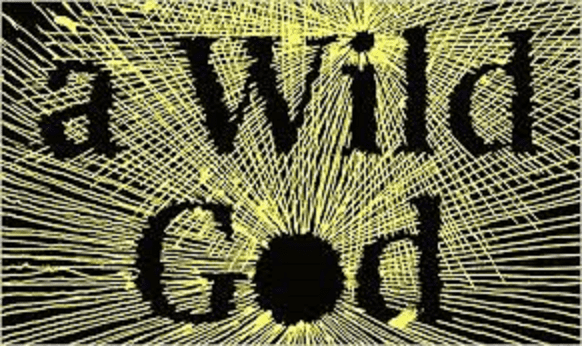
One fall around this time, a friend of mine from church who also is a regular at the monthly seminars I lead afterwards asked me whether I had ever read Barbara Ehrenreich’s Living With a Wild God. I had not, and honestly had never heard of the book (although the title alone made me want to read it immediately). “Put it on your list,” said my friend. “I want to know what you think of the end of the book.”
I found the book to be equal parts interesting, annoying, and incoherent. As Ehrenreich, best known (to me, at least) for her best-seller Nickeled and Dimed, wanders back in time to her dysfunctional childhood and tries to pick up a thread of investigation now that she is in her early seventies that she dropped many decades earlier, she frequently gets lost in the jungle that threatens everyone who writes about themselves—the temptation to believe that just because it happened to me, it’s interesting and important to someone else. The fine line between fascinating memoir and suffocating self-absorption is often close to invisible.
I should have loved the book, given that it is (roughly) the story of an atheist trying to come to grips with what can only be described as a series of “mystical experiences” that occurred over a few years in her late teens and early twenties. Right up my alley—sounds exactly like what God would do, send mystical experiences to an atheist while giving well-intentioned believers the silent treatment. But it wasn’t until the final chapter when I realized why the whole thing just wasn’t clicking with me. Ehrenreich writes:
I have no patience with Goethe when he wrote, ‘The highest happiness of man is to have probed what is knowable, and to quietly revere what is unknowable.’ Why ‘revere’ the unknowable? Why not find out what it is?
“Aha!” I thought. She’s trying to play the “seeking after God” game using a set of rules that guarantees that she will lose the game. That’s like playing Monopoly using rules that guarantee you’ll not proceed past Baltic Avenue. Never a good idea.
Ehrenreich was trained as a scientist and came from a family with no regard for religion, so her categories of explanation for everything are objective evidence, provable fact, and calculating reason. She lacks the common vocabulary for even beginning to communicate about experiences that apparently do not fit into these categories, but that doesn’t stop her from trying. And it is a heroic effort throughout, regularly teasing the reader with impending breakthroughs in understanding—when she’s not spending page after page telling us about her love affairs, her immersion in sixties radicalism and a variety of stop-and-start careers, that is. But I hung in there because I was hoping for a big payoff of some sort—Barbara Ehrenreich meets the Divine.
In her final chapter, the one in which I hoped she would tentatively draw a line between the knowable and the unknowable as her experiences have led her to draw it, Ehrenreich instead unfavorably quotes the above passage from Goethe, then proceeds to speculate randomly about the “wild God” who has been lurking around the fringes of her rational and logical life ever since her mystical experiences as a teenager.
Maybe God is the Presence we occasionally found ourselves in the middle of while experiencing natural beauty. Maybe God is a creation of the “Hyperactive Agency Detection Device” that cognitive scientists say our human brain comes equipped with, a device that predisposes us to project consciousness onto things other than ourselves, including rocks and trees. Maybe God is like a germ or a virus, not really alive but pervasively invading the various cracks available in living things. Or, I might add, maybe God is a Flying Spaghetti Monster, since apparently once one starts speculating beyond the boundaries of logic any guess is as good as any other.
“Why revere the unknowable? Why not find out what it is?” In the end, I find these questions to be sad, simply because the continuing assumption behind the questions is that everything, and I mean everything, is subject to not only logical scrutiny (that’s fine) but also the assumption that only those things that are at least in theory within the range and scope of human reason are worthy of even a moment of human attention. It is as if we have no other tools available for engaging with and trying to shape a meaningful life within the world we find ourselves so unexpectedly placed.
The other day I made the rare choice to get involved in a Facebook discussion. In response to my resistance to his universal claim that “Religious faith is bad,” a Facebook acquaintance (whom I’ve never met) said “Faith is belief without evidence. What else does it mean? Why else would it be needed?” My quick and inadequate response was “Faith is not belief without evidence. Faith is belief when evidence may point in a particular direction but is not complete or exhaustive. Belief entirely without any evidence at all is simply foolishness. That foolishness is not confined to religious activities–it is rampant in politics or any other arena of belief. Non-theists are just as capable of such foolishness as theists are.”
As long as faith opponents are rejecting a definition of faith similar to Mark Twain’s “Faith is believing something you know ain’t true,” I’m with them. But that’s not what real faith is. Rather, it is applying the very common human activity of believing on the basis of important but partial evidence to the realm of the relationship between human and divine. “Faith is the substance of things hoped for, the evidence of things not seen” wrote the author of Hebrews. The relationship between faith, evidence, knowledge and hope is one worthy of extended investigation—perhaps a sabbatical?? But to assume that faith and evidence have nothing to do with each other is to define the game out of existence—or to guarantee advancing no further than Baltic Avenue.
Development of Western Civilization
Development of Western Civilization
Previous Post

October 8, 2017
Learning to be Content
Next Post

October 12, 2017 God Doesn't Need Our Protection
Browse Our Archives
Select a Category abortion Advent AI Angels Artificial intelligence atheism attention baptism Baptists beauty belief Benedictines Bible bicycling Big Bird books Bovina Camaldoli hermitage Canada Catholicism cats certainty change Christianity Christmas Collegeville Covid-19 creativity Development of Western Civilization dogs doubt Easter Enneagram Epiphany Episcopal ethics Eucharist evil extroverts Facebook faith family fear flowers forgiveness freedom friends God goodness grace happiness heaven hell history Holy Spirit Holy Week hope human nature humility humor idolatry incarnation introverts irreverence Islam Jeanne Jesus Joe Biden joy Judaism justice Kamala Harris knowledge Lent listen literature liturgy love Marsue Memorial Day miracles movies music mystery mythology NPR Old Testament optimism paradox peace Penguins philosophy piano podcast politics power prayer Protestantism Providence College Religion Rhode Island sabbatical sacrament science seeing silence Simone Weil Socrates soul sports St. John's College stories suffering tattoo teaching technology television theology thinking time tolerance transcendence travel trees trust truth Uncategorized Vermont wisdom wonder writing
Select a Month May 2026 April 2026 March 2026 February 2026 January 2026 December 2025 November 2025 October 2025 September 2025 August 2025 July 2025 June 2025 May 2025 April 2025 March 2025 February 2025 January 2025 December 2024 November 2024 October 2024 September 2024 August 2024 July 2024 June 2024 May 2024 April 2024 March 2024 February 2024 January 2024 December 2023 November 2023 October 2023 September 2023 August 2023 July 2023 June 2023 May 2023 April 2023 March 2023 February 2023 January 2023 December 2022 November 2022 October 2022 September 2022 August 2022 July 2022 June 2022 May 2022 April 2022 March 2022 February 2022 January 2022 December 2021 November 2021 October 2021 September 2021 August 2021 July 2021 June 2021 May 2021 April 2021 March 2021 February 2021 January 2021 December 2020 November 2020 October 2020 September 2020 August 2020 July 2020 June 2020 May 2020 April 2020 March 2020 February 2020 January 2020 December 2019 November 2019 October 2019 September 2019 August 2019 July 2019 June 2019 May 2019 April 2019 March 2019 February 2019 January 2019 December 2018 November 2018 October 2018 September 2018 August 2018 July 2018 June 2018 May 2018 April 2018 March 2018 February 2018 January 2018 December 2017 November 2017 October 2017 September 2017 August 2017 July 2017 June 2017 May 2017 April 2017 March 2017 February 2017 January 2017 December 2016 November 2016 October 2016 September 2016 August 2016 July 2016 June 2016 May 2016 April 2016 March 2016 February 2016 January 2016 December 2015 November 2015 October 2015 September 2015 August 2015 July 2015 June 2015 May 2015 April 2015 March 2015 February 2015 January 2015 December 2014 November 2014 October 2014 September 2014 August 2014 July 2014 June 2014 May 2014 April 2014 March 2014 February 2014 January 2014 December 2013 November 2013 October 2013 September 2013 August 2013 July 2013 June 2013 May 2013 April 2013 March 2013 February 2013 January 2013 December 2012 November 2012 October 2012 September 2012
Follow Us!
TAKE THE
Religious Wisdom Quiz
What book contains the shortest chapter in the Bible?
Select your answer to see how you score.
Obadiah Haggai Psalms Proverbs
Books by This Author Books by Vance G. Morgan
Related posts from Freelance Christianity

The Lonely Pawn: On Faith, Doubt, and Meaning


AI and Love: When a Chatbot Becomes a...

TRENDING AT PATHEOS Progressive Christian

What Being a Modern-Day Apostle Means to Me
In my last column, I discussed the ins and outs of modern-day...

Did Ancient China Once Worship the God of...
Across human history, a common thread weaves through the origins of the...

Love Your Neighbor – Including Earth-Kin: Lev. 19,...
God’s command to love your neighbor means acting in an ethical and...

Lead a Church Study of “Jesus and Lao...
Guest writer Jack Thomas (The Irreverent Reverend) reflects on leading his church...

Pastoral Wisdom for Responding to Sermon Pushback
Getting sermon pushback on your social justice sermon? Learn practical, Proverbs-based strategies...

Principles for Understanding the Apostolic Ministry Today
Whenever people discover that my formal ministry title is "apostle," as in...
view all Progressive Christian blogs
Ad-Free & Subscriber Log-In Subscription Support
- About Us
- 2026 Calendar
- Videos
- Podcasts
- Library of World Religions
- Faith In Media Tracker
- Advertise With Us
- Write for Us
- Privacy Policy
- Terms of Service
- Do Not Sell My Data
- Contact Us
- Radiant Digital
- Manage Newsletter Subscriptions
- Unsubscribe From Notifications
- Sitemap
Copyright 2008-2026, Patheos. All rights reserved.
Subscription Support Ad-Free & Subscriber Log-In
Follow Patheos