
BuddhistCatholicContemplativeEvangelicalGeneral ChristianHinduJewishLatter-day SaintMuslimNew VisionsProgressive Christian
Beliefs
- Buddhist
- Catholic
- Contemplative
- Evangelical
- General Christian
- Hindu
- Jewish
- Latter-day Saint
- More Voices
- Muslim
- New Visions
- Pagan
- Progressive Christian
Topics
- Religion News
- Food and Religion
- Sports and Religion
- Religious Art
- Religious Music and Entertainment
- Religious Events
- History and Religion
- Style and Religion
- Politics and Religion
- Women in Religion
- Recreation Outdoors and Religion
- Business Finance and Religion
- Careers Workplace and Religion
- Education and Religion
- Family Parenting and Religion
- Health Fitness and Religion
- Home and Religion
- Relationships and Religion
- Technology and Religion
- Travel and Religion
Columnists
- Buddhist Columnists
- Business Finance and Religion Columnists
- Careers Workplace and Religion Columnists
- Catholic Columnists
- Contemplative Columnists
- Education and Religion Columnists
- Evangelists Columnists
- Family Parenting and Religion Columnists
- General Christian Columnists
- Health Fitness and Religion Columnists
- Hindu Columnists
- History and Religion Columnists
- Home and Religion Columnists
- Jewish Columnists
- More Voices Columnists
- Latter Day Columnists
- Muslim Columnists
- New Visions Columnists
- Nonreligious Columnists
- Pagan Columnists
- Politics and Religion Columnists
- Progressive Columnists
- Recreation Outdoors and Religion Columnists
- Relationships and Religion Columnists
- Religion News Columnists
- Religious Art Columnists
- Religious Events Columnists
- Religious Music and Entertainment Columnists
- Sports and Religion Columnists
- Style and Religion Columnists
- Technology and Religion Columnists
- Travel and Religion Columnists
- Women in Religion Columnists
Resource Library
- 2026 Calendar
- Library of World Religions
- The 100 Most Holy Places on Earth
- Patheos Answers
- Podcasts
- Videos
- Faith Leaders Database
- Anglican Episcopalian
- Bahai
- Baptist
- Buddhism
- Christianity
- Confucianism
- Eastern Orthodoxy
- Hinduism
- Holiness and Pentecostal
- ISKCON
- Islam
- Judaism
- Lutheran
- Methodist
- The Church of Jesus Christ of Latter-day Saints
- New Age
- Paganism
- Presbytarian and Reformed
- Protestantism
- Religion Behind the Scenes
- Roman Catholic
- Scientology
- Shia Islam
- Sikhism
- Sufism
- Sunni Islam
- Taoism
- Zen
- See all religions
Research Tools
 Ad-Free & Subscriber Log-In Subscription Support
Ad-Free & Subscriber Log-In Subscription Support
Follow Patheos 

- Trending:
- Forgiveness
- |
- Marriage
- |
- Consciousness
- |
- Death Penalty
- |
- Election
- |
- Halloween

- Home
- Progressive Christian
- Justifying My Existence
Justifying My Existence
Last updated on: June 1, 2015 at 7:30 am by Vance Morgan
Justifying My Existence 2015-06-01T07:30:08-04:00 Vance Morgan
Patheos Explore the world's faith through different perspectives on religion and spirituality! Patheos has the views of the prevalent religions and spiritualities of the world.
It is unsettling, even scary, to relinquish who we think we are, and scary to stop clinging to what we have and what we do. Henri Nouwen
As I picked up my bag to walk to the gym, then to the office for a few hours of work, I said “I’m off to justify my existence for the day!” The idea of such daily justification comes from my father who, when he was at home rather than on the road travelling, used to ask my brother and me as we stepped into the house after school 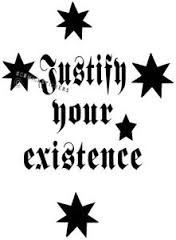 “What did you do today to justify your existence on this planet?” He always had a smile on his face when he said it, but there were serious undertones to the question. The challenge to not just be a piece of furniture in the room, not just to occupy space, but to prove my worth on a daily basis has stuck with me ever since. Jeanne’s response to my announcement was to laugh and say “You don’t have to do anything to justify your existence!” I appreciate the sentiment, but I’m not so sure.
I can talk a good talk about why, despite the Protestant work ethic and stereotypical American focus on action and productivity that pervades our culture, who one is does not amount to the same thing as what one does.  As Joan Chittister writes, humility is “the strength to separate our sense of the meaning of life from what we do.” One should work to live, after all, not live to work. I am not, however, nearly as good at walking the walk. This has become more and more obvious as I move into sabbatical mode. Within a month I will no longer be a program director, something that has consumed me as a second full-time job for the past four years. I will not be a full-time teacher for the next sixteen months, uncharted territory for someone who believes he was born to be a professor. I’ve been telling everyone who would listen for several years that the biggest thing that being an administrator, first four years as department chair, then four more as a program director, has taken away from me is writing. But this is not entirely true. I actually have been writing a lot over the past almost-three-years on this blog—close to 300,000 words worth of writing (enough for three 250-or-so page books). What I have not done for close to a decade is academic writing of the sort that an academic must do in order to get promoted and tenured. Why? Because I don’t have to. Nor do I want to.
  Tenure and the last promotion came a long time ago, well before the last decade of administration piled on top of teaching. I no longer need to write and publish the sort of thing that one needs to write and publish in order to earn tenure and promotion, and this is a good thing since I don’t want to write that sort of thing and haven’t wanted to for some time.
What this means, going into sabbatical, is that for the first time in my professional life—actually for the first time in my adult life—the pressure is off. I’m being paid to be on sabbatical—undoubtedly a rare gift pretty much exclusive to the world of academia. And I’m not sure how to handle that. Over the past few years I have taken baby steps in the direction of trusting the world around me to show me what’s next rather than imposing my own expectations and structures on what’s next.  But they are only baby steps, insufficient to guide my plans for sabbatical. Beginning around this time last year I started planning for sabbatical by doing the usual things—setting up a series of appointments with our very helpful director of sponsored research, sending out proposals both for residential and non-residential sabbatical projects, and so on. For several months in late 2014 I waited to see what I would be doing and where I would be going on sabbatical. The response to all of my proposals? “Thanks, but no thanks.” Other than the lovely form rejection letters in various forms, I received no feedback other than “we don’t want to fund you doing that.” By the time the rejections arrived the spring semester had started, so other than a few “what the fuck??” moments, I didn’t have the time to think much about the implications until the past couple of weeks. I have plenty to work on and write about—three book projects, no less—but the usual routes to where that will happen and when have been dead ends. Now what?
 I was lector yesterday morning at church for the first time in months, and in one of those unexpected moments of synchronicity that I’ve noticed more and more frequently over the past several years my assigned Old Testament reading was one of my favorites from the Jewish scriptures, the call of Isaiah. As I read it from the lectern the story had immediate resonance. Isaiah has a vision of the divine throne room, where six-winged seraphim fly about and cry “Holy, holy, holy!” 24/7. After Isaiah expresses his utter unworthiness at being present for such a glorious spectacle, an angel takes a live coal with tongs from the altar and, laying it on Isaiah’s lips, says “Now that this has touched your lips, your guilt has departed and your sin is blotted out.” Now you are ready, in other words. God itself asks “Whom shall I send, and who will go for us?” Isaiah answers, “Here am I; send me.” A risky thing to do, opening oneself up to whatever might come. Isaiah’s mission starts by saying “I’m ready for whatever.” Scary business, but I’ll give it a shot.
In Man’s Search for Meaning, Viktor Frankl, a survivor of Auschwitz, tells the brief story of a woman’s last hours before death.  Lying on her filthy cot in the barracks, the woman spoke briefly with Frankl.
“I am grateful that fate has hit me so hard. In my former life I was spoiled and did not take spiritual accomplishments seriously.” Pointing through the window of the hut, she said, “This tree here is the only friend I have in my loneliness.” Through that window she could see just one branch of a chestnut tree, and on the branch were two blossoms. “I often talk to this tree,” she said to me. I was startled and didn’t quite know how to take her words. Was she delirious? Did she have occasional hallucinations? Anxiously I asked her if the tree replied. “Yes.” What did it say to her? She answered, “It said to me, ‘I am here—I am here—I am life, eternal life.’”
I am here—I am life. Maybe that’s enough. At least it’s a start.
Previous Post

May 29, 2015
Colorblindness
Next Post
June 3, 2015 Unvisited Tombs
Browse Our Archives
Select a Category abortion Advent AI Angels Artificial intelligence atheism attention baptism Baptists beauty belief Benedictines Bible bicycling Big Bird books Bovina Camaldoli hermitage Canada Catholicism cats certainty change Christianity Christmas Collegeville Covid-19 creativity Development of Western Civilization dogs doubt Easter Enneagram Epiphany Episcopal ethics Eucharist evil extroverts Facebook faith family fear flowers forgiveness freedom friends God goodness grace happiness heaven hell history Holy Spirit Holy Week hope human nature humility humor idolatry incarnation introverts irreverence Islam Jeanne Jesus Joe Biden joy Judaism justice Kamala Harris knowledge Lent listen literature liturgy love Marsue Memorial Day miracles movies music mystery mythology NPR Old Testament optimism paradox peace Penguins philosophy piano podcast politics power prayer Protestantism Providence College Religion Rhode Island sabbatical sacrament science seeing silence Simone Weil Socrates soul sports St. John's College stories suffering tattoo teaching technology television theology thinking time tolerance transcendence travel trees trust truth Uncategorized Vermont wisdom wonder writing
Select a Month May 2026 April 2026 March 2026 February 2026 January 2026 December 2025 November 2025 October 2025 September 2025 August 2025 July 2025 June 2025 May 2025 April 2025 March 2025 February 2025 January 2025 December 2024 November 2024 October 2024 September 2024 August 2024 July 2024 June 2024 May 2024 April 2024 March 2024 February 2024 January 2024 December 2023 November 2023 October 2023 September 2023 August 2023 July 2023 June 2023 May 2023 April 2023 March 2023 February 2023 January 2023 December 2022 November 2022 October 2022 September 2022 August 2022 July 2022 June 2022 May 2022 April 2022 March 2022 February 2022 January 2022 December 2021 November 2021 October 2021 September 2021 August 2021 July 2021 June 2021 May 2021 April 2021 March 2021 February 2021 January 2021 December 2020 November 2020 October 2020 September 2020 August 2020 July 2020 June 2020 May 2020 April 2020 March 2020 February 2020 January 2020 December 2019 November 2019 October 2019 September 2019 August 2019 July 2019 June 2019 May 2019 April 2019 March 2019 February 2019 January 2019 December 2018 November 2018 October 2018 September 2018 August 2018 July 2018 June 2018 May 2018 April 2018 March 2018 February 2018 January 2018 December 2017 November 2017 October 2017 September 2017 August 2017 July 2017 June 2017 May 2017 April 2017 March 2017 February 2017 January 2017 December 2016 November 2016 October 2016 September 2016 August 2016 July 2016 June 2016 May 2016 April 2016 March 2016 February 2016 January 2016 December 2015 November 2015 October 2015 September 2015 August 2015 July 2015 June 2015 May 2015 April 2015 March 2015 February 2015 January 2015 December 2014 November 2014 October 2014 September 2014 August 2014 July 2014 June 2014 May 2014 April 2014 March 2014 February 2014 January 2014 December 2013 November 2013 October 2013 September 2013 August 2013 July 2013 June 2013 May 2013 April 2013 March 2013 February 2013 January 2013 December 2012 November 2012 October 2012 September 2012
Follow Us!
TAKE THE
Religious Wisdom Quiz
Who rebuilt the walls of Jerusalem after the exile?
Select your answer to see how you score.
Zerubbabel Ezra Nehemiah Joshua
Books by This Author Books by Vance G. Morgan
Related posts from Freelance Christianity

The Lonely Pawn: On Faith, Doubt, and Meaning


AI and Love: When a Chatbot Becomes a...

TRENDING AT PATHEOS Progressive Christian

What Being a Modern-Day Apostle Means to Me
In my last column, I discussed the ins and outs of modern-day...

Did Ancient China Once Worship the God of...
Across human history, a common thread weaves through the origins of the...

Love Your Neighbor – Including Earth-Kin: Lev. 19,...
God’s command to love your neighbor means acting in an ethical and...

Lead a Church Study of “Jesus and Lao...
Guest writer Jack Thomas (The Irreverent Reverend) reflects on leading his church...

Pastoral Wisdom for Responding to Sermon Pushback
Getting sermon pushback on your social justice sermon? Learn practical, Proverbs-based strategies...

Principles for Understanding the Apostolic Ministry Today
Whenever people discover that my formal ministry title is "apostle," as in...
view all Progressive Christian blogs
Ad-Free & Subscriber Log-In Subscription Support
- About Us
- 2026 Calendar
- Videos
- Podcasts
- Library of World Religions
- Faith In Media Tracker
- Advertise With Us
- Write for Us
- Privacy Policy
- Terms of Service
- Do Not Sell My Data
- Contact Us
- Radiant Digital
- Manage Newsletter Subscriptions
- Unsubscribe From Notifications
- Sitemap
Copyright 2008-2026, Patheos. All rights reserved.
Subscription Support Ad-Free & Subscriber Log-In
Follow Patheos