
BuddhistCatholicContemplativeEvangelicalGeneral ChristianHinduJewishLatter-day SaintMuslimNew VisionsProgressive Christian
Beliefs
- Buddhist
- Catholic
- Contemplative
- Evangelical
- General Christian
- Hindu
- Jewish
- Latter-day Saint
- More Voices
- Muslim
- New Visions
- Pagan
- Progressive Christian
Topics
- Religion News
- Food and Religion
- Sports and Religion
- Religious Art
- Religious Music and Entertainment
- Religious Events
- History and Religion
- Style and Religion
- Politics and Religion
- Women in Religion
- Recreation Outdoors and Religion
- Business Finance and Religion
- Careers Workplace and Religion
- Education and Religion
- Family Parenting and Religion
- Health Fitness and Religion
- Home and Religion
- Relationships and Religion
- Technology and Religion
- Travel and Religion
Columnists
- Buddhist Columnists
- Business Finance and Religion Columnists
- Careers Workplace and Religion Columnists
- Catholic Columnists
- Contemplative Columnists
- Education and Religion Columnists
- Evangelists Columnists
- Family Parenting and Religion Columnists
- General Christian Columnists
- Health Fitness and Religion Columnists
- Hindu Columnists
- History and Religion Columnists
- Home and Religion Columnists
- Jewish Columnists
- More Voices Columnists
- Latter Day Columnists
- Muslim Columnists
- New Visions Columnists
- Nonreligious Columnists
- Pagan Columnists
- Politics and Religion Columnists
- Progressive Columnists
- Recreation Outdoors and Religion Columnists
- Relationships and Religion Columnists
- Religion News Columnists
- Religious Art Columnists
- Religious Events Columnists
- Religious Music and Entertainment Columnists
- Sports and Religion Columnists
- Style and Religion Columnists
- Technology and Religion Columnists
- Travel and Religion Columnists
- Women in Religion Columnists
Resource Library
- 2026 Calendar
- Library of World Religions
- The 100 Most Holy Places on Earth
- Patheos Answers
- Podcasts
- Videos
- Faith Leaders Database
- Anglican Episcopalian
- Bahai
- Baptist
- Buddhism
- Christianity
- Confucianism
- Eastern Orthodoxy
- Hinduism
- Holiness and Pentecostal
- ISKCON
- Islam
- Judaism
- Lutheran
- Methodist
- The Church of Jesus Christ of Latter-day Saints
- New Age
- Paganism
- Presbytarian and Reformed
- Protestantism
- Religion Behind the Scenes
- Roman Catholic
- Scientology
- Shia Islam
- Sikhism
- Sufism
- Sunni Islam
- Taoism
- Zen
- See all religions
Research Tools
 Ad-Free & Subscriber Log-In Subscription Support
Ad-Free & Subscriber Log-In Subscription Support
Follow Patheos 

- Trending:
- Forgiveness
- |
- Marriage
- |
- Consciousness
- |
- Death Penalty
- |
- Election
- |
- Halloween

- Home
- Progressive Christian
- Jesus and John Gather at the River
Jesus and John Gather at the River
Last updated on: January 7, 2023 at 12:00 pm by Vance Morgan
Jesus and John Gather at the River 2023-01-07T11:33:41-04:00 Vance Morgan
Patheos Explore the world's faith through different perspectives on religion and spirituality! Patheos has the views of the prevalent religions and spiritualities of the world.
The season of Epiphany, squeezed in between the Christmas season and Lent, is the annual liturgical celebration of Jesus’ coming out party. The gospel texts over the next few weeks will follow Jesus as he calls disciples, performs miracles, gets thrown out of his hometown synagogue for claiming to be the fulfillment of Isaiah’s prophecy of the Messiah, and delivers the Sermon on the Mount. The gospel reading for the First Sunday of Epiphany is Matthew’s account of Jesus’ baptism by John the Baptist, the actual kickoff of the coming out party.

It has me thinking about several things, particularly the different ways in which the Christian groups I have spent my life with have handled baptism. What is the proper way to do it? Why do it at all? This takes me back almost four decades . . .
What is the best way to get the attention of a bunch of Episcopalians? I learned the answer to this question almost forty years ago when, after my first Sunday morning Episcopal worship service, I found myself downstairs in what they called the “undercroft” for coffee hour. There were at least fifty people gathered, eating pastries, drinking coffee, some smoking cigarettes (of all things**)–**the noise of conversation was deafening. Then the Dean of the cathedral entered the room and said loudly THE LORD BE WITH YOU! Upon which everyone parroted back AND ALSO WITH YOU! followed by dead silence. The joys of a liturgical church, in which some ways “trump” all others in terms of grabbing attention.
This is the phrase that every week introduces important chunks of liturgy, including the baptism of a baby, an event that I experienced for the first time soon after I started attending Episcopal services. The Episcopal procedure of baptizing infants was one of the few things that gave me pause when I discovered Anglican worship in my twenties. So much about the Episcopal way of doing things was attractive and an obvious spiritual balm to the scars I carried in my twenties from my conservative, fundamentalist upbringing. Liturgy, a pipe organ, excellent music, clerical robes, a prayer-book, weekly Eucharist—if I had been aware enough to design worship that spoke to my deepest aesthetic and spiritual needs, it would have been exactly like Sunday morning at St. Matthew’s Cathedral.
But this baby-baptizing business was weird. After finishing the baptismal liturgy, the Dean would carry the baby up and down the center aisle of the cathedral, saying “This is the brand newest Christian in the world!” as the congregation applauded. For someone taught from his earliest memory that becoming a Christian required a “born again experience,” a once for all conversion event that required a certain level of rational maturity and spiritual awareness, this business of becoming a Christian simply by some water being poured on one’s head in the manner specified by the prayer-book was jarring. My own full immersion baptism, performed by my father in a swimming pool size baptismal when I was twelve, was what a baptism is supposed to be like. I’ve always thought, despite sacred art and Hollywood depictions, that John the Baptist did not just pour a bit of water on Jesus’ head that day in the Jordan River—he dunked him.
At this point in my life I find myself, in addition to being much older and (hopefully) experienced, in a significantly different place spiritually and find it somewhat amusing and quaint that I thought baby-baptizing might be a deal breaker. There are a few essentials in the Christian faith—the Incarnation, for instance—but the proper method to baptize someone, let alone the meaning of baptism, is not one of them. I even resist attempts to nail down the essentials. Try systematizing the mystery of the Incarnation and see how far you get before losing the mystery entirely. The beautiful words toward the end of the Episcopal baptismal liturgy points toward another mystery—“You are marked as Christ’s own forever.” If I believe that to be true, then former doctrinal issues with baptizing children dissolve into a puddle of irrelevance.
In Iris Murdoch’s novel Nuns and Soldiers, a central character has a vision in which she is visited in her kitchen by Jesus. As he leaves the room after a brief conversation, Jesus touches the woman on the hand. After the vision ends, she knows that her experience was not simply imaginary because her hand is painfully burned where Jesus touched her. Although the burn heals, and the pain eventually fades over the following days, a small but permanent scar remains. For the rest of her life her scar is an indelible reminder that she is forever changed because one day she encountered Jesus.
Perhaps baptism is something like that. Somewhere in the past and continuing history of those who are scarred by the mark of Christ are events, people, decisions, and experiences that form the skeleton, the internal structure of faith. A person’s spiritual identity is shaped by this structure, fleshed out in ways unique to each individual.
Some pieces of this identity come out of the blue, divinely tinged experiences that cannot be easily accommodated or dismissed. Others are deliberately chosen, such as a baptism, responding to an altar call, a choice of worship community, or turning away from what no longer gives life. As a person baptized as an infant grows older, that person will be able to identify their baptismal Sunday as a signpost of difference, even though they did not choose that signpost themselves. The imprint of the divine on a human life often has nothing to do with individual choice.
The beauty of the Incarnation is that each of the moments of all of our days are, as Gerard Manley Hopkins put it, “charged with the grandeur of God.” The grandeur is not in the product, the greatness of what I or anyone, marked as Christ’s own, might become or achieve. The grandeur is not even in the gloriously random and holy experiences that leaven our lives. The grandeur is in the very idea of God in the flesh, an indwelling reality that sanctifies even our most mundane days and disturbing experiences. The Lord be with you . . . as the Lord always is.
Previous Post
January 5, 2023
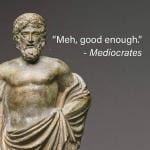
Mediocrates Returns with Some Additional Wisdom
Next Post

January 10, 2023 Are You the One?
Recent Comments
"Mary did have a choice. And she was able to make it before the Holy ..."
"i cannot read beyond your recommendations for the books since i like to have a ..."
"AI will never be able to utter with honesty, feeling, or humility, the greeting: "Namaste".It ..."
"They do. I'm sure you could find discussions of the same topic from any of ..."
Browse Our Archives
Select a Category abortion Advent AI Angels Artificial intelligence atheism attention baptism Baptists beauty belief Benedictines Bible bicycling Big Bird books Bovina Camaldoli hermitage Canada Catholicism cats certainty change Christianity Christmas Collegeville Covid-19 creativity Development of Western Civilization dogs doubt Easter Enneagram Epiphany Episcopal ethics Eucharist evil extroverts Facebook faith family fear flowers forgiveness freedom friends God goodness grace happiness heaven hell history Holy Spirit Holy Week hope human nature humility humor idolatry incarnation introverts irreverence Islam Jeanne Jesus Joe Biden joy Judaism justice Kamala Harris knowledge Lent listen literature liturgy love Marsue Memorial Day miracles movies music mystery mythology NPR Old Testament optimism paradox peace Penguins philosophy piano podcast politics power prayer Protestantism Providence College Religion Rhode Island sabbatical sacrament science seeing silence Simone Weil Socrates soul sports St. John's College stories suffering tattoo teaching technology television theology thinking time tolerance transcendence travel trees trust truth Uncategorized Vermont wisdom wonder writing
Select a Month May 2026 April 2026 March 2026 February 2026 January 2026 December 2025 November 2025 October 2025 September 2025 August 2025 July 2025 June 2025 May 2025 April 2025 March 2025 February 2025 January 2025 December 2024 November 2024 October 2024 September 2024 August 2024 July 2024 June 2024 May 2024 April 2024 March 2024 February 2024 January 2024 December 2023 November 2023 October 2023 September 2023 August 2023 July 2023 June 2023 May 2023 April 2023 March 2023 February 2023 January 2023 December 2022 November 2022 October 2022 September 2022 August 2022 July 2022 June 2022 May 2022 April 2022 March 2022 February 2022 January 2022 December 2021 November 2021 October 2021 September 2021 August 2021 July 2021 June 2021 May 2021 April 2021 March 2021 February 2021 January 2021 December 2020 November 2020 October 2020 September 2020 August 2020 July 2020 June 2020 May 2020 April 2020 March 2020 February 2020 January 2020 December 2019 November 2019 October 2019 September 2019 August 2019 July 2019 June 2019 May 2019 April 2019 March 2019 February 2019 January 2019 December 2018 November 2018 October 2018 September 2018 August 2018 July 2018 June 2018 May 2018 April 2018 March 2018 February 2018 January 2018 December 2017 November 2017 October 2017 September 2017 August 2017 July 2017 June 2017 May 2017 April 2017 March 2017 February 2017 January 2017 December 2016 November 2016 October 2016 September 2016 August 2016 July 2016 June 2016 May 2016 April 2016 March 2016 February 2016 January 2016 December 2015 November 2015 October 2015 September 2015 August 2015 July 2015 June 2015 May 2015 April 2015 March 2015 February 2015 January 2015 December 2014 November 2014 October 2014 September 2014 August 2014 July 2014 June 2014 May 2014 April 2014 March 2014 February 2014 January 2014 December 2013 November 2013 October 2013 September 2013 August 2013 July 2013 June 2013 May 2013 April 2013 March 2013 February 2013 January 2013 December 2012 November 2012 October 2012 September 2012
Follow Us!
TAKE THE
Religious Wisdom Quiz
Who said, "As for me, I know that my redeemer lives"?
Select your answer to see how you score.
Joseph Abraham Job Moses
Books by This Author Books by Vance G. Morgan
Related posts from Freelance Christianity

The Lonely Pawn: On Faith, Doubt, and Meaning


AI and Love: When a Chatbot Becomes a...

TRENDING AT PATHEOS Progressive Christian

What Being a Modern-Day Apostle Means to Me
In my last column, I discussed the ins and outs of modern-day...

Did Ancient China Once Worship the God of...
Across human history, a common thread weaves through the origins of the...

Love Your Neighbor – Including Earth-Kin: Lev. 19,...
God’s command to love your neighbor means acting in an ethical and...

Lead a Church Study of “Jesus and Lao...
Guest writer Jack Thomas (The Irreverent Reverend) reflects on leading his church...

Pastoral Wisdom for Responding to Sermon Pushback
Getting sermon pushback on your social justice sermon? Learn practical, Proverbs-based strategies...

Principles for Understanding the Apostolic Ministry Today
Whenever people discover that my formal ministry title is "apostle," as in...
view all Progressive Christian blogs
What Are Your Thoughts?leave a comment
Ad-Free & Subscriber Log-In Subscription Support
- About Us
- 2026 Calendar
- Videos
- Podcasts
- Library of World Religions
- Faith In Media Tracker
- Advertise With Us
- Write for Us
- Privacy Policy
- Terms of Service
- Do Not Sell My Data
- Contact Us
- Radiant Digital
- Manage Newsletter Subscriptions
- Unsubscribe From Notifications
- Sitemap
Copyright 2008-2026, Patheos. All rights reserved.
Subscription Support Ad-Free & Subscriber Log-In
Follow Patheos