
BuddhistCatholicContemplativeEvangelicalGeneral ChristianHinduJewishLatter-day SaintMuslimNew VisionsProgressive Christian
Beliefs
- Buddhist
- Catholic
- Contemplative
- Evangelical
- General Christian
- Hindu
- Jewish
- Latter-day Saint
- More Voices
- Muslim
- New Visions
- Pagan
- Progressive Christian
Topics
- Religion News
- Food and Religion
- Sports and Religion
- Religious Art
- Religious Music and Entertainment
- Religious Events
- History and Religion
- Style and Religion
- Politics and Religion
- Women in Religion
- Recreation Outdoors and Religion
- Business Finance and Religion
- Careers Workplace and Religion
- Education and Religion
- Family Parenting and Religion
- Health Fitness and Religion
- Home and Religion
- Relationships and Religion
- Technology and Religion
- Travel and Religion
Columnists
- Buddhist Columnists
- Business Finance and Religion Columnists
- Careers Workplace and Religion Columnists
- Catholic Columnists
- Contemplative Columnists
- Education and Religion Columnists
- Evangelists Columnists
- Family Parenting and Religion Columnists
- General Christian Columnists
- Health Fitness and Religion Columnists
- Hindu Columnists
- History and Religion Columnists
- Home and Religion Columnists
- Jewish Columnists
- More Voices Columnists
- Latter Day Columnists
- Muslim Columnists
- New Visions Columnists
- Nonreligious Columnists
- Pagan Columnists
- Politics and Religion Columnists
- Progressive Columnists
- Recreation Outdoors and Religion Columnists
- Relationships and Religion Columnists
- Religion News Columnists
- Religious Art Columnists
- Religious Events Columnists
- Religious Music and Entertainment Columnists
- Sports and Religion Columnists
- Style and Religion Columnists
- Technology and Religion Columnists
- Travel and Religion Columnists
- Women in Religion Columnists
Resource Library
- 2026 Calendar
- Library of World Religions
- The 100 Most Holy Places on Earth
- Patheos Answers
- Podcasts
- Videos
- Faith Leaders Database
- Anglican Episcopalian
- Bahai
- Baptist
- Buddhism
- Christianity
- Confucianism
- Eastern Orthodoxy
- Hinduism
- Holiness and Pentecostal
- ISKCON
- Islam
- Judaism
- Lutheran
- Methodist
- The Church of Jesus Christ of Latter-day Saints
- New Age
- Paganism
- Presbytarian and Reformed
- Protestantism
- Religion Behind the Scenes
- Roman Catholic
- Scientology
- Shia Islam
- Sikhism
- Sufism
- Sunni Islam
- Taoism
- Zen
- See all religions
Research Tools
 Ad-Free & Subscriber Log-In Subscription Support
Ad-Free & Subscriber Log-In Subscription Support
Follow Patheos 

- Trending:
- Forgiveness
- |
- Marriage
- |
- Consciousness
- |
- Death Penalty
- |
- Election
- |
- Halloween

- Home
- Progressive Christian
- It’s About Time
It’s About Time
Last updated on: December 12, 2017 at 7:00 am by Vance Morgan
It’s About Time 2017-12-11T13:48:13-04:00 Vance Morgan
Patheos Explore the world's faith through different perspectives on religion and spirituality! Patheos has the views of the prevalent religions and spiritualities of the world.
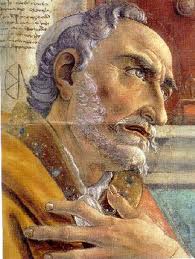 Time has been on my mind recently. A couple of months ago in my freshman Development of Western Civilization class, Epictetus continually brought us face to face with our mortality and assured us that “death is nothing terrible.” Last week we considered Augustine’s analysis of the mystery of time in Book XI of his Confessions. But my awareness of time over the past few months has, for the most part, been more personal than academic as several interesting markers of time’s passage materialized.
I realized last November, for instance, that I was voting in my eleventh Presidential election. I’ve selected five winners and six losers in those elections, which I suppose indicates the perpetual pendulum of our national political moods and preferences as well as anything. This also means, of course, that anyone roughly my age with opposite political leanings from mine is six and five in those elections, which sort of sucks.
As I calculated how old I would be if I get to vote in ten more Presidential elections, the disturbing visual of me being wheeled to the polling place to cast my vote in the 2056 election at age one hundred became far too clear for comfort. Of course, I probably would be voting by absentee ballot, with either my one-hundred-and-one year old wife or one of my sons, aged seventy-seven and seventy-four, helping me fill out the form. I can hear it now—“What do you mean Republicans don’t exist anymore?? Who the hell am I supposed to vote against??”

The recent Thanksgiving season provided me with even more opportunities to think about time, as we celebrated the thirtieth anniversary of Jeanne’s meeting my sons and me at my parents’ condominium the day before Thanksgiving in 1987. I was thinking how great it would be to have another thirty years together, until I started calculating. What would the two of us be like in our early nineties? We have often said that had we met in our teens or twenties we would not have given each other the time of day. What if by our nineties we have gotten tired of giving each other the time of day? Or what if by then one or both of us can no longer tell what time of day it is?
I was taught as a child that the issues “of this present time are not worthy to be compared with the glory that shall be revealed in us.” In other words, the passage of time in our earthly existence is ultimately an irrelevant matter, since as believers in Jesus we are eternal creatures. We literally will live forever with God in heaven. I never found that information particularly attractive as a kid and, truth be told, I don’t find it very interesting even now. Far more important to me is the question of how to live a life in real time. And a recent Sunday gospel reading is very helpful in that regard.
In response to his disciples’ natural and human concerns about what tomorrow will bring, what should I be doing now to guarantee an acceptable future, Jesus suggests that we take a look at the natural world around us, a world in which the passage of time does not seem to be an issue. We’ve all heard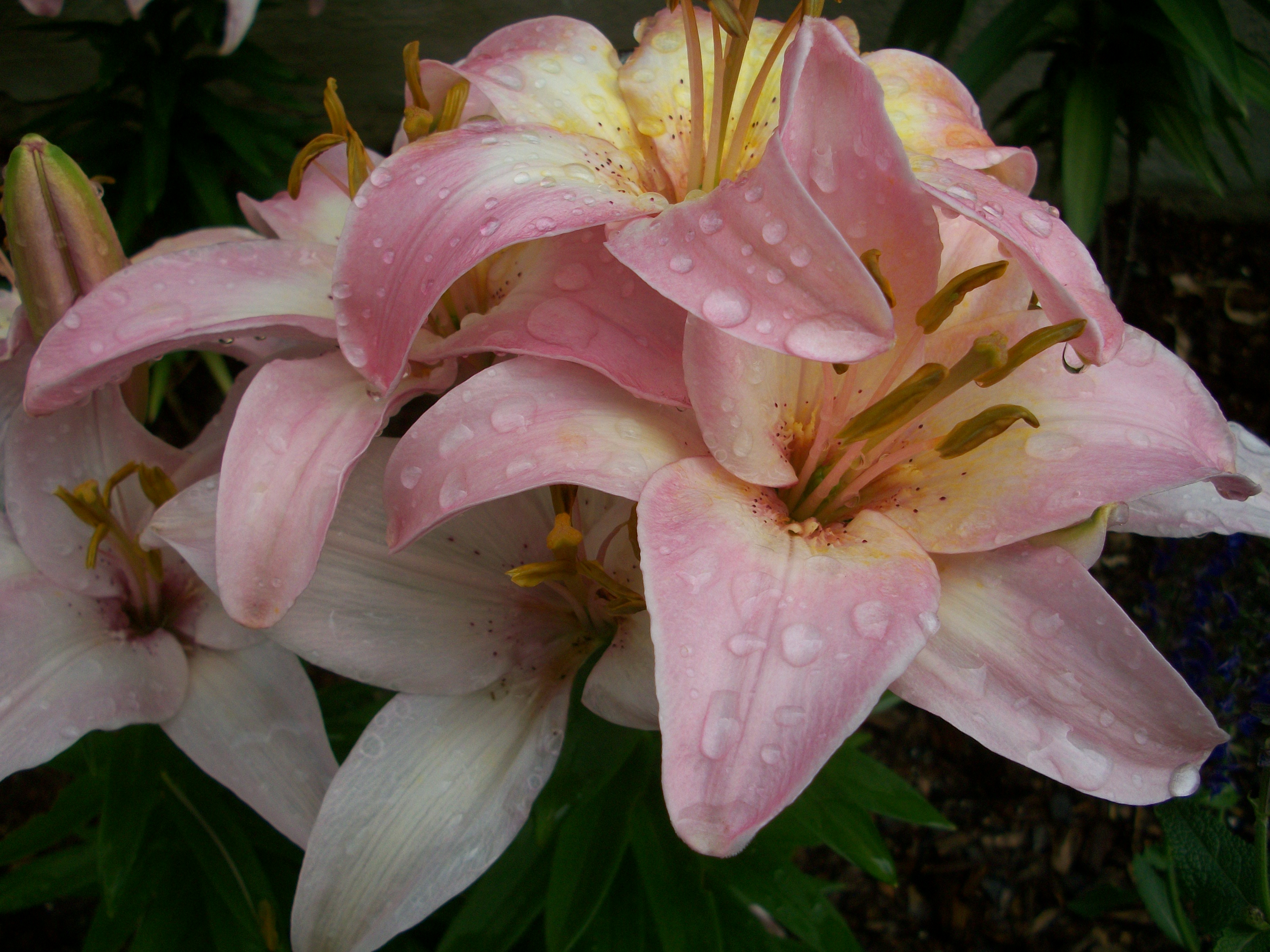 “consider the lilies of the field . . . Solomon in all of his glory was not clothed as one of these” and take Jesus to mean that we should not worry about tomorrow, because such worry cannot produce something better than a simple flower. But we—or I at least—tend to miss an equally important underlying message in this famous passage.
Perhaps the most important reason that we should not worry about the future is because the time we actually have, that we can actually do something about, is very short. In the right season, we have beautiful lilies in our front and back yard, which do their beautiful thing every spring and early summer, then fade away, shrivel up, and get cut back to ground level just a few weeks after they started out. Looking at their spot in the flower bed now in mid-December, it is difficult to imagine that anything beautiful was ever there. As Jesus says about the lilies’ cousins the grass, it “ is alive today and tomorrow is thrown into the oven.” I find little in this gospel that promises eternity. Instead, it promises that if we seek the kingdom of God first—the kingdom of God that is in us and among us now–rather than worrying about the future, “all these things will be given to you as well.”
So what does that mean? How do we do that? I recently finished reading Muriel Barbery’s delightful and thought-provoking novel, The Elegance of the Hedgehog. It is my second time through the book; I first read it early during my sabbatical in 2009. It came to me in one of those wonderful and unexpected ways, as Jeanne sent it to me in Minnesota with a note saying “I picked this up in the bookstore, but I think it’s more your kind of book.” She was right—it became one of a handful of important literary passageways into life-changing transformations. Now, over eight years later, I don’t recall all of the reasons it blew me out of the water then; its effect on me now is different, but just as powerful.
One of the two main characters in the novel is Paloma, the extraordinarily intelligent and precocious twelve-year-old daughter of a mid-level French governmental bureaucrat and his wife with pretensions of aristocracy and wealth. From her acute observational perch, Paloma critically evaluates the fellow residents of her upscale hotel apartment building in the heart of Paris. Paloma rejects the pretensions of the adults around her and the myth that with age comes wisdom. “Once children become adults themselves,” Paloma writes in her journal, “they exact their revenge by deceiving their own children. ‘Life has meaning and we grown-ups know what it is’ is the universal lie that everyone is supposed to believe.” Paloma is having none of it. If there is any meaning to life, her parents and the other adults in her life certainly don’t know what it is. She suspects that there actually is no meaning to life at all, and at the beginning of the novel is planning to commit suicide on her thirteenth birthday a few months down the road.
Paloma has many opportunities to mine the circumstances of her young life for meaning throughout the novel. For instance, Paloma’s family has to place her grandmother, “Mamie,” in a retirement home. It is the best situation that money can buy, yet Paloma and her family come face to face with the life-deadening circumstances of most of the residents when they move Mamie into her new home.
As they drive away, Colombe—Paloma’s pretentious older sister who is a philosophy major at the renowned Ecole Normale Superieure (Paloma can’t stand her)—says “Okay, it looks like Mamie is nicely settled in. But as for everything else . . . we have to hurry and forget about it, and quickly.” Colombe is expressing what many of us spend a good deal of time expressing—please don’t remind me that I am mortal, that a human being is an embodiment of planned obsolescence.
Paloma’s reflective response provides an alternative to running away from our mortality. What if we embrace it instead?
We mustn’t forget any of this, absolutely not. We have to live with the certainty that we’ll get old, and that it won’t look nice or be good or feel happy. And tell ourselves that it’s now that matters: to build something, now, at any price, using all our strength. Always remember that there’s a retirement home waiting somewhere and so we have to surpass ourselves every day, make every day undying. Climb our own personal Everest and do it in such a way that every step is a little bit of eternity.
As Renee, the other main character in the novel, says, the goal of a life must be “the contemplation of eternity within the very movement of life.”
Toward the end of the novel, Paloma—who no longer is planning to commit suicide—suggests that the purpose of a human life is to “find the task we have been placed on this earth to do, and accomplish it as best we can, with all our strength, without making things complicated or thinking there’s anything divine about our animal nature.” A wonderful insight, except that Paloma is wrong about one big thing. There is something divine about our animal nature. And that is what makes it possible to seek the kingdom of God now, in this place and at this time.
Development of Western Civilization
Previous Post

December 10, 2017
Silence Is Not Always Golden
Next Post
December 14, 2017 The Great Homesickness
Browse Our Archives
Select a Category abortion Advent AI Angels Artificial intelligence atheism attention baptism Baptists beauty belief Benedictines Bible bicycling Big Bird books Bovina Camaldoli hermitage Canada Catholicism cats certainty change Christianity Christmas Collegeville Covid-19 creativity Development of Western Civilization dogs doubt Easter Enneagram Epiphany Episcopal ethics Eucharist evil extroverts Facebook faith family fear flowers forgiveness freedom friends God goodness grace happiness heaven hell history Holy Spirit Holy Week hope human nature humility humor idolatry incarnation introverts irreverence Islam Jeanne Jesus Joe Biden joy Judaism justice Kamala Harris knowledge Lent listen literature liturgy love Marsue Memorial Day miracles movies music mystery mythology NPR Old Testament optimism paradox peace Penguins philosophy piano podcast politics power prayer Protestantism Providence College Religion Rhode Island sabbatical sacrament science seeing silence Simone Weil Socrates soul sports St. John's College stories suffering tattoo teaching technology television theology thinking time tolerance transcendence travel trees trust truth Uncategorized Vermont wisdom wonder writing
Select a Month May 2026 April 2026 March 2026 February 2026 January 2026 December 2025 November 2025 October 2025 September 2025 August 2025 July 2025 June 2025 May 2025 April 2025 March 2025 February 2025 January 2025 December 2024 November 2024 October 2024 September 2024 August 2024 July 2024 June 2024 May 2024 April 2024 March 2024 February 2024 January 2024 December 2023 November 2023 October 2023 September 2023 August 2023 July 2023 June 2023 May 2023 April 2023 March 2023 February 2023 January 2023 December 2022 November 2022 October 2022 September 2022 August 2022 July 2022 June 2022 May 2022 April 2022 March 2022 February 2022 January 2022 December 2021 November 2021 October 2021 September 2021 August 2021 July 2021 June 2021 May 2021 April 2021 March 2021 February 2021 January 2021 December 2020 November 2020 October 2020 September 2020 August 2020 July 2020 June 2020 May 2020 April 2020 March 2020 February 2020 January 2020 December 2019 November 2019 October 2019 September 2019 August 2019 July 2019 June 2019 May 2019 April 2019 March 2019 February 2019 January 2019 December 2018 November 2018 October 2018 September 2018 August 2018 July 2018 June 2018 May 2018 April 2018 March 2018 February 2018 January 2018 December 2017 November 2017 October 2017 September 2017 August 2017 July 2017 June 2017 May 2017 April 2017 March 2017 February 2017 January 2017 December 2016 November 2016 October 2016 September 2016 August 2016 July 2016 June 2016 May 2016 April 2016 March 2016 February 2016 January 2016 December 2015 November 2015 October 2015 September 2015 August 2015 July 2015 June 2015 May 2015 April 2015 March 2015 February 2015 January 2015 December 2014 November 2014 October 2014 September 2014 August 2014 July 2014 June 2014 May 2014 April 2014 March 2014 February 2014 January 2014 December 2013 November 2013 October 2013 September 2013 August 2013 July 2013 June 2013 May 2013 April 2013 March 2013 February 2013 January 2013 December 2012 November 2012 October 2012 September 2012
Follow Us!
TAKE THE
Religious Wisdom Quiz
What does the Greek word "Agape" mean in the Bible?
Select your answer to see how you score.
Unconditional Love Grace Peace Eternal Life
Books by This Author Books by Vance G. Morgan
Related posts from Freelance Christianity

The Lonely Pawn: On Faith, Doubt, and Meaning


AI and Love: When a Chatbot Becomes a...

TRENDING AT PATHEOS Progressive Christian

What Being a Modern-Day Apostle Means to Me
In my last column, I discussed the ins and outs of modern-day...

Did Ancient China Once Worship the God of...
Across human history, a common thread weaves through the origins of the...

Love Your Neighbor – Including Earth-Kin: Lev. 19,...
God’s command to love your neighbor means acting in an ethical and...

Lead a Church Study of “Jesus and Lao...
Guest writer Jack Thomas (The Irreverent Reverend) reflects on leading his church...

Pastoral Wisdom for Responding to Sermon Pushback
Getting sermon pushback on your social justice sermon? Learn practical, Proverbs-based strategies...

Principles for Understanding the Apostolic Ministry Today
Whenever people discover that my formal ministry title is "apostle," as in...
view all Progressive Christian blogs
Ad-Free & Subscriber Log-In Subscription Support
- About Us
- 2026 Calendar
- Videos
- Podcasts
- Library of World Religions
- Faith In Media Tracker
- Advertise With Us
- Write for Us
- Privacy Policy
- Terms of Service
- Do Not Sell My Data
- Contact Us
- Radiant Digital
- Manage Newsletter Subscriptions
- Unsubscribe From Notifications
- Sitemap
Copyright 2008-2026, Patheos. All rights reserved.
Subscription Support Ad-Free & Subscriber Log-In
Follow Patheos