
BuddhistCatholicContemplativeEvangelicalGeneral ChristianHinduJewishLatter-day SaintMuslimNew VisionsProgressive Christian
Beliefs
- Buddhist
- Catholic
- Contemplative
- Evangelical
- General Christian
- Hindu
- Jewish
- Latter-day Saint
- More Voices
- Muslim
- New Visions
- Pagan
- Progressive Christian
Topics
- Religion News
- Food and Religion
- Sports and Religion
- Religious Art
- Religious Music and Entertainment
- Religious Events
- History and Religion
- Style and Religion
- Politics and Religion
- Women in Religion
- Recreation Outdoors and Religion
- Business Finance and Religion
- Careers Workplace and Religion
- Education and Religion
- Family Parenting and Religion
- Health Fitness and Religion
- Home and Religion
- Relationships and Religion
- Technology and Religion
- Travel and Religion
Columnists
- Buddhist Columnists
- Business Finance and Religion Columnists
- Careers Workplace and Religion Columnists
- Catholic Columnists
- Contemplative Columnists
- Education and Religion Columnists
- Evangelists Columnists
- Family Parenting and Religion Columnists
- General Christian Columnists
- Health Fitness and Religion Columnists
- Hindu Columnists
- History and Religion Columnists
- Home and Religion Columnists
- Jewish Columnists
- More Voices Columnists
- Latter Day Columnists
- Muslim Columnists
- New Visions Columnists
- Nonreligious Columnists
- Pagan Columnists
- Politics and Religion Columnists
- Progressive Columnists
- Recreation Outdoors and Religion Columnists
- Relationships and Religion Columnists
- Religion News Columnists
- Religious Art Columnists
- Religious Events Columnists
- Religious Music and Entertainment Columnists
- Sports and Religion Columnists
- Style and Religion Columnists
- Technology and Religion Columnists
- Travel and Religion Columnists
- Women in Religion Columnists
Resource Library
- 2026 Calendar
- Library of World Religions
- The 100 Most Holy Places on Earth
- Patheos Answers
- Podcasts
- Videos
- Faith Leaders Database
- Anglican Episcopalian
- Bahai
- Baptist
- Buddhism
- Christianity
- Confucianism
- Eastern Orthodoxy
- Hinduism
- Holiness and Pentecostal
- ISKCON
- Islam
- Judaism
- Lutheran
- Methodist
- The Church of Jesus Christ of Latter-day Saints
- New Age
- Paganism
- Presbytarian and Reformed
- Protestantism
- Religion Behind the Scenes
- Roman Catholic
- Scientology
- Shia Islam
- Sikhism
- Sufism
- Sunni Islam
- Taoism
- Zen
- See all religions
Research Tools
 Ad-Free & Subscriber Log-In Subscription Support
Ad-Free & Subscriber Log-In Subscription Support
Follow Patheos 

- Trending:
- Forgiveness
- |
- Marriage
- |
- Consciousness
- |
- Death Penalty
- |
- Election
- |
- Halloween

- Home
- Progressive Christian
- Introduction to “For Everything There is a Season” . . .
Introduction to “For Everything There is a Season” . . .
Last updated on: March 12, 2024 at 6:00 am by Vance Morgan
Introduction to “For Everything There is a Season” . . . 2024-03-11T15:39:53-04:00 Vance Morgan
Patheos Explore the world's faith through different perspectives on religion and spirituality! Patheos has the views of the prevalent religions and spiritualities of the world.
Yesterday I had a very encouraging conversation with an editor from a publishing company who has expressed strong interest in one of my two sabbatical book projects: For Everything There is a Season: An Outsider’s Journey through the Liturgical Year. Keep your fingers crossed–if everything works out in the best way possible, this might actually be in print this year. For today’s post, here is a shortened version of the proposed introduction to that book (the whole introduction is about twice as long). Let me know what you think!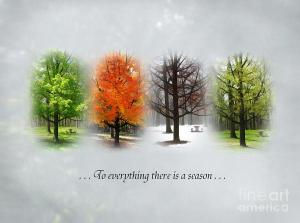
One sunny morning in September 1983, when I was struggling in my late twenties with serious financial problems, a failing marriage, years of graduate school ahead of me, and a general malaise both spiritual and physical, I wandered into a Sunday morning service at Saint Matthew’s Episcopal Cathedral in Laramie, Wyoming. In a rush of emotional response to the beautiful organ, the stately procession of choir, crucifer, deacon, and priest from back to front, and the overwhelming expressions of welcome from dozens of strangers, I felt that I had stumbled into a home whose existence I had not been aware of but for which I had been longing my whole life.
Over the succeeding weeks and months Saint Matthew’s became a life-preserver in more ways than one—no wonder I jumped into the strange and wonderful world of all things Episcopalian and the liturgical calendar with the enthusiasm and abandon of a true convert. My enthusiasm and commitment deepened as I experienced Advent for the first time, as Christmas liturgies framed the holidays, and as Epiphany revealed Jesus’ coming out party and early ministry in new ways. Saint Matthew’s became a haven and refuge; before long I was a daily regular at morning prayer services in the side chapel. Other than on Wednesdays when the Dean showed up so we could celebrate eucharist, the responsibility for the daily services rotated through the dozen or so regular attendees.
As is always the case with anyone who is an academic at heart upon discovering something new, I dove with abandon into researching and finding out everything I could about all things Episcopalian. As fate would have it, I came to the Episcopal church just as a new hymnbook (1982) and a new Book of Common Prayer (1979) had been approved and recently disseminated to congregations. Since each book was the first significantly revised and updated version in at least four decades everyone, even the Dean of the cathedral, was more or less at square one as new and unfamiliar hymns as well as a seemingly endless variety of new possibilities for liturgies were suddenly available.
What exactly was it about liturgical worship that seduced me so thoroughly? Since liturgical worship is framed by texts from the Jewish scriptures and the New Testament, the answers to that question begin with a description of my religious background and upbringing and how that upbringing shaped my relationship with sacred texts . . .
Stories and Rhythms
Although I was raised to revere the Bible, a reverence that bordered on worship, it wasn’t until I encountered liturgical worship that is shaped by selected lectionary readings that I came to fully appreciate and love the Bible in its totality. In my experience, those who treat the Bible as essentially the fourth member of the Trinity tend to be very selective in the portions that they emphasize, tending equally to deemphasize or completely ignore obviously contradictory or stubbornly obscure passages.
In the lectionary readings that ground liturgical worship, no portions of scripture are considered too problematic or unimportant for public display. In a given Sunday gospel reading Jesus is as likely to call a foreign woman a dog or speak dismissively to his mother as he is to tell a compelling parable or raise someone from the dead. The depressing psalms get as much play as the joyful ones. The prophets rage about how disappointingly disobedient the people of Israel are while also promising God’s continuing protection and love, despite appearances. God acts like a toddler in one passage and as a wise and beloved parent in the next.
Simply listening and attending to what is read from the lectern for a year of Sundays exposes one to an inexhaustible range of possibilities about the relationship between human beings and what is greater than us. The whole range of human emotions and commitments is on display, most often packaged within stories. And this makes sense, since as Alasdair MacIntrye wrote, human beings are “story-telling animals.” Stories are the natural context within which human beings understand themselves and each other; it is no surprise that Jesus was an incurable storyteller (more on that in a later chapter).
It is also no surprise that both ancient and contemporary people frame their speculations about and expectations of what is greater than us in stories. In the Preface to The Gates of the Forest, Elie Wiesel tells an old Hasidic tale in which a series of rabbinical leaders each sought to follow a three-step ritual for accomplishing the rescue of his respective community through a miracle. The founder of the tradition was Rabbi Israel Baal Shem-Tovand; the three steps were to go to a specific area of a forest to meditate, say a specific prayer, and light a fire. Unfortunately, each of the subsequent leaders in turn forgot a step of the ritual that had been passed on to him. Maggid of Mezeritch remembered two of the three steps, Rabbi Moshe-leib of Sasov knew one of the two steps passed on to him, but Rabbi Israel of Rizhin couldn’t even remember the single step that he had been given. The rabbi confesses to a young listener that he’s old, his memory is failing him, and all he can do is tell stories. But, the rabbi concludes, “It is sufficient. For God made man because He loves stories.” Just remembering the story about the tradition was, as the rabbi hoped, sufficient for obtaining the needed miracle.
The lectionary readings are selected to mirror the rhythms of the liturgical calendar; these rhythms reflect the natural human orientation to both change and stability just as the texts resonate with our natural attunement to stories and narratives. The change of seasons, birth and death, what the ancients used to call “generation and corruption”—within definitive and stable parameters, things are constantly and cyclically changing.
I am a native New Englander who has spent close to half of a century in the Northeast, living first in Vermont in my youth then in Rhode Island for the past three decades. Although I love autumn the most, I would not trade the change of seasons even for a guarantee of twelve months of perfect autumn weather. My vocation as a college professor is shaped by a different calendar that has its own changes—an academic liturgy, if you will.
Pick a date in any month and I will tell you roughly what I’ll be doing with reference to my work. October 20th? Midterm grades will be due within a few days. First week of March? Time for spring break. Third week of September? The first major student written work of the fall semester will be due. The day after MLK day in January? That’s the first day of the spring semester.
The same is true in the liturgical year. Second Sunday of Advent? John the Baptist is on tap. Last Sunday before Palm Sunday? Lazarus gets raised from the dead again. First Sunday after Easter? It’s time for Doubting Thomas. These and other reliably stable points of reference give shape and consistency to various aspects of lives, lives that we live in a world that might otherwise seem either incoherent in its waves of change or suffocatingly boring in its monotony.
The stories and rhythms of the liturgical year will become more and more apparent as we proceed. First, though, it is important to take a first look at the lay of the land that we will be exploring . . .
A Caveat
Whether one is attracted to liturgical frameworks in worship or not, it is worthwhile to consider for a moment that however worship is organized, the structures (or lack of same) are human made and don’t necessarily tell us anything about what is greater than us. This is particularly important when arguing and debating about which forms of worship are best, a hill that it often seems Christians (and other persons of faith) are willing to die on. Annie Dillard writes memorably about this and related issues in Holy the Firm:
On the whole, I do not find Christians, outside of the catacombs, sufficiently sensible of conditions. Does anyone have the foggiest idea what sort of power we so blithely invoke? . . . It is madness to wear ladies’ straw hats and velvet hats to church; we should all be wearing crash helmets. Ushers should issue life preservers and signal flares; they should lash us to our pews. For the sleeping god may wake someday and take offense, or the waking god may draw us out to where we can never return . . .
I often think of the set pieces of liturgy as certain words which people have successfully addressed to God without their getting killed. In the high churches, they saunter through the liturgy like Mohawks, moving along a strand of scaffolding, who have long since forgotten their danger. If God were to blast such a service to bits, the congregation would be, I believe, genuinely shocked. But in the low churches, you expect it any minute. This is the beginning of wisdom.
For any person of faith, it is important to remember that, first and foremost, God is mystery. Our forms of worship, no matter how attractive and satisfying both emotionally and intellectually, are at best revisable human attempts to shape the remarkable possibility that, out of love, God seeks relationship with humans into some sort of provisional story and framework. With that in mind, Advent calls.
Previous Post
March 10, 2024
Serpents in the Wilderness
Next Post
March 14, 2024 Eating Your Words. Literally.
Recent Comments
"Mary did have a choice. And she was able to make it before the Holy ..."
"i cannot read beyond your recommendations for the books since i like to have a ..."
"AI will never be able to utter with honesty, feeling, or humility, the greeting: "Namaste".It ..."
"They do. I'm sure you could find discussions of the same topic from any of ..."
Browse Our Archives
Select a Category abortion Advent AI Angels Artificial intelligence atheism attention baptism Baptists beauty belief Benedictines Bible bicycling Big Bird books Bovina Camaldoli hermitage Canada Catholicism cats certainty change Christianity Christmas Collegeville Covid-19 creativity Development of Western Civilization dogs doubt Easter Enneagram Epiphany Episcopal ethics Eucharist evil extroverts Facebook faith family fear flowers forgiveness freedom friends God goodness grace happiness heaven hell history Holy Spirit Holy Week hope human nature humility humor idolatry incarnation introverts irreverence Islam Jeanne Jesus Joe Biden joy Judaism justice Kamala Harris knowledge Lent listen literature liturgy love Marsue Memorial Day miracles movies music mystery mythology NPR Old Testament optimism paradox peace Penguins philosophy piano podcast politics power prayer Protestantism Providence College Religion Rhode Island sabbatical sacrament science seeing silence Simone Weil Socrates soul sports St. John's College stories suffering tattoo teaching technology television theology thinking time tolerance transcendence travel trees trust truth Uncategorized Vermont wisdom wonder writing
Select a Month May 2026 April 2026 March 2026 February 2026 January 2026 December 2025 November 2025 October 2025 September 2025 August 2025 July 2025 June 2025 May 2025 April 2025 March 2025 February 2025 January 2025 December 2024 November 2024 October 2024 September 2024 August 2024 July 2024 June 2024 May 2024 April 2024 March 2024 February 2024 January 2024 December 2023 November 2023 October 2023 September 2023 August 2023 July 2023 June 2023 May 2023 April 2023 March 2023 February 2023 January 2023 December 2022 November 2022 October 2022 September 2022 August 2022 July 2022 June 2022 May 2022 April 2022 March 2022 February 2022 January 2022 December 2021 November 2021 October 2021 September 2021 August 2021 July 2021 June 2021 May 2021 April 2021 March 2021 February 2021 January 2021 December 2020 November 2020 October 2020 September 2020 August 2020 July 2020 June 2020 May 2020 April 2020 March 2020 February 2020 January 2020 December 2019 November 2019 October 2019 September 2019 August 2019 July 2019 June 2019 May 2019 April 2019 March 2019 February 2019 January 2019 December 2018 November 2018 October 2018 September 2018 August 2018 July 2018 June 2018 May 2018 April 2018 March 2018 February 2018 January 2018 December 2017 November 2017 October 2017 September 2017 August 2017 July 2017 June 2017 May 2017 April 2017 March 2017 February 2017 January 2017 December 2016 November 2016 October 2016 September 2016 August 2016 July 2016 June 2016 May 2016 April 2016 March 2016 February 2016 January 2016 December 2015 November 2015 October 2015 September 2015 August 2015 July 2015 June 2015 May 2015 April 2015 March 2015 February 2015 January 2015 December 2014 November 2014 October 2014 September 2014 August 2014 July 2014 June 2014 May 2014 April 2014 March 2014 February 2014 January 2014 December 2013 November 2013 October 2013 September 2013 August 2013 July 2013 June 2013 May 2013 April 2013 March 2013 February 2013 January 2013 December 2012 November 2012 October 2012 September 2012
Follow Us!
TAKE THE
Religious Wisdom Quiz
Like a sheep led to slaughter, silent before shearers, this servant was pierced for our transgressions. What chapter foretells this suffering?
Select your answer to see how you score.
Isaiah 7 Isaiah 9 Isaiah 61 Isaiah 53
Books by This Author Books by Vance G. Morgan
Related posts from Freelance Christianity

The Lonely Pawn: On Faith, Doubt, and Meaning

AI and Love: When a Chatbot Becomes a...


TRENDING AT PATHEOS Progressive Christian

What Being a Modern-Day Apostle Means to Me
In my last column, I discussed the ins and outs of modern-day...

Did Ancient China Once Worship the God of...
Across human history, a common thread weaves through the origins of the...

Love Your Neighbor – Including Earth-Kin: Lev. 19,...
God’s command to love your neighbor means acting in an ethical and...

Lead a Church Study of “Jesus and Lao...
Guest writer Jack Thomas (The Irreverent Reverend) reflects on leading his church...

Pastoral Wisdom for Responding to Sermon Pushback
Getting sermon pushback on your social justice sermon? Learn practical, Proverbs-based strategies...

Principles for Understanding the Apostolic Ministry Today
Whenever people discover that my formal ministry title is "apostle," as in...
view all Progressive Christian blogs
What Are Your Thoughts?leave a comment
Ad-Free & Subscriber Log-In Subscription Support
- About Us
- 2026 Calendar
- Videos
- Podcasts
- Library of World Religions
- Faith In Media Tracker
- Advertise With Us
- Write for Us
- Privacy Policy
- Terms of Service
- Do Not Sell My Data
- Contact Us
- Radiant Digital
- Manage Newsletter Subscriptions
- Unsubscribe From Notifications
- Sitemap
Copyright 2008-2026, Patheos. All rights reserved.
Subscription Support Ad-Free & Subscriber Log-In
Follow Patheos