
BuddhistCatholicContemplativeEvangelicalGeneral ChristianHinduJewishLatter-day SaintMuslimNew VisionsProgressive Christian
Beliefs
- Buddhist
- Catholic
- Contemplative
- Evangelical
- General Christian
- Hindu
- Jewish
- Latter-day Saint
- More Voices
- Muslim
- New Visions
- Pagan
- Progressive Christian
Topics
- Religion News
- Food and Religion
- Sports and Religion
- Religious Art
- Religious Music and Entertainment
- Religious Events
- History and Religion
- Style and Religion
- Politics and Religion
- Women in Religion
- Recreation Outdoors and Religion
- Business Finance and Religion
- Careers Workplace and Religion
- Education and Religion
- Family Parenting and Religion
- Health Fitness and Religion
- Home and Religion
- Relationships and Religion
- Technology and Religion
- Travel and Religion
Columnists
- Buddhist Columnists
- Business Finance and Religion Columnists
- Careers Workplace and Religion Columnists
- Catholic Columnists
- Contemplative Columnists
- Education and Religion Columnists
- Evangelists Columnists
- Family Parenting and Religion Columnists
- General Christian Columnists
- Health Fitness and Religion Columnists
- Hindu Columnists
- History and Religion Columnists
- Home and Religion Columnists
- Jewish Columnists
- More Voices Columnists
- Latter Day Columnists
- Muslim Columnists
- New Visions Columnists
- Nonreligious Columnists
- Pagan Columnists
- Politics and Religion Columnists
- Progressive Columnists
- Recreation Outdoors and Religion Columnists
- Relationships and Religion Columnists
- Religion News Columnists
- Religious Art Columnists
- Religious Events Columnists
- Religious Music and Entertainment Columnists
- Sports and Religion Columnists
- Style and Religion Columnists
- Technology and Religion Columnists
- Travel and Religion Columnists
- Women in Religion Columnists
Resource Library
- 2026 Calendar
- Library of World Religions
- The 100 Most Holy Places on Earth
- Patheos Answers
- Podcasts
- Videos
- Faith Leaders Database
- Anglican Episcopalian
- Bahai
- Baptist
- Buddhism
- Christianity
- Confucianism
- Eastern Orthodoxy
- Hinduism
- Holiness and Pentecostal
- ISKCON
- Islam
- Judaism
- Lutheran
- Methodist
- The Church of Jesus Christ of Latter-day Saints
- New Age
- Paganism
- Presbytarian and Reformed
- Protestantism
- Religion Behind the Scenes
- Roman Catholic
- Scientology
- Shia Islam
- Sikhism
- Sufism
- Sunni Islam
- Taoism
- Zen
- See all religions
Research Tools
 Ad-Free & Subscriber Log-In Subscription Support
Ad-Free & Subscriber Log-In Subscription Support
Follow Patheos 

- Trending:
- Forgiveness
- |
- Marriage
- |
- Consciousness
- |
- Death Penalty
- |
- Election
- |
- Halloween

- Home
- Progressive Christian
- Insufficient Evidence
Insufficient Evidence
Last updated on: January 30, 2018 at 7:30 am by Vance Morgan
Insufficient Evidence 2018-01-30T07:19:49-04:00 Vance Morgan
Patheos Explore the world's faith through different perspectives on religion and spirituality! Patheos has the views of the prevalent religions and spiritualities of the world.
Bertrand Russell was a British philosopher, logician, mathematician, historian, writer, social critic, political activist and Nobel laureate. He was one of the most important and recognizable public figures in the English-speaking world during the first half of the twentieth century. He was also an avowed atheist. The story is told that at the end of one of his public lectures in which his atheism was on full display, a furious woman stood up during the question and answer period and asked, “And Lord Russell, what will you say when you stand in front of the throne of God on judgment day?” Russell replied, “I will say: ‘I’m terribly sorry, but you didn’t give us enough evidence.’”
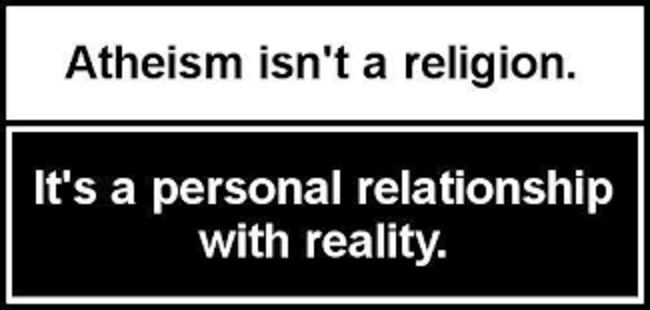
I was reminded of this story when the author of an article I assigned in my ethics classes last semester included it at the beginning of his discussion of how people use evidence to support the different sorts of things we claim to be true. For instance, the author claimed, verifiable and objective evidence serves as the foundation for truth claims in the sciences, but in religious belief—no so much. Indeed, the author continued, religious belief is easy and available to everyone because evidence is not required—just faith (whatever that means). The author identifies himself as an atheist who is fascinated by the phenomenon of religious belief—his conclusions make me wonder if he has ever actually met a person of faith.
As I worked with fifty students in two sections of General Ethics through our unit entitled “Does God have anything to do with ethics?’ I found that my junior and senior students—the majority of whom are products of Catholic primary and secondary education—were no more informed about the relationship of evidence to faith than the atheist author of the article for this given day. A few weeks earlier I had provided them with my “go to” definition of faith: Faith is the substance of things hoped for, the evidence of things not seen. Some were surprised to learn that this definition, which does not refer to either God or religion, is from the Book of Hebrews in the New Testament. Whatever else faith is, the author of Hebrews is claiming that evidence has something to do with it.
I decided, as I often do, to get at this tricky issue obliquely and through the back door. “How many of you have ever been to Japan?” I asked. No hands went up in either class section, including mine. “How many of you believe in the existence of Japan?” I asked next—all hands went up. “How does that work?” How do we come to believe in the existence and/or truth of something when we lack direct supporting evidence? Because clearly the preponderance of things that each of us believes to be true—thousands upon thousands of items of all sorts—are beliefs that lack direct empirical evidence to support them.“How many of you believe that Abraham Lincoln was assassinated by John Wilkes Booth in Ford’s Theater in 1865?” I asked next. All hands went up. “How many of you were there when it happened?” No hands went up—I assured them that even I was not old enough to have been an eye-witness. So once again we have an example of a claim that everyone believes to be true even though we lack “concrete evidence” (as my students like to call it) to support our belief. Or do we?
Upon being asked to list what sorts of evidence we do have to support our beliefs concerning the existence of Japan and what happened in Ford’s Theater in April of 1865, my students came up with several suggestions:
- Testimony—The word of others, eyewitnesses when possible, counts as particularly strong indirect evidence. Even though I have not been to Japan, I know people who have visited there and have even met people from Japan. It is, of course, possible that all of these people are lying to me, but the more that the testimonies I gather are consistent with each other, the more likely it is that they are pointing toward something true. This doesn’t work, of course, when considering events where no eyewitnesses are available, such as what happened at Ford’s Theater, but fortunately the spoken word is not the only way in which we are able to gather relevant testimony.
- Texts—Those who have not been to Japan have seen pictures of it and have read descriptions of it. These are indirect and second-hand, but become part of accumulating indirect evidence. Textual evidence for historical events for whom there are no longer any eyewitnesses is the bread-and-butter of the historian’s trade.
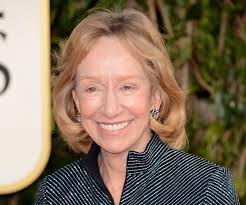
 The great Doris Kearns Goodwin gave a talk on campus not long ago—when she spoke of Abraham Lincoln, it never occurred to me to wonder if what she was saying was true. As she described the meticulous ways in which she gathered evidence for her book Team of Rivals from letters, diaries, newspapers, and other first-hand accounts from over a century-and-a-half ago, I was reminded of how the only evidence we have of the truth of anything occurring more than a hundred years ago requires both investigative strategies and an inherent trust in the results of such investigations.
 - Traditions—Often all we have to rely on to bolster various beliefs is what has been passed down from generation to generation as stories and traditions intended to capture the essence of an individual, a family, or a culture. We use such stories and traditions as evidence to support our best guesses concerning what might have happened; they form an important part of the foundation of belief that gets passed from generation to generation.
It was clear as the discussion proceeded that in some of the most important parts of our daily lives, both as we engage with the present and as we consider the past, our “certainties” are built on a foundation of uncertainty, a foundation that we eventually depend upon as if it were certain as our collection of indirect evidence reaches an imaginary tipping point.
I stepped back from the board where I had listed their examples of indirect evidence and asked, “How might these types of evidence work in another area of belief where we have a difficult time accessing direct evidence—belief in God?” As it turns out, the same sorts of indirect evidence that we use on a daily basis to bolster our belief in all kinds of things are available when we enter the arena of faith.
Sacred texts are used as sources of evidence of all sorts; regardless of whether a person considers such texts to be divinely inspired or not, they contain evidence of how people have engaged with issues of God and faith over the centuries. Such texts purportedly contain testimonial evidence to the existence and nature of God as the divine reportedly interacts with human beings, and interpretations of these testimonies become centerpieces of traditions that develop into religions.
We also have the same sort of indirect testimony concerning faith-related issues that my students used when identifying the sources of their belief in the existence of Japan even though none had ever been there. For instance, I know many people who report personal experiences that they believe can only be explained by an invasion of or intervention into their life by something greater than themselves. Often such reports can also be accounted for by explanations other than a direct encounter with God, but in such cases one must always consider both the reliability of the person giving the testimony and whether other similar reports have been given by other reliable sources.
As always, whether or not a person believes such reports is going to be a direct function of her or his predisposition to believe anything. How much evidence is enough? What sorts of testimony will I never believe, no matter who it comes from? To claim that evidence is ever free of all sorts of psychological and personality-driven biases is to ignore how we actually gather and use evidence in real time.
My answer to Bertrand Russell’s complaint that “you didn’t us give enough evidence” is that perhaps Lord Russell needed to consider what sort of evidence would have counted as “enough,” as well as what even counted as evidence for him at all. If his claim is that there is not enough “concrete evidence” to establish the existence of God, I might agree. But I would remind Russell that the vast majority of the many things that we believe to be true are not supported by such evidence either. When considering issues as important as faith, there is no need to change the rules of the evidence game—faith is, after all, “the evidence of things not seen.”
Previous Post

January 28, 2018
Changing the Water
Next Post
February 1, 2018 Deflategate and the Nazis
Browse Our Archives
Select a Category abortion Advent AI Angels Artificial intelligence atheism attention baptism Baptists beauty belief Benedictines Bible bicycling Big Bird books Bovina Camaldoli hermitage Canada Catholicism cats certainty change Christianity Christmas Collegeville Covid-19 creativity Development of Western Civilization dogs doubt Easter Enneagram Epiphany Episcopal ethics Eucharist evil extroverts Facebook faith family fear flowers forgiveness freedom friends God goodness grace happiness heaven hell history Holy Spirit Holy Week hope human nature humility humor idolatry incarnation introverts irreverence Islam Jeanne Jesus Joe Biden joy Judaism justice Kamala Harris knowledge Lent listen literature liturgy love Marsue Memorial Day miracles movies music mystery mythology NPR Old Testament optimism paradox peace Penguins philosophy piano podcast politics power prayer Protestantism Providence College Religion Rhode Island sabbatical sacrament science seeing silence Simone Weil Socrates soul sports St. John's College stories suffering tattoo teaching technology television theology thinking time tolerance transcendence travel trees trust truth Uncategorized Vermont wisdom wonder writing
Select a Month May 2026 April 2026 March 2026 February 2026 January 2026 December 2025 November 2025 October 2025 September 2025 August 2025 July 2025 June 2025 May 2025 April 2025 March 2025 February 2025 January 2025 December 2024 November 2024 October 2024 September 2024 August 2024 July 2024 June 2024 May 2024 April 2024 March 2024 February 2024 January 2024 December 2023 November 2023 October 2023 September 2023 August 2023 July 2023 June 2023 May 2023 April 2023 March 2023 February 2023 January 2023 December 2022 November 2022 October 2022 September 2022 August 2022 July 2022 June 2022 May 2022 April 2022 March 2022 February 2022 January 2022 December 2021 November 2021 October 2021 September 2021 August 2021 July 2021 June 2021 May 2021 April 2021 March 2021 February 2021 January 2021 December 2020 November 2020 October 2020 September 2020 August 2020 July 2020 June 2020 May 2020 April 2020 March 2020 February 2020 January 2020 December 2019 November 2019 October 2019 September 2019 August 2019 July 2019 June 2019 May 2019 April 2019 March 2019 February 2019 January 2019 December 2018 November 2018 October 2018 September 2018 August 2018 July 2018 June 2018 May 2018 April 2018 March 2018 February 2018 January 2018 December 2017 November 2017 October 2017 September 2017 August 2017 July 2017 June 2017 May 2017 April 2017 March 2017 February 2017 January 2017 December 2016 November 2016 October 2016 September 2016 August 2016 July 2016 June 2016 May 2016 April 2016 March 2016 February 2016 January 2016 December 2015 November 2015 October 2015 September 2015 August 2015 July 2015 June 2015 May 2015 April 2015 March 2015 February 2015 January 2015 December 2014 November 2014 October 2014 September 2014 August 2014 July 2014 June 2014 May 2014 April 2014 March 2014 February 2014 January 2014 December 2013 November 2013 October 2013 September 2013 August 2013 July 2013 June 2013 May 2013 April 2013 March 2013 February 2013 January 2013 December 2012 November 2012 October 2012 September 2012
Follow Us!
TAKE THE
Religious Wisdom Quiz
In what city did the disciples first preach to Gentiles and were first called Christians?
Select your answer to see how you score.
Ephesus Antioch Corinth Jerusalem
Books by This Author Books by Vance G. Morgan
Related posts from Freelance Christianity

The Lonely Pawn: On Faith, Doubt, and Meaning


AI and Love: When a Chatbot Becomes a...

TRENDING AT PATHEOS Progressive Christian

What Being a Modern-Day Apostle Means to Me
In my last column, I discussed the ins and outs of modern-day...

Did Ancient China Once Worship the God of...
Across human history, a common thread weaves through the origins of the...

Love Your Neighbor – Including Earth-Kin: Lev. 19,...
God’s command to love your neighbor means acting in an ethical and...

Lead a Church Study of “Jesus and Lao...
Guest writer Jack Thomas (The Irreverent Reverend) reflects on leading his church...

Pastoral Wisdom for Responding to Sermon Pushback
Getting sermon pushback on your social justice sermon? Learn practical, Proverbs-based strategies...

Principles for Understanding the Apostolic Ministry Today
Whenever people discover that my formal ministry title is "apostle," as in...
view all Progressive Christian blogs
Ad-Free & Subscriber Log-In Subscription Support
- About Us
- 2026 Calendar
- Videos
- Podcasts
- Library of World Religions
- Faith In Media Tracker
- Advertise With Us
- Write for Us
- Privacy Policy
- Terms of Service
- Do Not Sell My Data
- Contact Us
- Radiant Digital
- Manage Newsletter Subscriptions
- Unsubscribe From Notifications
- Sitemap
Copyright 2008-2026, Patheos. All rights reserved.
Subscription Support Ad-Free & Subscriber Log-In
Follow Patheos