
BuddhistCatholicContemplativeEvangelicalGeneral ChristianHinduJewishLatter-day SaintMuslimNew VisionsProgressive Christian
Beliefs
- Buddhist
- Catholic
- Contemplative
- Evangelical
- General Christian
- Hindu
- Jewish
- Latter-day Saint
- More Voices
- Muslim
- New Visions
- Pagan
- Progressive Christian
Topics
- Religion News
- Food and Religion
- Sports and Religion
- Religious Art
- Religious Music and Entertainment
- Religious Events
- History and Religion
- Style and Religion
- Politics and Religion
- Women in Religion
- Recreation Outdoors and Religion
- Business Finance and Religion
- Careers Workplace and Religion
- Education and Religion
- Family Parenting and Religion
- Health Fitness and Religion
- Home and Religion
- Relationships and Religion
- Technology and Religion
- Travel and Religion
Columnists
- Buddhist Columnists
- Business Finance and Religion Columnists
- Careers Workplace and Religion Columnists
- Catholic Columnists
- Contemplative Columnists
- Education and Religion Columnists
- Evangelists Columnists
- Family Parenting and Religion Columnists
- General Christian Columnists
- Health Fitness and Religion Columnists
- Hindu Columnists
- History and Religion Columnists
- Home and Religion Columnists
- Jewish Columnists
- More Voices Columnists
- Latter Day Columnists
- Muslim Columnists
- New Visions Columnists
- Nonreligious Columnists
- Pagan Columnists
- Politics and Religion Columnists
- Progressive Columnists
- Recreation Outdoors and Religion Columnists
- Relationships and Religion Columnists
- Religion News Columnists
- Religious Art Columnists
- Religious Events Columnists
- Religious Music and Entertainment Columnists
- Sports and Religion Columnists
- Style and Religion Columnists
- Technology and Religion Columnists
- Travel and Religion Columnists
- Women in Religion Columnists
Resource Library
- 2026 Calendar
- Library of World Religions
- The 100 Most Holy Places on Earth
- Patheos Answers
- Podcasts
- Videos
- Faith Leaders Database
- Anglican Episcopalian
- Bahai
- Baptist
- Buddhism
- Christianity
- Confucianism
- Eastern Orthodoxy
- Hinduism
- Holiness and Pentecostal
- ISKCON
- Islam
- Judaism
- Lutheran
- Methodist
- The Church of Jesus Christ of Latter-day Saints
- New Age
- Paganism
- Presbytarian and Reformed
- Protestantism
- Religion Behind the Scenes
- Roman Catholic
- Scientology
- Shia Islam
- Sikhism
- Sufism
- Sunni Islam
- Taoism
- Zen
- See all religions
Research Tools
 Ad-Free & Subscriber Log-In Subscription Support
Ad-Free & Subscriber Log-In Subscription Support
Follow Patheos 

- Trending:
- Forgiveness
- |
- Marriage
- |
- Consciousness
- |
- Death Penalty
- |
- Election
- |
- Halloween

- Home
- Progressive Christian
- I’m not a Catholic, but I could play one on TV
I’m not a Catholic, but I could play one on TV
Last updated on: August 11, 2020 at 6:00 am by Vance Morgan
I’m not a Catholic, but I could play one on TV 2020-08-10T12:35:11-04:00 Vance Morgan
Patheos Explore the world's faith through different perspectives on religion and spirituality! Patheos has the views of the prevalent religions and spiritualities of the world.
Classes begin on my campus in three weeks. That, in the middle of a pandemic, is enough in itself to cause everyone involved some sleepless nights. But even in “normal” times, the final weeks before the new academic year begins is stressful for professors, as we scramble to complete all of the various tasks and preparations that we have put off all summer.
The first reading assignment in the interdisciplinary course that I will be team-teaching with two friends and colleagues from the history and English department is Pope Francis’ 2015 environmental encyclical Laudato Si’, subtitled “On Care for our Common Home.”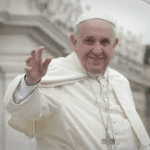 It stirred up a good deal of controversy when it was published five years ago—as I have reread it over the past few days, I am reminded of why. I am also reminded of my own experiences as a non-Catholic in Catholic higher education for more than three decades.
Remember back in the old days when a spokesperson for some medical product on television would say “I’m not a doctor, but I play one on TV”? I have a similar sort of authority when it comes to things Catholic. I am not Catholic (I don’t think I even met a Catholic until my late teens), but my more than thirty years of, first, being educated by Jesuits in my PhD program, then teaching in Catholic institutions of higher education, qualify me to chime in on things Catholic on occasion. And with increasing frequency over the past several years I am saying five words that I never thought I would hear myself say: I really like this Pope.
I was raised in a conservative, evangelical Protestant religious tradition. The first time I ever heard about something called a Pope was in 1965 when Pope Paul VI visited the U.S. I was nine years old and recall seeing highlights on our little black-and-white television from the nightly news. My parents sufficiently filled me in on what a Pope was for me to realize that this was important to some people (although not to us). For my family, the most memorable portion of the visit was when the pontiff stepped off the plane at LaGuardia airport and the wind blew his cape over his head. The draped Pope looked like my dachshund peeking out from under a blanket, a source of great laughter and irreverence in my household.
As I moved into adulthood and learned a bit more about these people called Catholics (and actually met a few), other Popes crossed my radar screen (please understand that the following observations are the product of viewing things through barbarian Protestant lenses). The Pope prior to Paul VI, John XXIII, was an interesting guy, a supposed placeholder choice who threw everything into disarray and set the stage for change by convening Vatican II.
John Paul I, who followed Paul VI, poped just long enough to meet and hear the confession of the aging Michael Corleone before dying under suspicious circumstances in Godfather III (loosely interpreted). His successor John Paul II, who contributed greatly to the fall of the Berlin Wall and the collapse of Communism, also managed to set the clock back decades in his church on many social issues and helped produce a generation of priests who proceed as if Vatican II never happened. Then came Benedict XVI, whose best decision as pontiff was to step down from his position before he messed things up any further.
Now there’s Pope Francis. Everyone knew that things might be different when the first Jesuit and the first non-old-white-guy-from-Europe since the Syrian Gregory III in 741 was elected. He’s Argentinian, from a part of the globe where liberation theology caught fire and where Catholic social thought with its preferential option for the poor has not been bumped aside in importance by issues like abortion and same-sex relationships as it has been all too often in the Northern hemisphere of Catholicism.
Rejecting many of the accoutrements that traditionally accompany being God’s go-to person, Pope Francis lives humbly (comparatively speaking) and has a refreshing (or worrisome, depending on who you are) tendency to say what he is thinking and feeling without checking with his multitude of handlers ahead of time. This, of course, sends the holy spin-doctors into hyper drive trying to explain what Francis really meant, when it is usually pretty clear that he meant what he said.
I have a number of Catholic friends and colleagues who have struggled mightily since Francis became Pope to convince me that everything he is saying is consistent with a seamless, conservative Catholic position that encompasses every issue imaginable. I’m not buying it. Not for their lack of trying, but because in the real world a seamless, all-encompassing perspective that is consistent from stem to stern across all possible issues is a pipe dream, particularly when insisting that such a framework be stuffed into the rigid “conservative” or “liberal” straitjackets that we insist everything fit into.
What is one to do when a Pope who advocates all of the familiar conservative positions on abortion and the ordination of women produces an encyclical like Laudato Si’, which contains statements and positions on environmental issues so liberal as to cause Fox News pundit Greg Gutfield, shortly after Laudato Si’ was published, to label Francis as a “Marxist” and “the most dangerous man on the planet”?
Is Pope Francis the Most Dangerous Person Alive?
According to Gutfield, “[Francis] wants to be a modern pope. All he needs is dreadlocks and a dog with a bandana and he could be on Occupy Wall Street.” Gutfield’s problem has nothing to do with Catholic doctrine or orthodoxy; rather, Gutfield is outraged because many of Francis’s explicit claims and prescriptions in Laudato Si’ are rooted in a deep suspicion of unfettered capitalism and its accompanying worship of private property.
Someone once said that the mark of a good Supreme Court decision is one that makes neither side happy. If that is also the mark of an effective papacy, Pope Francis is doing a good job. Liberals applaud his emphasis on the poor, environmental issues, and his lack of interest in the over-the-top and gaudy trappings of being the pontiff but are quick to point out that nothing has really changed yet—doctrine remains the same. There is enough in what Francis says and does to somewhat mollify conservative Catholics worried that he really does want to turn the Vatican into a home for liberation theology.
Conservatives, however, worry that Francis’s words actually mean something—that in his heart of hearts he is setting the stage for an overhaul of the institution he leads that will make Vatican II pale in comparison. As a very interested outside observer, it seems to me that this is a classic case of “nothing has changed, but everything is changing.”
One of my best friends is a Catholic theologian; we taught together on the faculty of the college I teach at for several years before he took a position at another university twenty years or so ago. He loves the Catholic church, but is a powerful critic of many of its doctrines and much of its structural and bureaucratic nonsense in a way that only a fully knowledgeable insider can be.
I recently read and commented on a draft of his next book, in which he calls, among other things, for the Catholic church to ordain women, embrace LGBTQ people with no qualifications or reservations, and to vastly expand the power of the laity in the administration of the church. These are all radical ideas, none of which is likely to happen fully during my lifetime. But as a long-standing interested outsider, I’m encouraged that such necessary and morally imperative changes are more likely to happen in due season because of Pope Francis.
The prophet Micah (I seem to be bumping into him a lot lately in this blog) succinctly summarizes the heart of faithfulness to the divine in the Jewish scriptures: “What does the Lord require of you but to do justly, love mercy, and walk humbly with your God?” In the spirit of his namesake from Assisi, Francis has the humility thing pretty much down. Although Micah’s directive is intended for individuals and not institutions, Francis’ papacy has been dedicated to tempering justice with mercy.
Justice, when understood as the application of relevant and appropriate rules and doctrinal pronouncements, has been the bread and butter of the Catholic Church since somebody thought up the idea. Francis has shown in many ways that a precise following and application of the rules actually can undermine the heart of justice, turning it cold and clinical. Without seeking to change church teaching on abortion and annulment, for instance, Francis reminds the faithful that in such issues and innumerable others the actual human beings involved must not be ignored.
When just a few months into his papacy Francis said “If someone is gay and he searches for the Lord and has good will, who am I to judge?” I knew that there was a new pontifical sheriff is in town. Not that my non-Catholic opinion matters that much, but I’ll say it again: I really like this Pope.
Previous Post
August 8, 2020
Jesus Goes for a Walk--on a lake
Next Post
August 13, 2020 Leaving Jesusland . . . for good
Browse Our Archives
Select a Category abortion Advent AI Angels Artificial intelligence atheism attention baptism Baptists beauty belief Benedictines Bible bicycling Big Bird books Bovina Camaldoli hermitage Canada Catholicism cats certainty change Christianity Christmas Collegeville Covid-19 creativity Development of Western Civilization dogs doubt Easter Enneagram Epiphany Episcopal ethics Eucharist evil extroverts Facebook faith family fear flowers forgiveness freedom friends God goodness grace happiness heaven hell history Holy Spirit Holy Week hope human nature humility humor idolatry incarnation introverts irreverence Islam Jeanne Jesus Joe Biden joy Judaism justice Kamala Harris knowledge Lent listen literature liturgy love Marsue Memorial Day miracles movies music mystery mythology NPR Old Testament optimism paradox peace Penguins philosophy piano podcast politics power prayer Protestantism Providence College Religion Rhode Island sabbatical sacrament science seeing silence Simone Weil Socrates soul sports St. John's College stories suffering tattoo teaching technology television theology thinking time tolerance transcendence travel trees trust truth Uncategorized Vermont wisdom wonder writing
Select a Month May 2026 April 2026 March 2026 February 2026 January 2026 December 2025 November 2025 October 2025 September 2025 August 2025 July 2025 June 2025 May 2025 April 2025 March 2025 February 2025 January 2025 December 2024 November 2024 October 2024 September 2024 August 2024 July 2024 June 2024 May 2024 April 2024 March 2024 February 2024 January 2024 December 2023 November 2023 October 2023 September 2023 August 2023 July 2023 June 2023 May 2023 April 2023 March 2023 February 2023 January 2023 December 2022 November 2022 October 2022 September 2022 August 2022 July 2022 June 2022 May 2022 April 2022 March 2022 February 2022 January 2022 December 2021 November 2021 October 2021 September 2021 August 2021 July 2021 June 2021 May 2021 April 2021 March 2021 February 2021 January 2021 December 2020 November 2020 October 2020 September 2020 August 2020 July 2020 June 2020 May 2020 April 2020 March 2020 February 2020 January 2020 December 2019 November 2019 October 2019 September 2019 August 2019 July 2019 June 2019 May 2019 April 2019 March 2019 February 2019 January 2019 December 2018 November 2018 October 2018 September 2018 August 2018 July 2018 June 2018 May 2018 April 2018 March 2018 February 2018 January 2018 December 2017 November 2017 October 2017 September 2017 August 2017 July 2017 June 2017 May 2017 April 2017 March 2017 February 2017 January 2017 December 2016 November 2016 October 2016 September 2016 August 2016 July 2016 June 2016 May 2016 April 2016 March 2016 February 2016 January 2016 December 2015 November 2015 October 2015 September 2015 August 2015 July 2015 June 2015 May 2015 April 2015 March 2015 February 2015 January 2015 December 2014 November 2014 October 2014 September 2014 August 2014 July 2014 June 2014 May 2014 April 2014 March 2014 February 2014 January 2014 December 2013 November 2013 October 2013 September 2013 August 2013 July 2013 June 2013 May 2013 April 2013 March 2013 February 2013 January 2013 December 2012 November 2012 October 2012 September 2012
Follow Us!
TAKE THE
Religious Wisdom Quiz
What do the Shoes of the Gospel of Peace allow believers to do?
Select your answer to see how you score.
Stand firm Dance Walk in darkness Run into battle
Books by This Author Books by Vance G. Morgan
Related posts from Freelance Christianity

The Lonely Pawn: On Faith, Doubt, and Meaning


AI and Love: When a Chatbot Becomes a...

TRENDING AT PATHEOS Progressive Christian

Why Christians Have a Sacred Duty to Vote:...
The Bible offers strong support for the sacred duty to vote. Here...

What Being a Modern-Day Apostle Means to Me
In my last column, I discussed the ins and outs of modern-day...

Did Ancient China Once Worship the God of...
Across human history, a common thread weaves through the origins of the...

Love Your Neighbor – Including Earth-Kin: Lev. 19,...
God’s command to love your neighbor means acting in an ethical and...

Lead a Church Study of “Jesus and Lao...
Guest writer Jack Thomas (The Irreverent Reverend) reflects on leading his church...

Principles for Understanding the Apostolic Ministry Today
Whenever people discover that my formal ministry title is "apostle," as in...
view all Progressive Christian blogs
Ad-Free & Subscriber Log-In Subscription Support
- About Us
- 2026 Calendar
- Videos
- Podcasts
- Library of World Religions
- Faith In Media Tracker
- Advertise With Us
- Write for Us
- Privacy Policy
- Terms of Service
- Do Not Sell My Data
- Contact Us
- Radiant Digital
- Manage Newsletter Subscriptions
- Unsubscribe From Notifications
- Sitemap
Copyright 2008-2026, Patheos. All rights reserved.
Subscription Support Ad-Free & Subscriber Log-In
Follow Patheos